
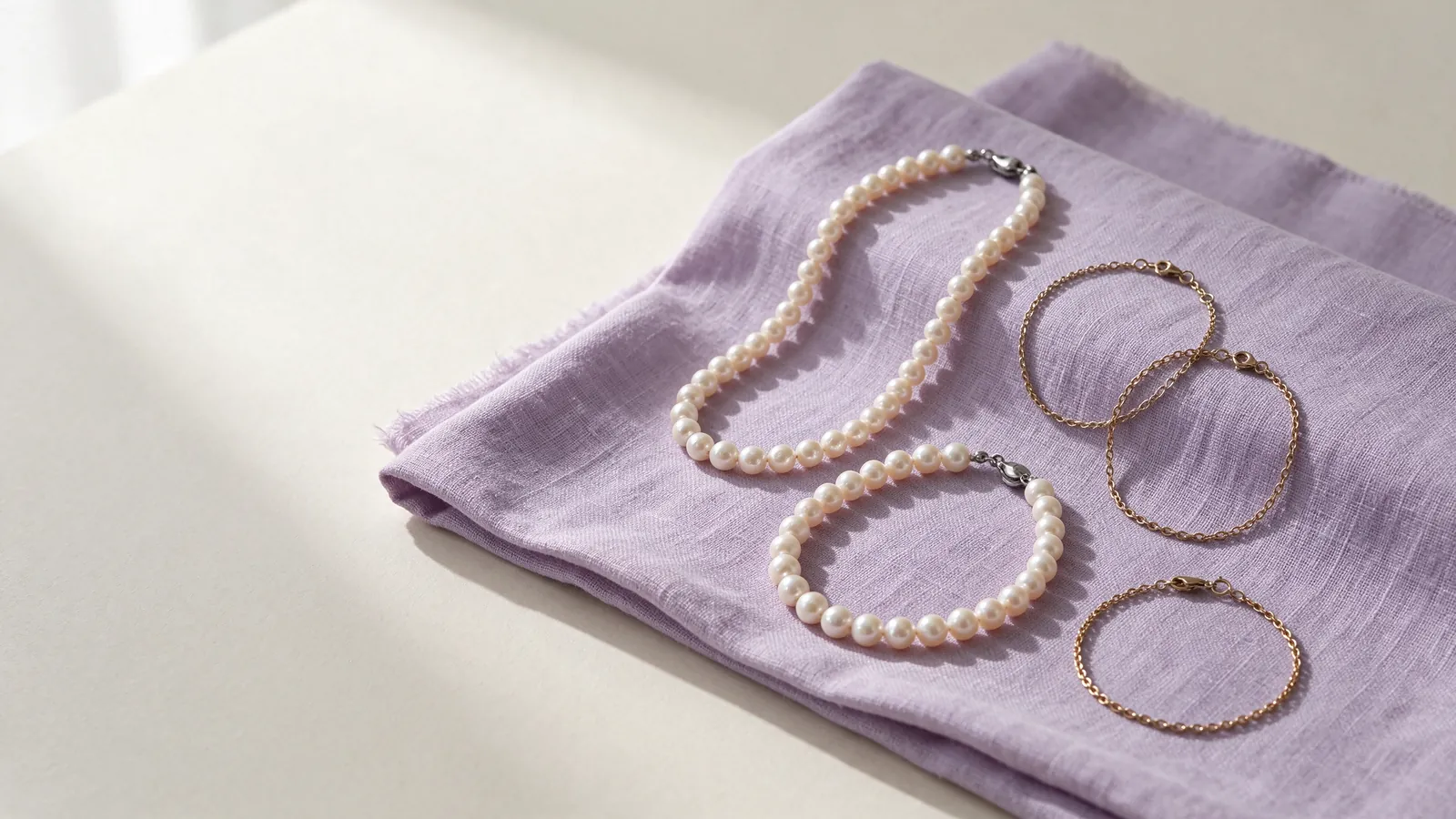
How does wrist fit affect a baroque pearl bracelet or an irregular pearl bracelet, especially a baroque pearl chain bracelet?
Take your wrist measurement where you normally wear a bracelet, with a flexible tape resting against the skin rather than tightening it. Treat that measurement as a starting point. The full length of a bracelet and its usable inside space are different things: inward-facing pearl contours and the clasp can affect how closely the piece sits.
When trying on an irregular design, relax your hand, make a fist and bend your wrist. Notice any pressure near the wrist bone and whether the bracelet moves towards your palm. A prominent contour may feel comfortable in one position but press against the skin in another. There is no single allowance that solves every combination of wrist shape and pearl arrangement.
When trying on a baroque pearl bracelet or an irregular pearl bracelet, how should you check the clasp and sleeve clearance of a baroque pearl chain bracelet?
Wear a shirt or jacket you actually use and let the cuff slide naturally over the bracelet. Check whether your other hand can reach the clasp without twisting the strand. If fabric catches repeatedly, examine the projecting pearl and clasp position rather than simply choosing a looser fit; extra movement may leave the same catching point unresolved.
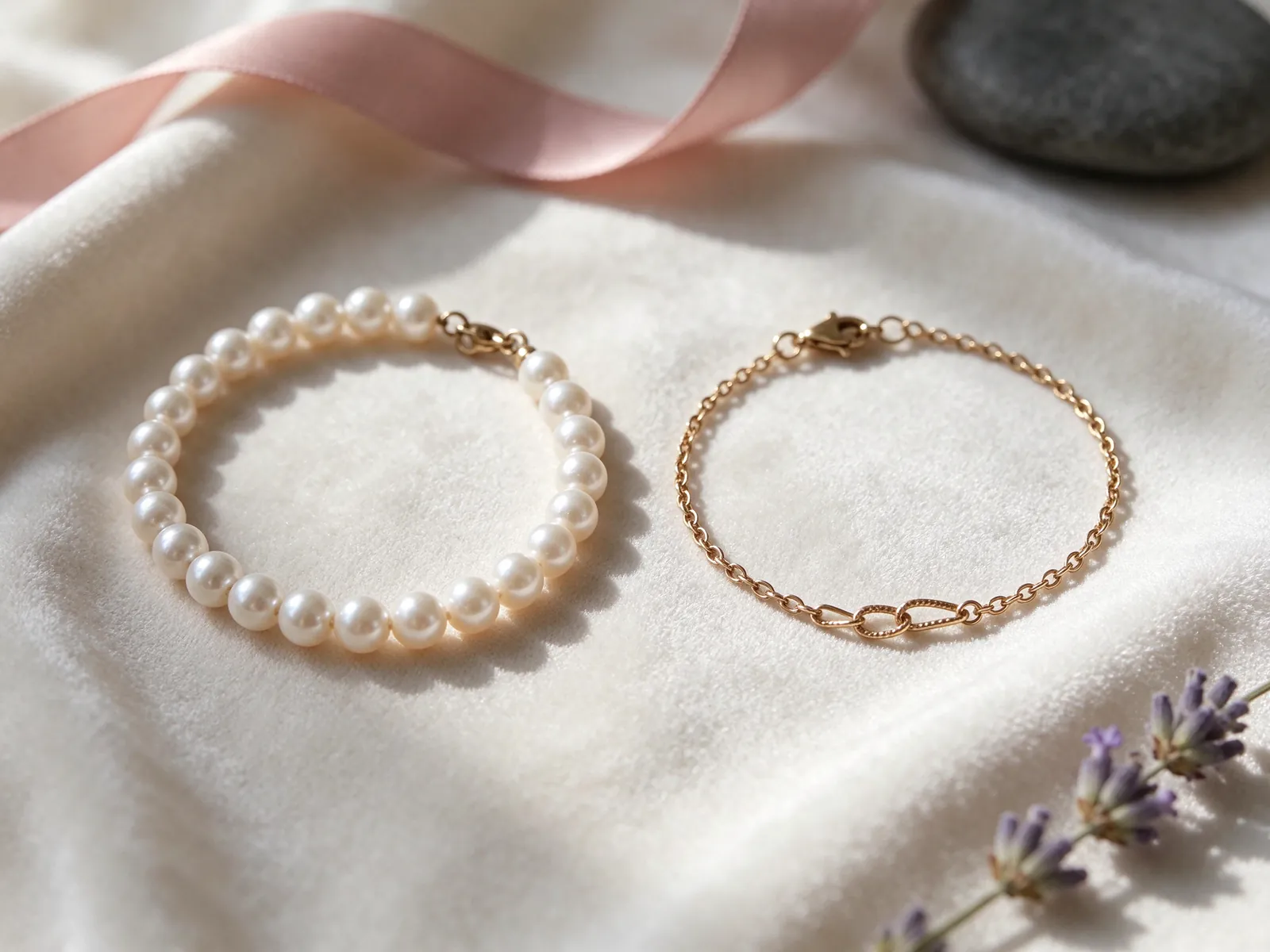
Read shape as a design choice, not a pearl identity
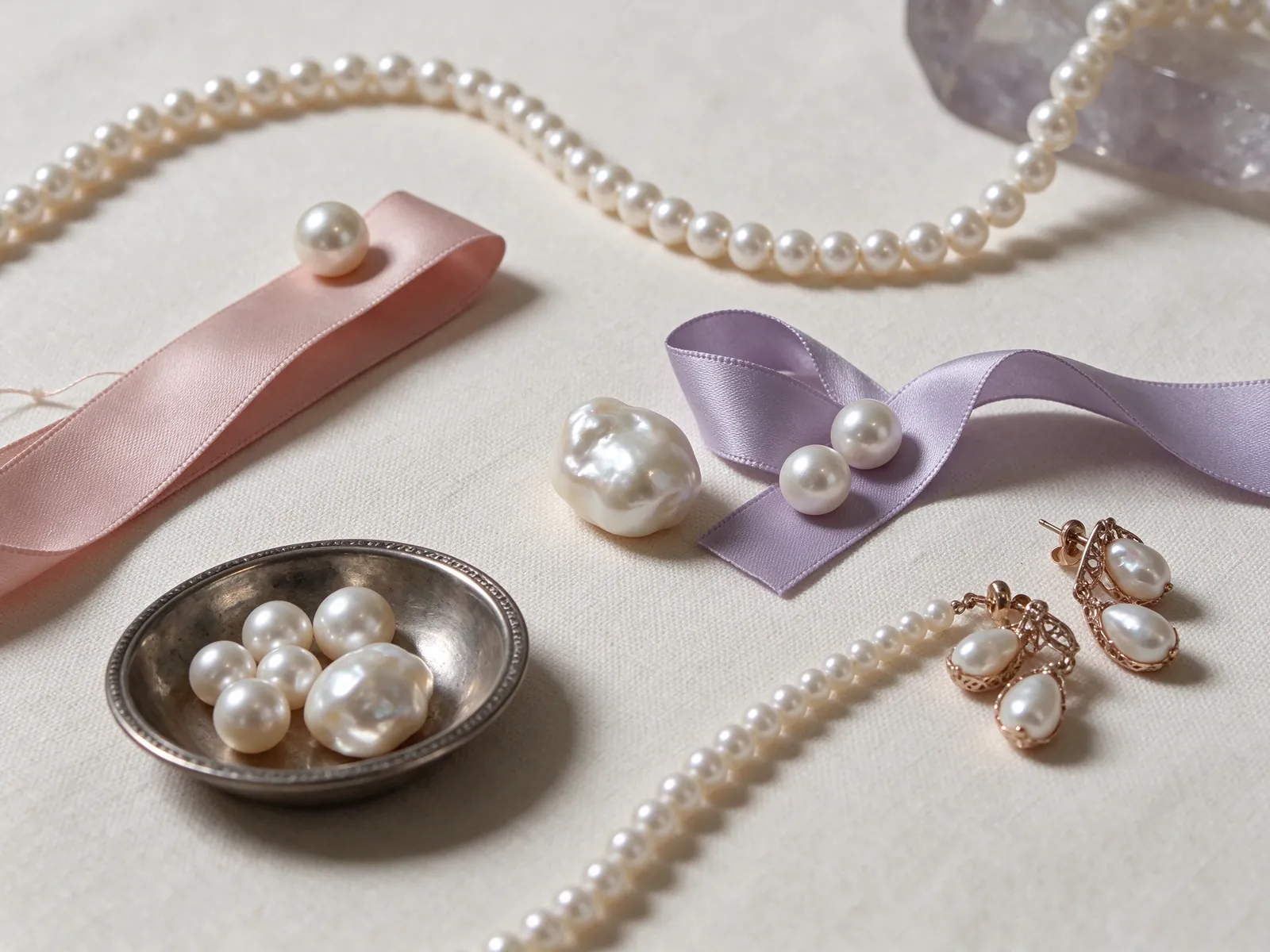
The appeal of baroque pearls lies in outlines that need not be round or symmetrical. Compare gentle undulations with more pronounced contours, then look at how each pearl is orientated. An unusual shape can create a focal point, but greater irregularity is not automatically a sign of better quality or a more comfortable bracelet.
Keep shape terminology separate from pearl identity. Baroque does not establish freshwater origin, a beadless structure or wild-natural status, and it is not interchangeable with Keshi or seed. When comparing a freshwater pearl bracelet, read the stated pearl information separately from your preference for irregular contours. A design name cannot supply missing information about identity or origin.
Use several views to understand the outline
A front view may hide a raised side or make a long pearl look shorter. Look for side and clasp views as well, noting how lighting changes the apparent depth of the surface. Photographs help explain a visual preference; they do not, by themselves, establish pearl type, treatment status or certificate contents.
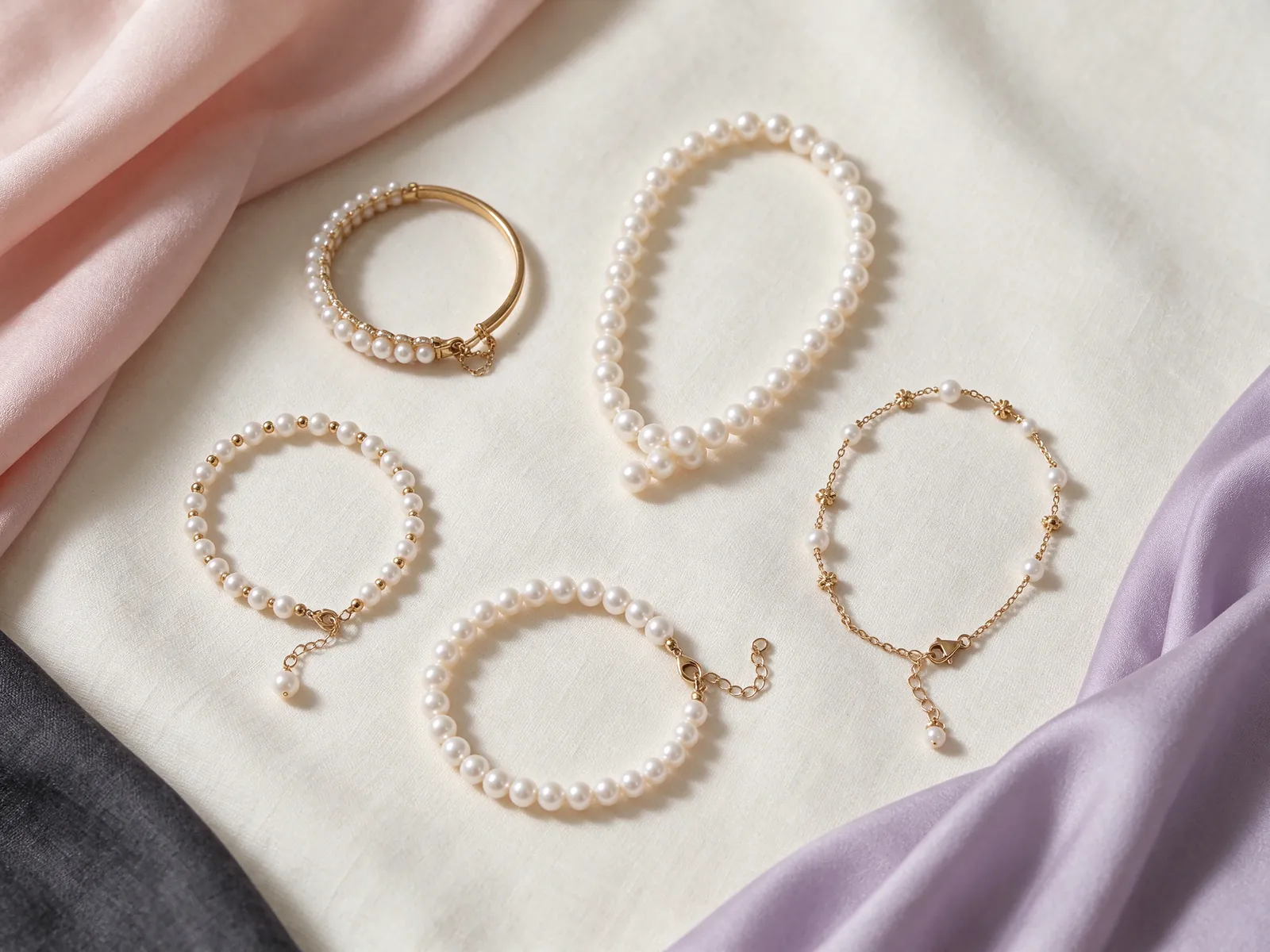
Choose the rhythm of a strand or a chain arrangement
A continuous arrangement creates a more connected line around the wrist, while a chain arrangement allows open spaces to become part of the composition. Compare each pearl bracelet against the same outfit. Decide whether you want a continuous band of reflected light beside a cuff or a more interrupted rhythm of pearls and metal.
Spacing that looks even on a flat surface can change once the bracelet follows your wrist. Let your arm hang, then raise it and turn your palm upwards. Watch whether pearls gather on one side, meet as the wrist bends or turn underneath. The arrangement should make sense in movement, not only in its most carefully presented position.
Give an asymmetrical design a clear focal point
Start by choosing the contour you want to notice first, then assess how neighbouring pearls lead towards it. Several strong outlines can look lively, but they also require separate comfort checks. Decide whether you enjoy the focal point changing position as you move; a fluid composition need not remain centred on the top of your wrist.
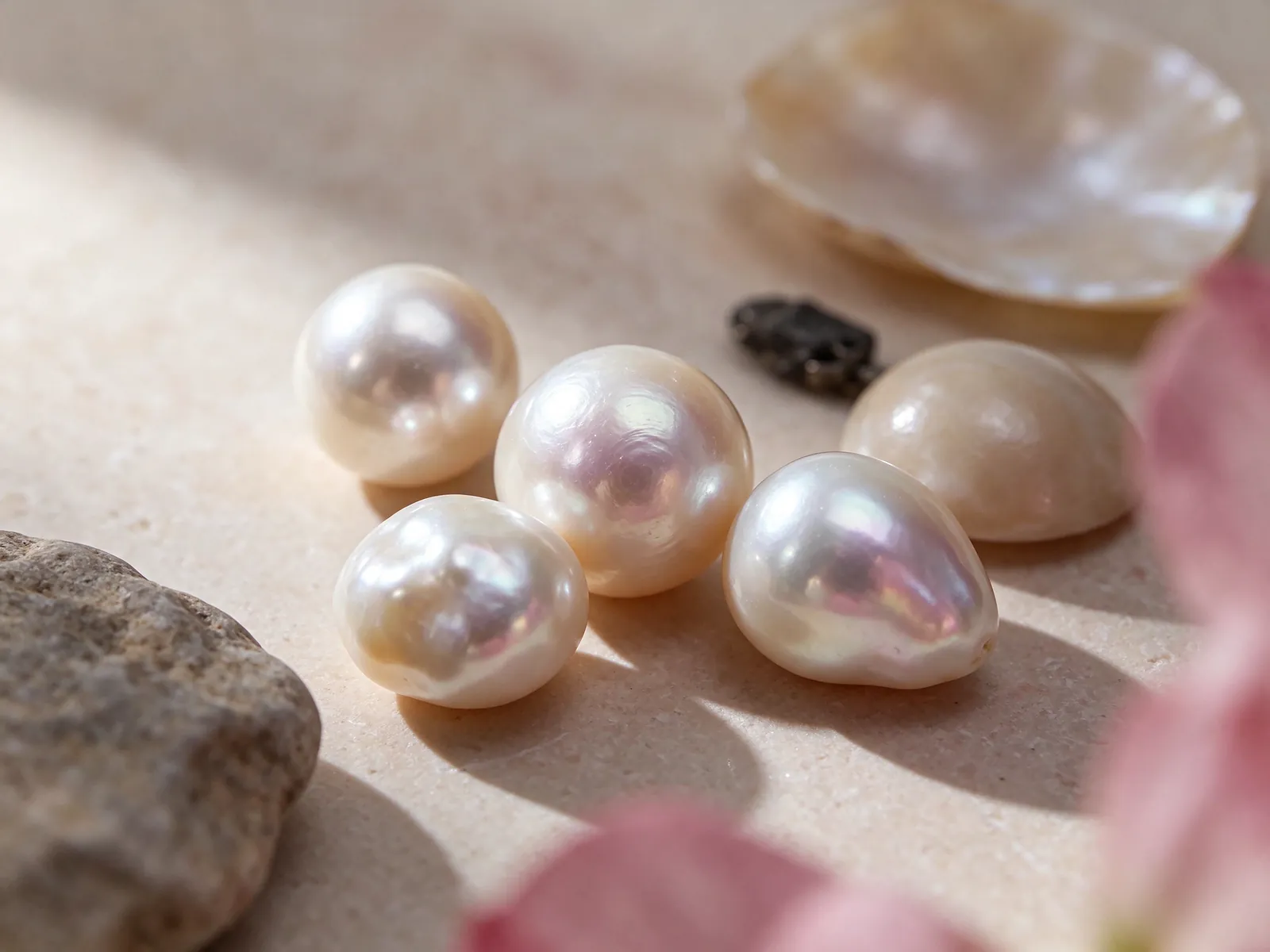
Compare lustre and matching without demanding roundness
GIA identifies seven pearl value factors: size, shape, colour, lustre, surface quality, nacre quality and matching. Shape is therefore one part of a broader comparison. Look at the clarity of reflections and the relationship between neighbouring pearls, rather than letting an interesting outline distract from surface condition or a noticeably different level of lustre.
If you prefer a white pearl bracelet, treat white as a colour direction for styling, not proof of pearl type. GIA distinguishes bodycolour, overtone and orient, and not every pearl shows all three. Compare the bracelet under soft daylight and indoor light to understand how its appearance relates to your clothing and skin tone.
Matching can mean harmony rather than identical outlines
In a baroque arrangement, matching may be expressed through related colour, lustre or a gradual change in shape. Look at the whole bracelet after examining individual pearls. An intentional contrast can be appealing, but it should be a contrast you enjoy; neither perfect visual uniformity nor strong variation establishes a quality grade on its own.
Plan around cuffs, desk work and evening clothes
A plain shirt or simple knit gives irregular contours a quieter background. Before adding other jewellery, consider how cuff buttons and fabric texture already frame your wrist. If you spend time at a keyboard, rest your forearm in your usual working position and check whether projecting pearls touch the desk. A standing mirror cannot answer that practical question.
An open wrist in eveningwear reveals more of the outline, but handbag handles and clasps still deserve attention. If you want a restrained look, compare the visual scale of a small pearl bracelet before choosing stronger contours. Small-looking elements do not automatically mean a lighter piece or better fit; the finished arrangement and contact points still matter.
Separate a watch from pearls before attempting a stack
Try wearing a watch on the opposite wrist first, leaving the bracelet visible and reducing repeated contact with hard edges. If you prefer both together, observe them while walking, carrying a bag and lowering your arm. When the pieces keep crowding each other, simplifying the combination is more useful than adding another layer for visual balance.
Make clasp access and connection points part of the choice
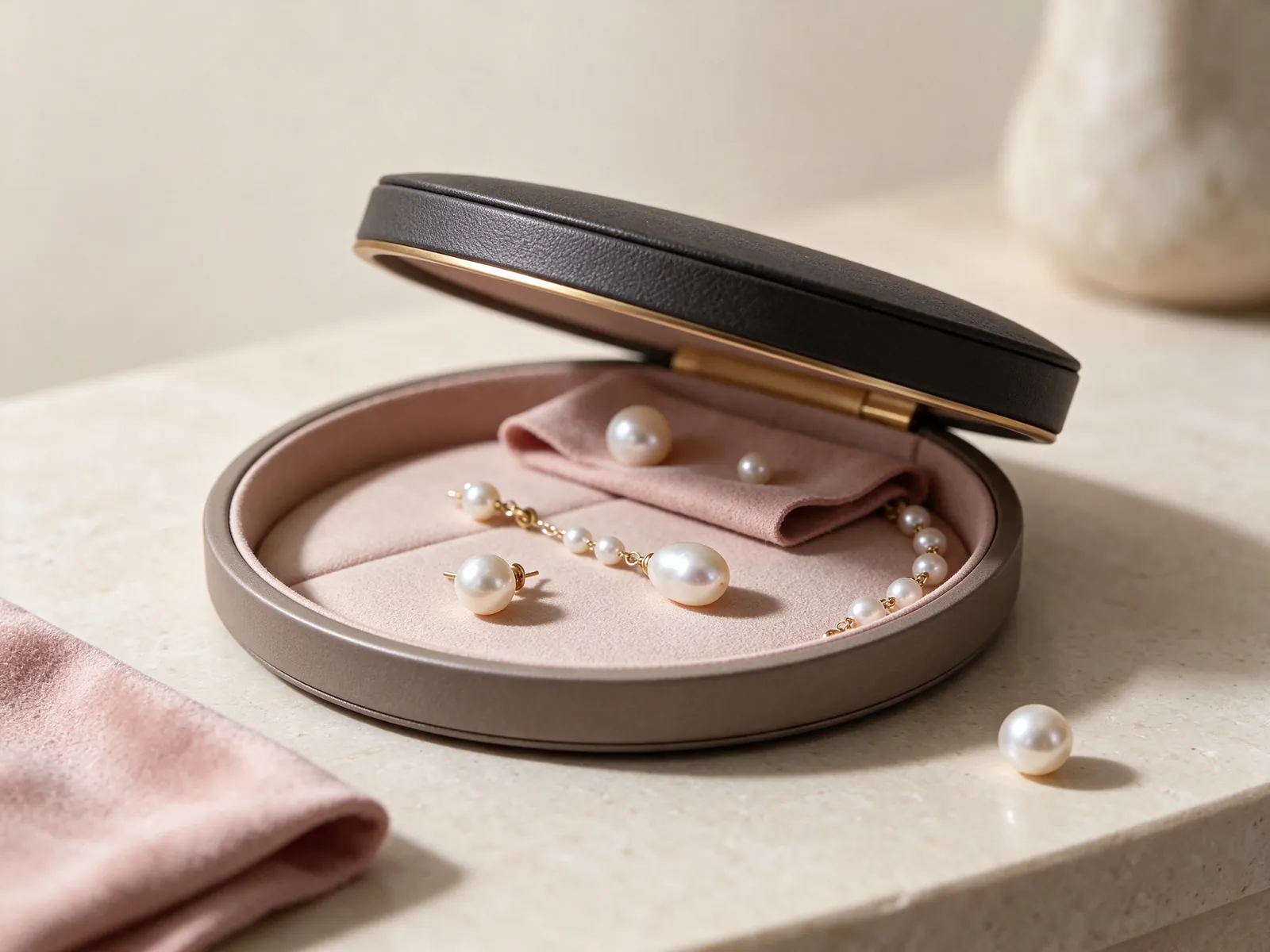
A clasp deserves more attention than a quick glance at the back of the bracelet. Check its opening direction, how easily you can hold it with your other hand and where it rests when closed. Look for uncomfortable edges or an arrangement that crowds the fastening. Stop if operation requires force rather than trying to lever it open with a nail.
When reading about a platinum pearl bracelet, distinguish the metal choice from the bracelet's structure. A metal name does not establish easy clasp operation, waterproofness or protection from knocks. Think about the relationship between metal colour, link scale and pearl contour, then examine the actual fastening and the areas that rest against your skin. For metal enquiries, the permitted options are 18K 750 white gold, 18K 750 yellow gold, 18K 750 rose gold, PT950 platinum and PT900 platinum; the actual marking and construction of an individual piece still need separate consideration.
Test adjustable positions with the loose end included
If a bracelet has adjustable fastening positions, repeat the wrist movement test after changing the position. Notice where any remaining chain hangs and whether it reaches the desk or catches a bag. Being able to close the bracelet is not enough: the chosen setting should also preserve the intended proportions and avoid persistent contact in everyday use.
Build gentle care into the way you wear the bracelet
GIA gives pearl a Mohs hardness of 2.5. That makes avoiding abrasion important, especially where an irregular contour projects towards a desk edge, bag clasp or another piece of jewellery. After wearing, wipe gently with a very soft, clean cloth and store the bracelet separately from hard-edged pieces that could rub against its pearls.
Keep pearls away from acids, perfume, hair spray and excessive heat. GIA advises against ultrasonic and steam cleaning. If a strung bracelet is cleaned with water, its string must be completely dry before it is worn again. A chain-like appearance is not permission to immerse the whole piece; pearl connections and other components also need consideration.
Describe your wearing habits when asking about fit
Before a style and wrist-fit enquiry with Flint Jewellery, note your measurement, preferred wearing position, usual cuff and whether you want a continuous strand or open chain spacing. Explain where a bracelet tends to meet your desk or catch your sleeve. A photograph can illustrate a preferred outline, but cannot replace a clear description of the pearl identity or dimensions.
| Feature | What to observe | Try-on action | Decision point |
|---|---|---|---|
| Pearl contours | Length, raised areas and orientation | Turn the wrist to see the side | Enjoy the outline without persistent local pressure |
| Spacing | Continuous pearls or open chain intervals | Lower and raise the arm | Check the composition after the focal point moves |
| Clasp | Access and skin-facing edges | Operate with the other hand | Choose accessible operation without force |
| Cuff clearance | Fabric meeting contours or a loose chain end | Bend the wrist in a usual shirt | Address the catching point rather than only adding looseness |
| Lustre and matching | Reflections and relationships between pearls | Turn under different soft lighting | Seek deliberate harmony or a contrast you enjoy |
Pearl knowledge and authoritative references
GIA identifies seven pearl value factors: size, shape, colour, lustre, surface quality, nacre quality and matching. A baroque outline is only one part of the comparison.
Read the reference for this factFrequently asked questions
Does a more unusual baroque shape mean a better-quality bracelet?
Not on its own. GIA includes shape among seven value factors, alongside size, colour, lustre, surface quality, nacre quality and matching. A distinctive outline may suit your taste, but its degree of irregularity cannot establish a quality grade.
Should I choose a chain arrangement for a close-fitting shirt cuff?
Not automatically. Open spacing changes the visual rhythm, but projecting pearls, the clasp or a loose chain end can still catch fabric. Try the bracelet with your usual shirt and check the actual contact points while bending your wrist.
Why can two bracelets of the same length feel different?
Their usable inside space may differ because of inward-facing contours, clasp shape and arrangement. Measure your wrist, then assess local pressure, movement and whether the piece slides towards the palm. Flat length alone cannot describe the whole fit.
Can I identify freshwater pearls from the word baroque?
No. Baroque describes shape, not pearl type or origin. It also does not establish a beadless or wild-natural identity and is not synonymous with Keshi or seed. Read the explicit pearl information rather than inferring identity from a design name.
Can a baroque bracelet be cleaned with an ultrasonic jewellery cleaner?
No. GIA advises that pearls should never be cleaned with ultrasonic or steam cleaners. Use a very soft, clean cloth after wear; if a strung piece is cleaned with water, allow the string to dry completely before wearing it again.
Updated: