
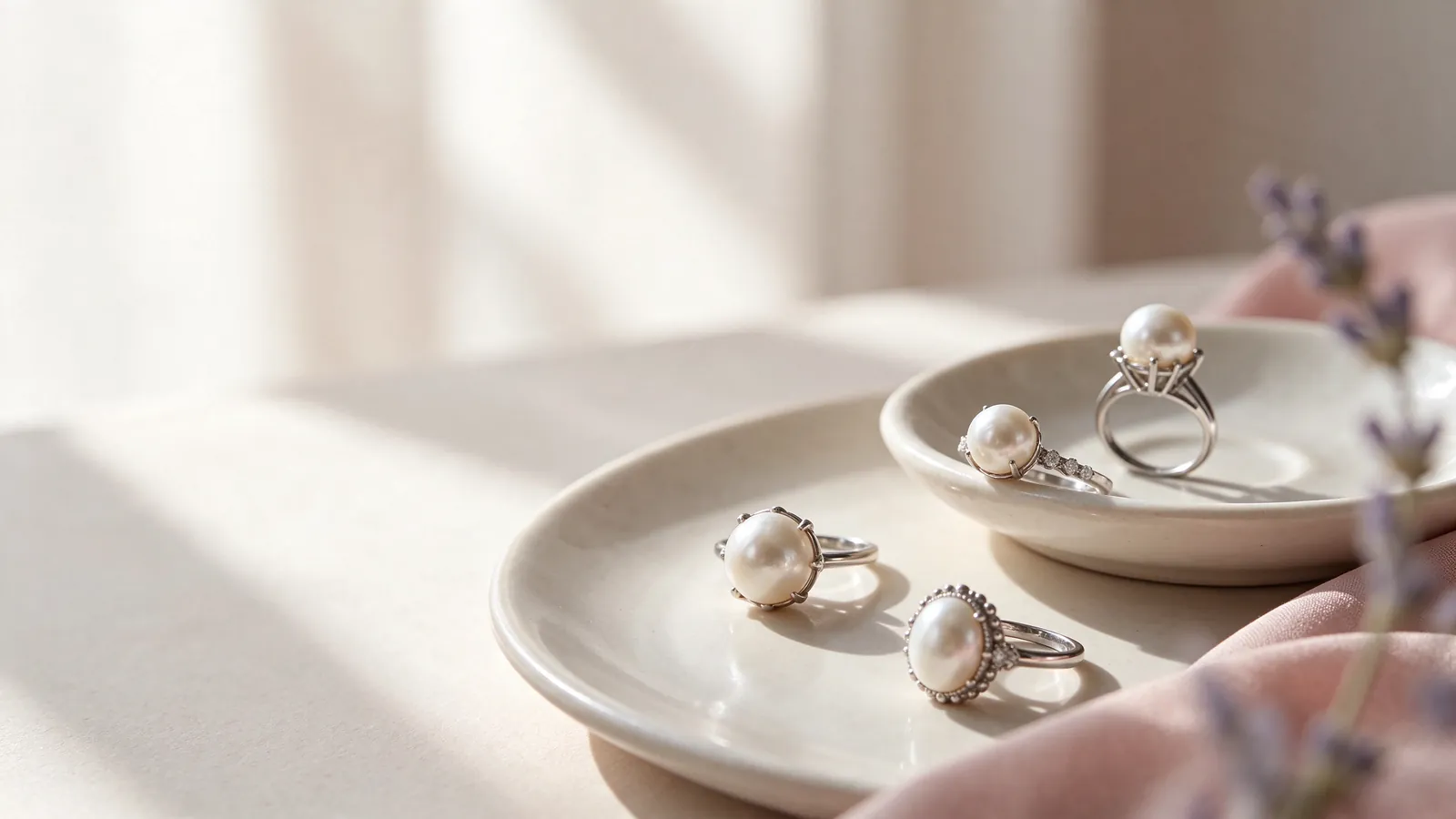
What creates visual balance in a crescent moon pearl ring, a crescent pearl ring or a moon shaped pearl ring?
A crescent moon pearl ring is best understood as a composition rather than a specification. The names crescent pearl ring and moon shaped pearl ring do not establish how tall the setting is, how the pearl is secured or how the tips finish. Begin with the opening in the curve: does it frame the pearl tightly, or does a visible gap become part of the design? When comparing pearl rings Hong Kong, consider the whole outline on your finger rather than the clarity of the lunar motif in an enlarged photograph.
A close arc can draw attention inward, while a broader sweep gives the metal outline more visual weight. Neither arrangement is automatically more flattering. Look at where the curve extends in relation to your knuckles and neighbouring fingers, then turn your hand slightly. If the motif only reads clearly from directly above, decide whether that matters to you. The angle you see while wearing a ring may differ from the angle presented in a photograph.
When assessing a crescent moon pearl ring, a crescent pearl ring or a moon shaped pearl ring, how do setting height and ring fit affect comfort?
The view from the side answers questions that the front cannot. Notice the relationship between the highest point of the pearl, the arc and the band. Let the ring settle at the intended wearing position, then relax and bend your fingers. A ring that turns to one side needs its fit and balance assessed together; tightening the band is not a universal answer. Keep separate notes on appearance and movement so that a pleasing outline does not conceal an uncomfortable fit.
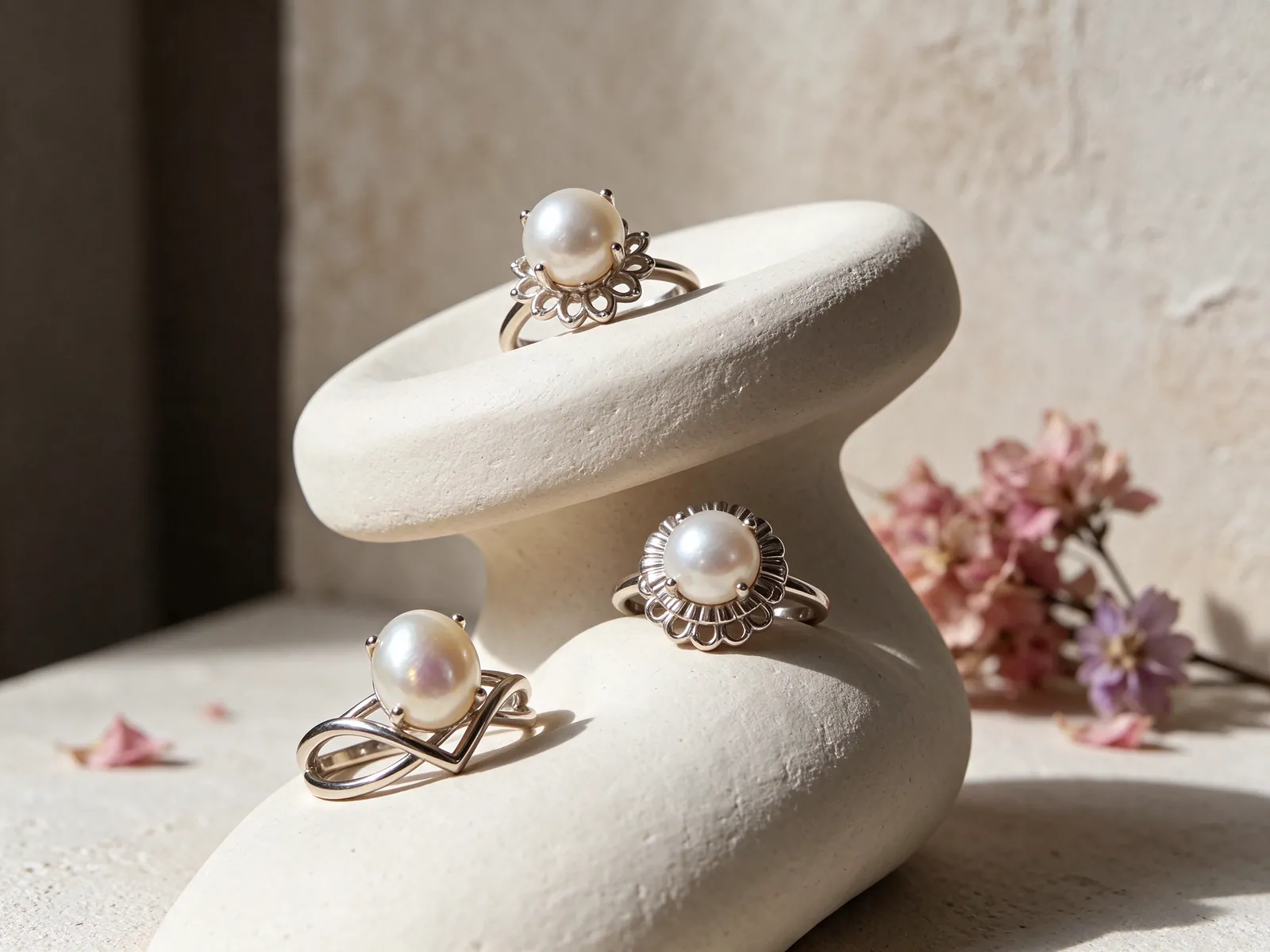
Pearl placement, light and the space inside the curve
A pearl placed near the middle of the arc can make the curve feel like a frame. A pearl near an end introduces a more directional composition. To compare them, briefly ignore the band and identify what catches your eye first: the pearl, the metal sweep or a pointed end. If the pearl is meant to lead, check whether the thickness and brightness of the arc compete with it. If the curve is the attraction, look for an outline you enjoy from more than one angle.
For compositions with sparkling details, a pearl and diamond ring offers a useful comparison of focal points: concentrated sparkle and a more evenly distributed outline can lead the eye differently. A pearl halo ring provides another contrast, using an enclosing frame rather than a crescent opening. These comparisons help you decide how much negative space you prefer. A bright point in an image, however, cannot establish a stone's identity or the construction of a particular ring.
Assess the pearl separately from the lunar outline
Use gentle light to observe the pearl's reflections, surface details and overall colour, then rotate the ring. GIA describes seven pearl value factors: size, shape, colour, lustre, surface quality, nacre quality and, for jewellery with more than one pearl, matching; the appeal of a crescent is not itself a quality grade. Nor does a colour establish pearl origin or natural-versus-cultured identity. Keep your visual preferences separate from the written description of the individual pearl, particularly when a highly contrasted photograph makes every surface look uniformly bright.
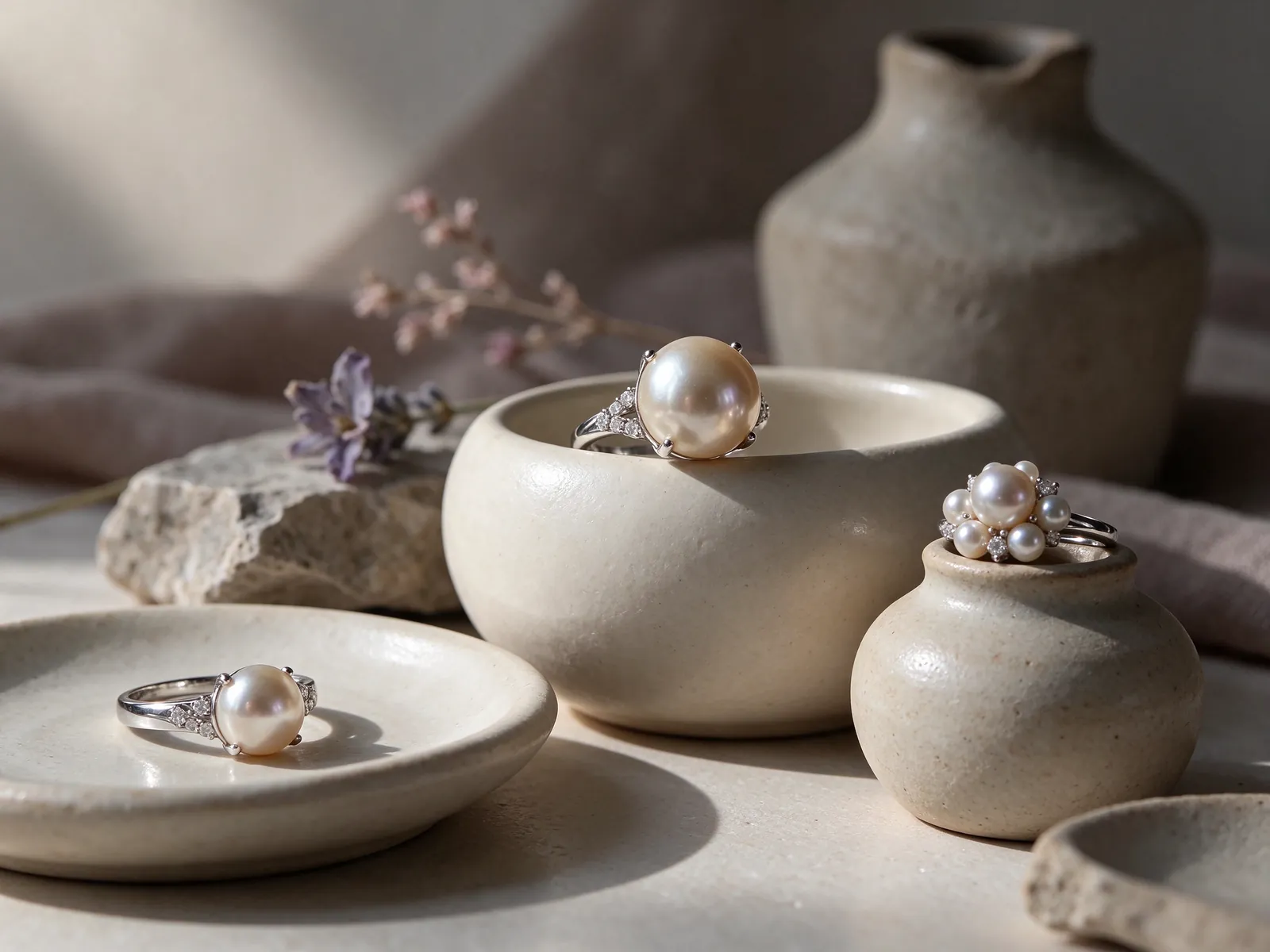
Test the profile with sleeves and ordinary hand movements
A pronounced side profile may suit your preferred look but needs room during daily movements. Pass a familiar sleeve gently over the ring and notice whether you instinctively change your hand position. A lower outline is not automatically comfortable either: an inward-facing tip or a broad contact area can still interfere with movement. The useful question is not simply whether a ring is high or low, but where its outline sits relative to the things your hand regularly encounters.
Measure for the intended finger and consider how the band passes over the knuckle before settling at the base. A comfortable knuckle passage and a stable wearing position are different aspects of fit. When comparing band widths, relax your hand, make a gentle fist and check the space beside adjacent fingers. Do not treat tolerating pressure as proof of a good size. Record the movement that causes discomfort rather than reducing every issue to the word 'tight'.
Describe sideways rotation before deciding on a size change
An off-centre pearl may contribute to a directional feel, but rotation can also relate to band shape and the fit on your finger. Explain whether the ring turns while your hand rests, slips during movement or presses when you bend a finger. Those observations are more useful than assuming a smaller ring will solve everything. Any proposed change should be considered in relation to the entire setting, not only the measured size of the band.
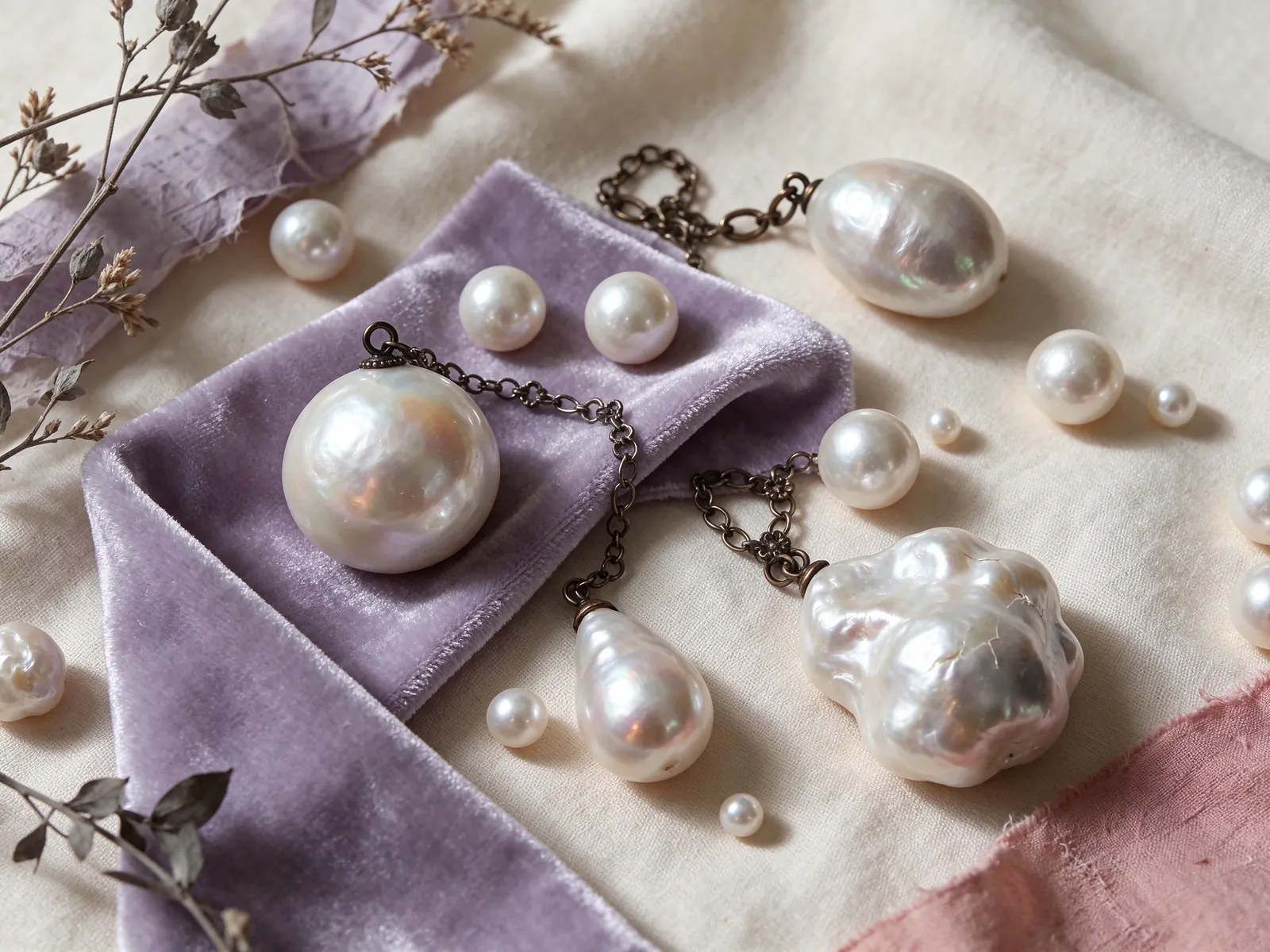
Look closely at crescent tips and the pearl's attachment
The ends of the arc give a crescent much of its character. Check whether they point upwards, outwards or back towards the finger, and how close they come to neighbouring jewellery. Use ordinary movements to assess clearance; do not repeatedly pull fabric against a tip to test it. A slender-looking end in a photograph still needs a side view and a gentle assessment of how it meets your hand.
Ask how the pearl is attached and which types of force should be avoided. An attachment hidden beneath the pearl is not necessarily absent, and a neat appearance does not prove structural strength. Look at whether the space beneath the arc is accessible for appropriate care, without inserting a sharp object into it. Never twist the pearl or press the crescent to test security. Unexpected movement or an irregular contact point is a reason to stop wearing the ring and seek inspection.
An open motif is not an adjustable band
The open area of a moon motif is a visual feature, not permission to change the ring size. Even if a band has an opening, its appearance alone cannot tell you whether it is designed for adjustment. Bending it may alter tip direction and forces around the setting. Discuss sizing separately from the decorative opening, and do not try to correct the ring's orientation by pulling or squeezing the metal yourself.
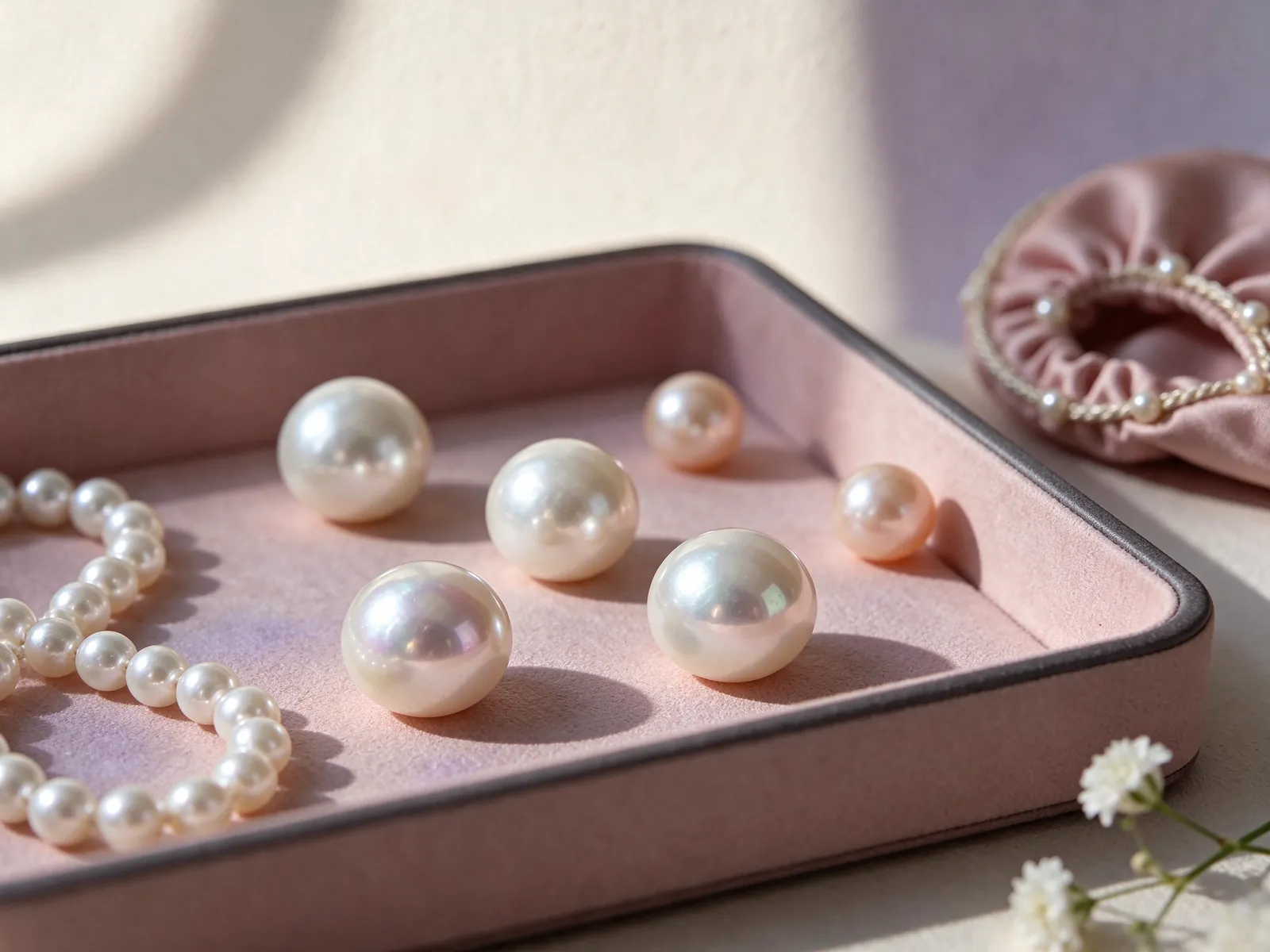
Style the moon without crowding its outline
For everyday jewellery, start by wearing the crescent alone and observing it beside your watch and usual cuffs. If you add another ring, try a separated finger before placing it directly beside the arc. This keeps the negative space visible and makes contact points easier to assess. A pearl butterfly ring is a useful alternative if you enjoy an expressive motif but prefer a spreading outline to the single-direction sweep of a crescent.
For an evening look, decide whether your hand or your earrings will provide the main emphasis. A statement pearl ring can help you consider a stronger hand-focused composition, while a pearl tiara ring offers a different upward silhouette. Clothing formality alone should not decide setting size. Think about holding a bag, lifting a glass and moving a fitted sleeve, as well as how the ring looks when your hand is still.
Choose orientation and stacking by clearance, not a rule
The crescent opening can face towards your fingertips or your wrist according to preference. After reversing it, check the tips against your knuckle and neighbouring rings again. If stacking, make sure the other ring does not press against the pearl or rub along the curve as your finger moves. Negative space is already part of the composition; you do not have to fill it for the styling to feel complete.
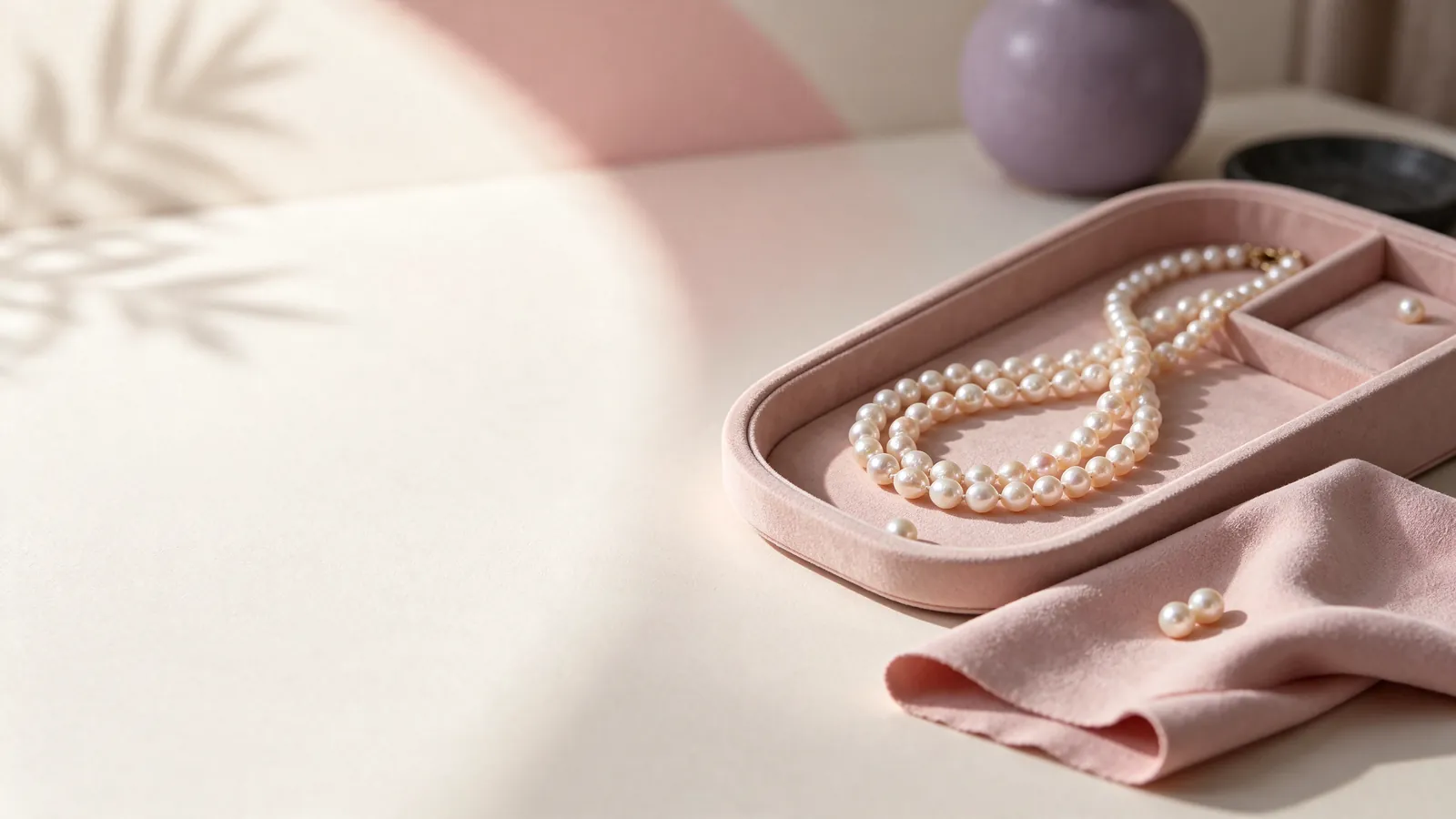
Care for the pearl as well as the metal arc
GIA lists pearl at 2.5 on the Mohs hardness scale. A surrounding arc does not change the pearl's own need for protection from abrasion. Avoid arranging other rings so that their hard edges touch the pearl. Store the ring separately in a clean, soft place where the crescent tips will not become entangled with other jewellery, and keep weight off the setting. The numerical hardness information is a care consideration, not a prediction of a ring's lifespan.
After wearing, gently wipe the pearl with a very soft, clean cloth. Keep acids, perfume, hair spray and excessive heat away from it. Do not apply a cleaning method simply because it works for an all-metal ring: GIA advises against ultrasonic and steam cleaning for pearls. If dirt remains beneath the curve, do not scrape it with a needle or scrub it with a hard brush. Ask a jewellery professional about care appropriate to the whole setting.
Stop wearing a ring that begins catching unexpectedly
If a previously smooth tip starts catching fabric, or you notice unusual movement near the pearl, remove the ring rather than repeating the action. Note where the problem occurs and what you were doing, then arrange professional inspection. Do not press the tip back yourself or use glue to hide movement. Reducing further force on a questionable part is more sensible than continuing to wear it to see whether the problem disappears.
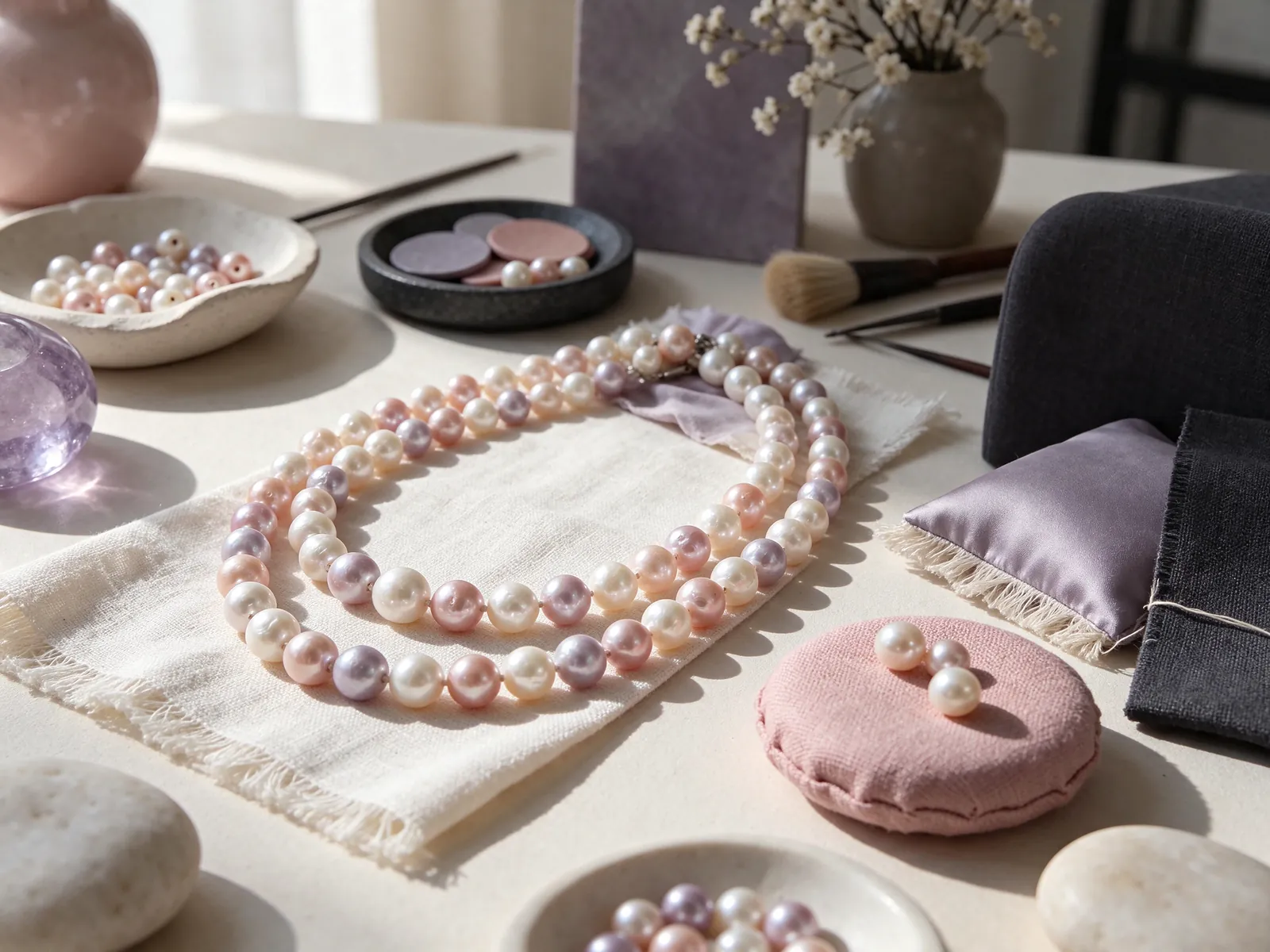
Turn preferences into a practical comparison brief
For each silhouette, record the opening direction, pearl position, arc thickness, side profile and room beside adjacent fingers. In a separate note, describe how it feels when your hand is relaxed, bent and passing through a sleeve. If you are comparing photographs, request front, side and angled views to understand the outline, while recognising that images cannot replace a measured size or wearing experience. This separates an attractive composition from a comfortable arrangement.
Begin a selection conversation with concrete priorities: perhaps the pearl should lead visually, the tips should remain clear of neighbouring fingers, or your daily sleeves are close-fitting. Explain which finger you intend to use and whether other rings will be worn nearby. Read the individual jewellery description for pearl identity and dimensions instead of deriving them from the lunar name. Clear preferences make comparisons more useful without assuming that one attractive reference establishes every detail of another ring.
To discuss how a lunar outline fits your preferences, contact Flint Jewellery on WhatsApp or call +85260106207. Share your intended finger, usual sleeves and the negative space you want to preserve so the ring-selection conversation can focus on your everyday priorities.
Finish with an unstacked, reversed and sleeved comparison
Try the silhouette alone, reverse its orientation and then repeat an ordinary sleeve movement. If one direction feels more natural, that can be a styling choice, provided the band fit and tip clearance remain suitable. If you constantly need to reposition it during movement, reconsider the height, width or balance. The aim is not to choose the photograph that looks most like a moon, but an outline that fits your habits and that you are willing to care for.
| Feature | Front view | Side or movement check | Styling consideration | Useful question |
|---|---|---|---|---|
| Curve opening | Is the negative space clear? | Does the curve read from an angle? | Avoid filling the gap with another ring | Which orientation suits my gestures? |
| Pearl placement | Central or directional focal point | Does it rotate when the hand rests? | Keep space around the pearl | How is the pearl attached? |
| Setting profile | How prominent is the outline? | Does a sleeve need extra clearance? | Consider cuffs and bag handling | Can I compare a side view? |
| Crescent tips | Direction and finish of the ends | Check nearby fingers and fabric | Avoid contact with neighbouring rings | What contact should the tips avoid? |
| Band fit | Does the motif settle as preferred? | Assess knuckle passage and finger bending | Recheck movement after adding jewellery | How does this width relate to my measured fit? |
Pearl knowledge and authoritative references
GIA lists pearl at 2.5 on the Mohs hardness scale. An enclosing crescent does not remove the need to protect the pearl from abrasion.
Read the reference for this factFrequently asked questions
Are crescent moon, crescent and moon shaped pearl rings fixed technical categories?
The names alone do not establish technical specifications. Compare the opening, pearl position, tip finish and side profile, and read the description of the individual ring for details that a motif name cannot supply.
Should the crescent point towards my fingertips?
There is no necessary direction implied by the name. Try the orientation you prefer, then check it against your knuckle, adjacent fingers and sleeves. Reversing it is a styling option, not a reason to accept uncomfortable contact.
Does an off-centre pearl mean I need a smaller ring?
Not automatically. Rotation can involve weight distribution, band shape and finger fit. Describe when the ring turns and how it feels during movement before deciding that a size change is the appropriate response.
Can another band sit inside the crescent's open space?
Only assess such a pairing with attention to contact during movement. The other band should not press against the pearl, rub the curve or touch the tips. Wearing it on a separated finger may preserve the outline more clearly.
Does a metal arc make ultrasonic pearl cleaning suitable?
No. A framing arc does not change GIA's advice against ultrasonic or steam cleaning for pearls. Use a very soft, clean cloth for routine wiping and ask a jewellery professional about areas beneath the setting that are difficult to clean.
Updated: