
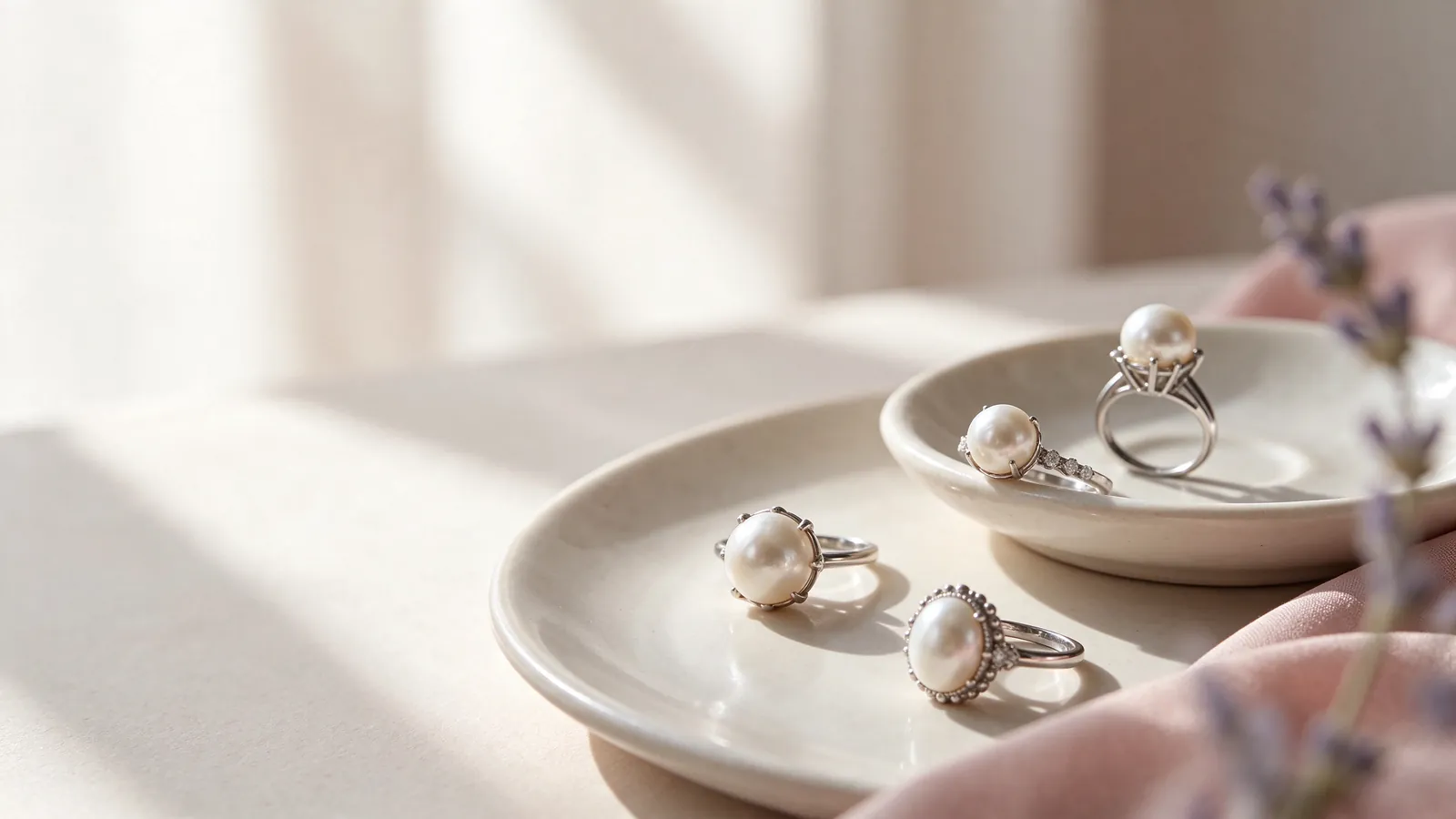
How do band width and setting height shape comfort across Akoya pearl ring designs when choosing a Japanese Akoya pearl ring?
Start with the finger on which you intend to wear the ring. A band that looks delicate in a close-up may feel quite different beside your other fingers, while a broader band can change the sensation at the base of the finger. Compare each complete design rather than assuming that the size of an existing ring will feel identical in another width. Look at the hand relaxed, not only with the fingers carefully spread for a photograph.
Setting height deserves a side view. Notice how far the pearl sits above the finger and whether the surrounding structure projects beyond it. Pick up your phone, move your hand towards a pocket and try the movement of putting on a jacket without pressing the pearl against anything. The broader guide to pearl rings Hong Kong can help you organise your preferred outlines before comparing individual shapes and their practical compromises.
When trying a Japanese Akoya pearl ring, how can you assess knuckle clearance and movement across Akoya pearl ring designs?
Ease the ring over the knuckle, then assess the fit at the base of the finger. It should not require forceful pulling to remove, and a ring that keeps turning needs attention alongside any feeling of pressure. Hands can feel different with temperature and activity, so record which hand, finger and band width you tried. If your hands are unusually cold or swollen, do not let that single fitting settle the decision.
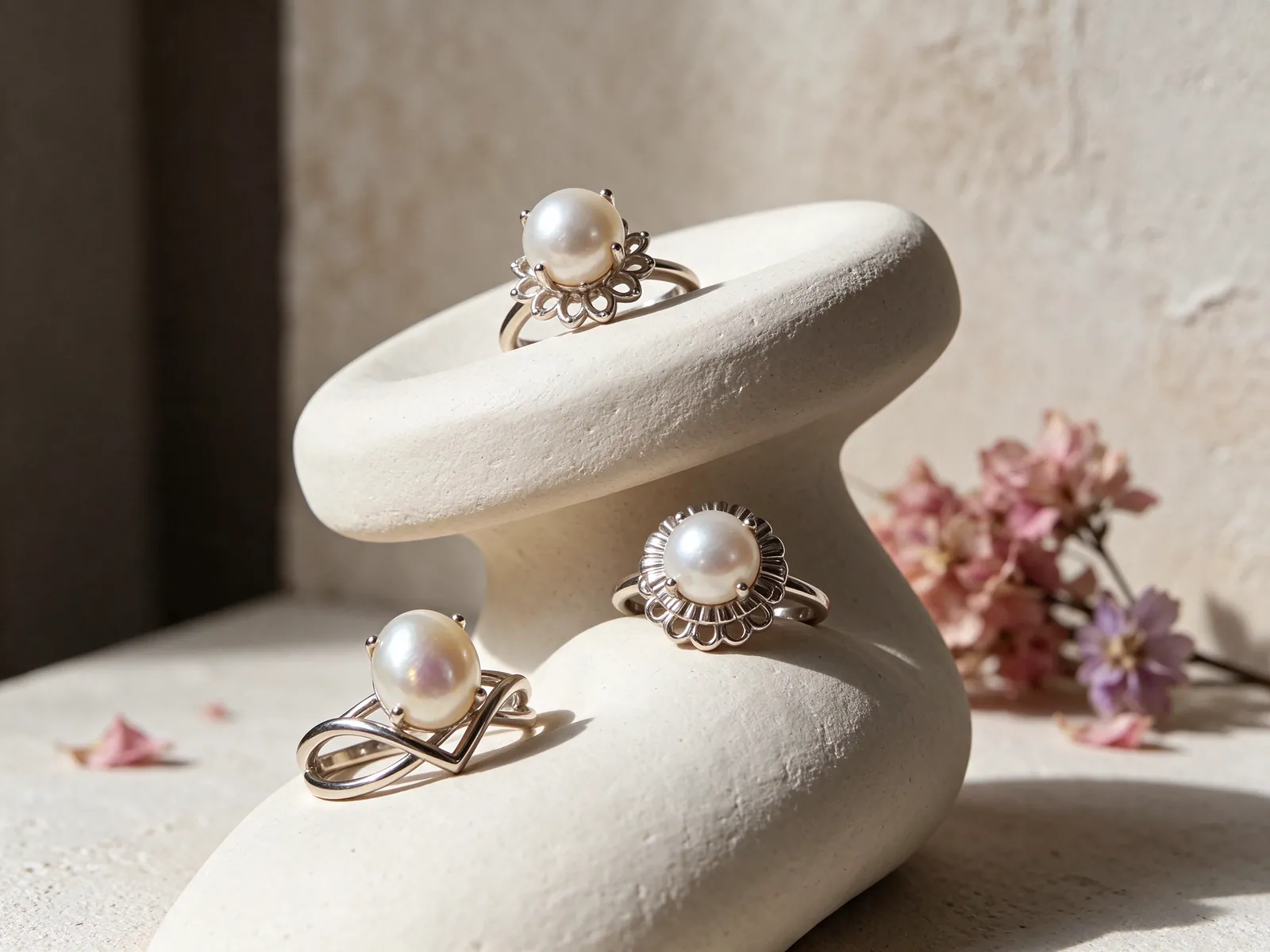
Separate the Akoya description from an origin statement
A search for a Japanese Akoya pearl ring combines several questions: the pearl description, its stated origin and the design of the finished ring. Read the wording carefully to see whether Japanese refers to the pearl, the place of manufacture or an aesthetic description. The guide to what are Akoya pearls gives useful context, but a name alone does not establish the origin of the particular pearl being discussed.
GIA describes seven pearl value factors: size, shape, colour, lustre, surface quality, nacre quality and, for multi-pearl jewellery, matching. For a single-pearl ring, begin with the visible qualities you enjoy, then consider matching if you want to wear it with other pearl jewellery. A round outline or white appearance is not proof of origin or certification. A broad grade label also cannot replace a description of the features that actually matter to you.
Ask what the origin information actually refers to
A useful enquiry is specific: does the origin statement concern this pearl, and what information connects it to the ring under discussion? If a laboratory document is supplied, read its stated conclusions rather than treating its existence as a promise about every aspect of quality. Keep the pearl description, origin wording and any documented findings separate so that one does not silently become evidence for another.
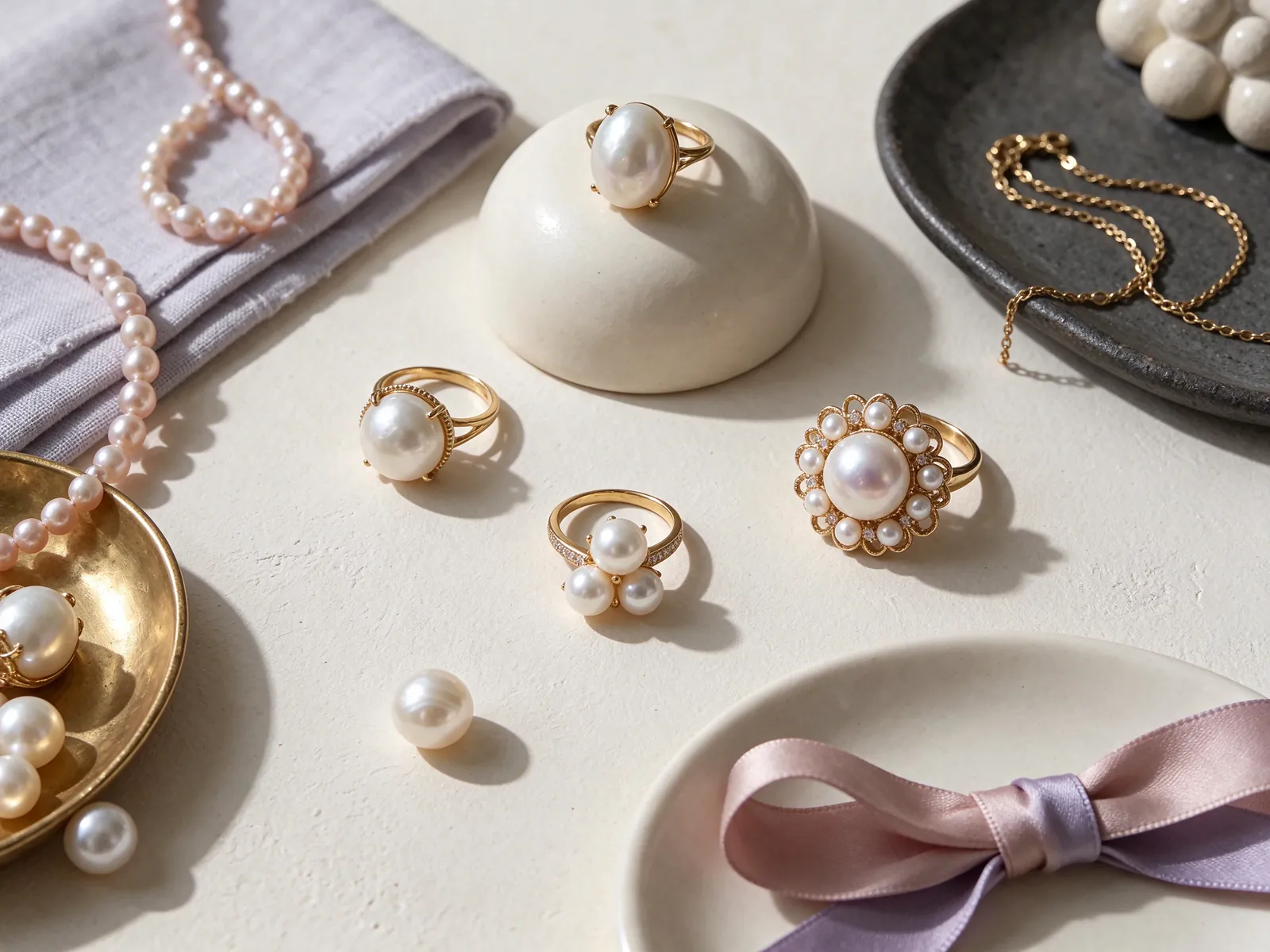
Judge scale on your hand and in your wardrobe
Visual scale depends on more than the pearl alone. The space between the base of your finger and the knuckle, the width of your hand and the shape of your nails all influence the composition. Look at the ring close up, then at arm's length. For a restrained effect, assess the open space around the pearl; for a stronger focal point, look for an outline that feels coherent rather than simply choosing the largest-looking centre.
When exploring a South Sea pearl ring or a freshwater pearl ring alongside this topic, carry the same requirements into each comparison: intended finger, preferred profile and everyday movements. The pearl-type name is not a substitute for actual dimensions or a fitting. A Tahitian pearl ring can also enter a colour-led shortlist if you enjoy darker styling, but judge the specific appearance against your clothing rather than assuming all rings within a category look alike.
Try the ring with a familiar sleeve
A patterned blouse, decorative cuff or textured jacket already adds detail near the hand. A simpler ring outline may keep that combination calm, while a plain evening outfit can leave more room for a distinctive focal point. These are styling options, not rules. Wear a familiar top when trying designs and take a relaxed hand photograph, which often says more about everyday use than an isolated ring close-up.
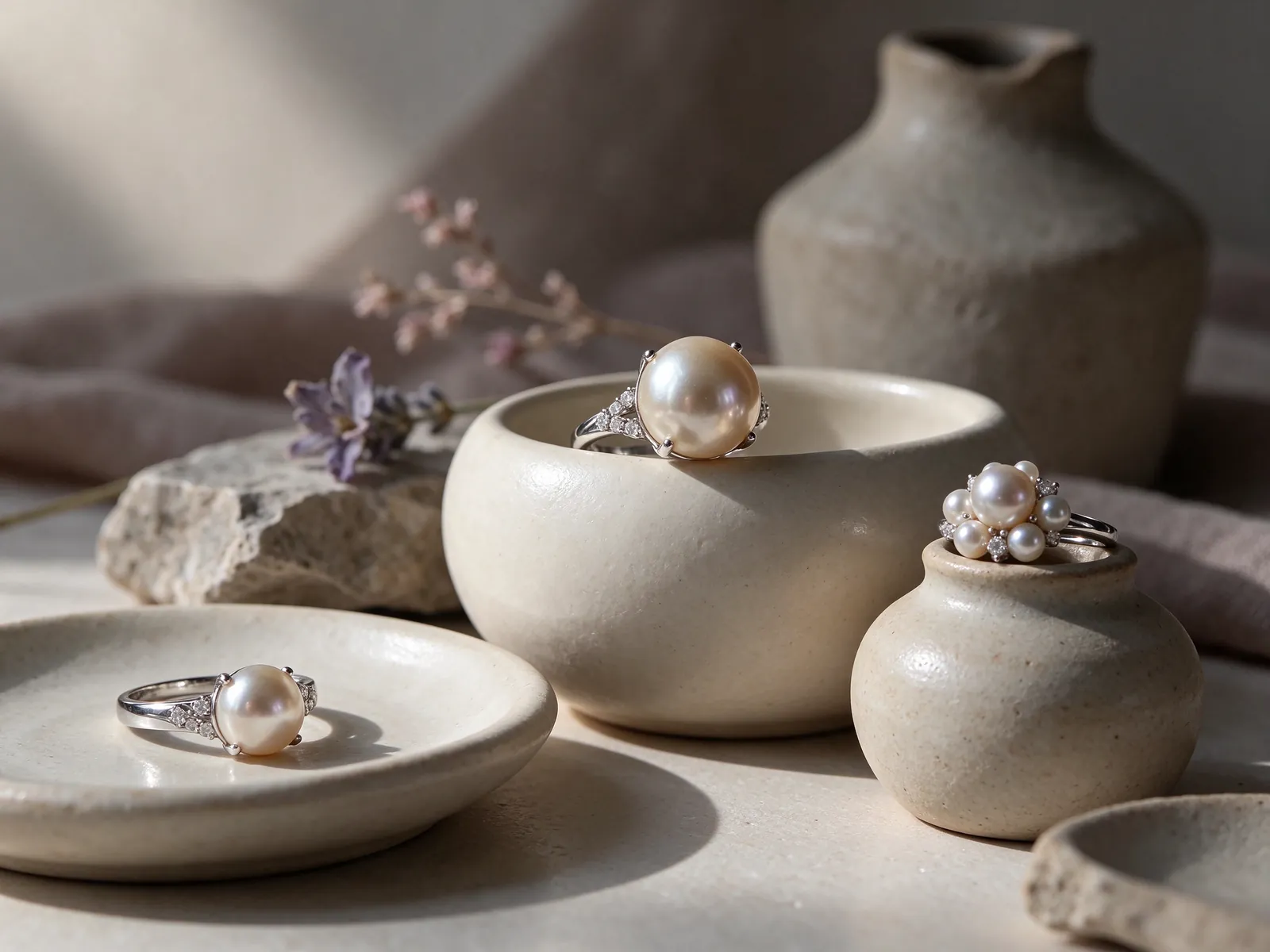
Compare lustre and colour without changing the conditions
Keep lighting, background and viewing distance consistent when comparing pearls. Examine the overall colour in gentle light, then turn the ring to observe reflections and visible surface features. A brightly exposed photograph can conceal detail, while a dark background can change the impression of contrast. If discussing a ring remotely, ask for a front view and additional angles rather than relying on the one image that looks brightest.
GIA distinguishes bodycolour, overtone and orient, and notes that not every pearl shows all three. Describe what you enjoy in ordinary terms, such as a cooler or warmer overall impression, then check the actual appearance. Surface features should be considered by their position and visibility during wear. After examining a close-up, return to a normal viewing distance so that magnification does not become the only basis for judging the ring.
Bring existing pearls into the comparison
If the ring is intended to accompany earrings or a necklace, bring them along where possible. Otherwise, use photographs taken under similar conditions. Compare the relationship of colour and lustre before demanding an exact visual match. Jewellery near the face and jewellery on the hand are seen from different angles; a balanced combination can be more useful than trying to make every photograph look identical.
Choose how much detail should surround the pearl
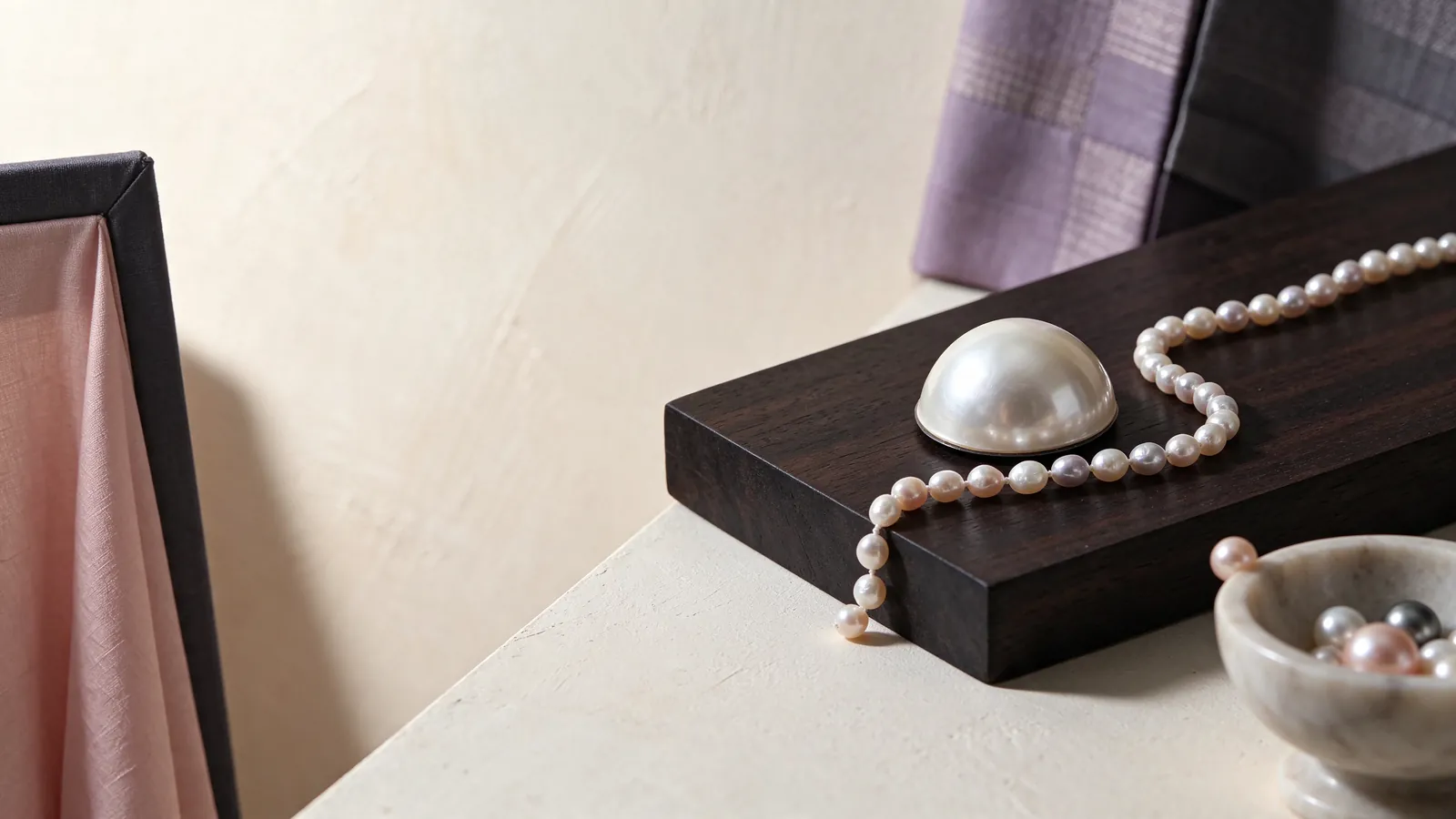
A simple single-pearl outline directs attention to the pearl and the line of the band. A pearl halo ring adds a surrounding frame, so compare the complete face-up footprint as well as the side profile. Notice whether the pearl remains the visual centre and whether the surrounding setting changes the space needed on your finger. More detail is not automatically more suitable; proportion and the way you dress remain part of the decision.
If you like a band with small points of sparkle, the pavé pearl ring topic can help you consider that detail alongside contact with neighbouring fingers. In a pearl and diamond ring, assess whether the stones frame the pearl, draw the eye sideways or compete with it. Try the outline next to your usual jewellery rather than treating all diamond-accented designs as one interchangeable style.
Leave room between rings when styling a stack
Before stacking, look from the side to see whether another ring touches the pearl or its setting. Move the fingers gently and check again. If the outlines collide, wearing the second ring on another finger or the other hand is a useful alternative. A little visual space also lets the pearl remain clear in the composition without sacrificing practical comfort for a tightly arranged photograph.
Make a customisation discussion concrete
For the metal discussion, the five options are 18K 750 white gold, 18K 750 yellow gold, 18K 750 rose gold, PT950 platinum and PT900 platinum. Start by choosing the colour direction you enjoy with your wardrobe, then consider the pearl and the band together. A cool or warm palette is a useful starting point, not a rule that determines what suits every skin tone or outfit.
When speaking with Flint Jewellery, explain which finger you intend to use, the outline you prefer and the tasks you do frequently. Mention whether the ring needs to coordinate with jewellery you already own. If using an existing ring as a fitting reference, describe its width and where it feels comfortable or tight, not just its size. For a gift, establish the intended hand and finger rather than transferring a measurement from a different finger.
Translate daily habits into design priorities
Saying that you often wear knitted sleeves, handle documents or use a keyboard is more informative than asking only for an everyday design. Decide which matters most: a clear single-pearl focus, a discreet outline, room beside another ring or ease during particular movements. Having those priorities ready makes the conversation more purposeful without assuming that one design can solve every competing preference.
Build care into the wearing routine
GIA places pearl at 2.5 on the Mohs hardness scale. For a ring, that makes the environment around your hands particularly relevant: remove it before activities that can bring impact, abrasion or contact with cleaning products. A low-looking setting does not remove the need for care. If your day involves repeated manual tasks, choosing suitable moments to wear the ring can be more practical than trying to keep it on throughout.
After wearing, wipe the pearl with a very soft, clean cloth and keep it apart from jewellery that could scratch it. GIA advises avoiding acids, perfume, hair spray and excessive heat, and says pearls should never go into ultrasonic or steam cleaners. Do not transfer a cleaning method from another gemstone to a pearl ring without considering the complete construction and asking what is appropriate for that piece.
Notice changes without testing the pearl by force
When removing the ring, pay attention to a changed pearl position, a setting that begins catching fabric or an unusual alteration in the band. If the pearl seems to move, stop wearing the ring rather than twisting it to check or attempting to add glue yourself. Describe when the change appeared and what was happening at the time so that a discussion about inspection can be specific.
To discuss the outline and fit you prefer, contact Flint Jewellery on WhatsApp or call +85260106207. Share the intended finger, a reference band width and your usual activities so the conversation can focus on the proportions and comfort that matter to you.
| Feature | What to observe | What to try | Decision to make |
|---|---|---|---|
| Band width | Space at the finger base and contact with adjacent fingers | Relax the hand, bend gently and remove the ring | Assess this design rather than transferring another ring's fit |
| Setting height | Side projection and the pearl's position above the finger | Pick up a phone and try a familiar sleeve | Balance a focal point with ordinary movements |
| Lustre and colour | Reflections and appearance under consistent light | Turn the ring, then view it at a normal distance | Avoid judging from a single bright close-up |
| Surrounding detail | Whether the pearl, frame or side stones lead the eye | Compare with your usual clothes and jewellery | Choose restrained space or a more defined outline |
| Daily environment | Likely contact with hard objects, chemicals or heat | Review work, household and exercise routines | Plan appropriate wearing and removal moments |
Pearl knowledge and authoritative references
GIA lists pearl at 2.5 on the Mohs hardness scale and states that pearls should never be cleaned in ultrasonic or steam cleaners.
Read the reference for this factFrequently asked questions
Does Japanese Akoya wording tell me where the finished ring was made?
Not necessarily. Check whether the wording concerns the pearl's origin, the manufacture of the ring or a style description. Ask for information specific to the pearl or ring being discussed rather than treating the phrase as a statement about every part of the jewellery.
Why might my usual ring size feel different in a wider band?
The complete band shape and width affect the sensation at the finger base and beside neighbouring fingers. Compare the actual design on the intended finger, checking passage over the knuckle as well as comfort once seated. A size number alone does not describe all of those experiences.
Can I choose a pearl colour to match a necklace from separate online photographs?
Use photographs taken under similar lighting and backgrounds where possible, and ask for more than one angle. Separate exposure settings and screens can change the appearance. Treat photographs as a way to explain preferences, then assess coordination in consistent conditions rather than expecting an exact match from unrelated images.
How can I add another ring without crowding the pearl?
Check the side view for contact between the second ring, the pearl and its setting, then move the hand gently. If the outlines interfere, separate fingers or hands may give a better result. Leave enough visual space for the pearl instead of forcing a tight stack.
Is an ultrasonic cleaner suitable if the pearl ring also contains diamonds?
No. GIA states that pearls should never be cleaned in ultrasonic or steam cleaners. The presence of other stones does not cancel that guidance. Use gentle routine wiping and ask about a cleaning approach appropriate to the complete ring.
Updated: