
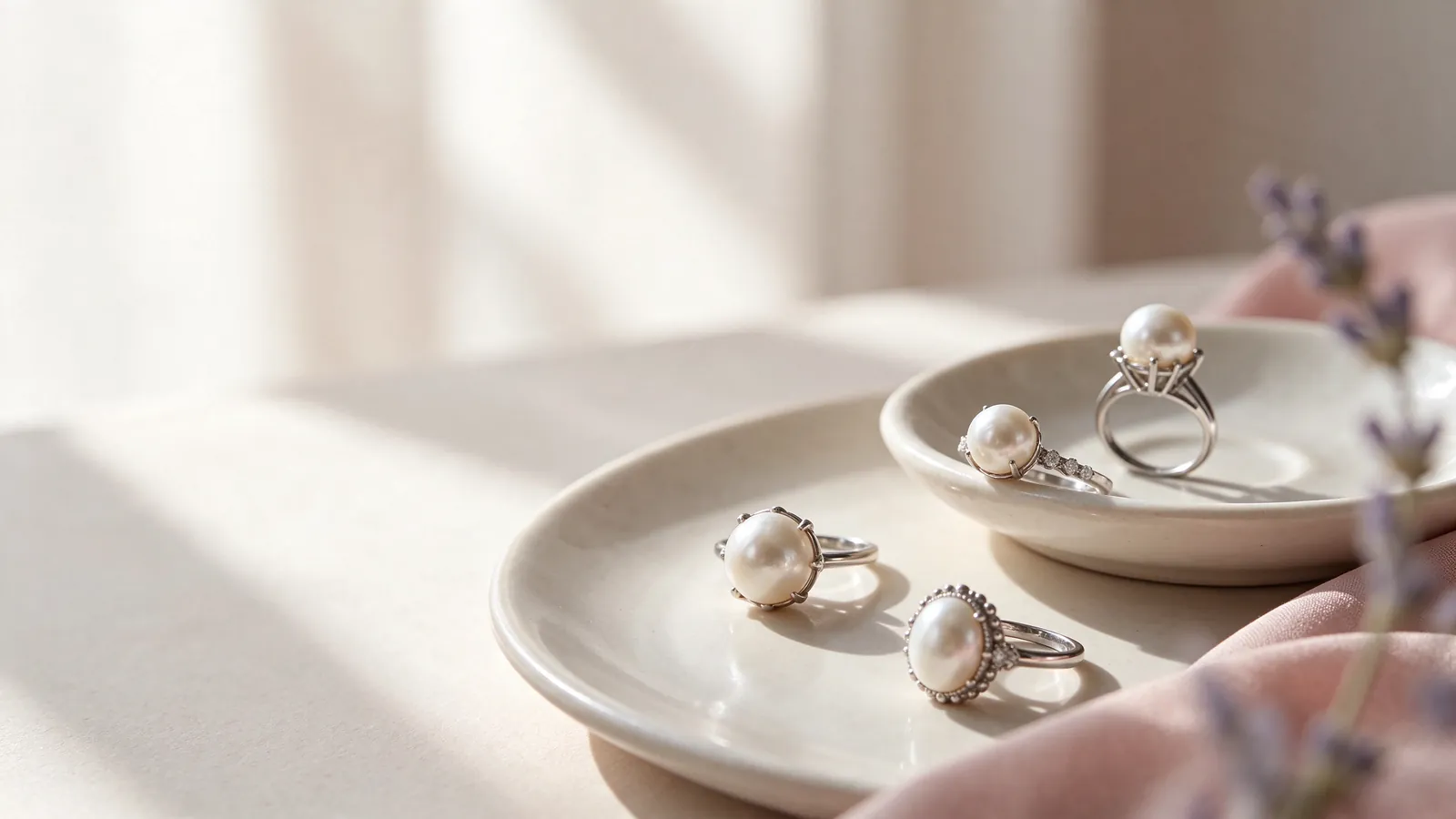
How do the pearl and its surround balance in a pearl halo ring, whether described as a diamond halo pearl ring or a halo setting pearl ring?
Start with the visual hierarchy: do you notice the pearl first, or does the diamond border lead your eye? Neither preference is inherently better, but they produce different moods. A clearly defined surround can emphasise the pearl's outline, while a more prominent border gives the whole ring greater visual presence. Judge this on the hand as well as in a close-up. A magnified photograph can make the border seem more dominant than it does at normal viewing distance.
The expressions pearl halo ring, diamond halo pearl ring and halo setting pearl ring overlap as design descriptions. They do not, by themselves, establish a pearl type, dimensions or diamond specification. Look instead at continuity around the centre, the space between visual elements and the transition into the band. If you are still choosing a general silhouette, pearl rings Hong Kong provides a broader starting point for comparing a halo with other ring styles.
How should you assess height and fit in a pearl halo ring, diamond halo pearl ring or halo setting pearl ring to complement those proportions?
Check the side view before concentrating on ring size. Note where the pearl, surround and band sit, then gently bend your fingers and mimic holding a handbag. A ring that fits around the finger can still feel awkward if its upper structure touches a neighbouring finger. Repeated rotation also deserves a discussion about balance, not simply a tighter size.
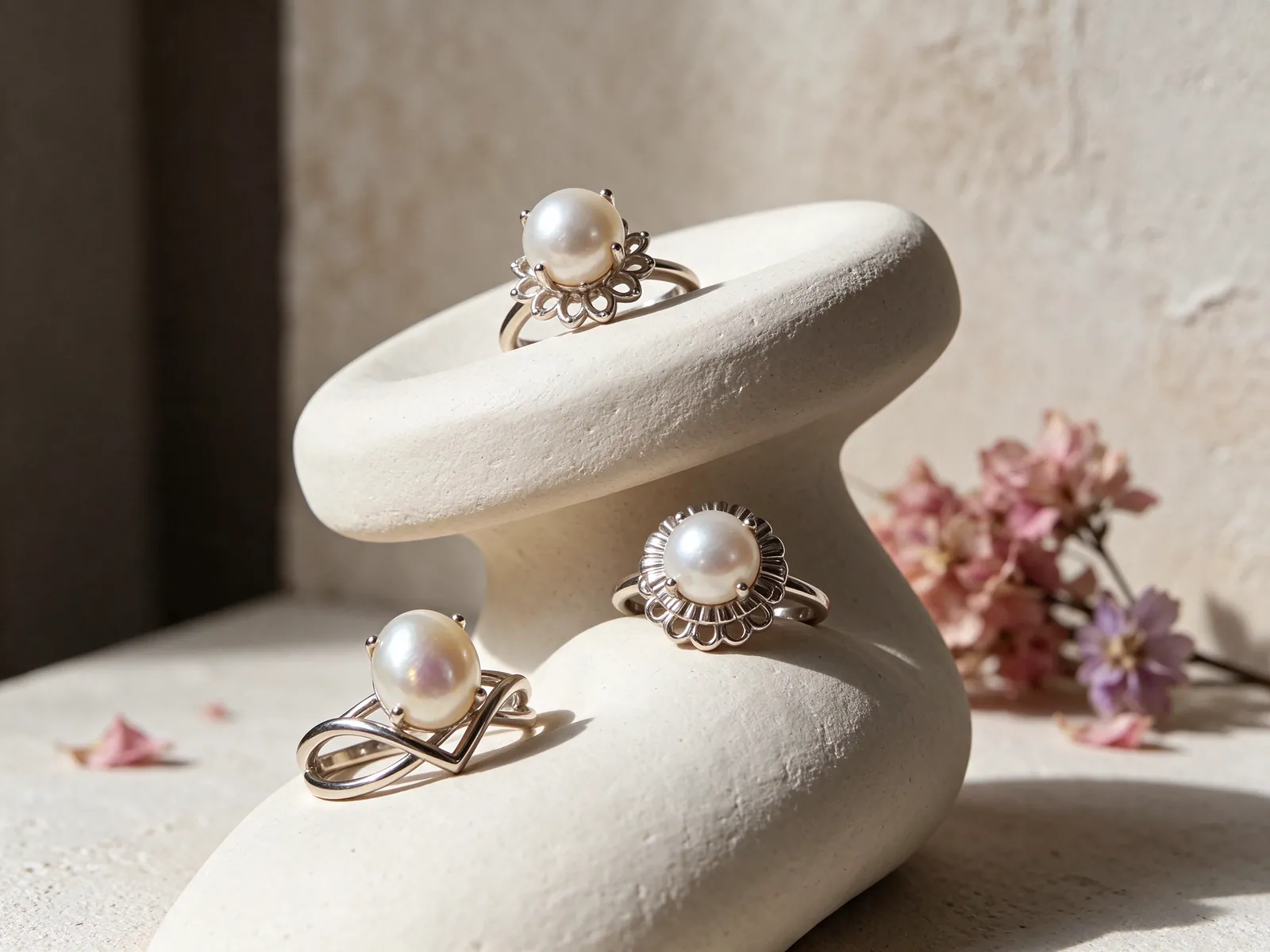
Separate a surrounding halo from pavé and side accents
Diamonds beside a pearl do not necessarily create a halo. They may sit along the shoulders, gather on one side or trace a complete border. When comparing a pearl and diamond ring, identify where the diamonds draw attention before deciding how formal the design feels. Side accents can leave the centre relatively open; a continuous surround establishes a more explicit frame. This distinction helps you express whether you want a defined outline or simply a touch of contrasting sparkle.
Halo describes a layout around a centre, whereas pavé refers to the closely set diamond effect. The concepts can overlap, but they are not interchangeable. A pavé pearl ring may place that effect on the band rather than around the pearl. For a less enclosed composition, compare the directional line of a crescent moon pearl ring. The useful question is not which name sounds more elaborate, but where the eye travels and how the edges interact with your hand.
Compare photographs with similar framing
Use a similar hand angle, viewing distance and lighting when comparing images. Do not treat a tightly cropped detail and a full-hand photograph as equivalent measures of size. Record the border shape, distribution of sparkle and band transition you prefer; these observations communicate more than asking for a ring to be simply more glamorous.
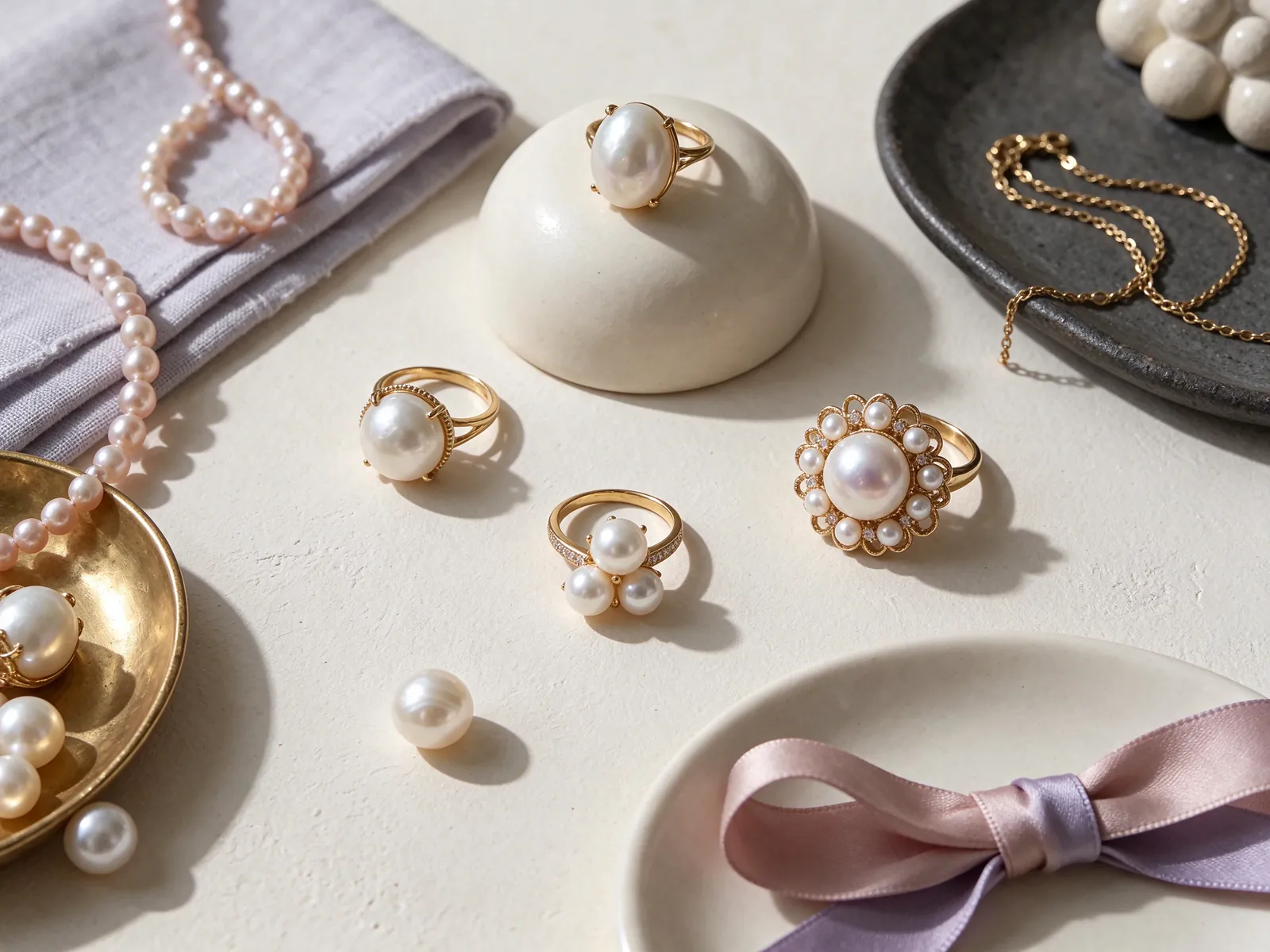
Evaluate the pearl independently of the diamond border
A sparkling frame should not replace a close look at the centre. Observe how clearly light reflects from the pearl, how its colour reads from different angles and how the visible surface contributes to the overall impression. GIA identifies seven pearl value factors: size, shape, colour, lustre, surface quality, nacre quality and matching in multi-pearl jewellery. They offer a useful framework for questions about the pearl, rather than a reason to infer quality from an ornate setting or a flattering photograph.
Shape affects how a border is read, too. A rounded outline can give a concentrated composition, while an elongated or irregular outline calls for a different relationship with its surroundings. If you are also researching an Akoya pearl ring or a South Sea pearl ring, keep the pearl information separate from your preferred halo outline. Appearance and colour alone cannot establish origin, natural-versus-cultured identity or certification. Read any descriptions or accompanying documents for the particular pearl rather than letting the setting name answer those questions.
Distinguish pearl lustre from surrounding sparkle
Under gentle lighting, look at the centre first, then the border, then the entire hand. This makes it easier to identify whether you enjoy the pearl's own reflections or the surrounding points of light. Nearby clothing and metal can influence photographic colour, so a screen image alone is not a reliable way to infer pearl identity or treatment.
Choose the band for your hand and daily movements
Avoid rigid rules about which finger shapes should wear a halo. Instead, assess the space around the ring face and the way the band supports its visual weight. A slim band may emphasise the centre, but the balance still matters; a broader band creates a different contact area and feel. Distinguish passing over the knuckle from resting at the base of the finger. A size chosen only because it slips on easily may not give the settled fit you want.
Try ordinary, gentle movements: straighten your hand, bend your fingers and hold your phone as usual. Notice pressure at the band edges, contact with adjacent fingers and whether the face repeatedly turns to one side. For office wear, consider the ring's position while typing; for occasional banquet wear, include sleeves and handbag handling in your assessment. Do not pull fabric against the setting or knock it against a surface to test strength. Comfort should be assessed without stressing the ring.
Treat rotation as a fit-and-balance question
Occasional movement and constant sideways rotation are different experiences. Consider the hand's condition, the fit at the finger base and the distribution of weight before deciding what to change. Making the ring tighter is not automatically the answer, particularly where the knuckle and finger base need different allowances.
Use metal colour to connect the halo with your wardrobe
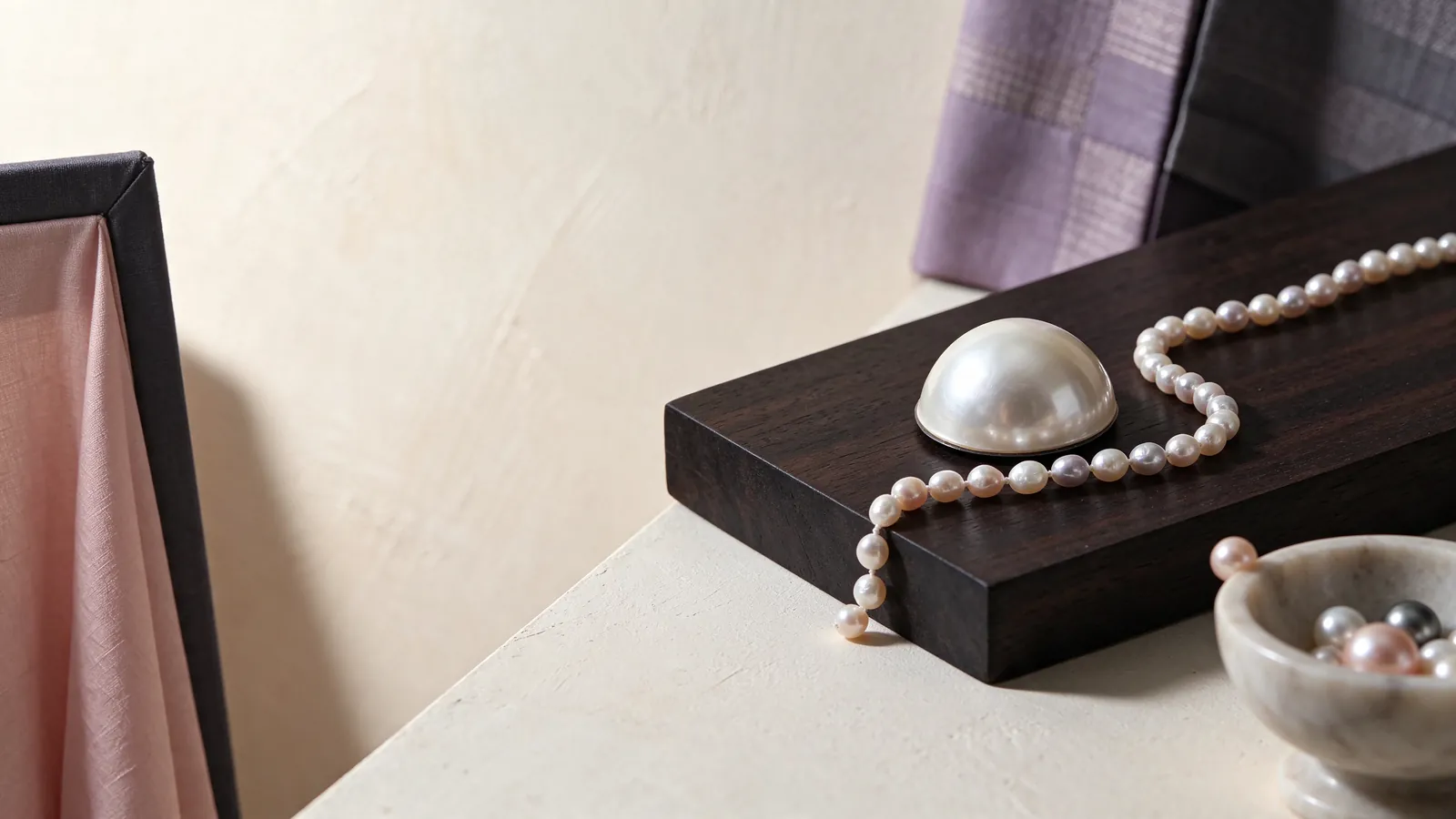
Metal colour changes the boundary between pearl and border. A white-toned frame can create a visually continuous outline with bright details; yellow gold brings a warmer contrast; rose gold can relate differently to soft pink or lavender clothing. These are styling directions, not a quality ranking. Compare the ring beside clothes you actually wear, such as an ivory blouse, a dark jacket or a patterned dress, rather than relying only on a warm-or-cool skin-tone label.
For a metal discussion, keep the options to 18K 750 white gold, 18K 750 yellow gold, 18K 750 rose gold, PT950 platinum and PT900 platinum. Also consider a watch, wedding band and favourite earrings. They need not all match, but clear hierarchy helps: let one item lead and another echo a colour or line. With mixed metals, the pearl can remain the soft visual anchor rather than asking every accessory to compete for attention.
Test a familiar outfit rather than an isolated colour swatch
A halo beside a plain blouse reads differently from one beside lace or sequins. Check whether the centre remains easy to see and whether the metal feels integrated with the sleeve and other accessories. The most useful colour is the one that supports your intended outfit, not one declared universally flattering.
Give the halo a clear role from workday to wedding banquet
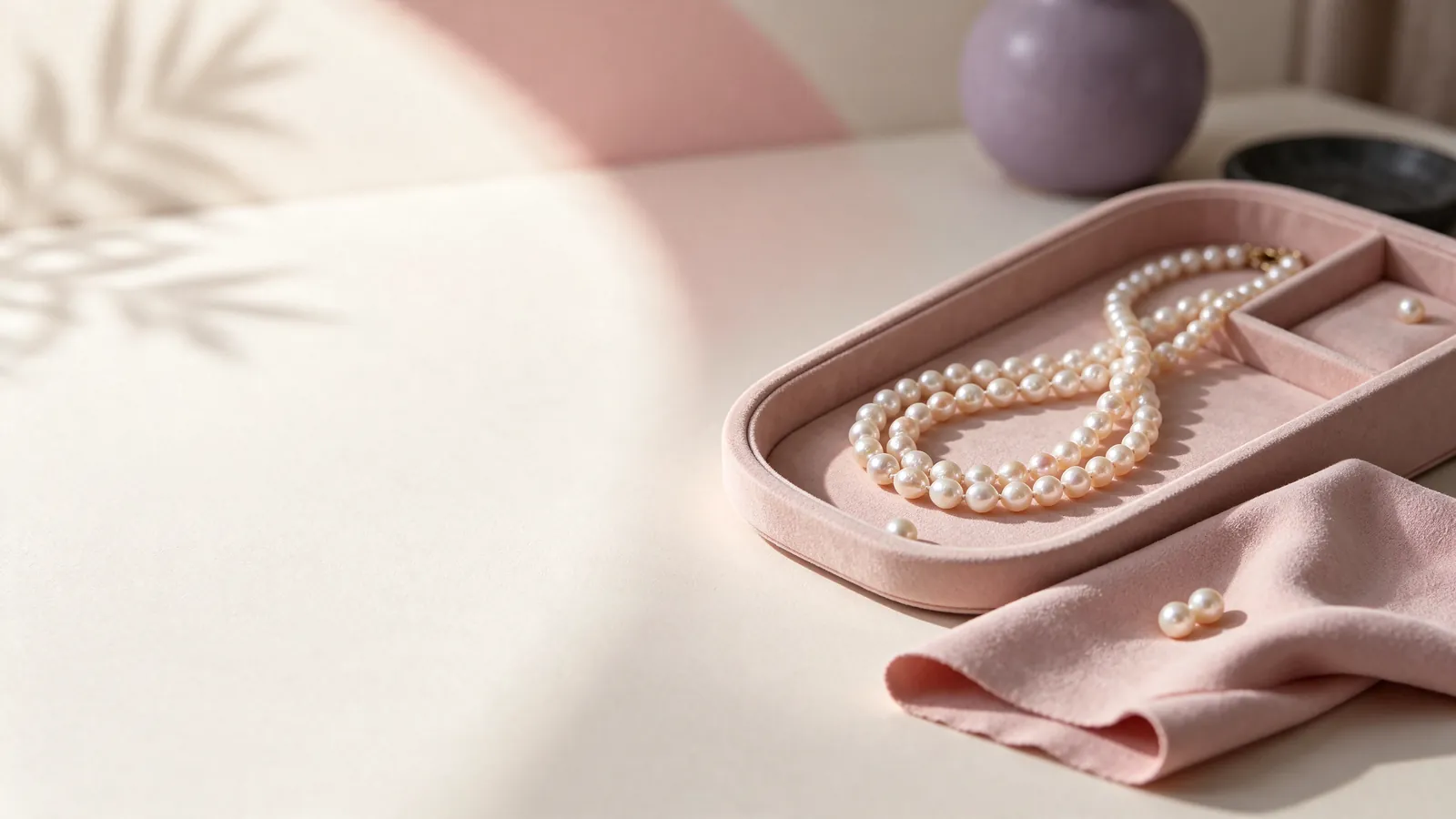
For a restrained daytime outfit, make the ring the main point of interest on the hand and keep other jewellery quieter. At a wedding banquet, start with the dress: an embellished neckline may need little additional sparkle nearby, while the ring supplies an independent highlight. Consider the whole outfit rather than increasing decoration everywhere. The contrast between pearl lustre and a bright border is easier to appreciate when surrounding accessories leave it room to be seen.
If you want a stronger focal piece, a statement pearl ring offers a useful comparison in overall shape and visual presence. For stacking, check whether another ring touches the pearl, surround or setting, including when your fingers bend. A high profile does not automatically mean a wedding band will sit comfortably beside it. Discuss both side silhouettes together instead of aiming for a flush appearance based only on a photograph taken from above.
Include sleeves and handbag hardware in the styling decision
Loose knits, lace cuffs and bag fittings create contact points worth noticing. Dress slowly around the ring and avoid using it to pull open a sleeve. These habits help you assess a suitable outline, but no halo should be assumed completely snag-proof or impact-proof simply because its border appears smooth in a photograph.
Let pearl care determine how you clean the complete ring
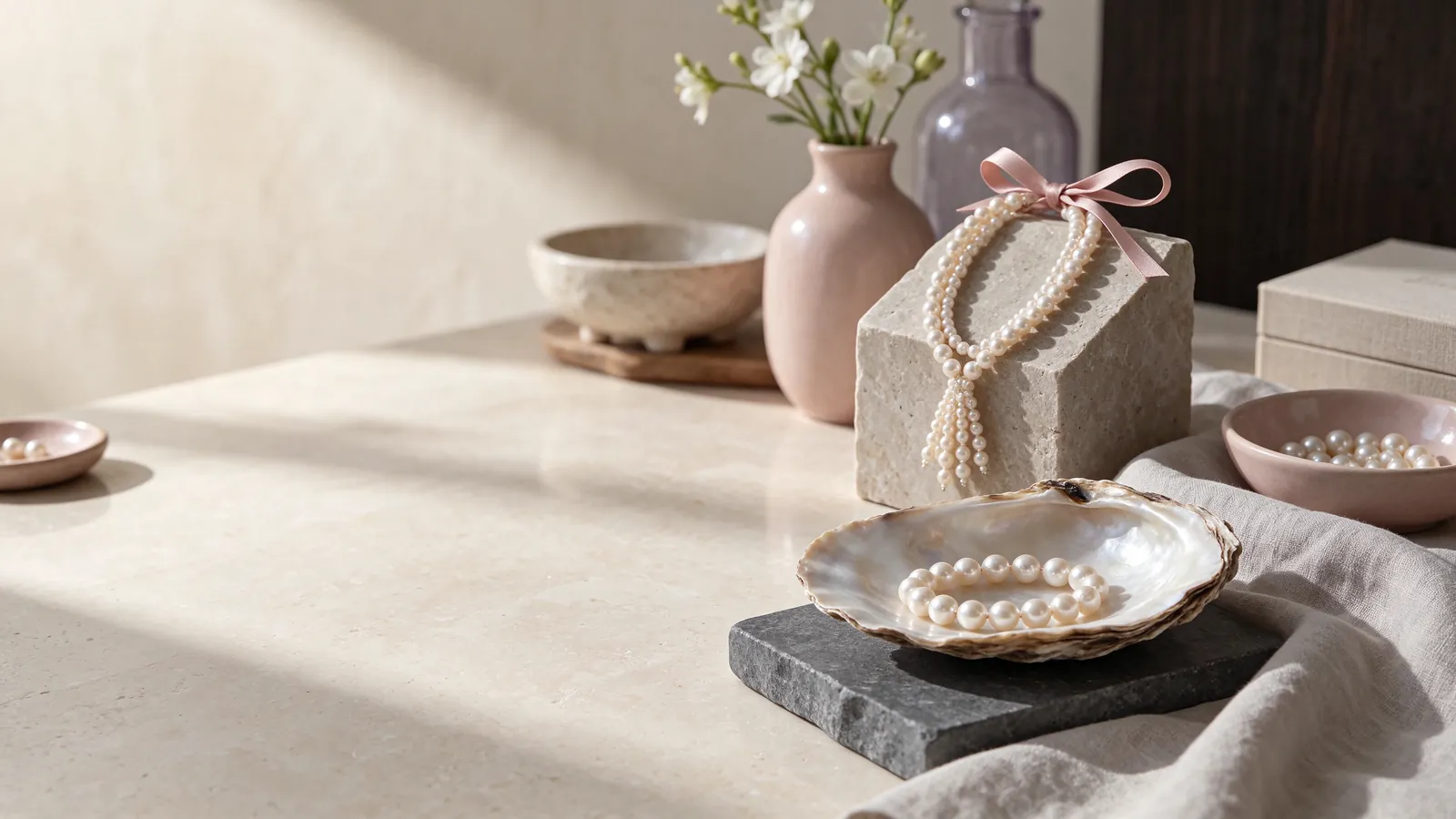
A diamond surround does not make the central pearl scratch-resistant. GIA places pearl at 2.5 on the Mohs hardness scale and says pearls should never be cleaned in ultrasonic or steam cleaners. The cleaning routine must therefore consider the pearl, not just the diamonds. After wearing, wipe gently with a very soft, clean cloth. Avoid abrasive rubbing and do not use a sharp tool to pick debris from beneath the pearl or between setting details.
Keep perfume, hair spray, acids and excessive heat away from pearls. Put the ring on after preparing your hair and fragrance, and remove it before household cleaning, exercise or tasks involving pressure on the hand. Store it separately from jewellery that could scratch the pearl; a neighbouring diamond ring should not rest directly against the centre. If you notice snagging, a loose component or a changed fit, stop wearing it and seek a jeweller's assessment rather than pushing the setting yourself.
Prepare specific preferences for a design conversation
Bring together your preferred centre-to-border balance, complete or open outline, usual sleeve styles and stacking intentions. Add the metal colour, band feel and side profile you find comfortable. This turns a general request for a halo into practical design priorities, while pearl and diamond information remain matters to read in their own descriptions. Discuss your preferred pearl, border, band and wearing feel with Flint Jewellery via WhatsApp, or call +85260106207.
| Area to inspect | What to compare | Wearing consideration | Question to ask |
|---|---|---|---|
| Centre and border | Pearl focus versus surrounding sparkle | Assess the full hand, not only a close-up | Which element should attract attention first? |
| Side profile | Position of pearl, surround and band | Notice sleeves and neighbouring fingers | Where does the structure project during movement? |
| Band and fit | Knuckle passage versus finger-base comfort | Check gentle phone-holding and finger bending | Is rotation related to size or balance? |
| Metal and outfit | Outline clarity and warm or cool contrast | Include watch, cuffs and familiar clothing | Which colour keeps the pearl visually central? |
| Care and storage | Pearl needs within a diamond-set ring | Avoid ultrasonic, steam and abrasive contact | Can I wipe softly and store the ring separately? |
Pearl knowledge and authoritative references
GIA places pearl at 2.5 on the Mohs hardness scale and advises against ultrasonic and steam cleaning. A diamond halo does not change the central pearl's care requirements.
Read the reference for this factFrequently asked questions
Does a halo need a visually wide diamond border?
No. The term describes a surround, not a fixed border width. Compare how clearly the pearl reads, the outer outline and the ring's presence on your hand. A more prominent border and a restrained frame serve different preferences rather than a universal better-or-worse rule.
Can pavé appear in a halo design?
Yes, the concepts can overlap. Halo describes the arrangement around a centre, while pavé describes a closely set diamond effect. Pavé can also appear on the band without forming a halo, so identify its position rather than treating the terms as synonyms.
Can diamond sparkle substitute for checking pearl lustre?
No. Look at the centre separately under gentle light, then assess the whole ring. Surrounding sparkle does not establish pearl quality, origin or identity. GIA's pearl factors offer a more useful framework for questions about the pearl itself.
Is a higher setting always better for wearing with a wedding band?
Not necessarily. Check the shape of both rings from the side and whether the other band contacts the pearl or setting during movement. Comfortable separation matters more than achieving a flush look in a top-view photograph.
Can I use an ultrasonic cleaner because the halo contains diamonds?
No. GIA says pearls should never be cleaned using ultrasonic or steam cleaners. Care for the complete ring with the pearl in mind, use a very soft clean cloth after wearing, and have difficult cleaning or loose components assessed by a jeweller.
Updated: