
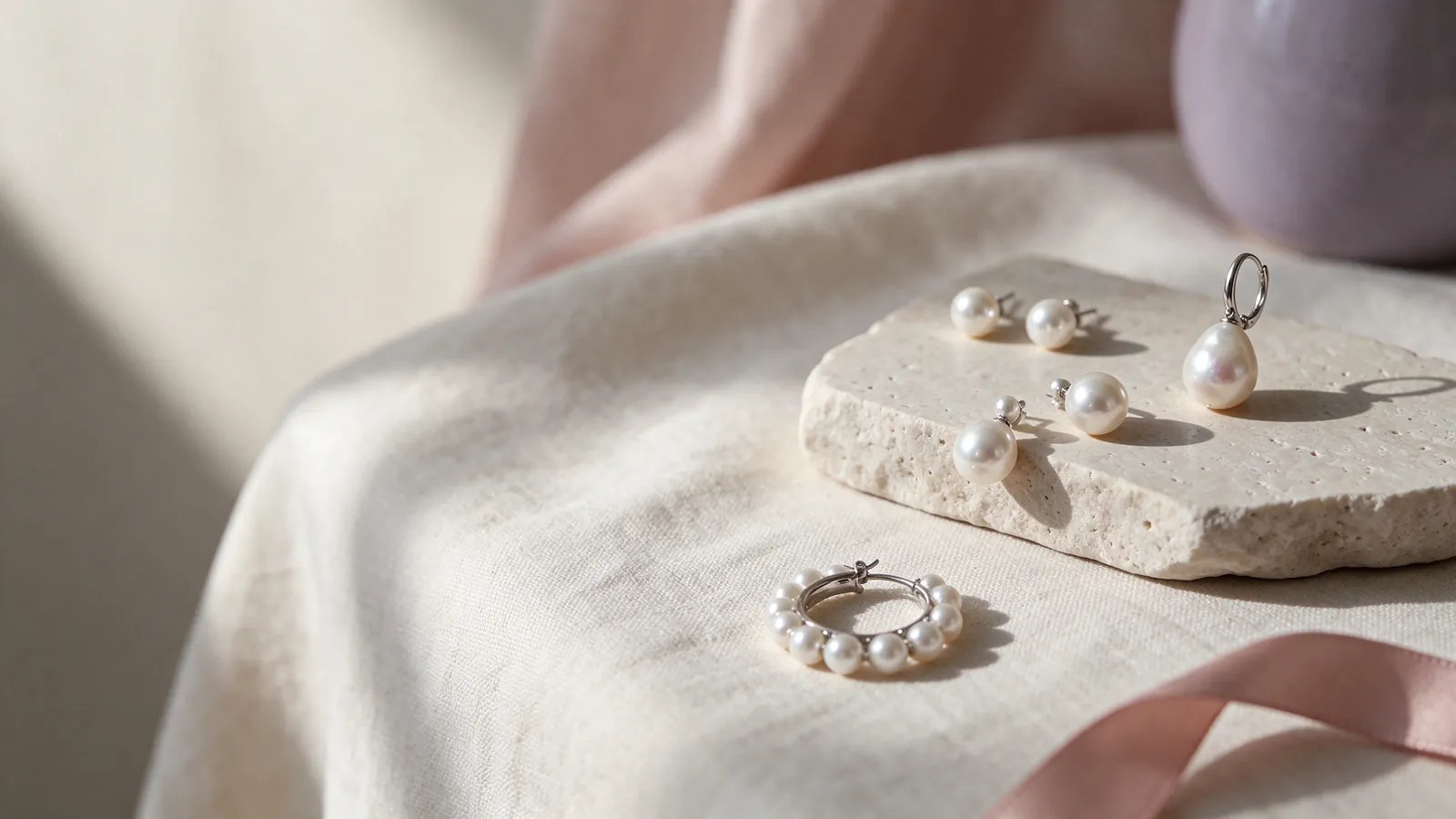
How do proportions shape the look of 14K gold pearl earrings and K14 pearl earrings, including 14k pearl studs?
When reading about 14K gold pearl earrings or K14 pearl earrings, separate the metal designation from the shape of the earring. The phrase 14k pearl studs describes a style, but it does not explain the position of the post or the profile of the setting. Begin by deciding whether you want the pearl to appear close to the lobe, frame the lobe or create a line below it. Those are design questions rather than conclusions drawn from a metal name.
Look at a front view, a side view and an angled view rather than relying on one enlarged photograph. The front shows the outline, while the side reveals how much of the setting is visible. For a wider starting point, pearl earrings Hong Kong can help you organise style preferences before narrowing the search. A pearl-led front and a visibly framed front may create different impressions even when the listings use similar material terminology.
Which pearl placements and fastenings should you compare in 14K gold pearl earrings and K14 pearl earrings, especially 14k pearl studs?
Ask where the post joins the setting and whether that point sits behind the centre of the pearl. Then ask how the fastening closes and which part should be held during removal. These details help explain the construction without guessing from a front photograph. Someone else's wearing image can illustrate a silhouette, but their piercing position and ear shape cannot establish how the same construction will sit on you.
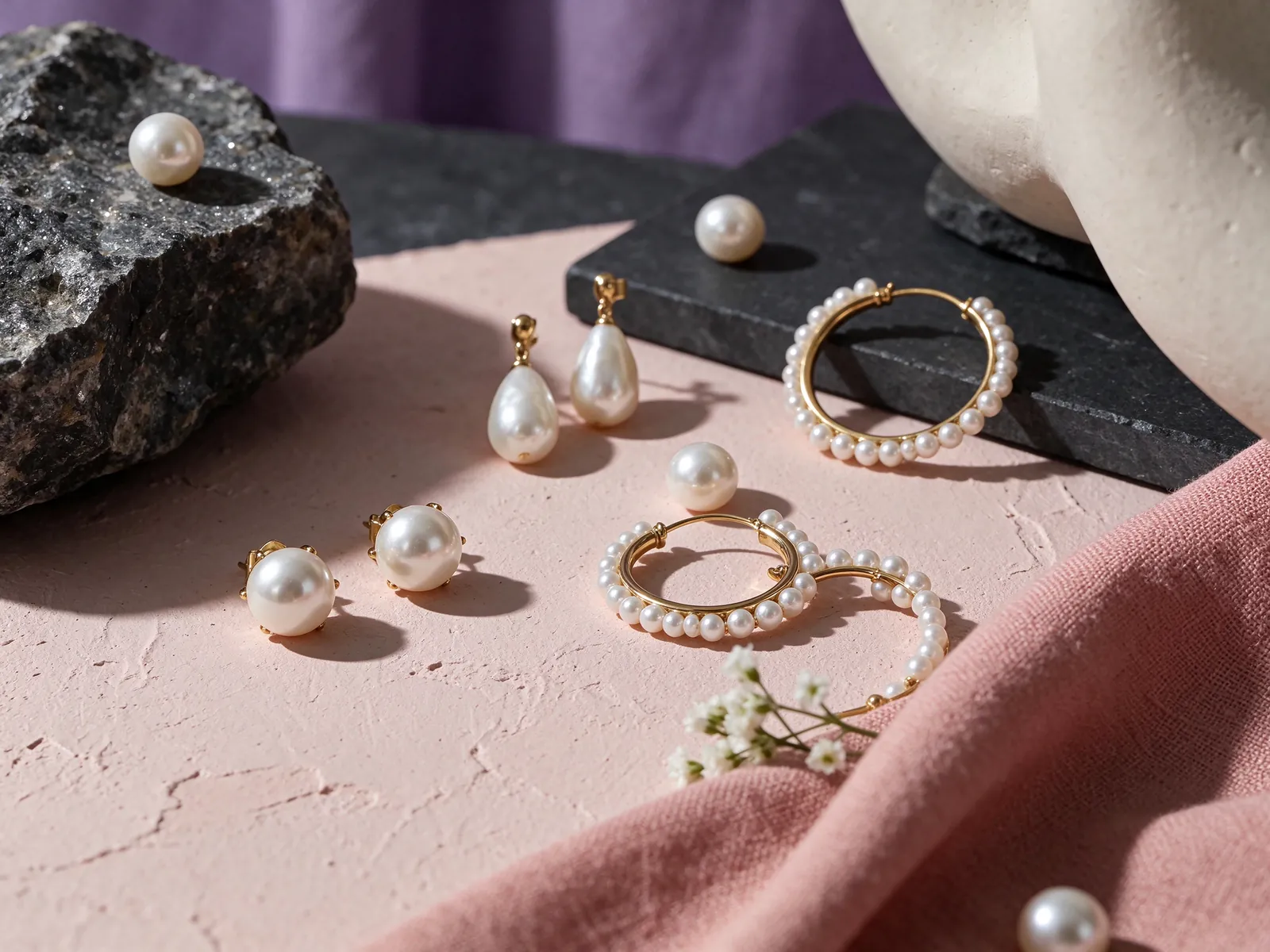
Read the designation alongside a component description
A short product title is not a complete description of every component. Read the separate information for the post, setting and back where it is provided. Useful questions include which part the metal designation describes, whether the back is supplied as the matching component and whether a rear view is available. The guide to pearl earring back types helps you compare the fastening separately from the metal label and ask how it works with the individual post.
The same reading method applies when comparing 10K gold pearl earrings: establish the designation, understand the components and then consider the wearing arrangement. Do not turn a metal name into a ranking of fastening security or personal comfort. If jewellery has previously caused irritation, find out about the parts that actually contact your skin and seek suitable professional advice for your circumstances. A label alone cannot establish suitability for every sensitive ear.
Keep three separate lines in your comparison notes
Write down the stated designation, the component description and the seller's actual answer about care or replacement parts. Leave an unanswered question open rather than filling it with an assumption. Similar-looking backs are not enough to establish interchangeability. Before replacing or swapping a back, ask about compatibility with the individual post instead of choosing solely for a matching appearance.
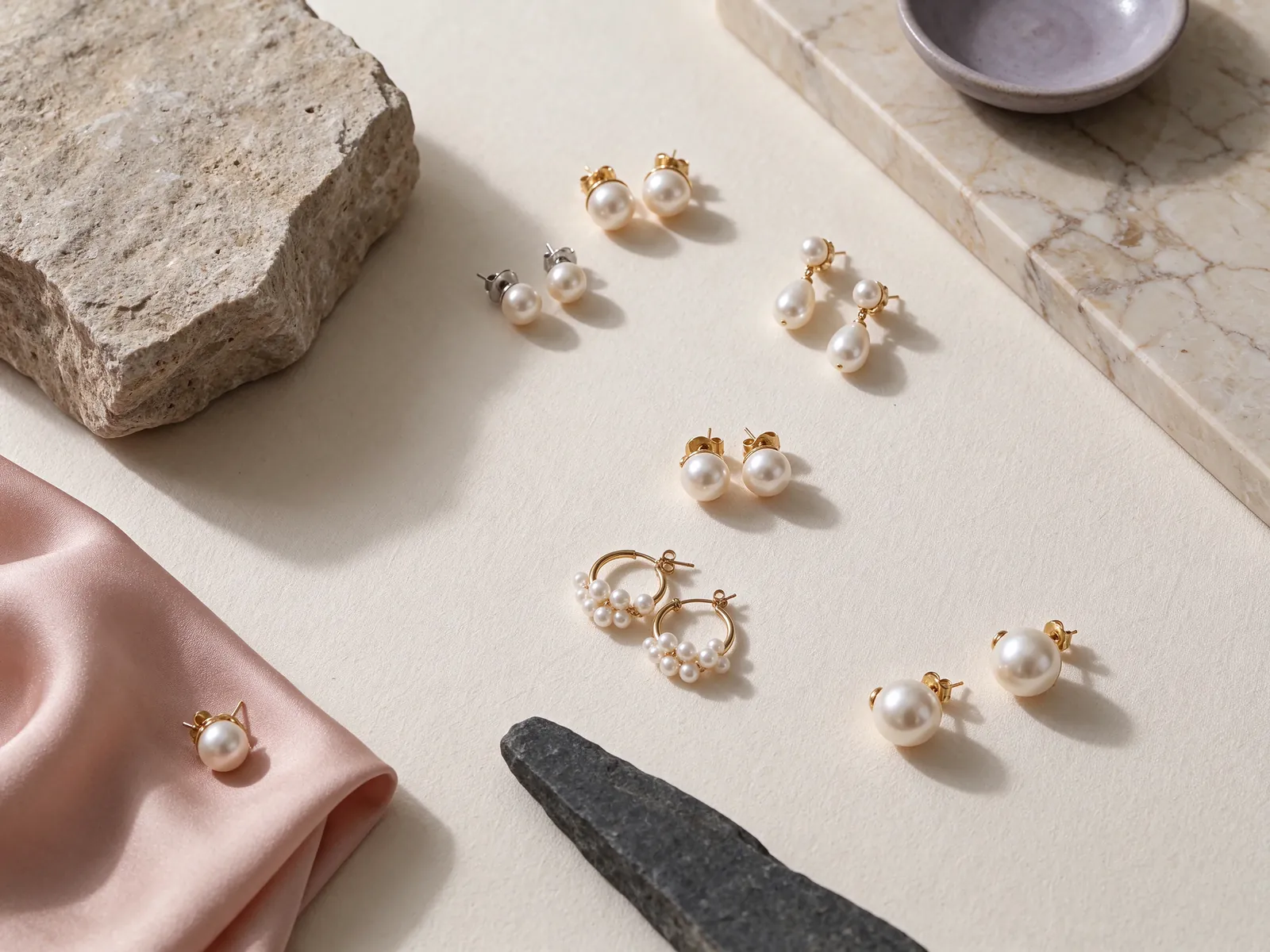
Judge placement and pair matching under comparable light
The centre of a pearl and the attachment point behind it need not occupy the same position. This makes the location of the piercing relevant to the visible silhouette. Start with pearl stud earrings to understand the close-to-lobe style, then look at the actual post placement of a particular pair. Observe both ears if trying earrings on; your two piercings and lobes may not present an identical outline.
Lighting also changes what a photograph emphasises. A bright front reflection may draw attention to lustre, while angled light can make contours more noticeable. Compare views taken under reasonably similar conditions before judging how well a pair matches. GIA describes seven pearl quality factors: size, shape, colour, lustre, surface quality, nacre quality and matching. The earring's metal designation cannot substitute for these separate aspects of the pearls themselves.
Observe straight ahead, turning and from the side
During a permitted try-on, look straight ahead, turn gently and inspect a side view. Notice whether the setting becomes more prominent as the angle changes. Visible metal is not automatically a flaw: some people prefer a defined frame, while others want the pearl to dominate. Use the observations to describe your preference, not to impose a supposedly perfect proportion on every wearer.
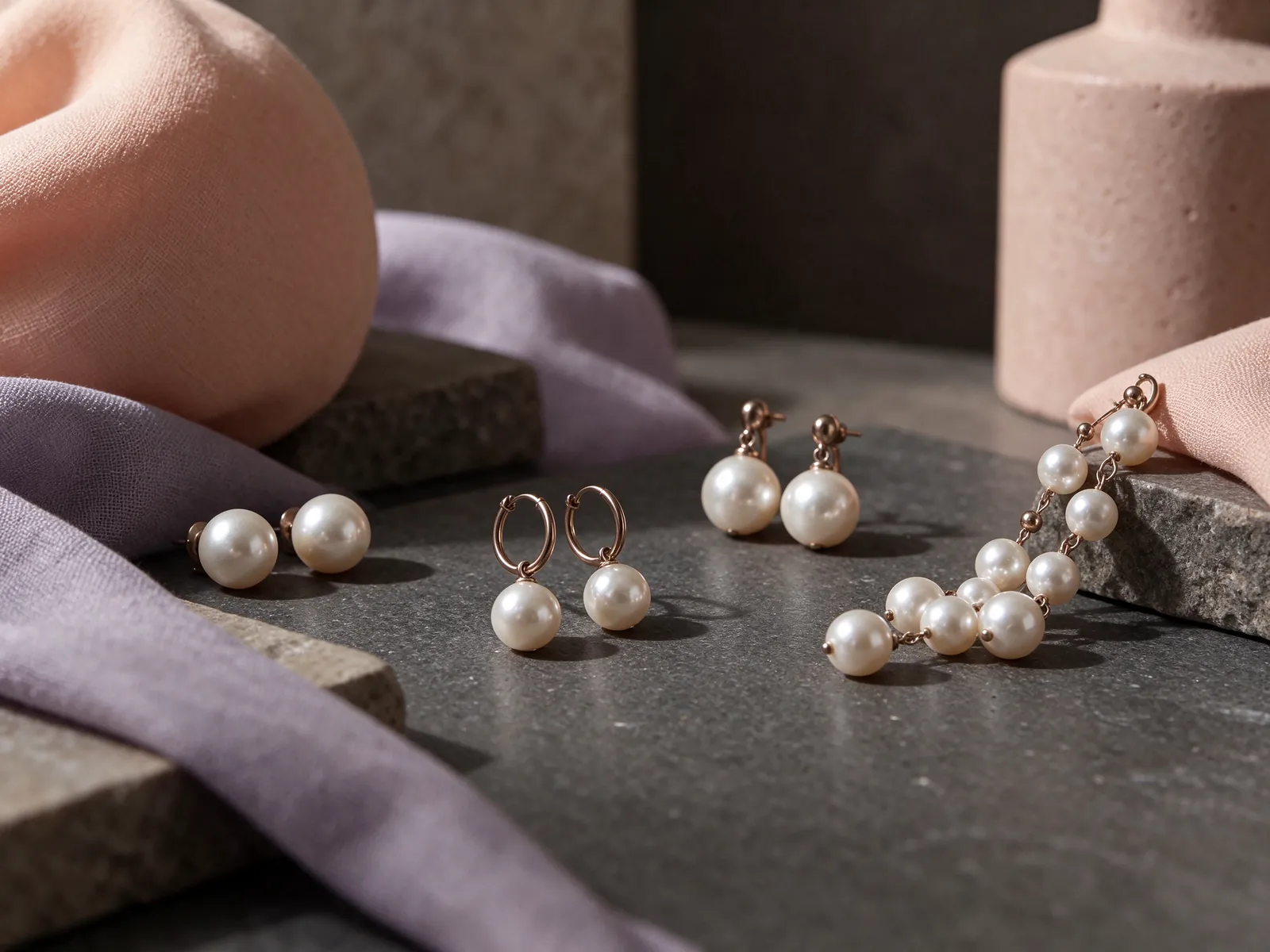
Compare fastening operation as well as the rear appearance
A back is a working part of an earring, not merely a detail hidden behind the ear. Ask how it engages, how it is released and where your fingers should hold it. A larger-looking back is not automatically more comfortable than a smaller one. The contact area, the post arrangement and your own lobe all matter. If the fit feels pressurised, do not treat pushing the back tighter as a universal solution.
Think about your routine as well. Someone changing earrings frequently may prioritise an operation they can handle clearly and steadily. Someone choosing a different silhouette may need to understand the moving parts first. Reading pearl studs vs drops vs dangles helps separate style categories before comparing their fastening details. Neither a stud nor a drop is the right answer for every working day; the relevant question is how its structure relates to your movements.
Identify a metal holding point before removing the back
Follow the instructions for the individual fastening. Avoid using the pearl as a pulling point, and do not twist it or bend the post to release a stuck component. Pause and ask for appropriate help if the operation is unclear. When putting the pair away, account for both earrings and their backs so that small parts do not become mixed with unrelated jewellery.
Plan the silhouette around collars, glasses and hair
For a Hong Kong office wardrobe, assess earrings alongside the clothes and accessories you actually use. A shirt collar, scarf or high neckline changes the open space around the ear. Glasses add another line beside the face, while tied-back hair reveals more of the side setting. The guide to everyday pearl earrings can help organise these situations so that your choice reflects the whole outfit rather than an isolated close-up.
A detailed neckline may suit a simpler ear outline if you want to keep the focus on the clothing. A plain top gives you another way to make the earrings more noticeable. These are styling options, not rules based on age or face shape. Compare the actual garment near your face in natural light where possible, since heavily edited images can alter the apparent colour of both fabric and pearl.
Think through the actions of an ordinary day
Consider putting on glasses, answering a phone, changing an outer layer and arranging your hair. During a try-on, gentle movement may reveal nearby contact without pulling on the earring. Equipment worn close to the ear deserves its own space check. This is not a test proving that earrings suit every activity; it helps identify moments when removing them may be the more practical choice.
Narrow the design brief before discussing a material direction
Use a comparison table to record the designation, pearl placement, visible side setting, fastening operation and intended outfit. Enter only what you have actually been told or shown. If your preferred line sits below the lobe rather than against it, pearl drop earrings may be a more useful next topic than another search for similar stud names. Changing the silhouette can address a design preference that changing the search terminology cannot.
This page uses 14K terminology to explain design reading. A discussion with Flint Jewellery can instead consider 18K 750 white gold, 18K 750 yellow gold, 18K 750 rose gold, PT950 platinum or PT900 platinum. Begin with your preferred placement, the amount of visible metal and the clothing you expect to wear. These directions do not establish the availability of a finished pair or turn another seller's 14K listing into Flint product information.
Describe one detail to keep and one to avoid
For example, you may want a pearl-led front but less prominence from the side setting. Alternatively, you may prefer a line below the lobe while wanting to keep it clear of a high collar. State the preference alongside the occasion. An inspiration photograph can communicate appearance, but it cannot establish pearl identity, dimensions, price or a certificate for a design being discussed.
Care for the pearl separately from the metal designation
GIA places pearl at 2.5 on the Mohs hardness scale and says that pearls should never be cleaned in ultrasonic or steam cleaners. A substantial-looking post or setting does not make those methods appropriate for the whole earring. After wearing, use a very soft clean cloth and store the pair where it will not rub against other jewellery. For a particular cleaning problem, ask about the construction before choosing a method.
Keep perfume, hair spray, acids and excessive heat away from pearls. Arranging hair and applying perfume before putting earrings on makes the routine easier to manage, but it does not eliminate later contact. Everyday styling is not a promise of suitability for bathing, exercise or sleep. If the fastening changes or a setting seems loose, stop using the pair and seek appropriate attention rather than assuming a small adjustment will repair it.
Make putting the pair away a brief observation point
Wipe gently, account for the pair and its backs, then place the earrings separately from items that could rub against them. Notice any change in a setting or fastening and describe the specific part when asking for help. Keeping the designation, the construction and pearl care in separate categories gives you a reading method that remains useful beyond one 14K search. To discuss your preferred pearl placement and fastening with Flint Jewellery, contact us on WhatsApp at +85260106207 to explore an 18K gold or platinum direction.
| Aspect | Information to read | Wearing observation | Wardrobe consideration | Question to ask |
|---|---|---|---|---|
| Designation and components | Descriptions of post, setting and back | Do not infer contact parts from a title | Choose a silhouette before narrowing labels | Which component does the designation describe? |
| Pearl placement | Front and rear attachment views | Position relative to piercing and lobe edge | Front emphasis with hair tied back | Where does the post join the setting? |
| Side profile | Side and angled views | Visibility and prominence of the setting | Relationship to glasses and hairstyle | Can I see the construction from the side? |
| Fastening | Closing and release instructions | Finger access and contact with the lobe | Frequency of changing earrings | Which metal part should I hold? |
| Activity and care | Instructions for the individual construction | Nearby clothing or equipment | Order of hair styling and perfume use | What cleaning method suits this pair? |
Pearl knowledge and authoritative references
GIA places pearl at 2.5 on the Mohs hardness scale and says pearls should never be cleaned with ultrasonic or steam cleaners; a 14K or K14 earring designation does not change that pearl-care guidance.
Read the reference for this factFrequently asked questions
Does the K14 wording describe a different stud shape from 14K?
Not by itself. These are alternative ways of writing a gold designation. Stud shape, pearl arrangement, post placement and fastening need their own descriptions, so similar names can still accompany different constructions.
Can a front photograph tell me how far the pearl projects?
No. The pearl can hide the setting from the front, and camera angle affects the impression. Look for a side view and distinguish a pearl-led front from a construction that actually sits close to the lobe.
Should I swap the back if a stud appears tilted?
Do not assume that a different-looking back is compatible or will solve the issue. Piercing position, lobe shape and the individual construction also matter. Ask about the pair before replacing a component or tightening it further.
What matters when choosing earrings for glasses and a shirt collar?
Look at the side profile as well as the front. Consider whether putting glasses on or turning near the collar brings either accessory close to the earring. A stud label cannot establish clearance for every frame or garment.
Can I use a 14K search image to begin a Flint design discussion?
You can use it to describe a preferred silhouette, pearl position or amount of visible metal. Keep those appearance preferences separate from the other seller's product details. Flint Jewellery discussions concern the stated 18K gold or platinum directions, not a 14K product offer.
Updated: