
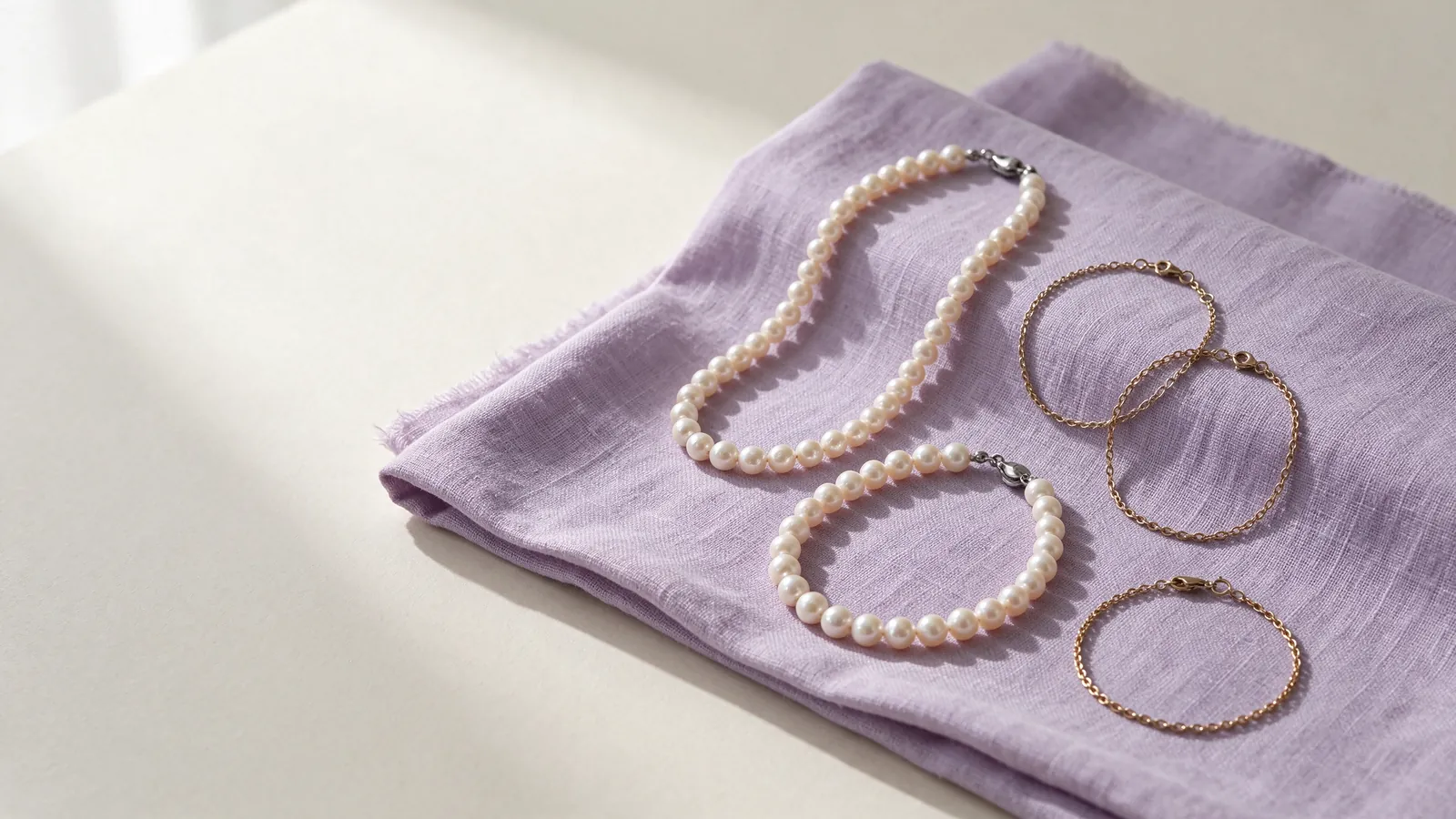
When reading “PT900 PT850 pearl bracelet” and “850 platinum pearl bracelet” descriptions, which labels refer to the chain or clasp?
The wording PT850 pearl bracelet can make a mixed description look more straightforward than it is. WSP uses PT900/850 in a bracelet description, but a slash does not explain how those labels relate to the visible chain, clasp or connecting components. Read the title alongside the individual item's component descriptions. Do not automatically assign PT900 to the clasp and PT850 to the chain, or assume every small part has the same description as the most prominent part.
It helps to separate two questions: what is being described, and what do you want to wear? The first concerns component wording; the second concerns pearl spacing, chain proportions and comfort. The platinum pearl bracelet guide offers a focused starting point for those decisions. Flint Jewellery's platinum options are PT950 and PT900. Discuss a preferred appearance and structure within those options rather than treating another retailer's PT900/850 wording as a material choice for a Flint design.
After checking the component details in “PT900 PT850 pearl bracelet” and “850 platinum pearl bracelet” descriptions, what should you ask about wrist fit?
Measure around the intended wearing position with a flexible tape resting against the wrist without pulling it tight. Record whether you prefer a close outline or some movement towards the hand. Wrist circumference is not finished bracelet length: the pearl arrangement, clasp and way the bracelet curves can affect the fit. A bracelet you already enjoy wearing can be useful, provided you explain how you measured it and how loose it feels.
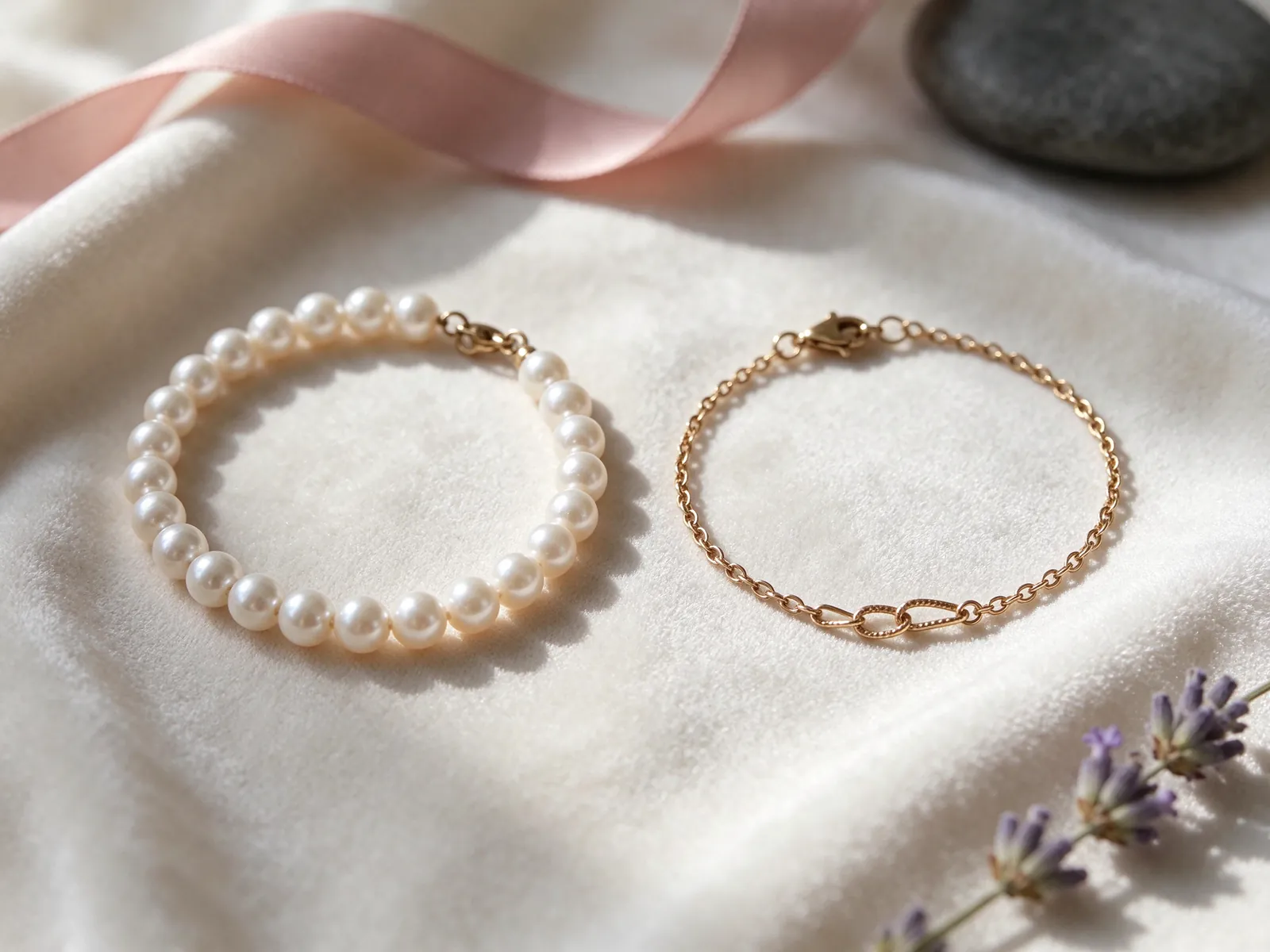
Why a chain, strand and multi-row bracelet need different fit questions
A pearl station bracelet leaves visible chain between pearls, whereas a continuous strand creates a different outline around the wrist. Compare the rhythm of the arrangement and how the clasp joins it, not simply the length printed in a description. A bracelet lying flat does not show exactly how its components will settle when worn. Ask about the closed wearing length and whether the clasp is included in that measurement before relating it to your wrist circumference.
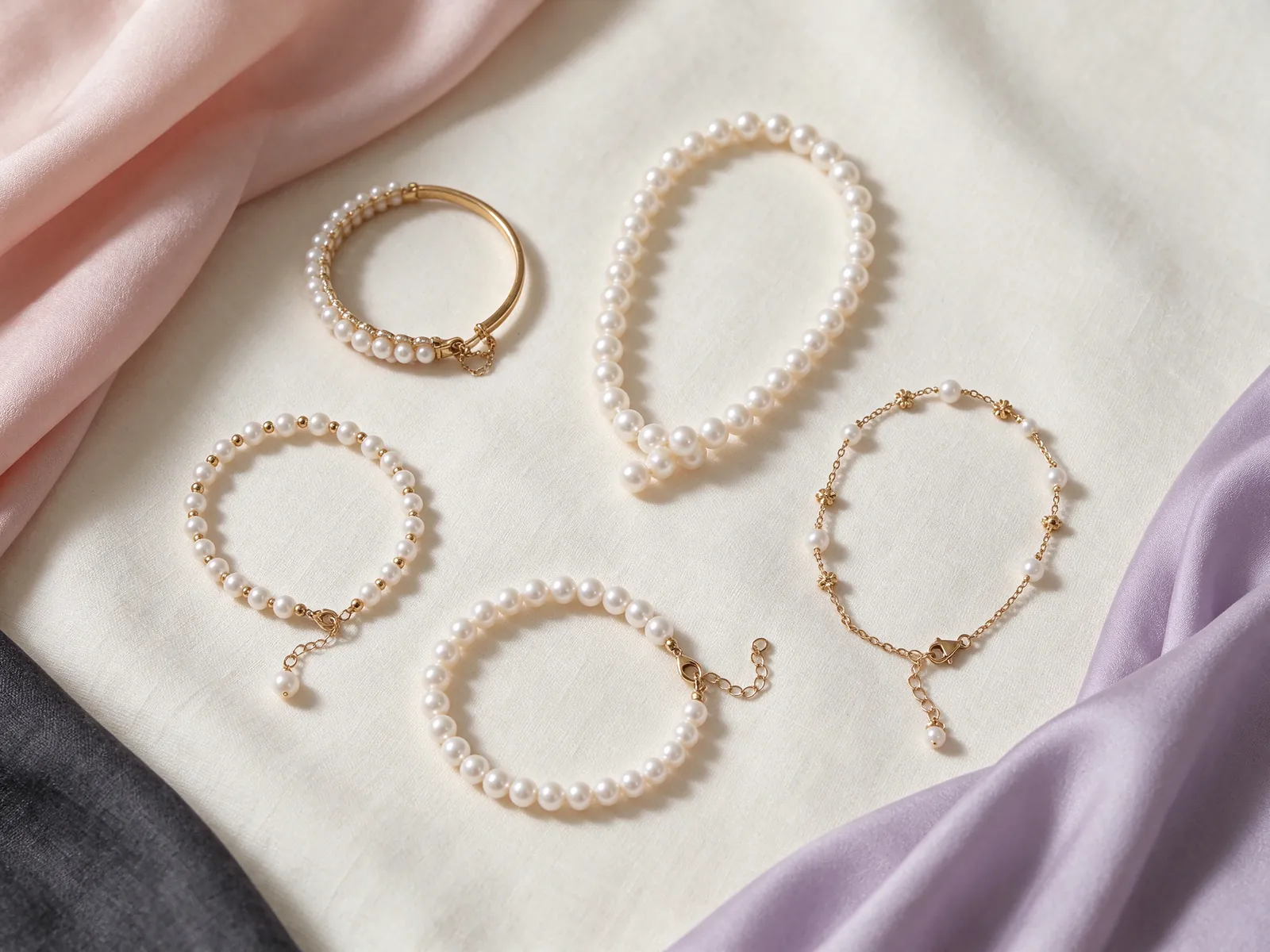
For a pearl strand bracelet, notice how the continuous line curves and whether it feels comfortable when the wrist bends. A multi strand pearl bracelet raises another question: do the rows lie smoothly together, or bunch when you turn your hand? Neither effect can be predicted from a PT850 label. An adjustable section, where present, also needs attention because the available fastening positions and the hanging end may influence your preferred fit.
Describe the fit rather than adding a universal allowance
Instead of assuming the same extra length suits everyone, explain what comfortable movement means to you. Do you want the bracelet to remain near the wrist, or move a little when your arm hangs down? Include any sleeve or watch considerations. For a gift, a familiar bracelet measured in a clearly explained way is more informative than estimating a wrist from someone's height or a photograph.
Read the pearls separately from the metal description
An 850 platinum pearl bracelet description is not a pearl quality grade. GIA identifies seven pearl value factors: size, shape, colour, lustre, surface quality, nacre quality and matching. For a bracelet, begin with the overall line of pearls and the way neighbouring pearls work together. Then look more closely at reflections and visible surface features. A bright photograph alone cannot settle all of these factors or establish the identity of the pearls.
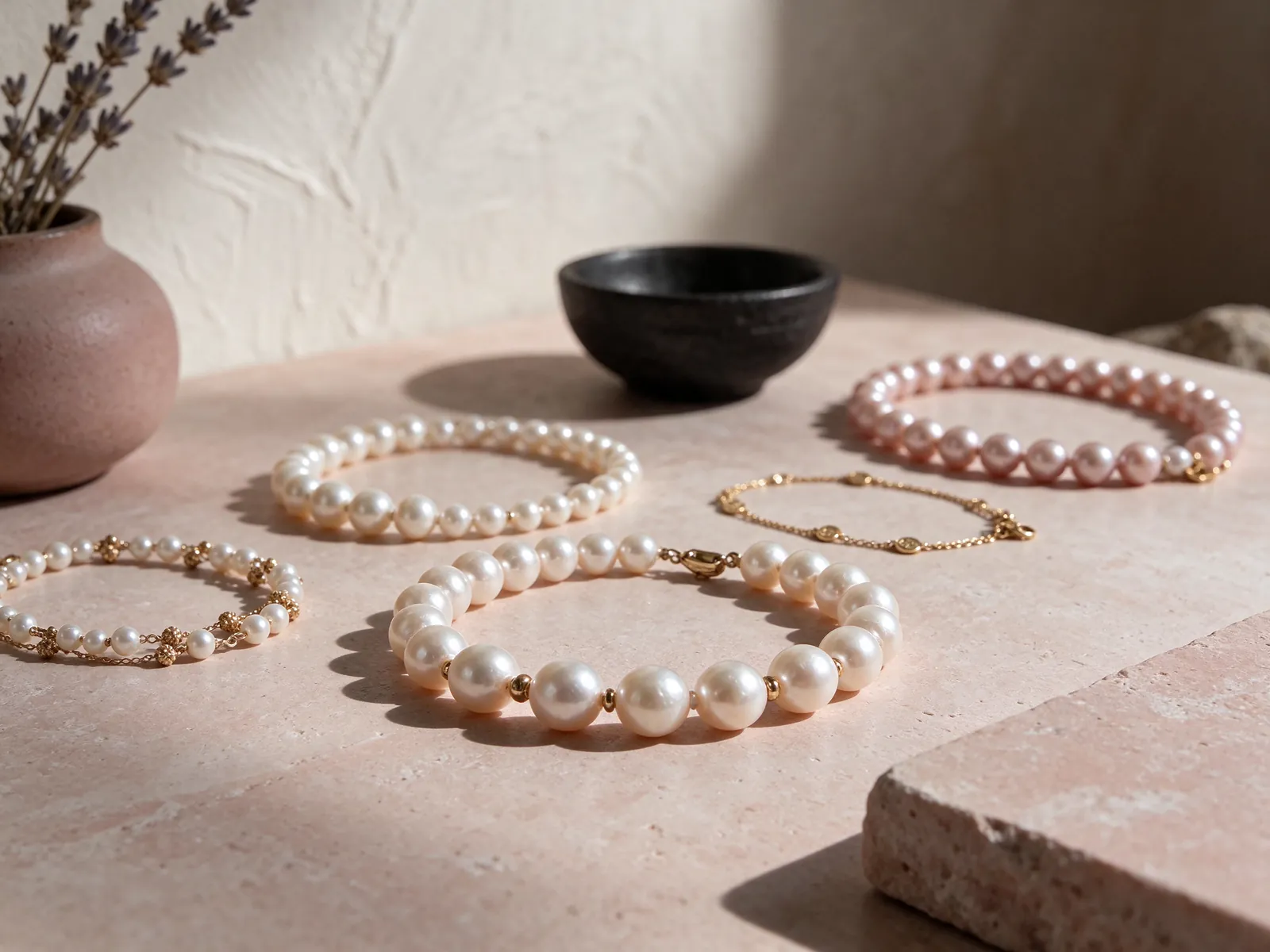
The amount of exposed chain changes the contrast around each pearl, and the surroundings can influence how colour appears. Compare the bracelet beside a sleeve you actually wear, looking at both the overall effect and individual pearls. Shape or colour alone does not establish origin, natural-versus-cultured identity or certification. If those details matter to your decision, ask for the individual item's description and any relevant documentation instead of inferring them from the metal name.
Choose between an even rhythm and deliberate variation
Matching is useful to discuss in visual terms. You may prefer a calm, continuous effect, or enjoy changes in outline and colour that create a more varied rhythm. Explain that preference rather than using the platinum label as shorthand for quality. View the arrangement from different angles; a harmonious bracelet does not require every pearl to look identical under every light.
Plan the space beside cuffs, watches and other jewellery
For office wear, think about the shirt cuff as well as the bracelet. A pearl bracelet should leave room for natural wrist movement without relying on a tight fit to stay visible. Check whether a narrow cuff pushes the pearls towards the hand or catches a hanging end. An evening outfit with a simpler sleeve may let the pearl arrangement stand out more clearly, while a detailed cuff may suit a quieter outline.
When wearing a watch, contact matters more than a matching metal description. Watch-case edges, chain links and raised details can touch the pearls as the wrist moves. Wearing the watch and bracelet on different wrists is one practical way to reduce direct contact. If you prefer stacking, observe where the pieces meet rather than judging only a posed photograph. Adding more jewellery is not necessary to make the pearls feel considered or complete.
Try the movements you make outside the mirror
Let your arm hang naturally, pick up your bag and pull your sleeve into place. Notice whether the bracelet shifts, the clasp turns underneath or the pearls meet another accessory. These movements give a more useful picture than holding the wrist still. If pieces repeatedly collide, change the arrangement or reduce stacking; a different platinum label does not remove physical contact.
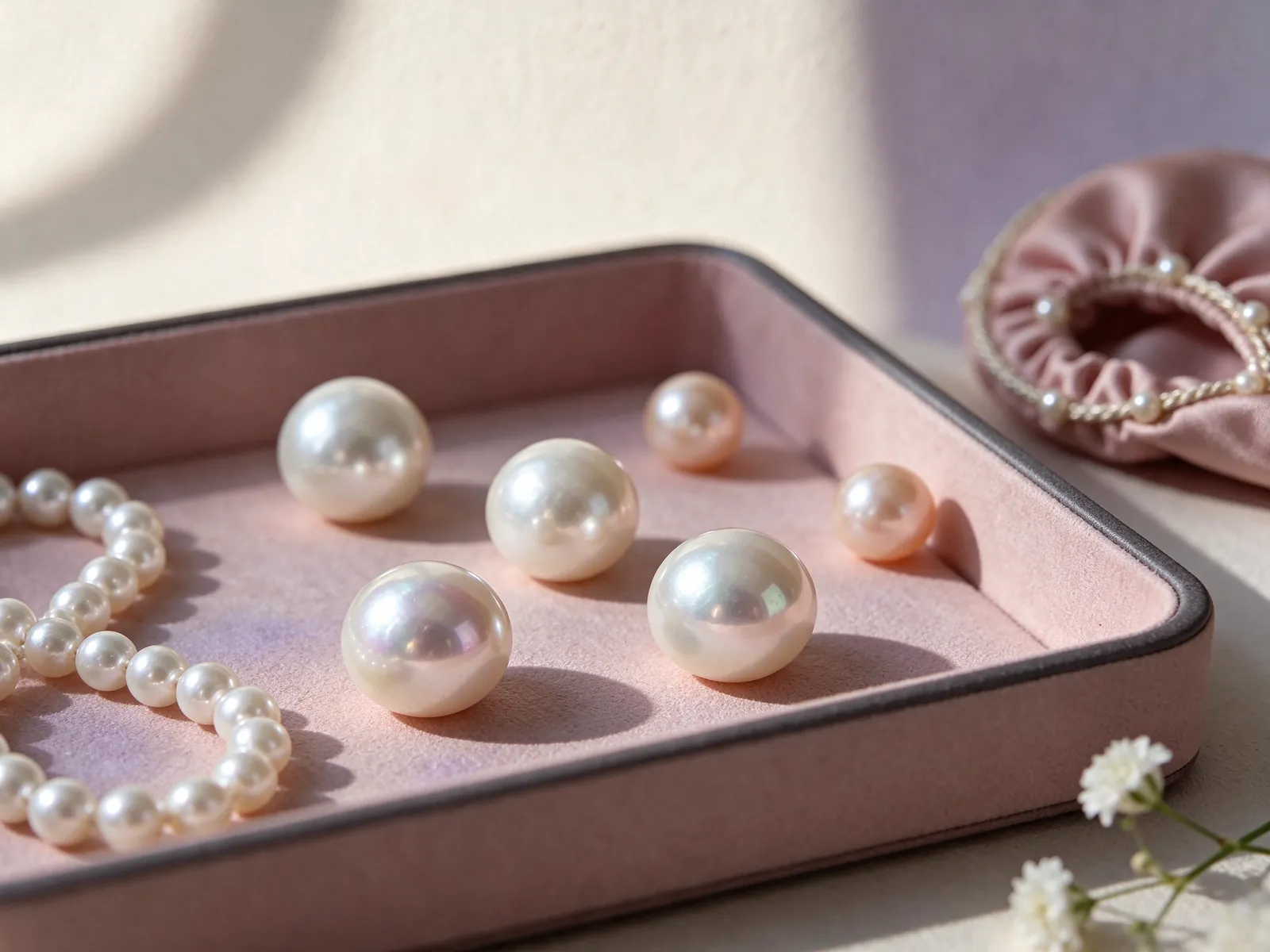
Assess clasp operation and comfort at your desk
A clasp needs to work with your habits. Look at whether the opening is easy to see, whether your fingertips can hold the components steadily and whether fastening pulls on the pearl arrangement. A small clasp is not automatically easier to operate, and a larger one is not automatically better. The useful question is whether you can open and close it without awkward force and understand when it is properly closed.
Rest your wrist in a familiar typing position and notice where the clasp or decorative components meet the desk. Then bend your wrist, hold your phone and reach into a pocket. If the bracelet turns repeatedly or the pearls gather on one side, discuss length and arrangement rather than assuming a particular metal label guarantees a stable fit. Comfort is a relationship between the structure and your movements, not something the title alone can promise.
For a gift, ask about habits without making assumptions
Alongside style preferences, find out whether the recipient normally fastens bracelets independently and what sleeves they wear most often. Someone new to bracelets may appreciate a discussion of practical operation as much as the appearance. These details help explain the desired clasp and proportions without guessing ability from age or assigning a standard fit to everyone.

Let pearl care guide cleaning of the whole bracelet
GIA lists pearl at 2.5 on the Mohs hardness scale and advises against ultrasonic or steam cleaning. A metal chain does not make those methods appropriate for the attached pearls. After wearing, use a very soft, clean cloth to wipe the pearls gently. Store the bracelet separately from pieces that could rub against it, rather than leaving it tangled with other chains or next to hard projecting details.
Avoid exposing pearls to acids, perfume, hair spray and excessive heat. Finish fragrance and hair-styling steps before putting the bracelet on, keeping sprays away from the pearls. Remove it before activities that create unnecessary chemical contact or friction. If strung pearls have been cleaned with water, GIA advises that the string must be completely dry before wearing; a dry-looking pearl surface does not establish that the string is ready.
Stop pulling if the clasp or connections behave differently
If a clasp sticks or a connection appears loose, do not force it or use pliers near the pearls. Put the bracelet down safely and describe the part that has changed to a suitable jewellery professional. The metal wording can help identify what you are discussing, but any handling decision depends on that bracelet's structure and condition rather than a general PT850 search term.
Turn the search into a focused design conversation
Search results can place different structures and metals side by side. A stainless steel pearl bracelet comparison is another description-reading topic, not a reason to transfer one item's component details to another. Write down what attracted you first: exposed chain, a continuous pearl line, a particular clasp appearance or a white-metal look. Then add the wrist measurement, wearing occasions and sleeve or watch considerations that will shape the conversation.
For a discussion with Flint Jewellery, start with PT950 or PT900 platinum options and explain the appearance and fit you want. Keep the material question distinct from the pearl arrangement and clasp question, so none is lost behind a short title. You can use WhatsApp at https://wa.me/85260106207 to explain your measurement method and preferred movement, together with the everyday situations in which you expect to wear the bracelet.
Finish with specific questions, not a label alone
Ask which components the description covers, how the closed length is measured, how the clasp operates and where the pearls sit during normal movement. Each question addresses a real choice. The term PT850 pearl bracelet can begin your research, but the individual description, structure and your own wearing preferences should guide the final discussion.
| Area | Read or observe | Useful question | Wearing consideration | Do not assume |
|---|---|---|---|---|
| Metal wording | Chain, clasp and connection descriptions | Which parts does each label cover? | Discuss the desired outline separately | The slash assigns every component |
| Fit | Wrist circumference and closed length | Is the clasp included in the measurement? | Room for wrist and sleeve movement | Wrist size equals bracelet length |
| Arrangement | Stations, a continuous strand or multiple rows | How does the arrangement settle when worn? | Bunching or movement to one side | Equal flat lengths feel identical |
| Pearls | Lustre, outline and matching | What appearance and identity details are described? | View beside a familiar sleeve | Metal wording is a pearl grade |
| Care | Pearls and any stringing | How should the bracelet be wiped and dried? | Keep sprays and rubbing away | Metal-only cleaning methods apply |
Pearl knowledge and authoritative references
GIA lists pearl at 2.5 on the Mohs hardness scale and advises against ultrasonic or steam cleaning; the presence of a metal chain does not override pearl-care needs.
Read the reference for this factFrequently asked questions
Does PT900/850 mean the clasp is definitely PT900?
Not from that wording alone. WSP uses PT900/850 in a bracelet description, but a slash does not assign the labels to the chain, clasp or connecting components. Read the individual component descriptions before making that distinction.
Can I discuss a PT850 bracelet as a Flint material option?
Flint Jewellery's platinum options are PT950 and PT900. You can explain the chain proportions, pearl rhythm and white-metal appearance you like, then discuss those preferences within the two platinum options rather than treating PT850 as a Flint choice.
Why is my wrist measurement not enough to choose the length?
It describes your wrist, not the finished bracelet. Pearl arrangement, clasp space and preferred movement affect the fit. Ask how closed length is measured and, if an adjustable section is present, which fastening positions can be used.
Is ultrasonic cleaning suitable because the pearls are attached to a metal chain?
No. GIA advises that pearls should never be cleaned in ultrasonic or steam cleaners. Use gentle routine wiping with a very soft, clean cloth, and allow any string cleaned with water to dry completely before wearing.
What should I check before wearing the bracelet beside a watch?
Observe direct contact during wrist movement and when adjusting your sleeve. Watch-case edges and chain links may touch the pearls. Separate wrists can reduce that contact; matching metal descriptions do not replace this practical check.
Updated: