
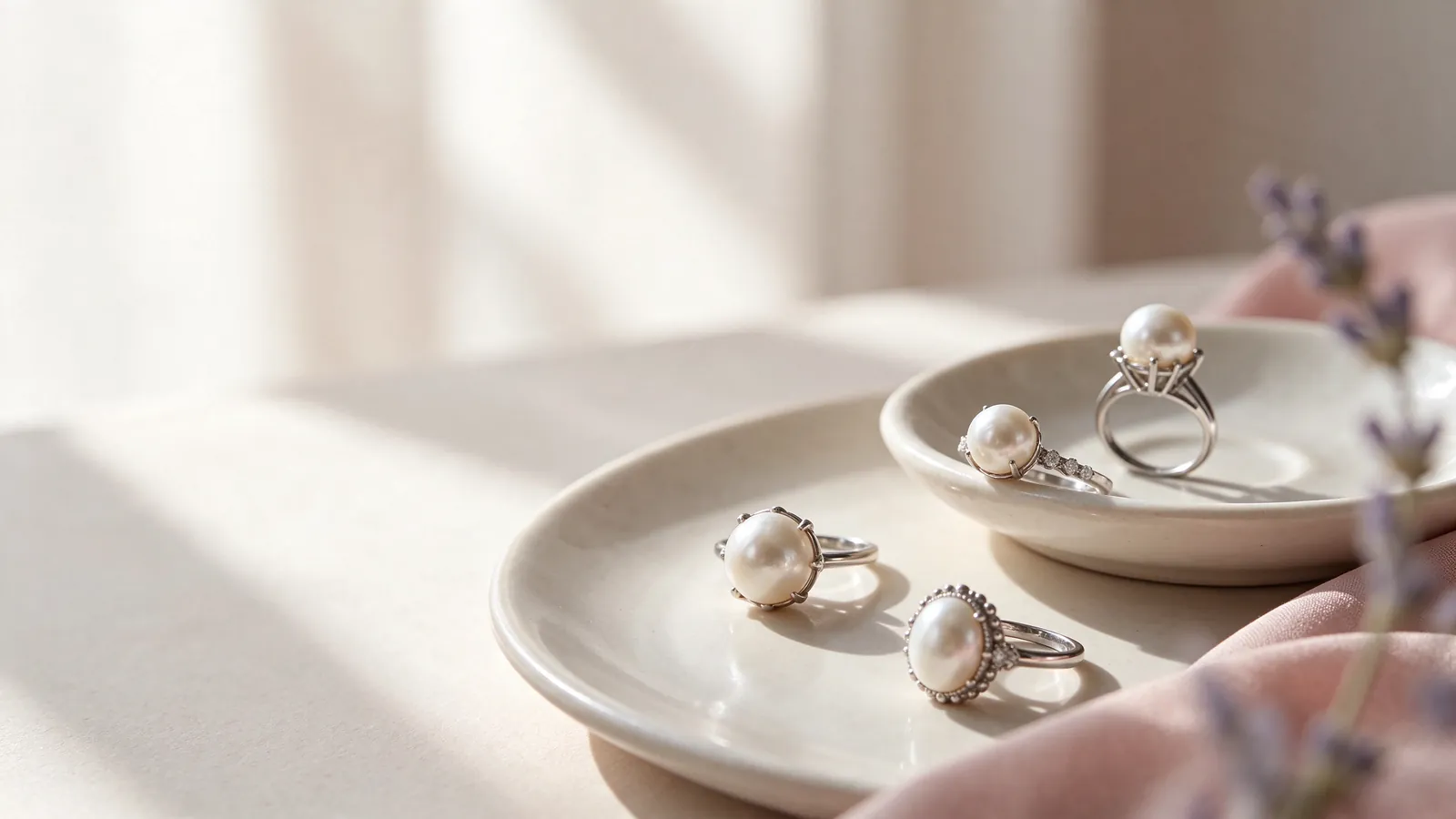
How do you balance pearl and diamond ring proportions when choosing a diamond accent pearl ring or pearl diamond ring?
Begin with the effect you want at an ordinary viewing distance. In a pearl and diamond ring, diamonds can lead the eye towards the pearl or become a prominent outline around it. Look at the ring on your hand before studying a close-up photograph: a bright display image can make the diamond arrangement seem more dominant than it feels in person. When using the pearl rings Hong Kong guide to compare styles, use a consistent hand position and similar lighting so that differences in framing are easier to separate from differences in presentation.
A diamond accent pearl ring need not create a narrow or understated silhouette. The placement of accents, the width of the shoulders and the visible space around the pearl all influence its character. Briefly cover the diamond-set area to see whether you enjoy the pearl itself, then uncover it to judge the partnership. Finger shape is a useful point of comparison, not a rule that dictates style. Notice where the ring sits between your knuckles and how much open skin remains around the face. Those relationships tell you more than a generic recommendation for long or short fingers.
How should a pearl and diamond ring fit, and what should you check when trying on a diamond accent pearl ring or pearl diamond ring?
Try a pearl diamond ring with your hand resting flat, then gently bend your fingers and hold your phone. Check the side profile, including the pearl support, rather than judging height from the top view alone. Persistent pressure, uncomfortable contact with a neighbouring finger or frequent rotation towards the palm deserves attention. A smaller size is not automatically the answer to rotation: the distribution of weight and the shape of the band also matter. Ask to compare the fit and structure together instead of accepting discomfort as part of the style.
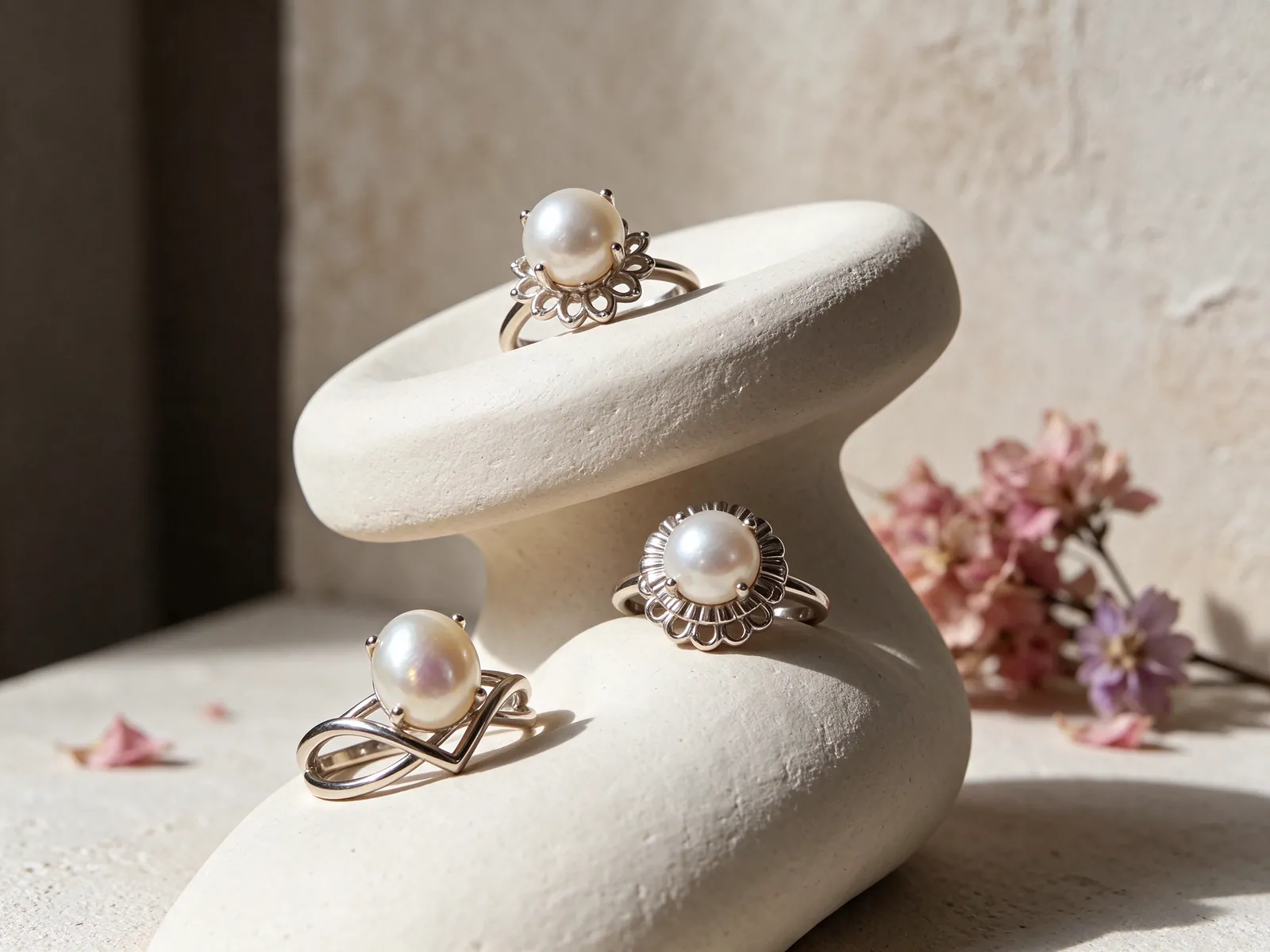
What changes when diamonds sit beside, around or below the pearl?
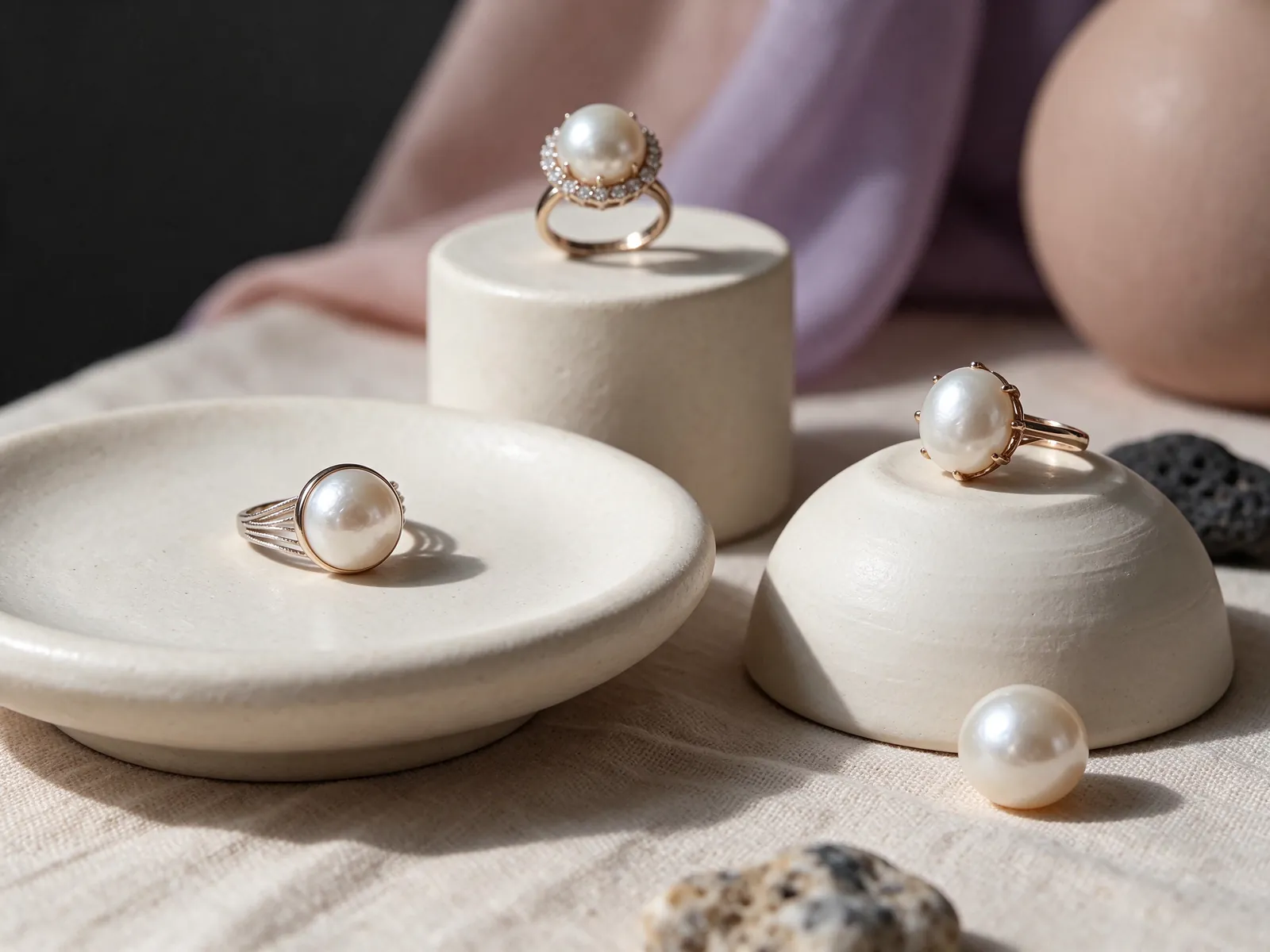
Side diamonds can create a path from the shoulders towards the centre while leaving the pearl outline distinct. A pearl halo ring creates a more visible perimeter, so examine the gap between the pearl and its diamond frame. Does the border support the pearl visually, or conceal more of its edge than you prefer? Compare the arrangement from above and from an angle. A larger-looking outline is a design effect, not proof that the pearl has a higher quality or belongs to a particular pearl type.
Diamonds along a band move some of the sparkle away from the centre. For a pavé pearl ring, look at how far the diamond-set section extends and where its edges meet adjacent fingers. Gently bring your fingers together rather than inspecting the setting only with your hand spread open. More stones do not, by themselves, tell you whether a ring feels comfortable. The actual setting edges, band width and contact points are more useful considerations, especially if fine knitwear or lace is part of your wardrobe.
Use an asymmetric curve to direct attention deliberately
A crescent moon pearl ring is a useful comparison when you prefer a sweep of detail rather than an even border. Look at which side remains open and how the curve leads towards the pearl. Turn your hand towards yourself and towards someone opposite you: an arrangement should make sense beyond its preferred photographic angle. If the design has a clear direction, try it facing both the fingertip and the wrist. Its relationship with a cuff may change noticeably even though the components remain the same.
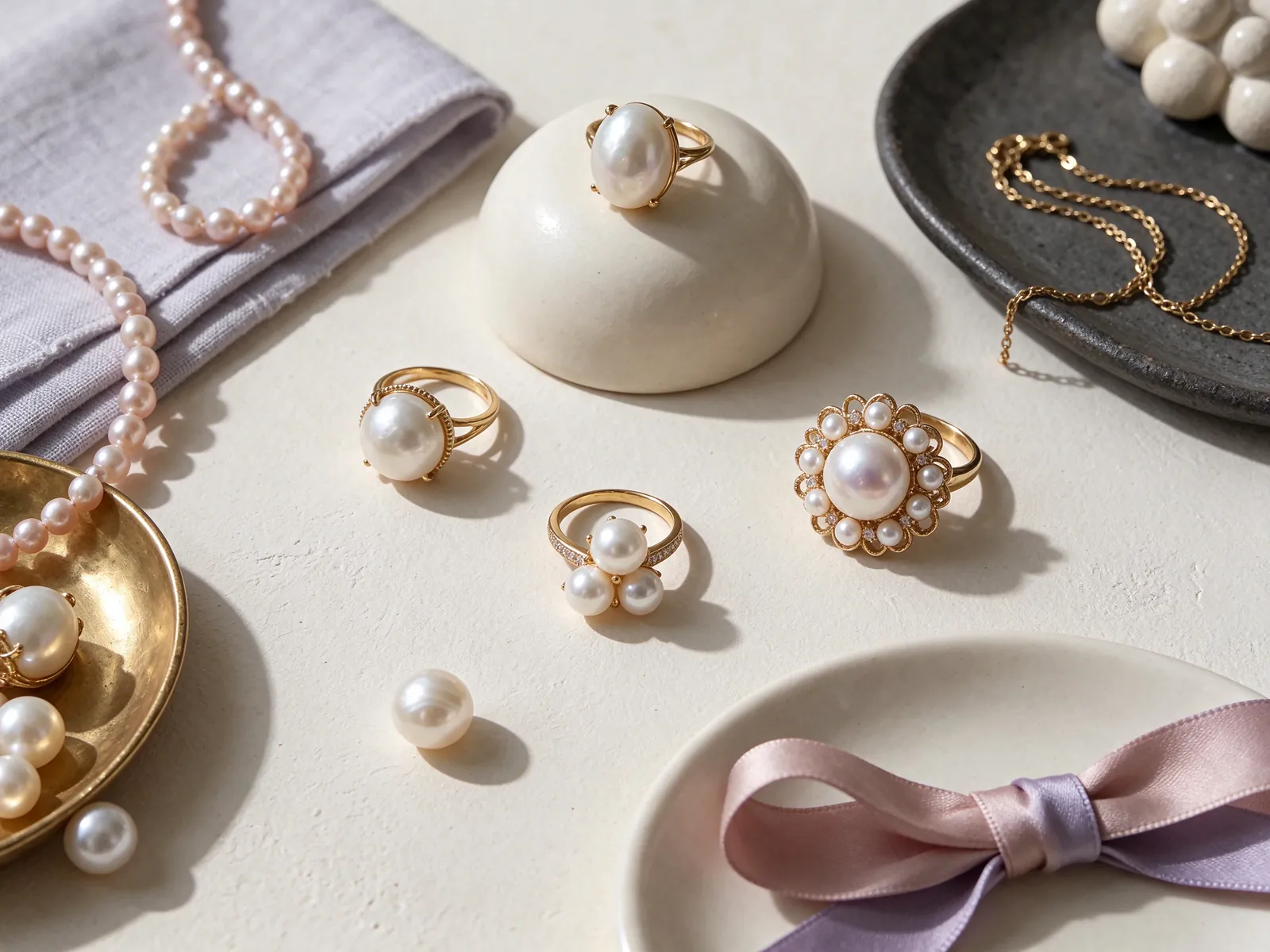
Judge pearl lustre separately from the surrounding sparkle
Move away from concentrated display lighting where possible and examine the pearl under soft, even light. Look at the clarity of reflections, the overall lustre and the visible surface as you slowly turn the ring. A bright white reflection is not necessarily the pearl's bodycolour, and a photograph without visible surface features does not establish that none exist. If competing diamond arrangements make comparison difficult, briefly hide the diamonds and return your attention to the pearl before viewing the complete ring again.
GIA describes seven pearl value factors: size, shape, colour, lustre, surface quality, nacre quality and matching. They provide a useful framework for questions, rather than a shortcut for assigning a grade from a picture. With a single-pearl ring, start with the pearl's appearance and then consider its relationship with the metal and diamond placement. Matching deserves particular attention in multi-pearl arrangements. Shape or colour alone cannot establish origin, natural-versus-cultured identity or the existence of a certificate. Read those descriptions separately from the styling language.
Compare colour with a neutral sleeve and an existing accessory
GIA distinguishes bodycolour, overtone and orient; not every pearl shows all three. For a practical comparison, place your hand against a white or light grey sleeve, then against a darker colour you often wear. Notice whether the pearl still has the tone you enjoy. The metal and the diamond border change the contrast too, so a colour name alone is not a complete styling decision. Bringing a familiar pair of earrings allows a more direct comparison under the same light than trying to match separate photographs.
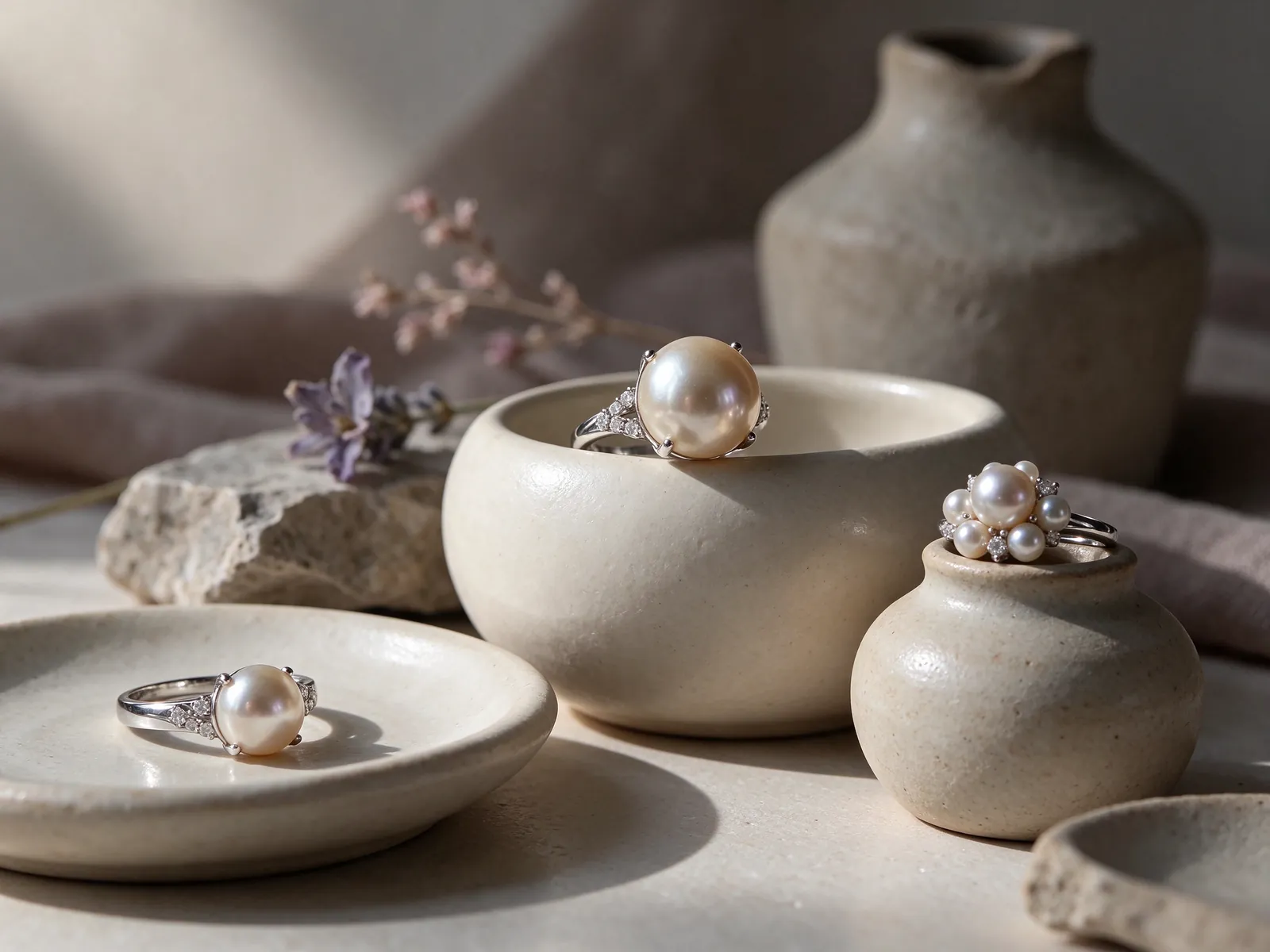
Check the profile and band before planning a stack
A delicate top view can hide a substantial support underneath. Examine how the pearl connects to the band, where the setting projects sideways and how much height sits above the finger. A lower profile should not be treated as a promise against knocks; contact depends on the setting and on what you do while wearing it. Reproduce gentle everyday movements, such as holding a document or reaching towards a coat pocket, to find out whether the face demands more attention than you want to give it.
Two rings with the same stated size may feel different because their bands differ in width and inner shape. Let your hand hang naturally and notice whether the centre consistently tips to one side. Then open and close your fingers softly to assess the position of the diamond-set edges. If the fit feels right but the top keeps turning, discuss balance and band structure as well as size. The purpose of trying on is to identify the source of discomfort, not to train your hand to tolerate it.
Inspect the contact points between neighbouring rings
Place the proposed companion ring beside the pearl ring and look from the side. Check whether its edge could touch the pearl, prongs or support, including when your fingers move. A curved band is not automatically compatible with every setting. If the rings push against each other, wearing them on separate hands or leaving the pearl ring alone can be a more sensible arrangement. Also assess the combined width when bending your finger: a pleasing photograph does not establish that a stack will feel comfortable during use.
Give the ring a clear role in your everyday jewellery
For office dressing, begin with your cuffs and earrings. A plain shirt or a cleanly cut jacket gives the ring a quieter background, allowing the pearl outline to remain readable. If the diamonds are visually prominent, smaller earrings can keep the combination balanced without requiring a perfectly matched set. A shared metal colour or curved motif may be enough. If your hands regularly meet keyboards, papers or textured fabric, assess those movements before deciding that the ring is suitable simply because it looks polished with workwear.
For dinner or a formal occasion, a statement pearl ring can be the main feature on the hand. Leave some space around a broad diamond arrangement rather than filling every neighbouring finger. If a bracelet is involved, notice whether wrist movement brings it close to the ring. A pearl butterfly ring offers another way to think about curves and directional motifs. When a sleeve already has an expressive print, compare whether the ring adds a pleasing echo or introduces a competing focal point before increasing the size of other accessories.
Separate photographic impact from practical suitability
Take an unfiltered top and side photograph against a sleeve you actually wear. Review the relationship between the pearl, diamond border and finger, then put the photographs aside and notice natural movement. A ring that looks excellent with evening clothes may demand more care around your usual knitwear. That difference concerns the intended occasion, not a failure of the design. Decide whether you want an everyday centrepiece or a special-occasion accent before allowing one particularly striking image to settle the choice.
Turn style preferences into a focused design conversation
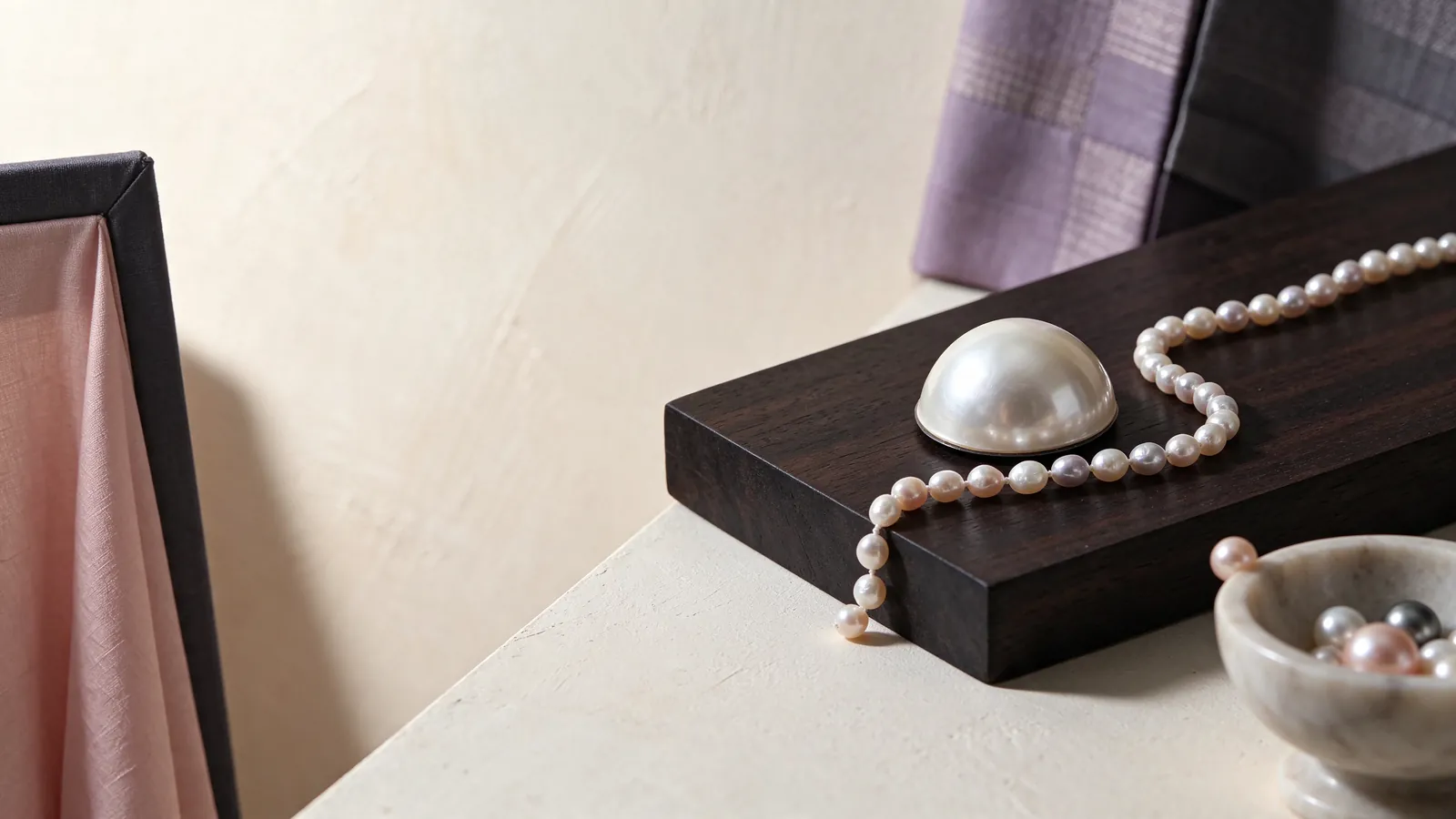
When speaking with Flint Jewellery, explain which finger you have in mind, the occasions you dress for and whether pearl lustre or diamond sparkle should lead. Phrases such as 'keep the pearl edge visible' or 'concentrate diamonds along the shoulders' are more informative than asking only for extra sparkle. A reference image is useful when you identify the proportion, curve or placement you like rather than treating the whole design as something to copy. An existing ring can also help communicate preferred band feel and pairing space.
Metal directions can be discussed in 18K 750 white gold, 18K 750 yellow gold, 18K 750 rose gold, PT950 platinum and PT900 platinum. Compare how each direction relates to the pearl colour and to jewellery you already wear, rather than assuming a name alone settles the choice. For a particular design, record the pearl description, diamond arrangement, ring size, setting height and metal choice as separate details. This keeps aesthetic preferences distinct from the actual specifications being discussed and makes differences between proposals easier to understand.
Read front views, side views and stone descriptions together
A front drawing explains arrangement; a side drawing explains the support and profile. Read both alongside written descriptions. If a diamond weight is stated, distinguish a total weight from a description of individual stones rather than treating the number as a direct measure of face width. Pearl colour, shape and identity also need their own descriptions and should not be inferred from an image. Compare the visible pearl outline and contact space first, then consider the remaining trade-offs with a clearer picture of the proposed structure.
Care for the combination according to the pearl's needs
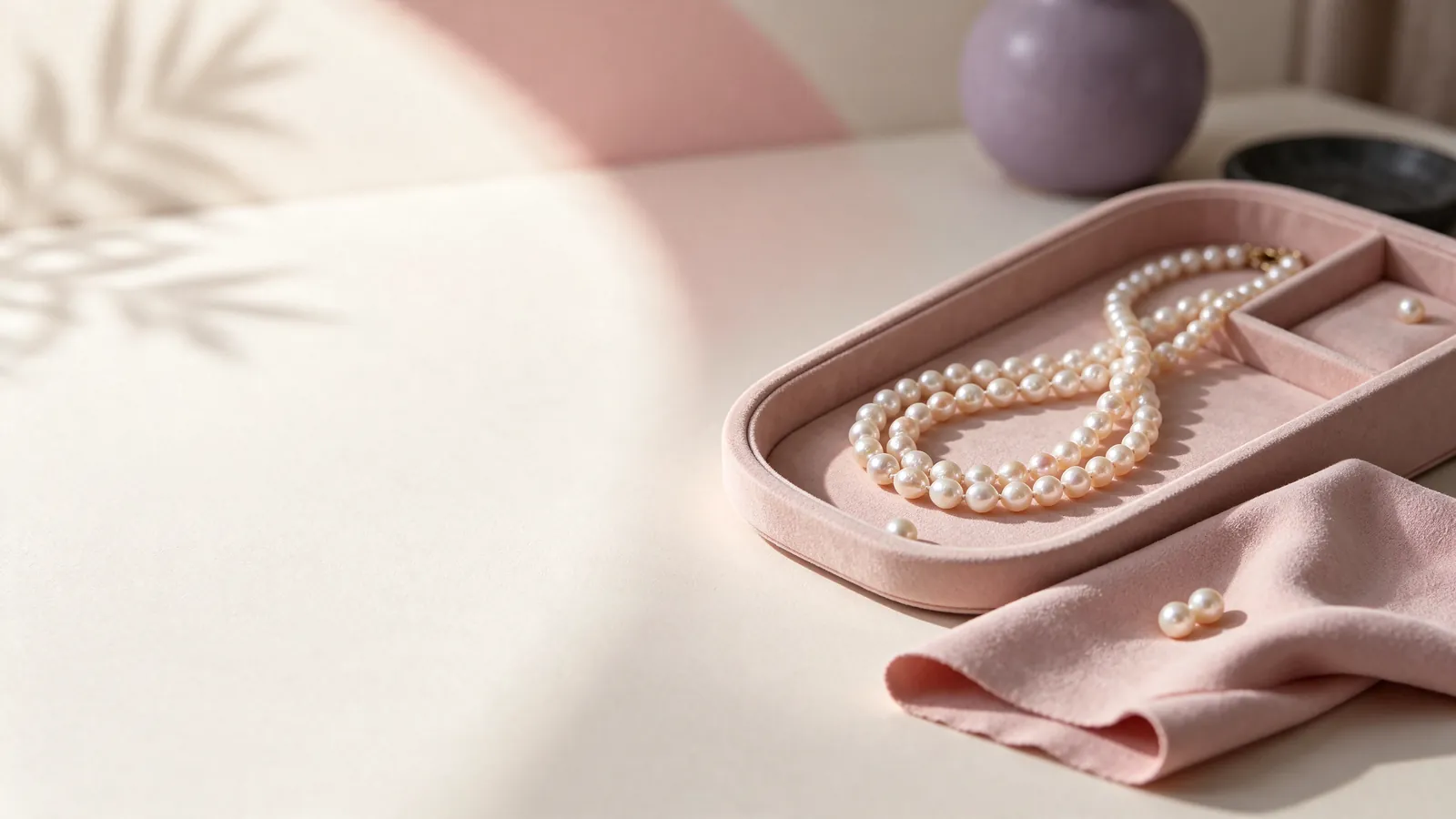
GIA lists pearl at 2.5 on the Mohs hardness scale and says pearls should never be cleaned in ultrasonic or steam cleaners. Diamonds in the same ring do not make those methods suitable for the pearl. After wearing, gently wipe with a very soft, clean cloth. Avoid contact with acids, perfume, hair spray and excessive heat. Completing cosmetics and fragrance before putting on the ring helps avoid spraying the surface directly, but does not remove the need to pay attention to later contact.
Do not scrape a narrow setting recess with a sharp object or introduce a strong cleaner simply because dirt appears beside a diamond. Any cleaning method needs to consider both the pearl and its attachment. Ask about an appropriate approach if residue remains beyond easy wiping. Store the ring separately from hard jewellery so that pearl surfaces do not rub against diamond edges or other bands. When removing it, hold the band instead of pulling the pearl, avoiding unnecessary force at its fixing point.
To discuss pearl and diamond ring proportions with Flint Jewellery, use WhatsApp to share your preferred diamond placement, intended finger and usual wearing occasions, or call +85260106207. These details provide a clear starting point for your enquiry.
Stop wearing when the setting behaves differently
If the pearl moves, a setting edge catches fabric or the support appears bent, take the ring off and keep it separately. Do not add glue, press parts back into place or repeatedly move the pearl to test it. A clear photograph and a brief description of the preceding contact can help explain the issue. Inspection and any repair depend on the actual condition; a photograph alone cannot determine the outcome. Recognising a change early is a practical part of wearing the combination, not just a matter of preserving its sparkle.
| Direction | Visual focus | Top-view check | Try-on check | Styling consideration |
|---|---|---|---|---|
| Side diamonds | A path towards the pearl | Visibility of the pearl edge | Contact with neighbouring fingers | Keep nearby rings visually simple |
| Halo | Pearl within a bright perimeter | Space between pearl and border | Side profile and support height | Leave room around a broad ring face |
| Diamond-set band | Sparkle along the shoulders | Extent of the diamond-set area | Hold a phone and move a cuff gently | Consider textured sleeves |
| Asymmetric curve | Detail balanced by open space | Direction of the curve | View from both sides of the hand | Relate the motif to cuff lines |
| Pearl-led balance | Lustre and surface appearance | Observe under even light | Briefly cover the diamonds | Compare against a neutral sleeve |
Pearl knowledge and authoritative references
GIA lists pearl at 2.5 on the Mohs hardness scale. A pearl and diamond ring should not be cleaned as though it contained diamonds alone; GIA advises against ultrasonic and steam cleaning for pearls.
Read the reference for this factFrequently asked questions
Can I keep the pearl visually dominant without removing diamonds?
Yes, diamond placement can leave a clear pearl outline while adding accents at the sides or along the band. Compare the ring at an ordinary viewing distance and briefly cover the diamonds to assess the pearl separately. The balance matters more than counting stones.
Will a lower setting always be easier to wear with knitwear?
Height is only part of the question. Side projections, setting edges and the position of diamond-set shoulders may also meet fabric. Try gentle movements with a familiar sleeve and inspect the side view rather than treating a low profile as a guarantee.
How can I compare a ring with pearl earrings I already own?
Bring the earrings and compare them under the same even light, using a neutral sleeve as well as a colour you often wear. Look at pearl tone, metal colour and visual scale together. Separate photographs can give misleading impressions of a match.
Does a stated diamond total weight tell me how wide the ring looks?
Not by itself. Distribution, spacing and arrangement affect the outline. Read whether the weight describes all diamonds or individual stones, and compare front and side views to understand how those diamonds sit around the pearl.
What should I do if the pearl begins to turn in its setting?
Stop wearing the ring, keep it separately and describe the change. Avoid adding glue or moving the pearl repeatedly to test it. The fixing and condition need assessment before a suitable next step can be determined.
Updated: