
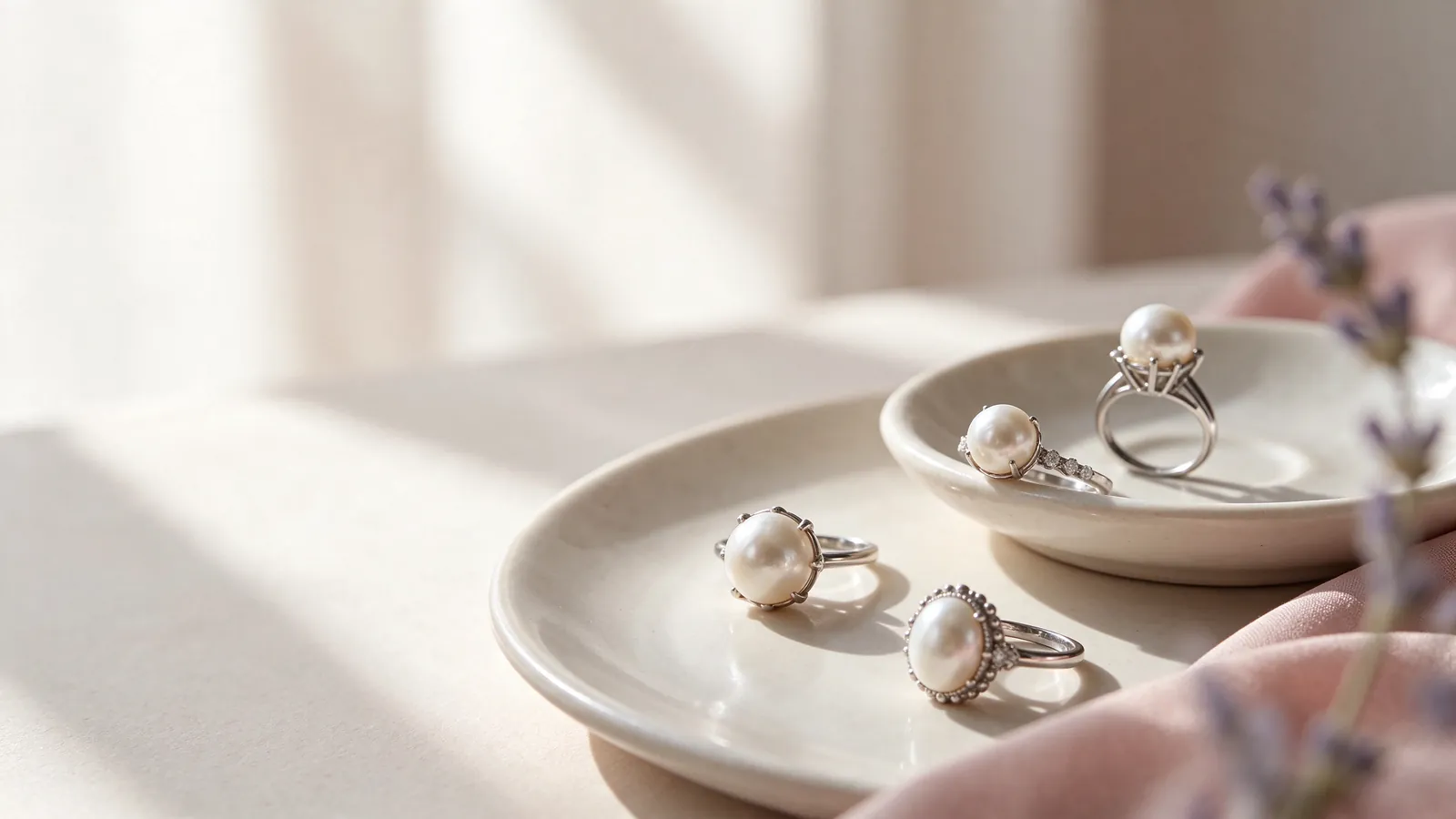
Comparing South Sea pearl ring designs: which proportions suit your hand in a white South Sea pearl ring?
Begin with the relationship between the pearl, the shoulders of the ring and the visible space on either side of your finger. A centrepiece that looks balanced in a close photograph may feel much more prominent when you see your whole hand. Decide whether you want an isolated focal point or a continuous outline that carries across the band. Neither preference belongs exclusively to a particular hand shape.
A slender-looking band can emphasise the pearl, while a more substantial outline distributes attention across the ring. Visual lightness is not the same as comfortable contact with your fingers. Compare the front and side together, and consider how the ring sits when your hand is relaxed rather than posed. The broader guide to pearl rings Hong Kong offers a useful starting point for distinguishing silhouette, fit and decoration before narrowing your preferences.
Within South Sea pearl ring designs, how do band width and setting height affect the proportions of a white South Sea pearl ring?
Treat width and height as separate decisions. Width changes the area touching your finger; height changes how far the pearl stands above your hand. A lower profile still needs consideration of clearance beside neighbouring fingers, while a taller outline may come closer to a cuff. Make a fist, open your hand and consider the items you regularly hold. These movements reveal trade-offs that a front-facing photograph cannot answer.
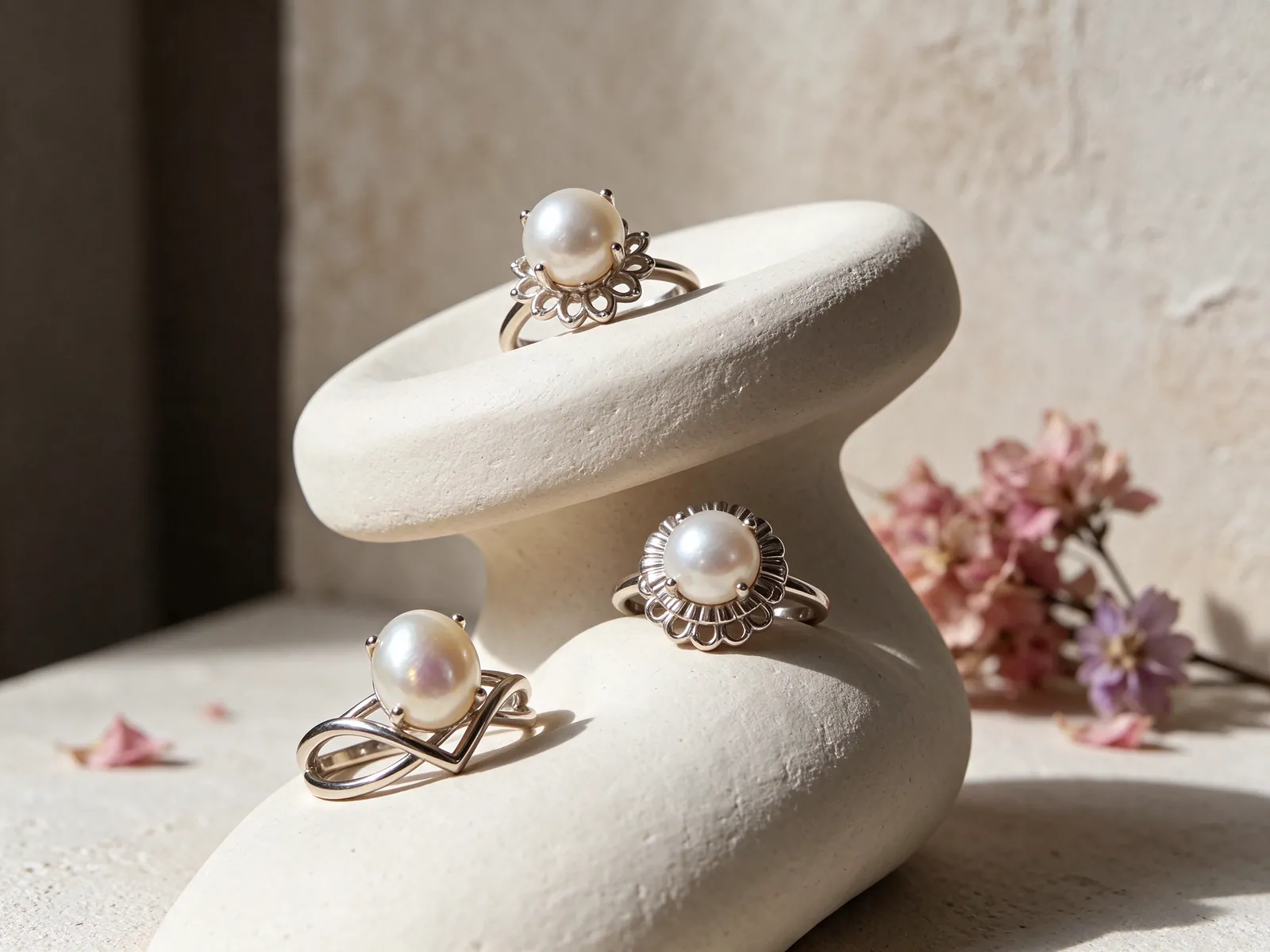
Look at white colour, lustre and surface as different questions
White does not describe every aspect of a pearl's appearance. GIA distinguishes bodycolour, overtone and orient, and notes that not every pearl displays all three components. Compare the overall colour first in reasonably neutral light, then consider its relationship with your skin and usual clothing indoors. Reading what are South Sea pearls can help you understand the topic, but the name alone is not a complete description of an individual pearl's quality.
GIA describes seven pearl value factors: size, shape, colour, lustre, surface quality, nacre quality and matching. For a single-pearl ring, look at lustre and visible surface characteristics from several directions rather than relying on a single flattering angle. Matching becomes relevant if you intend to wear the ring with pearl earrings or a pendant. Consider how the pieces work together without expecting separate pearls to appear identical in every setting.
Separate photographic contrast from the pearl's appearance
A dark background can make a white pearl appear more conspicuous, while bright exposure can hide subtle surface detail. When comparing photographs, check whether lighting and backgrounds are broadly similar. Ask about the viewing conditions if the images seem markedly different. Colour and shape alone cannot establish origin, natural-versus-cultured identity or certification; those questions belong with information specifically describing the pearl rather than an interpretation of its photograph.
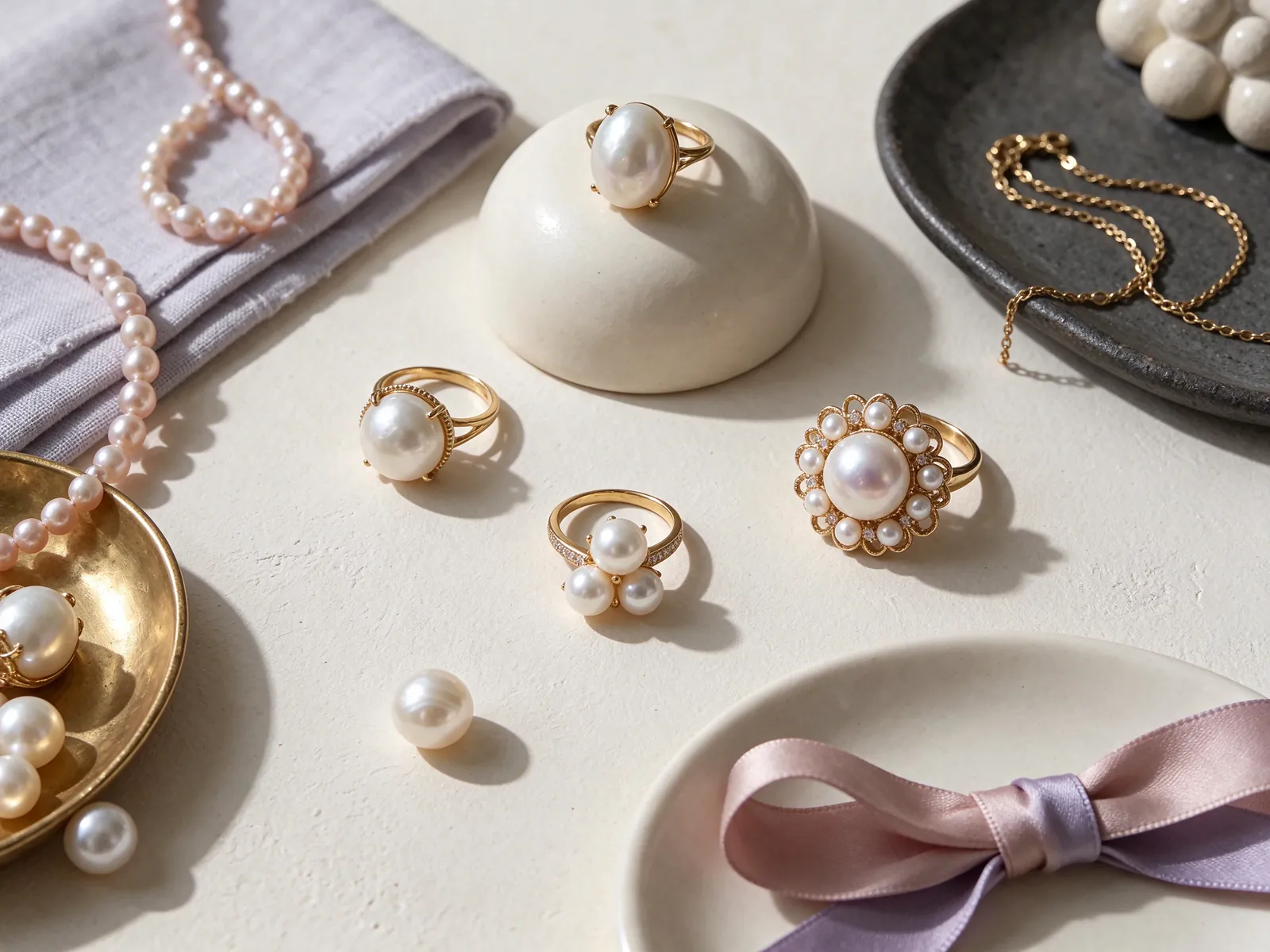
Compare alternatives by the change you want to make
If you like a white focal point but want more visible space around it, identify that preference before changing pearl categories. An Akoya pearl ring can be explored using the same questions about silhouette, shoulders and side profile. Do not assume a fixed diameter or a prescribed style from a pearl name. A clearer comparison asks whether the particular outline you are considering gives you the balance and finger clearance you prefer.
If the real question is contrast with clothing, a Tahitian pearl ring provides another direction to consider. Compare a light and a darker focal point against the same sleeve and alongside the jewellery you already wear. Avoid ranking colours as better or worse, or expecting every pearl in a category to share the appearance of one image. Choose whether you want a gentle relationship with your outfit or a more distinct visual accent.
An irregular outline is not simply a larger statement
When you say you want something distinctive, you may be responding to asymmetry rather than greater visual area. Exploring a baroque pearl ring helps you articulate a preference for an extended curve, an uneven outline or a directional shape. Bring that observation back to the whole ring: which way should the outline travel across your hand? Shape preferences are useful design language, but shape on its own does not prove pearl identity or origin.
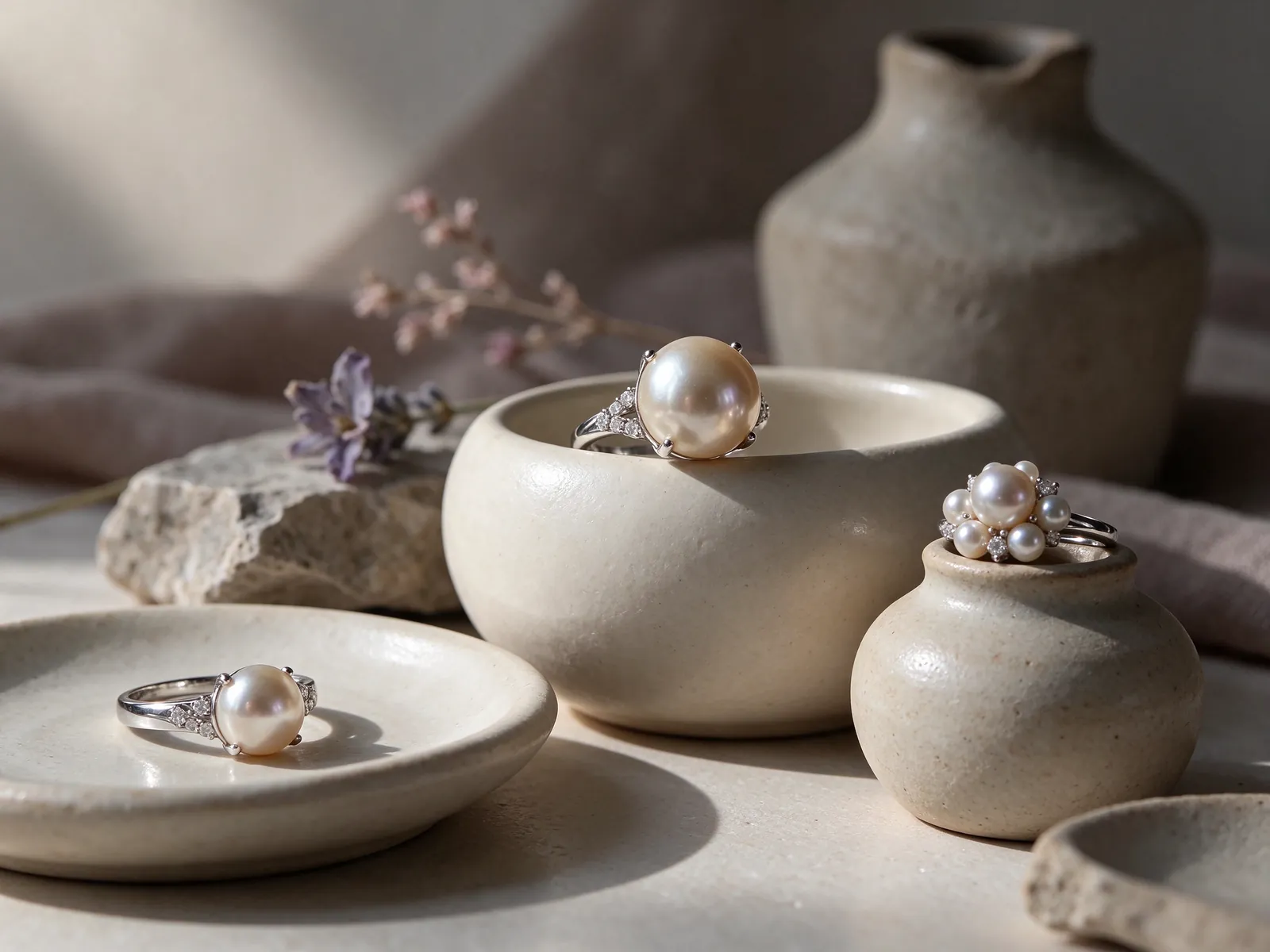
Decide where you want the decoration to lead the eye
A restrained outline places greater attention on the pearl and the transition into the band. Inspect that transition from a slanted view as well as from above. You may prefer a smooth visual continuation, or a deliberate contrast between a prominent pearl and quiet shoulders. Fewer visible details do not automatically create a better proportion; the relationship between the elements matters more than counting the decorative features.
A pearl halo ring raises a different question: how much should the surrounding outline extend the focal area? Look at whether the pearl remains the first feature you notice from a normal viewing distance. A surrounding border may create a fuller shape, but also reduce the space visible around the finger. Compare the complete footprint and side profile, rather than selecting a direction solely because its front photograph looks more striking.
Use the shoulders to understand the distribution of detail
The shoulders can look abbreviated in a straight-on photograph. A side view shows whether decoration is concentrated beside the pearl or continues along the band. A pavé pearl ring offers a further way to think about that distribution. If another ring will be worn nearby, consider the contact points between them. Decorative style alone does not establish durability or everyday suitability; the actual outline and your hand movements remain important.
Style the white focal point around real sleeves and jewellery
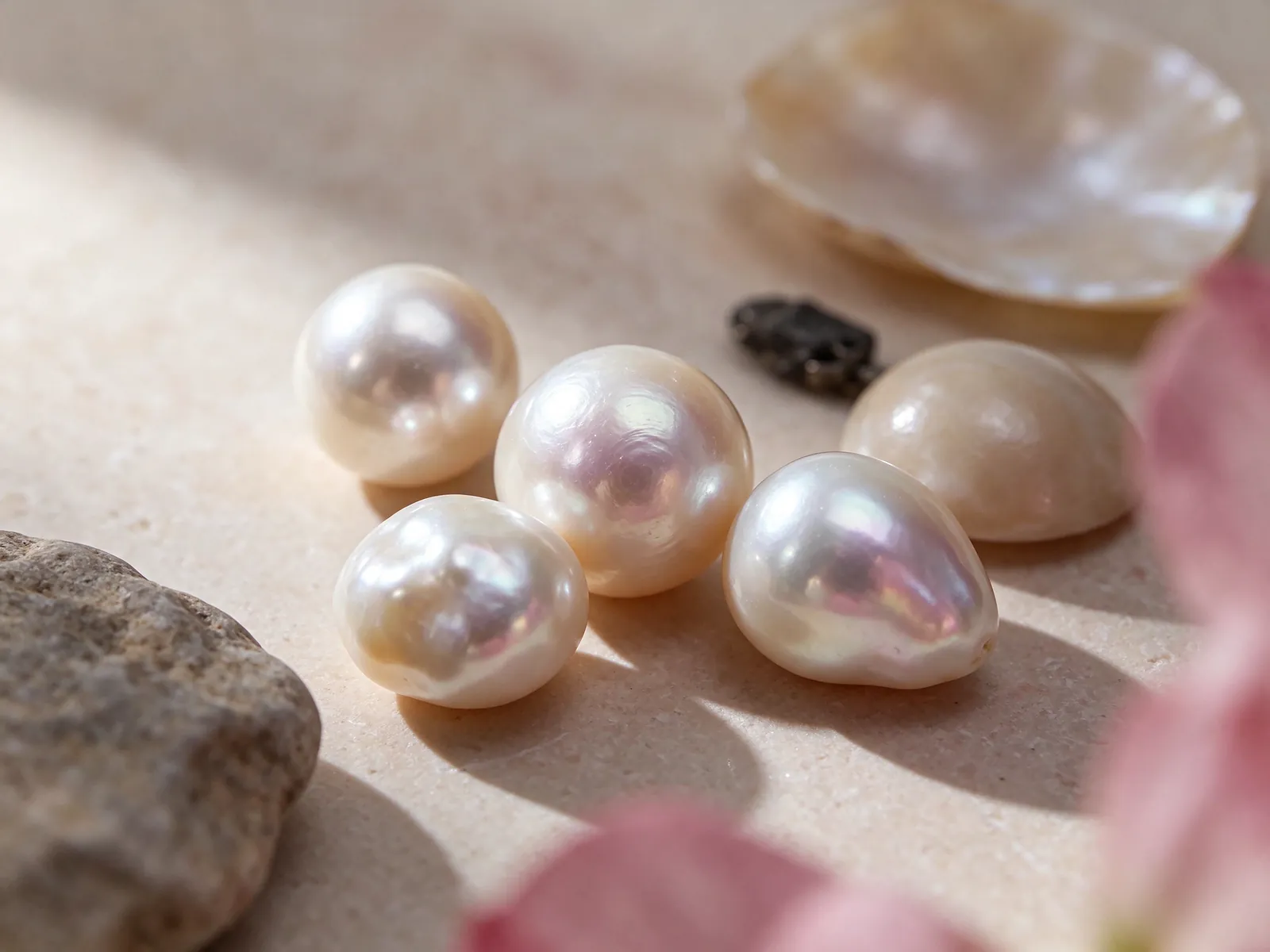
Start with a shirt or jacket you wear often. A soft knitted cuff may move towards the ring, while a structured cuff creates a clearer edge beside it. Check the position of the pearl when holding a bag or fastening a coat, not just when your hand rests flat. Against darker clothing, the white focal point may appear more distinct; against pale fabric, its lustre and outline can become more important to the effect.
For a metal-colour discussion, Flint Jewellery's five customisation material options are 18K 750 white gold, 18K 750 yellow gold, 18K 750 rose gold, PT950 platinum and PT900 platinum. Consider them alongside the jewellery you already enjoy rather than assuming one metal colour is the only partner for white pearls. Reflections from the band contribute to the overall appearance, so compare the pearl, metal tone and clothing together.
Allow room when wearing a wedding band or bracelet
Coordination need not mean placing every piece next to another. Wearing a wedding band on a different finger or moving a bracelet to the other wrist can preserve a clear focal point and reduce contact. If you prefer neighbouring rings, check the area beneath the pearl and beside the band as your fingers bend. A pleasing arrangement in a still photograph may not retain the same spacing during normal movement.
Include fit and pearl care in your everyday decision
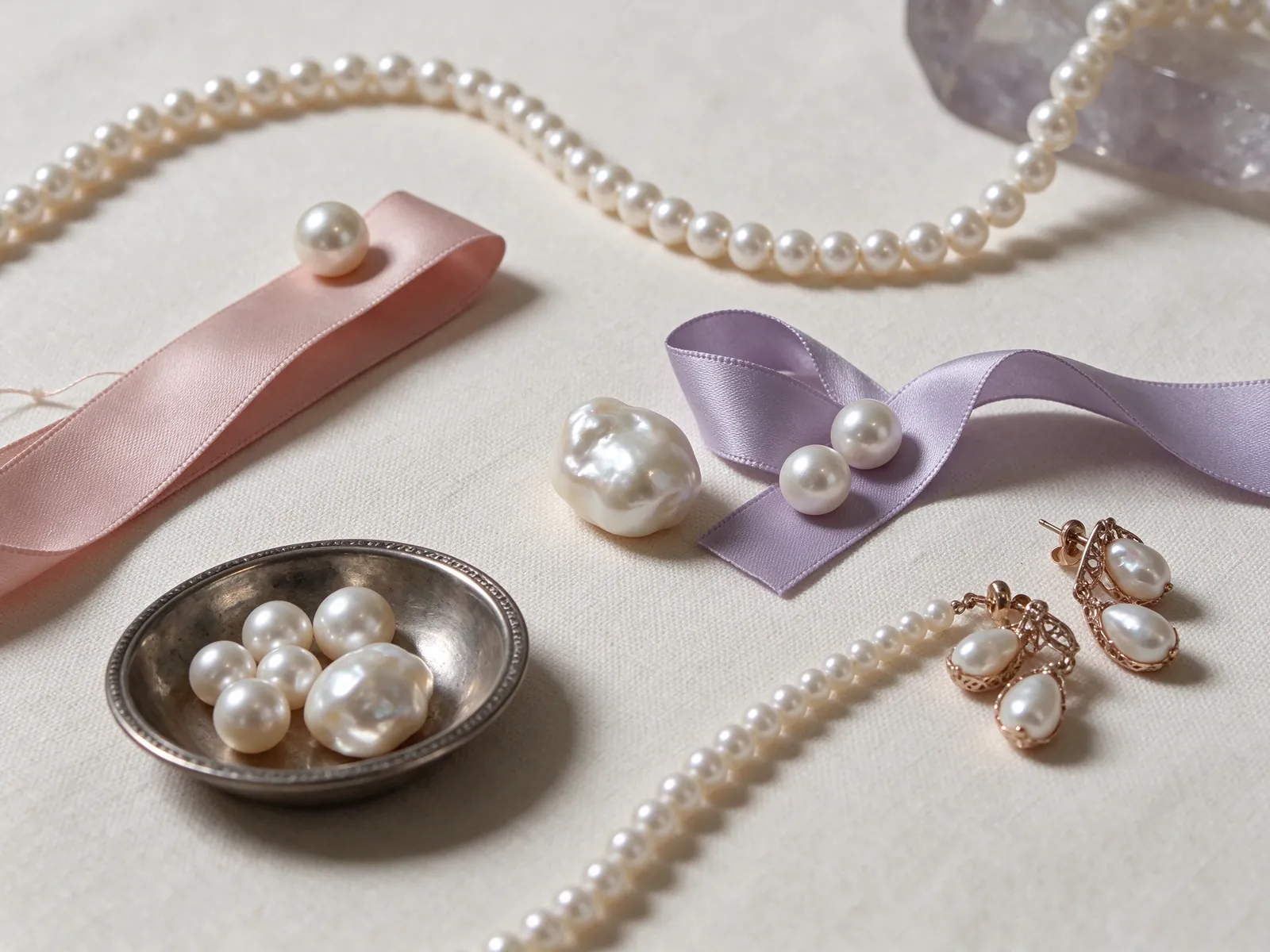
Assess fit as more than the ability to slide a ring onto your finger. Notice how it passes the knuckle, how it rests afterwards and whether it turns when you move. Tightening the size purely to stop rotation may change comfort without addressing the whole relationship between band shape and the pearl's position. If you plan to wear it on another finger or the opposite hand, consider the fit again rather than relying on appearance alone.
GIA lists pearl at 2.5 on the Mohs hardness scale. This is useful for understanding scratching risk, not for predicting a ring's resistance to a particular impact. Remove the ring before handling cleaning chemicals, exercising or lifting items that could strike the pearl. Avoid direct contact with perfume and hair spray. Decide where you will put it when removed, so protecting the pearl becomes a practical part of wearing it.
Gentle wiping does not replace attention to the setting
GIA advises using a very soft, clean cloth after wearing and avoiding ultrasonic or steam cleaning for pearls. Keep the pearl away from acids and excessive heat. If it moves unexpectedly or the setting appears distorted, stop wearing the ring rather than twisting the pearl or attempting to secure it yourself. Cleaning the visible surface cannot tell you whether the connection beneath it is sound.
Prepare a design conversation with useful, specific preferences
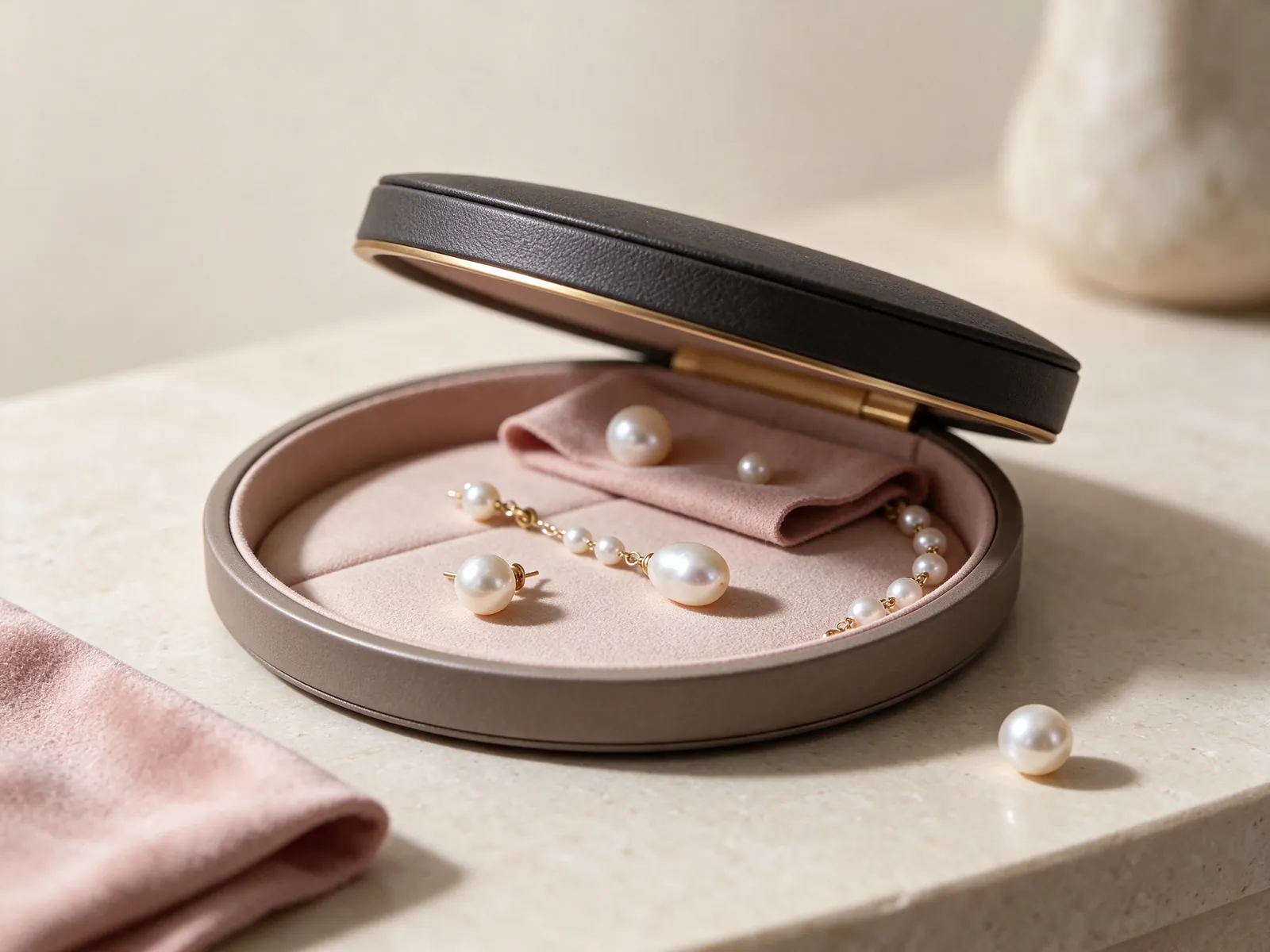
Gather your preferred wearing finger, typical sleeve styles and the amount of space you want around the focal point. Choose images showing both the front and side, then explain what you like about each: an uninterrupted line, a pearl that stands apart, or decoration that travels towards the shoulders. These observations make a discussion of South Sea pearl ring designs more precise than simply asking for something classic or bold.
Keep pearl information separate from the styling brief. Ask about the description and information corresponding to the particular pearl, then consider dimensions and the overall outline in relation to your hand. Do not use a model's finger in a photograph as a measurement scale. If your own hand images help explain your preferences, include a relaxed open hand and a side angle so the discussion is not confined to a posed top view.
Test the idea against work, going out and handling everyday tasks
Imagine the same outline with your working clothes, an outfit for dinner and your usual routine at home. At work, consider cuffs and objects your hand contacts; for an evening out, consider how other jewellery shares the attention. At home, plan when to remove the ring. An outline may suit a particular occasion better than all-day use, and that can be a deliberate choice. Discuss ring styling and fit with Flint Jewellery on WhatsApp, bringing these practical preferences into the conversation.
| Aspect | How to compare | Styling decision | Wearing consideration |
|---|---|---|---|
| Pearl and hand | View the whole hand and the space beside the pearl | An isolated focal point or a continuous outline | Check position with the fingers open and bent |
| White colour and lustre | Use comparable lighting and several angles | A gentle relationship or contrast with clothing | Exposure differences can conceal surface detail |
| Band width | Look at contact beside the finger and the shoulders | Emphasise the pearl or distribute visual weight | Notice pressure against neighbouring fingers |
| Side profile | Compare front and side views together | A quieter outline or more visible height | Consider cuffs and objects regularly held |
| Other jewellery | Inspect spacing beside and beneath the pearl | Coordinate on one hand or separate focal points | Check whether pieces touch during movement |
Pearl knowledge and authoritative references
GIA lists pearl at 2.5 on the Mohs hardness scale. For a South Sea pearl ring, this supports attention to scratching and careful handling; it does not establish impact resistance or a guarantee of durability.
Read the reference for this factFrequently asked questions
Is a white South Sea pearl ring automatically a particular quality grade?
No. The name is not a complete quality assessment. Examine the individual pearl's description and consider lustre, surface characteristics, shape and the other relevant value factors. Colour alone does not establish origin, identity or certification.
What should I compare if I prefer a quiet ring for an office wardrobe?
Look at the whole silhouette beside your usual cuffs, including shoulder decoration and side profile. A quiet effect can come from controlled spacing and restrained lines rather than simply making every element smaller. Consider contact with the objects you handle at work as well as appearance.
Can I choose proportions reliably from a photograph of someone else's hand?
The image can communicate a style preference, but finger proportions, camera angle and exposure influence the effect. Compare front and side views and discuss the outline in relation to your intended wearing finger. Do not treat the photographed hand as a size scale.
Should a white pearl ring match pearl earrings exactly?
Consider the pieces together under similar lighting, especially their colour relationship and lustre. Matching is one of GIA's value factors, but your styling preference may allow a softer coordination rather than an identical appearance. Decide whether the ring or the earrings should lead the outfit.
What if the pearl seems to move when I wipe it?
Stop wearing the ring and avoid twisting, pressing or attempting to glue the pearl. Gentle wiping is routine surface care, not a way to resolve a possible connection problem. Keep the ring protected from contact while you arrange an appropriate assessment.
Updated: