
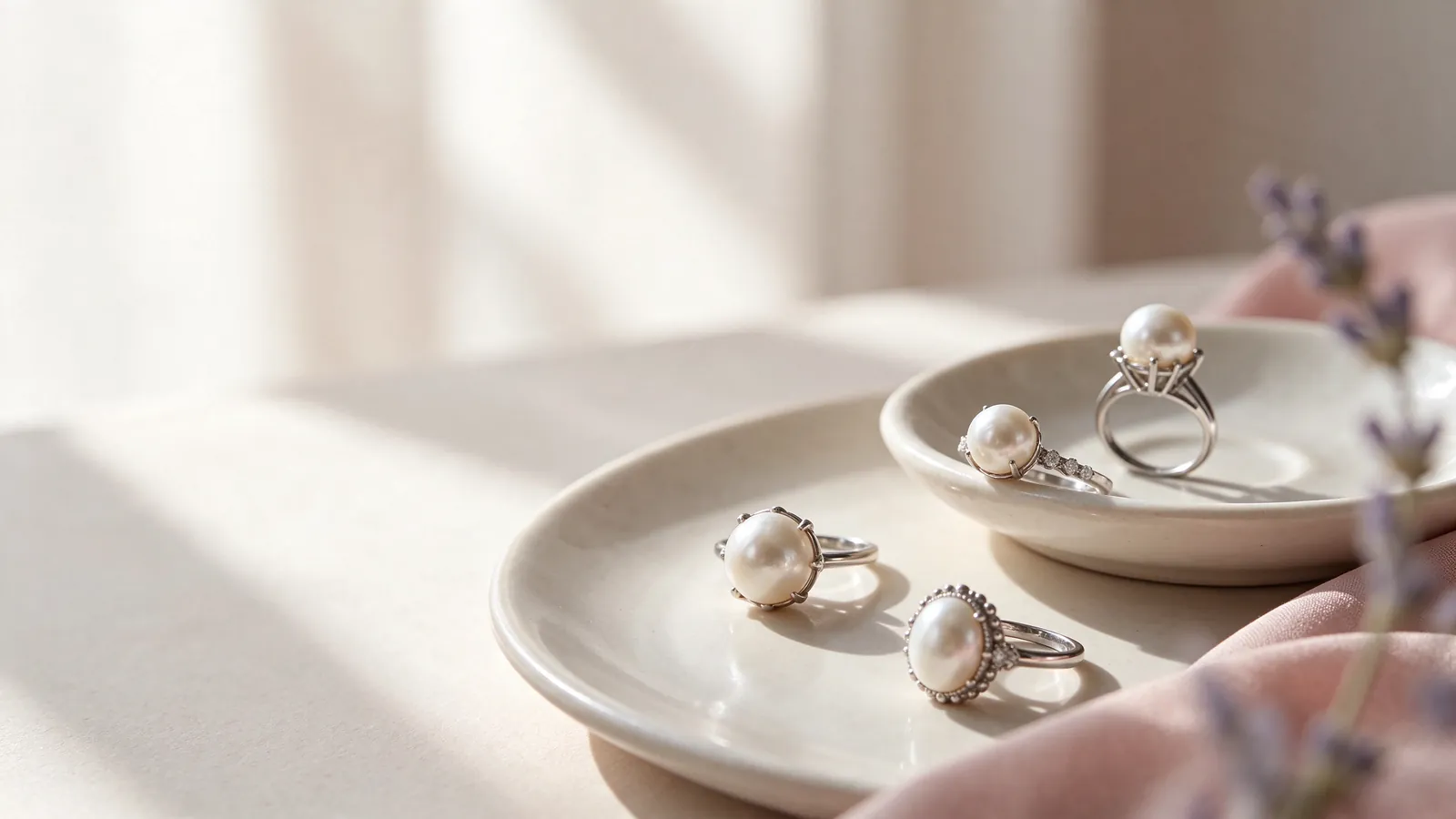
How do face proportions shape an Akoya pearl signet ring and its pearl signet design?
Begin with the silhouette rather than the apparent size of the pearl. A long face, rounded rectangle or oval can each create a different balance on the hand. Look at the metal visible around the pearl and the transition into the shoulders: does the outline remain legible, or does the pearl dominate it completely? The signet character belongs to this overall composition, not to a promise that the pearl can function as a stamp. For a broader starting point, the guide to pearl rings Hong Kong helps separate a preference for a defined face from a preference for any ring with a single pearl.
A front photograph cannot settle every proportion question. A ring that appears compact from above may lift noticeably away from the finger in profile. Compare a full hand view with a side view, and consider how much of the finger the face covers. In an Akoya pearl signet ring description, the pearl name does not tell you the face width, attachment method or finished height. Ask about those construction details separately, rather than treating a style name as a complete specification.
For an Akoya pearl signet ring, how does pearl signet design affect band width, setting height and fit?
Try relaxing the hand, making a loose fist and holding a pen. Notice whether the shoulders press into adjacent fingers or the raised face catches a cuff. A comfortable ring size alone cannot resolve an awkward shoulder or top-heavy balance. Making the ring looser to escape pressure can introduce rotation, so describe the movement that feels wrong before deciding whether size, width or height needs attention.
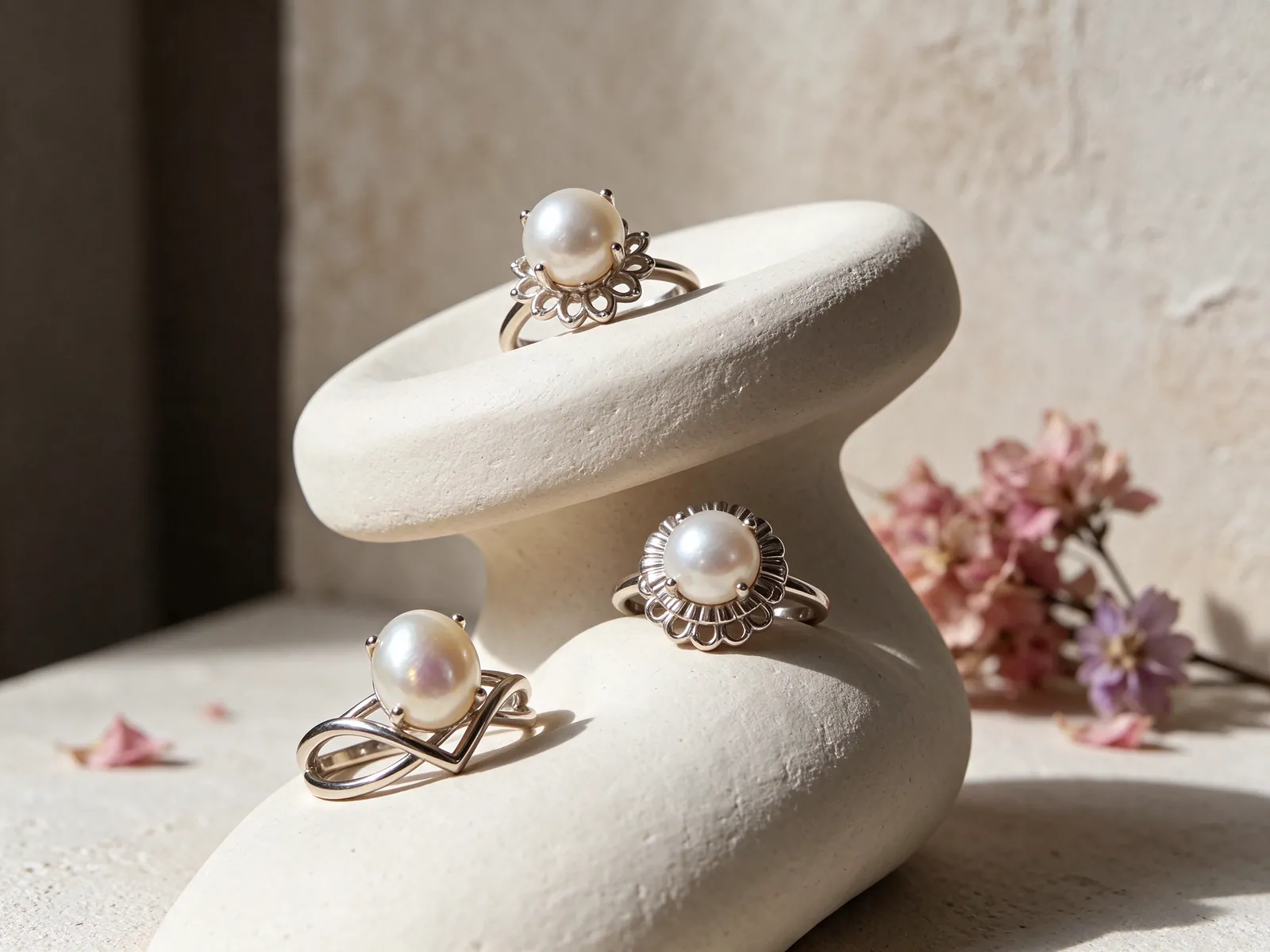
Choose a finger around the way you use your hands
The index finger makes a strong visual position, but it also meets handles, bags and other everyday objects. The middle finger places a wide face centrally, yet leaves a neighbouring finger on either side to accommodate the shoulders. Try the outline on the intended hand, not just whichever hand is convenient during a fitting. If you write, type or carry objects frequently, test those movements gently and consider when you would remove the ring. There is no single finger that makes every signet-inspired construction comfortable.
For a smaller finger, the pearl pinky ring guide offers a useful comparison based on placement. Reducing the size of a broad ring is not the same as choosing proportions that suit the little finger. Examine the face overhang, its orientation and whether it drifts towards the palm when your hand relaxes. The edge of the hand can contact a phone or a tabletop in ways a still photograph never shows. Stability should be assessed alongside the visual effect, rather than assuming that a smaller pearl automatically solves the fit.
Use a fitting width close to the intended band
A narrow ring that passes the knuckle comfortably is not a complete test for a wider signet band. Compare a similar contact width and inner contour where possible. Check both passage over the knuckle and steadiness at the base of the finger. If those areas differ noticeably, do not judge fit only by how easily the ring comes off; observe whether the face remains correctly oriented when worn.
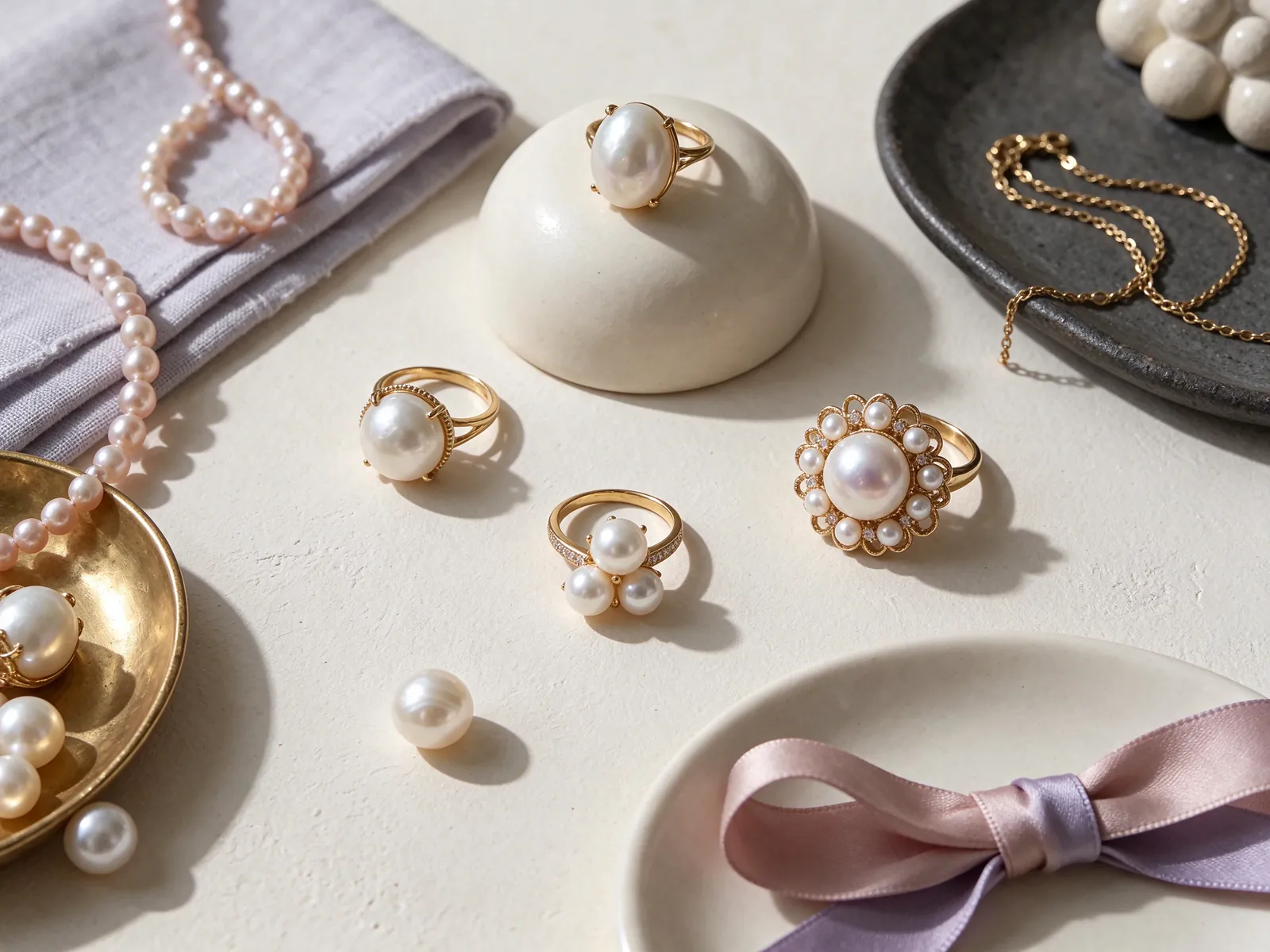
Compare the pearl position and the transition into the shoulders
A central pearl asks the eye to read the surrounding frame evenly. An off-centre position creates more metal space on one side and a directional composition. View that arrangement from both the fingertips and the wrist to decide which orientation you prefer. Rounded or irregular-looking outlines can soften a geometric face, but appearance alone does not establish pearl identity, origin or treatment. Keep the design judgement separate from the questions that require actual pearl information.
Straight shoulders can reinforce a clear geometric outline; curved transitions can make the face feel less abrupt. If the softer details attract you, compare a pearl flower ring to decide whether you want recognisable petals or simply a rounded signet silhouette. These are different visual intentions, even when both include a pearl. Use a whole-hand view when judging decorative detail: an enlarged close-up can make a small feature seem much more prominent than it will be at normal viewing distance.
Read the profile for exposure, not just height
Look for the space beneath the pearl, projecting metal edges and the transition from the face into the band. A lower pearl may still have exposed surfaces, while a visible metal border does not make every impact harmless. Ask how the pearl is secured and how the setting can be checked. Compare that explanation with your habits instead of treating a substantial-looking frame as permission to wear the ring through all activities.
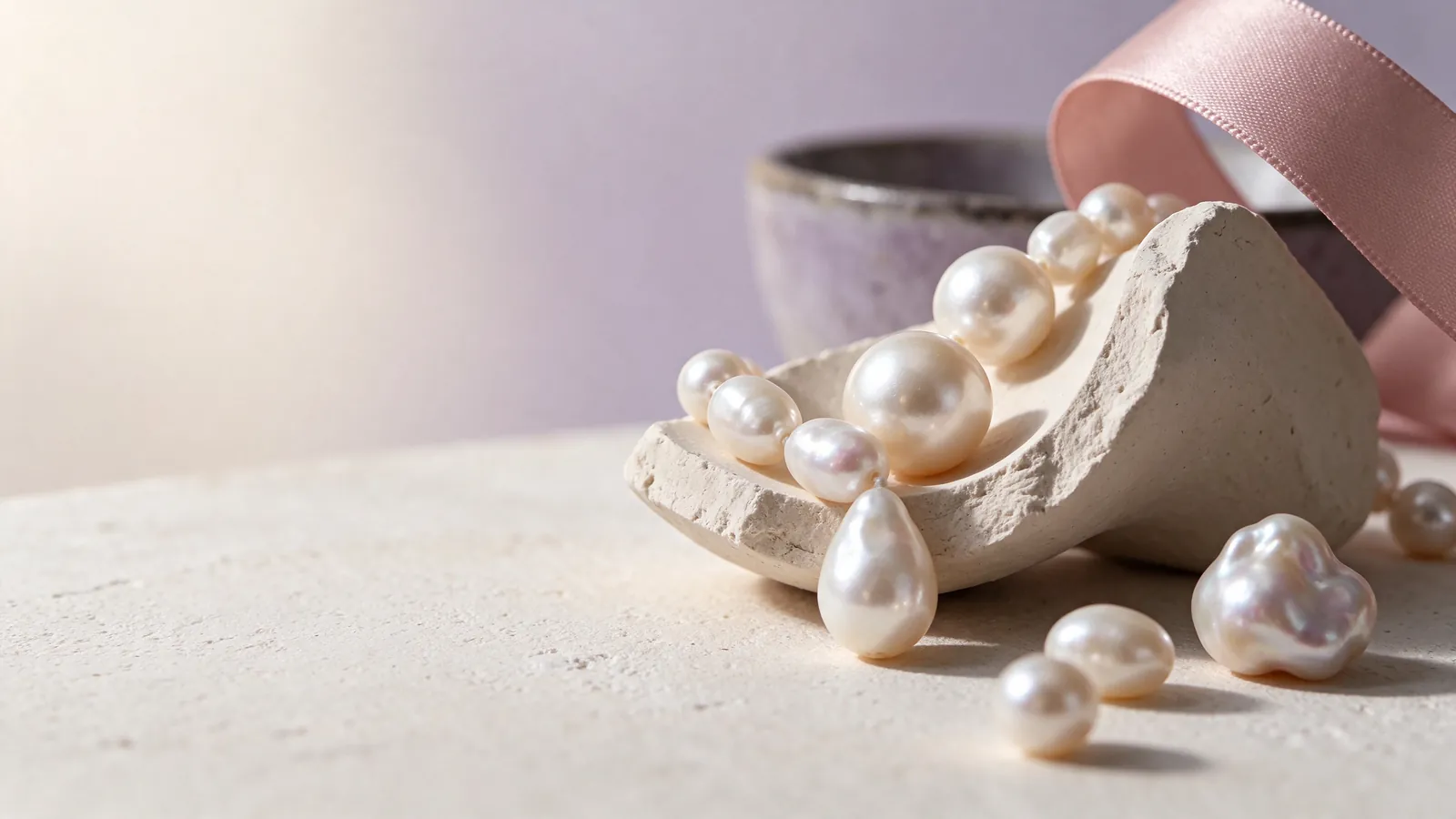
Separate an Akoya description from a quality assessment
The word Akoya is a starting point for understanding a pearl description, not a quality grade or proof of certification. Keep two sets of questions: one about the pearl and any documents provided, and another about the ring construction. If a report is offered, read what it identifies and which pearl it concerns. A heading on a jewellery page cannot substitute for that information. When comparing colour visually, use similar lighting and backgrounds, as reflected metal and surrounding colours can influence the impression.
GIA describes seven pearl value factors: size, shape, colour, lustre, surface quality, nacre quality and matching. For a single focal pearl, lustre and the visible surface are particularly useful parts of a visual discussion; matching becomes easier to consider with several pearls or companion jewellery. The list is not a shortcut to assigning a grade. Look for the character of reflections rather than brightness alone, and examine the surfaces visible during wear rather than only the most flattering photographed angle.
Turn broad preferences into answerable questions
Instead of asking only whether a pearl is high quality, ask what size information is recorded, where visible surface features occur and what documents accompany it. Explain whether you prefer crisp reflections or a quieter appearance under your usual lighting. Such preferences help a selection conversation, but they do not independently establish origin, natural-versus-cultured identity or treatment status. Those points need relevant information, not an inference from the finished ring.
Plan the ring around cuffs and neighbouring jewellery
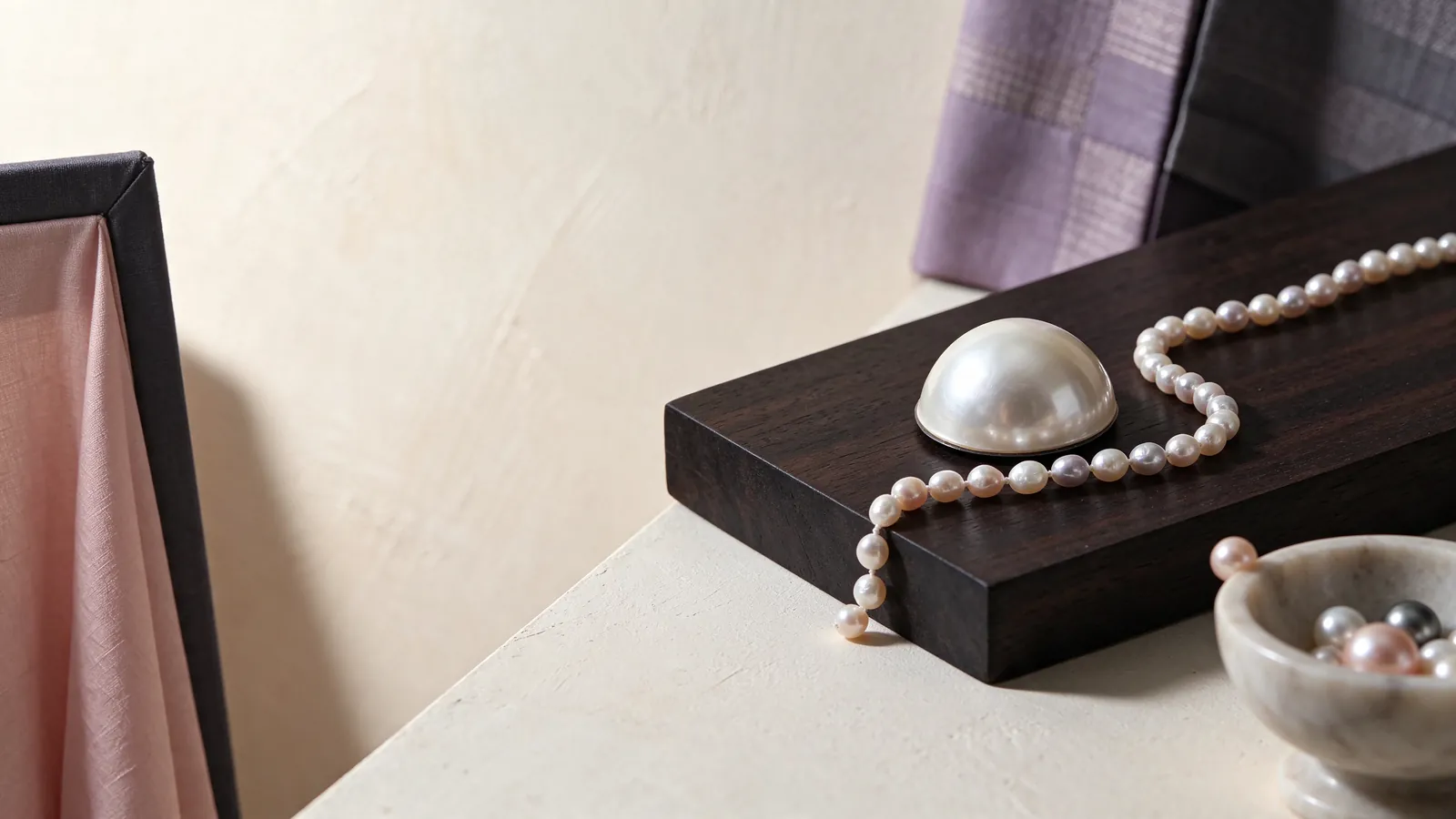
A defined signet face can provide the main focal point on the hand. With a shirt or tailored jacket, its outline can echo the clothing while the pearl softens the composition. Check the practical relationship with the cuff as well as the colour combination. Pass the sleeve gently over the ring and notice any projecting part. A knitted sleeve deserves particular attention because catching a thread is a different problem from simply finding the ring too high.
Before stacking, see whether the edge of another ring touches the pearl when the fingers bend. An open pearl ring offers a comparison in negative space, but an open outline should not be assumed to permit repeated bending for adjustment. A multi pearl ring provides a different, distributed focal pattern and may help you decide whether additional rings would make the hand too busy. Moving rings to separate fingers can be more useful than pushing two neighbouring bands apart while leaving their edges free to meet during movement.
Discuss the finished surface alongside the metal
If metal choices are part of the discussion, focus on 18K 750 white gold, 18K 750 yellow gold, 18K 750 rose gold, PT950 platinum and PT900 platinum. Consider the intended surface finish and pearl colour together rather than predicting the entire effect from the metal name. These options do not by themselves establish setting height, comfort or suitability for stacking; the complete construction remains the relevant comparison.
Decide what personalisation should do before choosing its position
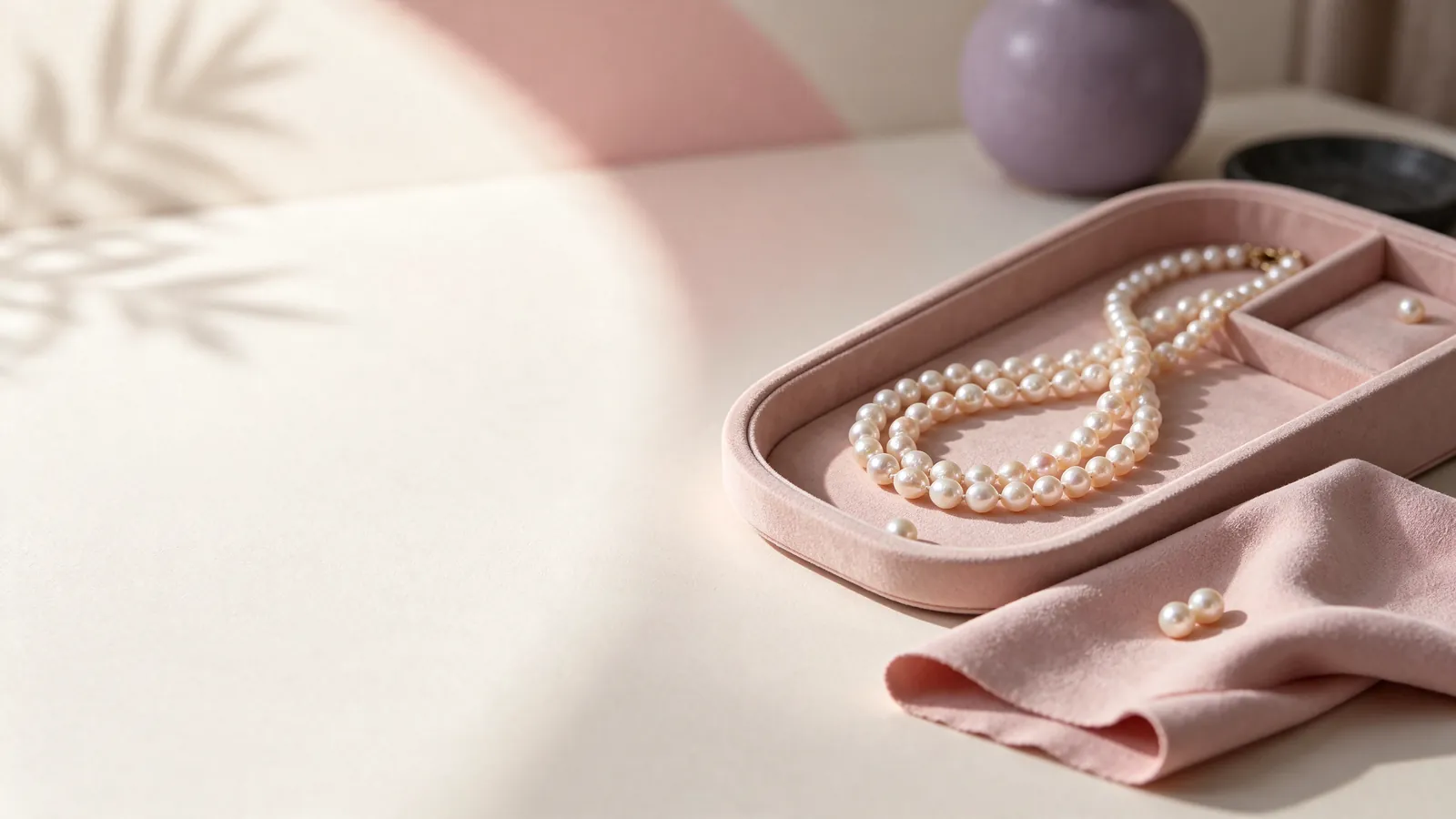
For engraving, decide whether the message should be visible while worn or reserved for the inside of the band. Available metal space, pearl position and attachment details all matter. A short set of initials may preserve the face composition better than a long inscription where space is limited. Do not treat the pearl surface as an ordinary metal engraving area. A signet-inspired silhouette can carry personal meaning without a functional seal or a message across its whole face.
If movement is the feature you enjoy, compare a pearl charm ring with a fixed face. A moving element has different contact points and behaviour around sleeves, neighbouring jewellery and objects held in the hand. That distinction helps clarify whether your preference is for a stable geometric outline or for a detail that changes direction as you move. Both can incorporate pearls, but the shared material does not make them interchangeable choices for your daily routine.
For a gift, prioritise habits over assumptions
Notice the recipient's preferred hand, finger and usual band width before choosing a broad face. An existing ring can indicate taste, but its size belongs to that finger and construction, not every proposed design. If the inscription is central to the gift, clarify its wording and intended location; if comfort matters most, prioritise an opportunity to assess the profile and fit. Age or gender does not answer those practical questions.
Make pearl care part of the wearing decision
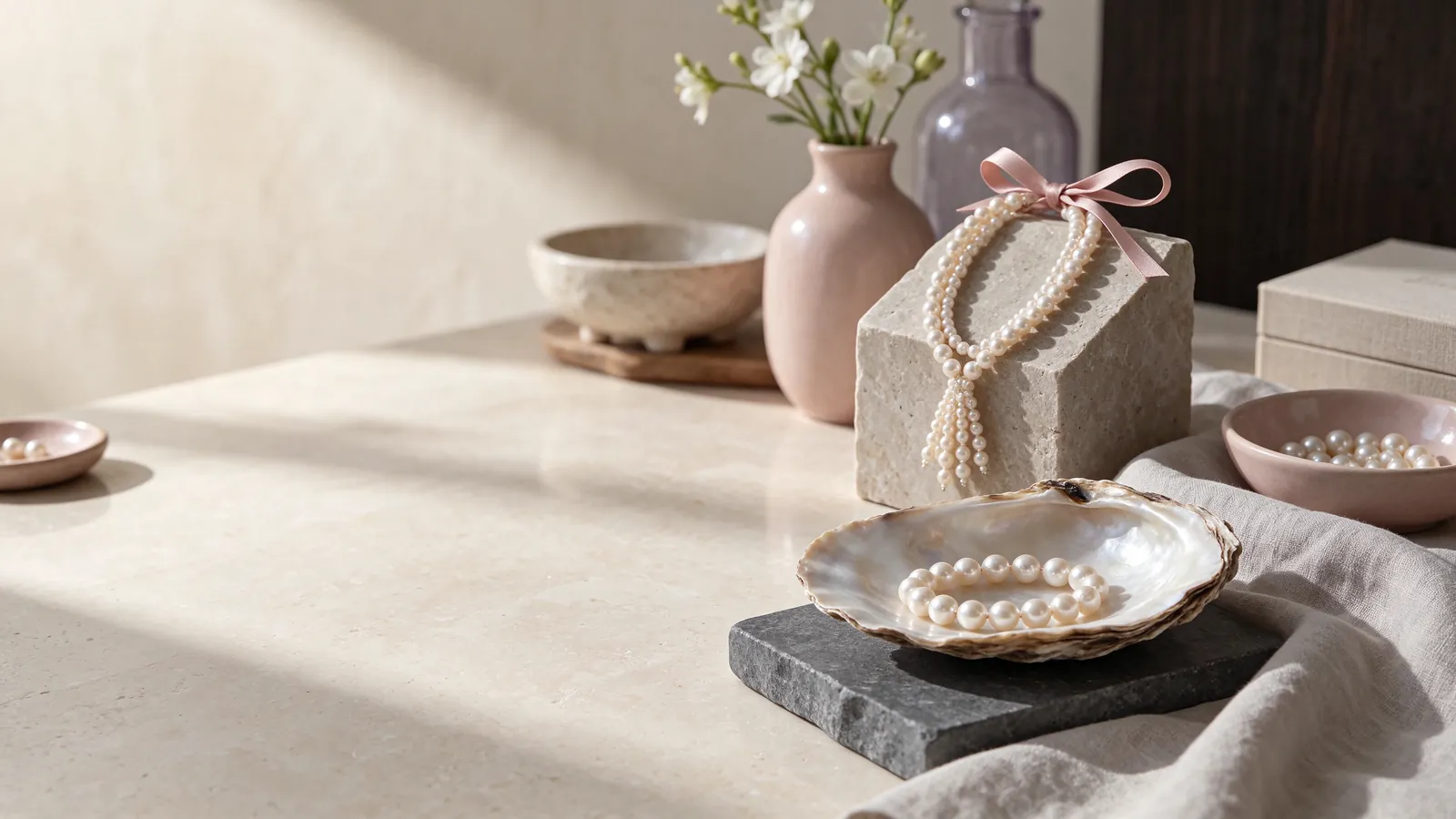
A ring regularly meets surfaces that an earring may never touch. GIA lists pearl at 2.5 on the Mohs hardness scale, a useful reminder to protect exposed pearl surfaces from scratching. That number is not an impact rating or a prediction of how many knocks a setting can tolerate. Remove the ring before cleaning, handling rough objects or activities likely to strike the face. A substantial metal silhouette does not give the pearl the same resistance to wear as the surrounding structure.
After wearing, wipe the pearl gently with a very soft, clean cloth and store it away from jewellery that could scratch it. GIA advises against ultrasonic and steam cleaning for pearls and warns about acids, perfume, hair spray and excessive heat. If the ring has other decorative elements, their usual cleaning methods should not override the pearl's needs. Consider the whole setting, especially places near the pearl base that are difficult to see, rather than placing the complete ring in a cleaner suitable only for another component.
Stop wearing a pearl that appears to have moved
If the pearl feels loose, changes orientation or begins catching where it did not before, put the ring aside for an appropriate setting inspection. Avoid twisting the pearl, scraping material beneath it or adding household glue. Describe when you noticed the change and whether there was a knock or a particular activity beforehand. A clear account helps explain the issue without requiring you to diagnose the attachment or choose a repair method yourself.
For help comparing a signet-inspired outline with your wearing habits, contact Flint Jewellery on WhatsApp at +85260106207 to discuss pearl ring selection. Share your intended finger, usual cuff style and any engraving ideas so the conversation can focus on practical preferences.
| Feature | Front view | Profile view | Wearing check | Decision focus |
|---|---|---|---|---|
| Face outline | Compare length, width and metal space | Look at the shoulder transition | Relax and extend the fingers | Balance with the intended finger |
| Pearl position | Compare central and offset arrangements | Note exposed surfaces and space beneath | Pass a cuff gently over the face | Focal point and contact areas |
| Band and size | Watch the orientation of the face | Consider the inner contour | Hold a pen and make a loose fist | Separate fit from construction |
| Companion rings | Compare the combined visual weight | Check whether an edge meets the pearl | Bend neighbouring fingers together | Reduce surface rubbing |
| Care needs | Notice changes in visible surfaces | Watch for a change in pearl position | Remove before rough tasks | Avoid ultrasonic and steam cleaning |
Pearl knowledge and authoritative references
GIA lists pearl at 2.5 on the Mohs hardness scale. For a signet-inspired ring, this supports attention to surface scratching; it does not establish impact resistance.
Read the reference for this factFrequently asked questions
Does a pearl signet ring work as a wax seal?
Do not assume that the style name establishes a sealing function. A signet-inspired face can be purely a visual outline, without a usable engraved seal. Avoid pressing a pearl into wax or exposing it to heat and abrasion. If a working seal is the aim, discuss that tool separately from a pearl ring.
Should a rotating face always be corrected with a smaller size?
Not necessarily. Band fit, the balance of the face and the difference between knuckle and finger base can all affect rotation. Compare relaxed and active hand positions before deciding. A smaller size may make passage over the knuckle uncomfortable without resolving the underlying construction issue.
Where can initials fit without crowding the pearl?
Start with the available metal area and whether the initials should be visible during wear. Limited space beside the pearl may favour a shorter inscription or an inside-band position. The final position needs to account for the setting; the pearl itself should not be treated as a normal metal engraving surface.
Does an Akoya description mean a report is included?
No. A pearl-type description is not proof of an accompanying report or a quality grade. If documentation matters, ask what is actually provided, what it records and which pearl it identifies. The ring's appearance cannot answer those documentary questions.
Can I wear a wedding band directly beside it?
Check whether the wedding band's edge touches the pearl as you bend your fingers, then consider the visual pairing. If the contact is unsuitable, separate the rings onto different fingers or hands. A good colour combination does not remove the risk of repeated rubbing at the pearl surface.
Updated: