
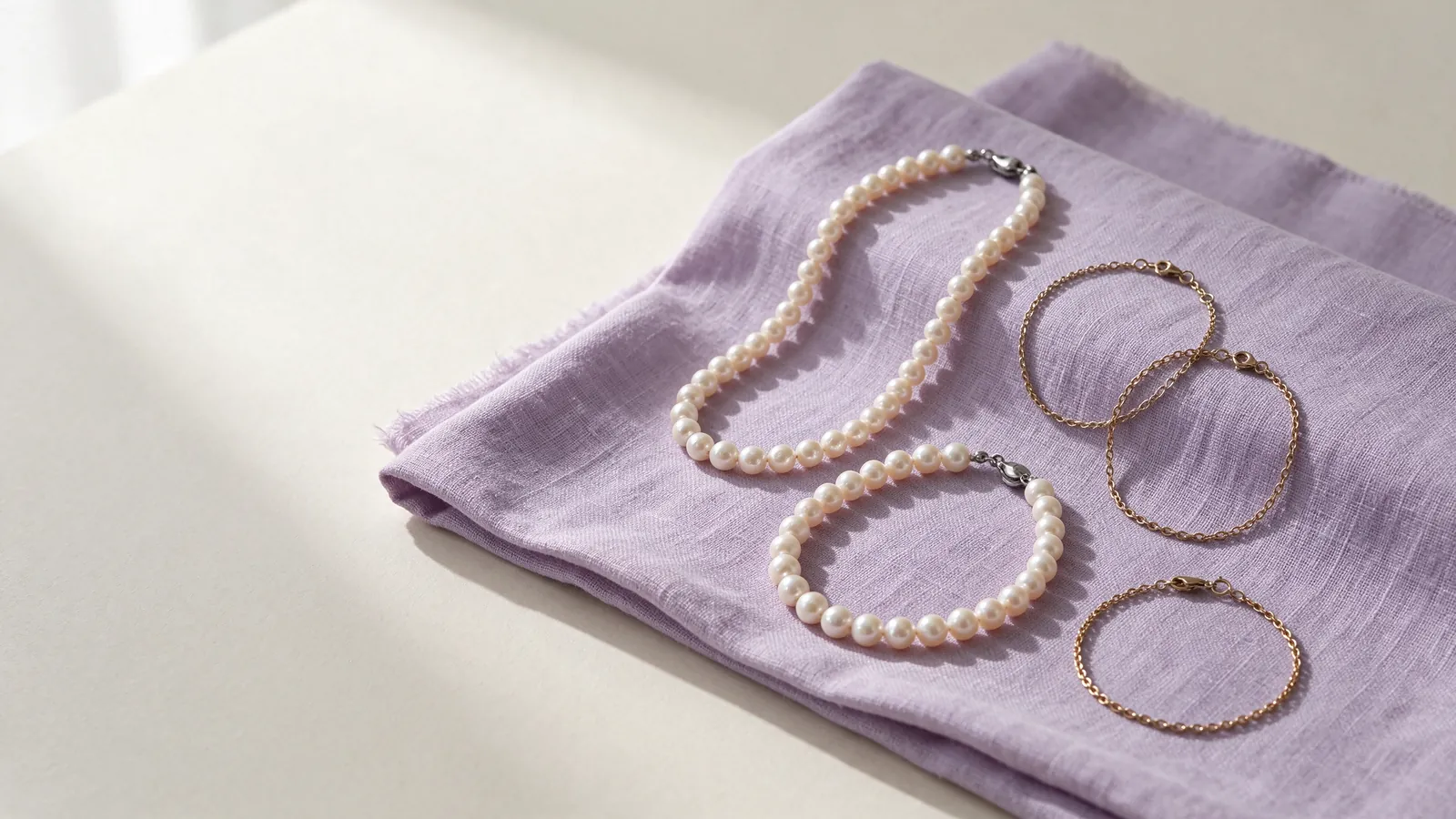
How Should pearl bracelets Fit When Planning a custom pearl bracelet?
Measure where you actually intend to wear the bracelet, rather than choosing an arbitrary point on the arm. Use a flexible, non-stretch measuring tool against the skin without pulling it tight, and keep the hand relaxed. Record both the circumference and the position relative to the wrist bone. This measurement describes the bare wrist; it does not automatically establish a finished bracelet length, because the volume of the pearls and the construction affect the space inside.
Next, describe the movement you enjoy. A closer outline and a bracelet that travels towards the hand can feel quite different even when both look attractive. During a fitting, turn the palm over, bend the wrist gently and imitate everyday actions such as typing or holding a bag. Notice pressure near the wrist bone and whether the bracelet repeatedly meets the desk. Compare options in the same wearing position so that the differences are meaningful.
Checking Clasp Position on pearl bracelets Before Choosing a custom pearl bracelet Length
Clasp access deserves a practical test with the opposite hand. Consider whether you can locate the opening, hold the bracelet steady and close it without twisting the wrist awkwardly. A clasp intended to sit underneath may move as you work; one treated as a design feature may not remain facing outwards. Tell the designer which hand you normally use, where you wear a watch and what feels inconvenient. These observations give a custom pearl bracelet discussion more substance than simply asking for a looser fit.
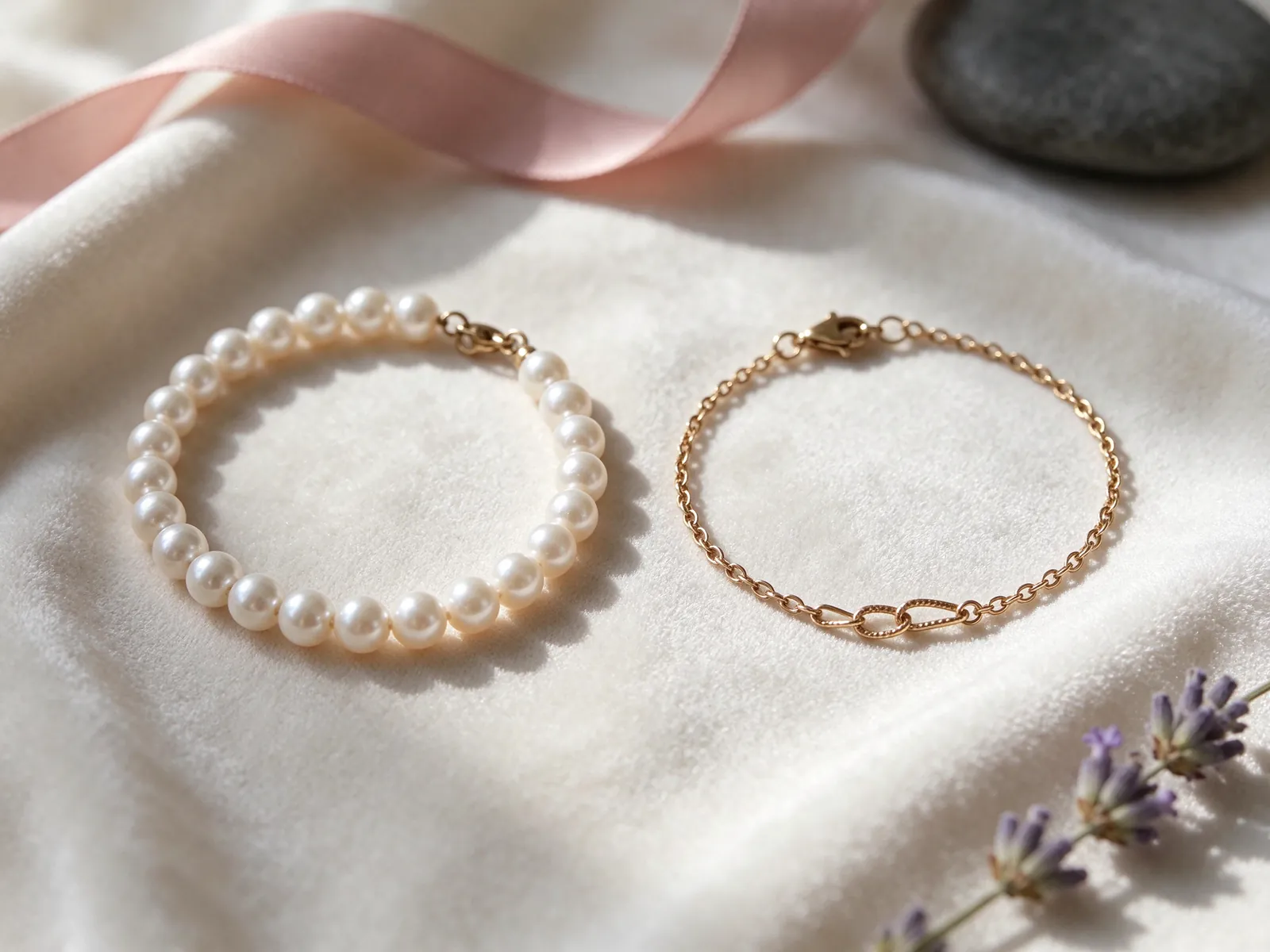
Choose a Silhouette by Looking at the Arrangement
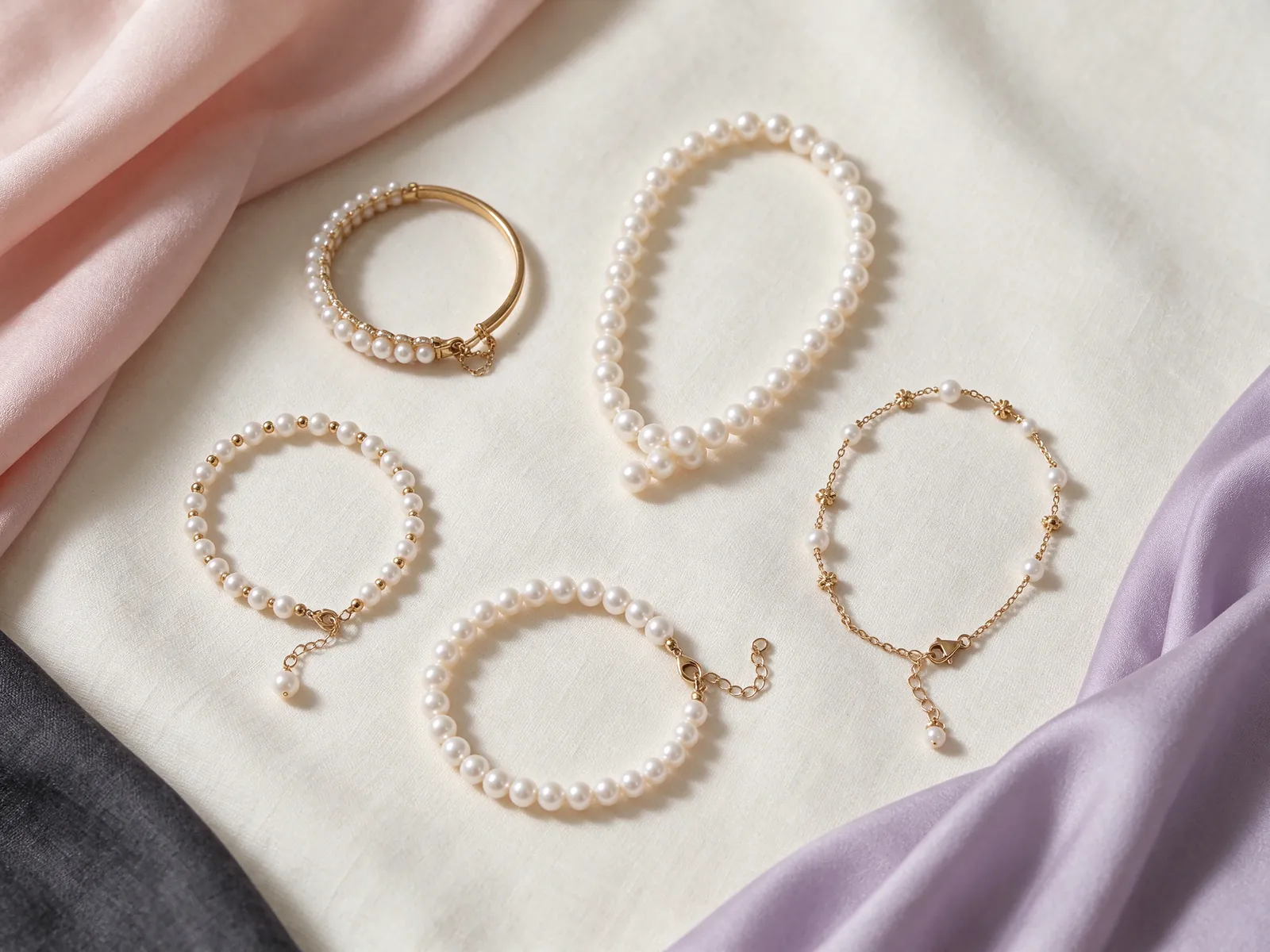
A continuous row brings attention to the rhythm of the pearls around the wrist. When exploring a pearl strand bracelet, look at the curve it forms when worn, how neighbouring pearls relate visually and where the clasp interrupts the line. Do not assume that a delicate wrist always needs the narrowest design. The useful comparison is between the bracelet, the hand and the sleeve, with comfort checked in motion rather than inferred from a still image.
A multi strand pearl bracelet introduces width and a more substantial visual presence. Look for how the rows lie beside one another and whether they overlap when the wrist bends. A wider outline can serve as the main accent without additional bracelets. Try it with the cuff you normally wear and consider where the underside rests while you work. Width is a styling choice, not a substitute for checking fit and clasp orientation.
Use Visible Chain to Change the Visual Rhythm
For more space between pearls, a pearl station bracelet offers a useful design direction to explore. Observe how the stations are distributed as the wrist turns, not only when the bracelet is laid flat. A half chain pearl bracelet makes the contrast between a pearl section and a chain section more explicit. Decide which part you would like to see most and whether you welcome the two sections changing position during wear. Neither arrangement is inherently a higher-quality choice; each creates a different balance of pearl and metal.
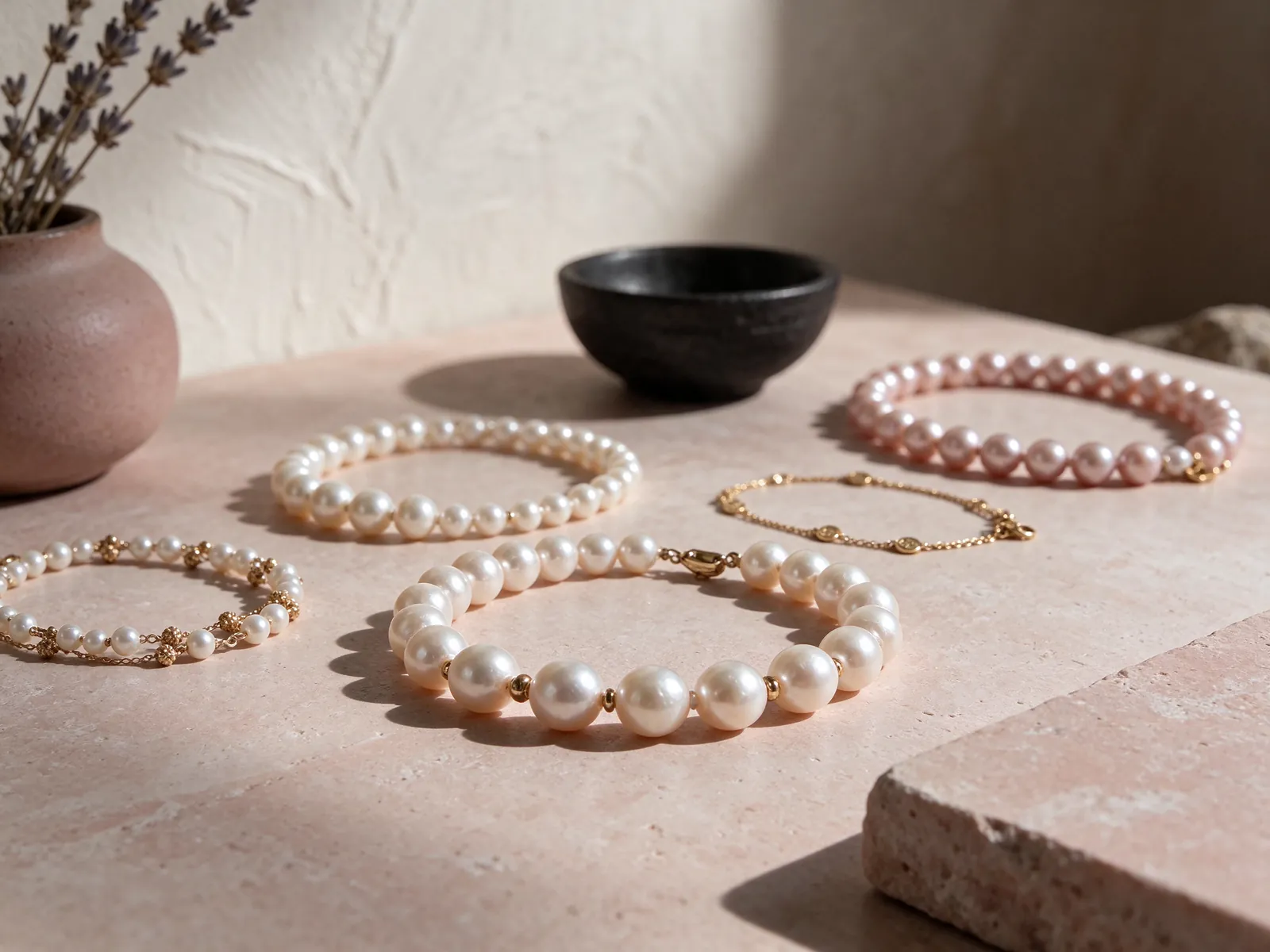
Look Beyond Colour to Lustre and Matching
View pearls in gentle, consistent light and turn the wrist to see how the reflections change. Ask yourself whether the brightness feels coherent along the arrangement, rather than focusing only on one particularly attractive pearl. Strong spotlights and image filters can alter an impression. Surface features also need context: their position and visibility should be considered alongside the overall appearance, not judged solely from a heavily enlarged photograph.
GIA identifies seven pearl value factors: size, shape, colour, lustre, surface quality, nacre quality and matching. Matching is especially relevant to a bracelet because neighbouring pearls are seen together. A harmonious design need not make every pearl look identical; deliberate variation can create a pleasing rhythm. First decide whether you prefer an even outline or visible changes in shape, then assess whether the arrangement supports that preference.
Separate a Style Preference from an Identity Claim
Bodycolour, overtone and orient are distinct colour components, and not every pearl displays all three. A white or dark appearance cannot establish origin, natural-versus-cultured identity or the existence of a certificate. If those details matter to your choice, read the description and applicable documentation for the particular piece. For a broader styling perspective, Pearl Jewellery connects the wrist decision with other forms of jewellery, without requiring a matching set.
Make Room for Sleeves, Watches and Rings
A shirt cuff can push a bracelet towards the hand or catch around a prominent clasp. Try the cuff fastened as you would normally wear it, rather than rolled back just for the fitting. With knitwear, pay attention to parts that could catch the fabric. If you spend much of the day typing, the contact at the underside of the wrist matters as much as the view in a mirror. Clothing provides a more realistic test than an uncovered wrist alone.
When wearing a watch, trying the bracelet on the other wrist is a useful way to reduce direct contact between the pieces. If you prefer them together, observe whether they move into one another during ordinary gestures. A prominent ring may pair well with a quieter bracelet outline, while a wider pearl arrangement can be the main focus. Coordination is about choosing where the eye rests, not making every accessory equally noticeable.
Let the Occasion Suggest a Focus, Not a Uniform
Pearls need not be reserved for formal clothing. A plain top can leave room for a bracelet's reflected light, while a patterned sleeve may call for a simpler outline. For a celebration, consider how the bracelet appears when seated, holding a bag or posing for photographs. Those positions can reveal a different section of the arrangement. Trying the actual outfit helps identify clashes with sleeve decoration and shows whether the intended focal point remains visible.
Consider Metal Colour and Clasp Function Together
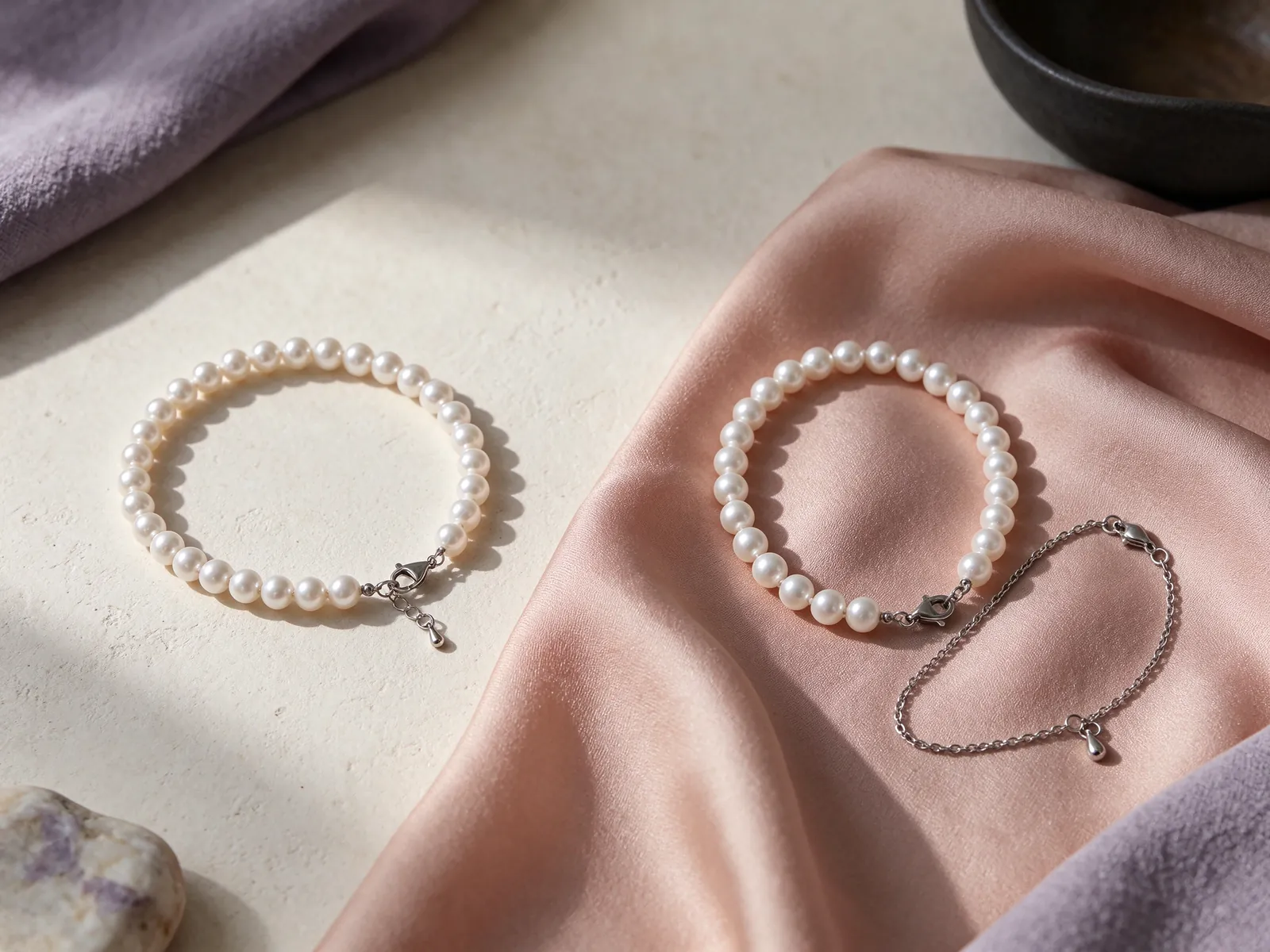
Begin with the metal colours you already enjoy wearing and decide whether you want continuity or contrast. Flint Jewellery's five customisation material options are 18K 750 white gold, 18K 750 yellow gold, 18K 750 rose gold, PT950 platinum and PT900 platinum. In a bracelet design conversation, specify whether the metal should act as a subtle connection, a visible chain section or a clasp accent. A material name alone does not determine how the finished structure will sit.
A beautiful clasp still needs to suit the way you handle jewellery. Check whether you can identify its opening and operate it comfortably, and notice any part that meets the desk or sleeve. If you prefer a discreet clasp underneath the wrist, discuss that alongside the overall arrangement. Treating the clasp as part of the design from the beginning is more useful than viewing it as a final decorative addition.
Do Not Use Tightness to Force a Fixed Position
If the clasp rotates into view, consider wearing space, weight distribution and wrist movement before requesting a shorter length. A bracelet should not be made uncomfortable merely to reproduce a photograph's angle. Describe whether your priority is easier handling, a quieter clasp or a more concentrated outline, then consider these priorities together. If a piece causes skin discomfort during wear, remove it and seek appropriate professional advice rather than assuming that another metal colour will solve the problem.
Prepare a Useful Brief for Yourself or a Gift
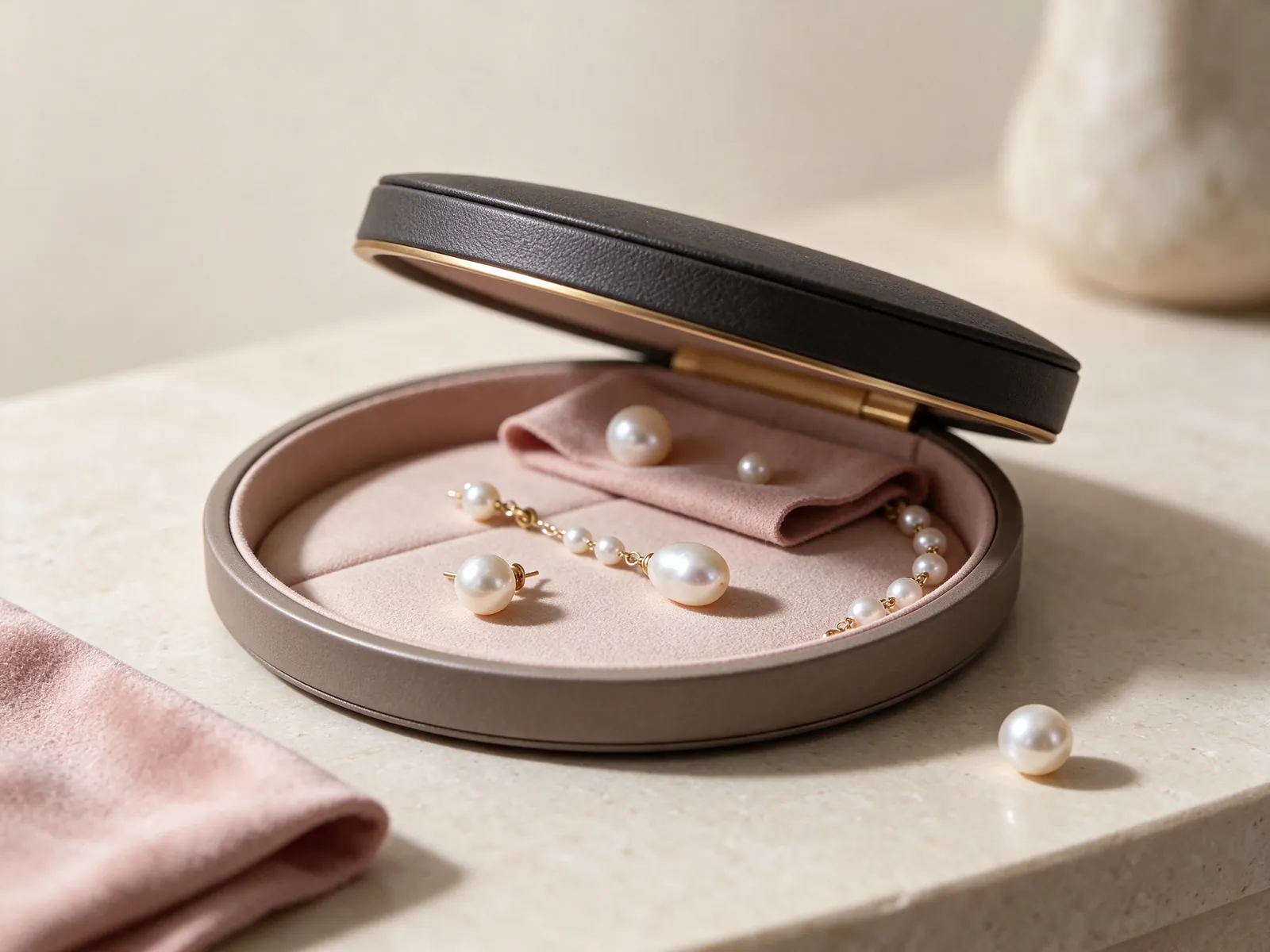
Choose a few style images and explain what attracts you in each: the spacing, the outline, the metal colour or the balance with the hand. An image is a starting point, not a complete specification. Include dislikes as well, such as a clasp that is too conspicuous or a bracelet that travels towards the palm. Record the intended wearing wrist, typical sleeves and whether the piece would share space with a watch.
For a gift, the recipient's wrist measurement and wearing habits are more helpful than guesses based on height or clothing size. Asking about a closer or more mobile fit can make the decision more personal. If you are keeping the idea a surprise, observing favourite accessories can inform the style direction, but it cannot establish the correct length. Keep uncertainty about fit separate from confidence about the recipient's taste.
Describe Comfort in Actions, Not Only Measurements
If you use an existing bracelet as a comparison, explain when it feels comfortable and when it gets in the way. Its stated length may not translate directly to a different construction. A concise brief can combine the measured wrist position, preferred silhouette, clasp visibility and intended occasions. Discuss wrist fit and design ideas with Flint Jewellery on WhatsApp, using those details to keep the conversation focused on personal needs rather than a request to reproduce every feature in a photograph.
Protect Pearls Where the Wrist Meets Daily Life
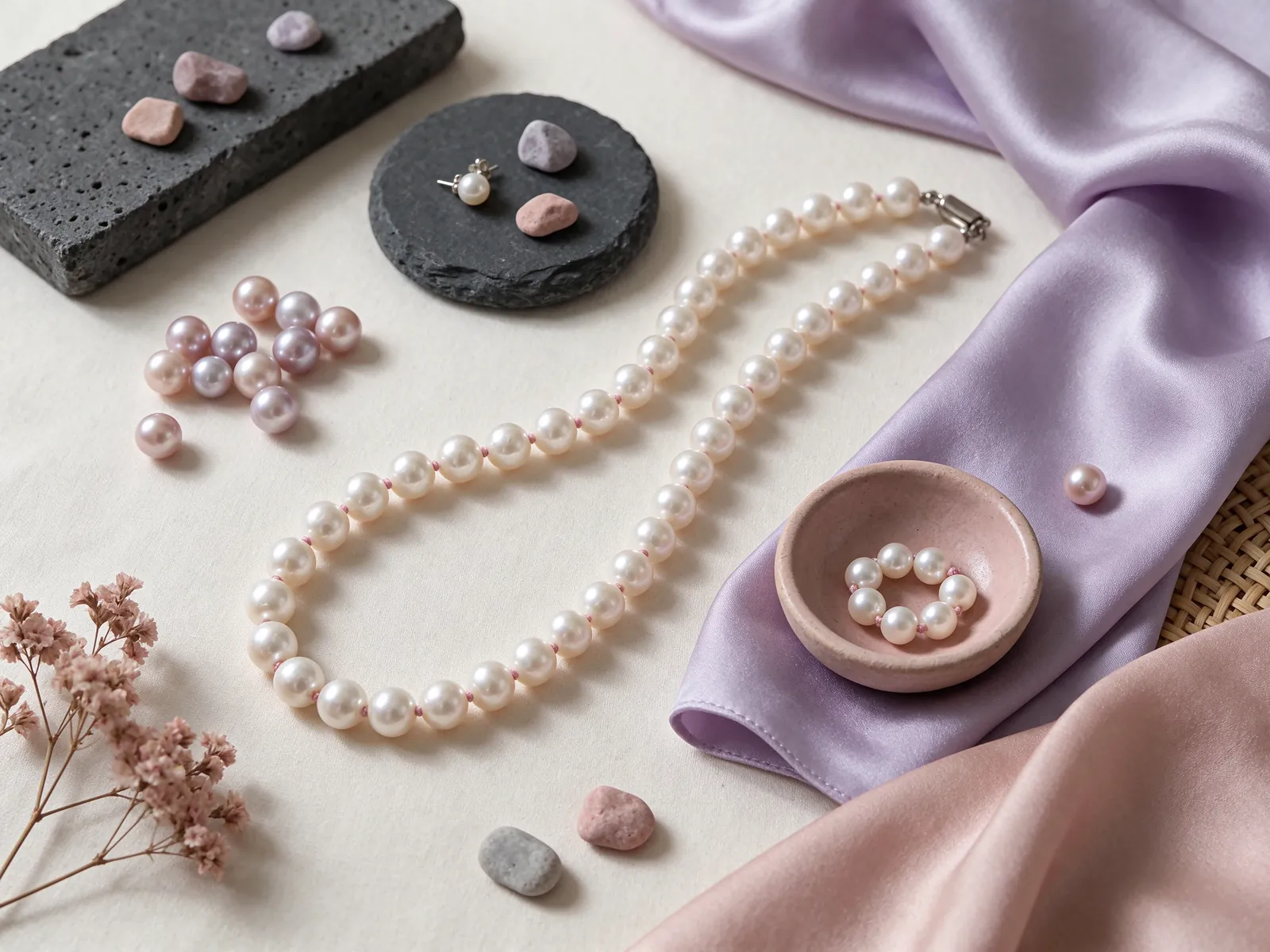
Bracelets spend time near desks, bag fittings and the sink. Remove the piece before tasks that involve cleaning products or repeated contact with hard surfaces, and keep perfume and hair spray away from the pearls. GIA gives pearl a Mohs hardness of 2.5, a useful reminder to take scratching seriously. That number is not a promise of resistance to a particular impact, and it should not be used as a test of how firmly a bracelet can be handled.
After wearing, gently wipe pearls with a very soft, clean cloth and store them separately from jewellery that could scratch them. GIA advises against ultrasonic and steam cleaners for pearls, and against exposure to acids and excessive heat. If strung pearls are cleaned with water, the string must be completely dry before wearing. A dry-looking outer surface does not establish that the string around the drill holes is ready.
Respond to Wear without Pulling or Testing the Bracelet
When putting the bracelet away, notice whether the clasp closes normally and whether any visible string or chain shows damage or unusual looseness. If something has changed, stop wearing it and seek an appropriate jewellery professional's assessment. Do not pull the arrangement to test its strength. Care depends on construction and use, so a single maintenance interval should not be assumed for every bracelet. Store the piece in a natural position without heavy items pressing on it.
When you have noted your wrist measurement and wearing preferences, discuss design ideas with Flint Jewellery on WhatsApp or call +85260106207.
| Arrangement | Visual emphasis | Fit observation | Sleeve consideration | Design discussion |
|---|---|---|---|---|
| Continuous strand | An uninterrupted pearl rhythm | Curve around the wrist bone | Cuff pushing the strand | Evenness or deliberate variation |
| Multiple rows | A wider wrist accent | Rows overlapping on movement | Balance with decorated cuffs | Orientation and visual width |
| Spaced pearls | Pearl and metal alternating | Stations seen as the wrist turns | Simple fabric as a backdrop | Spacing and chain presence |
| Pearl and chain sections | Two distinct visual elements | Sections changing position | Which section a cuff conceals | Preferred outward-facing portion |
| Visible clasp accent | Closure within the composition | Access and underside contact | Potential fabric catching | Visibility and ease of handling |
Pearl knowledge and authoritative references
GIA lists pearl at 2.5 on the Mohs hardness scale. For a bracelet, this supports attention to scratching at the desk and against other jewellery; it is not an impact-resistance guarantee.
Read the reference for this factFrequently asked questions
Why is wrist circumference not the same as a finished bracelet length?
The measurement follows bare skin, while pearls, chain and the clasp create a structure with its own inner space. Record where you measured and how much movement you prefer, then consider the fit of the actual construction instead of applying one length to every style.
Should I choose a strand or a spaced design for shirt sleeves?
Try each outline with your normal cuff fastening. A strand may be pushed towards the hand, while visible chain or clasp details may catch the fabric. The useful choice depends on the actual sleeve and wrist movement, not a rule that one arrangement is always better.
Does a rotating clasp mean the bracelet must be shortened?
Not necessarily. Movement, wearing space and weight distribution can all contribute. Observe when it rotates and discuss clasp position with the overall design. Reducing length solely to hold one visual angle can make the piece less comfortable.
Can matching pearls still have different shapes?
Yes. A design can intentionally use variations while keeping a coherent visual rhythm. GIA includes matching among seven value factors, but your style choice can favour either an even outline or more visible changes. Shape alone does not establish pearl identity.
Can I use a jewellery cleaning machine on a pearl bracelet?
Pearls should not be cleaned in ultrasonic or steam cleaners. Use gentle care appropriate to the construction, including a very soft, clean cloth after wear. If strung pearls have been cleaned with water, allow the string to dry completely before wearing.
Updated: