
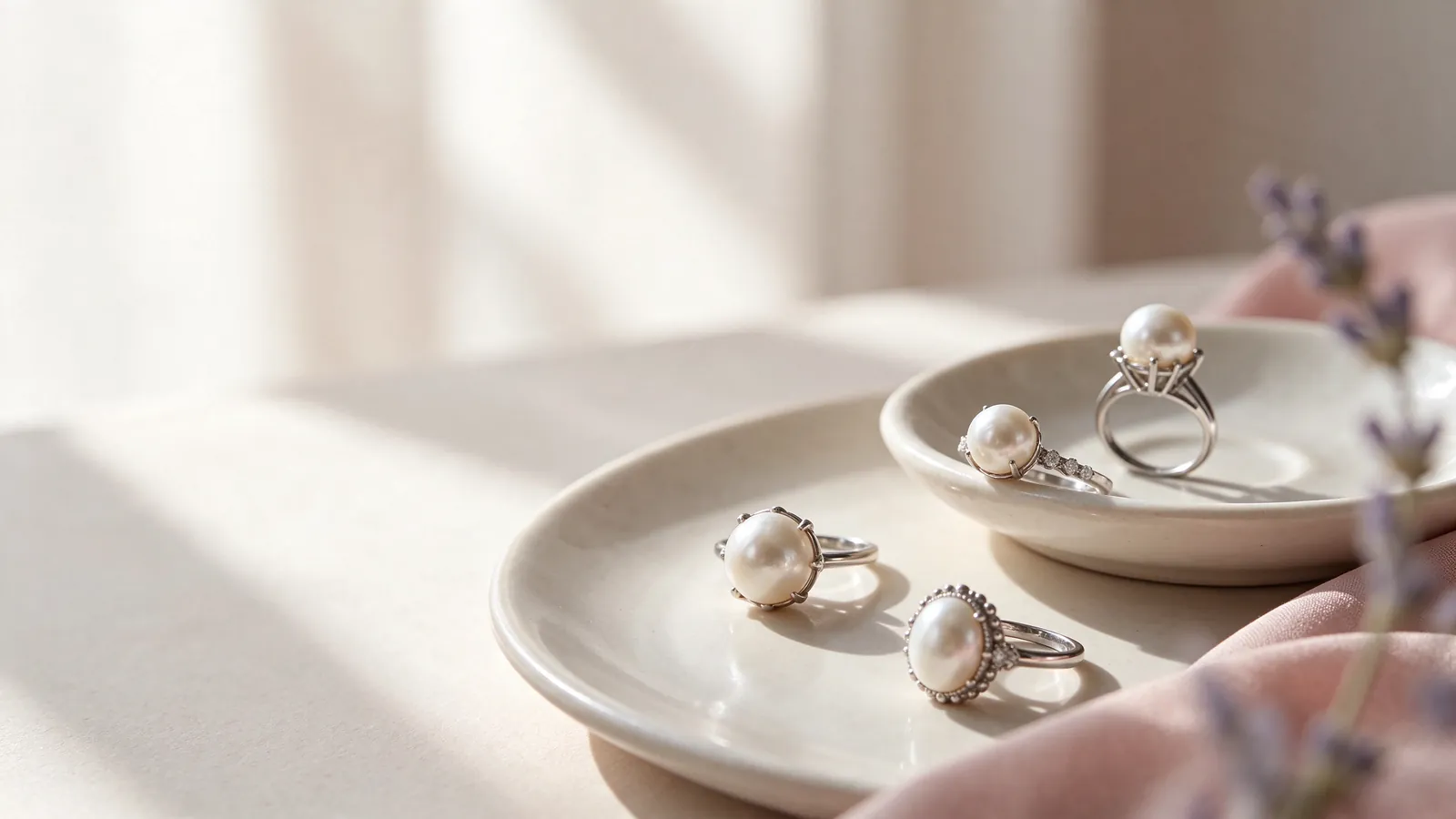
How should a statement pearl ring, pearl cocktail ring or bold pearl ring balance hand proportions and fit?
Start with the outline of the whole ring on your hand. A broad setting spreads the focal point across the fingers, while a lengthwise silhouette draws attention towards the fingertip. Neither is reserved for a particular hand shape. Look at how much of the finger remains visible and whether the setting extends into the space beside it. The pearl rings Hong Kong guide provides a wider starting point for understanding settings before choosing a more pronounced silhouette.
A statement pearl ring does not need to rely on apparent pearl size alone. Open metalwork, a curved shoulder or an offset composition can create presence without a densely decorated surface. Think about the hand and finger you intend to use, along with the clothes you reach for most often. The term pearl cocktail ring can describe a styling focal point; it need not confine a bold pearl ring to formal evenings.
When trying on a statement pearl ring, what can rotation and finger contact reveal about a pearl cocktail ring or bold pearl ring?
Let your hand hang naturally, then gently close and open it. Notice whether the head repeatedly turns in one direction or presses against an adjacent finger. Rotation can relate to the head's balance and the band shape as well as size, so a tighter band is not automatically the answer. The ring should pass the knuckle without relying on persistent pressure once in place.
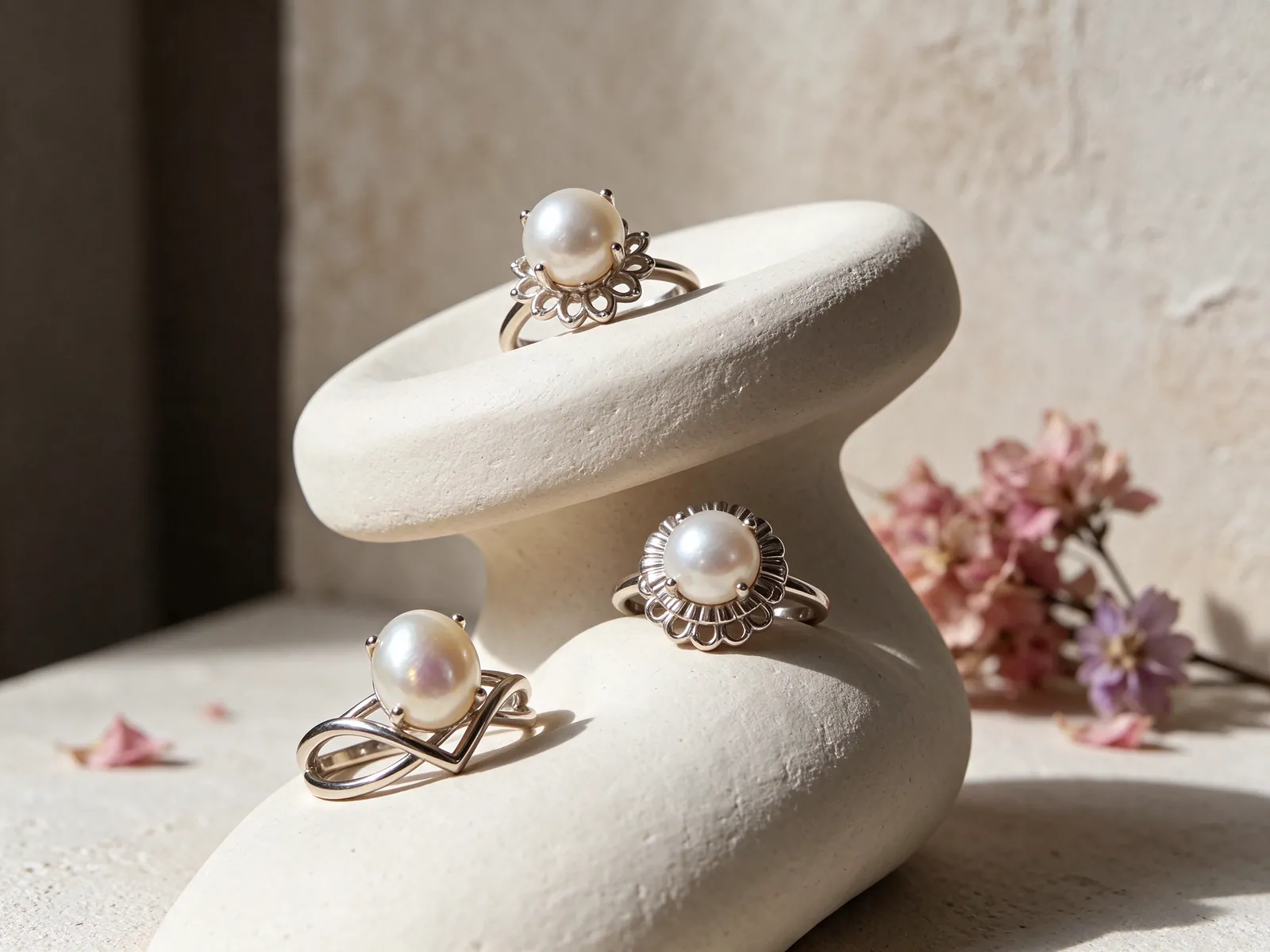
Which setting lines create presence without a heavy look?
Separate visual width from visual density. A ring with generous open space can occupy a broad area while showing the finger beneath it; a compact but solid shoulder may feel more graphic. A pearl signet ring is a useful comparison when you enjoy a strong, unified outline. Consider where that width sits, because a wide shoulder can meet neighbouring fingers differently from a narrower band.
For a more directional line, explore the curved composition discussed in the crescent moon pearl ring guide. An arc facing towards the fingertip suggests a different movement from one opening towards the side of the hand. Check the side view as well as the front: a graceful outline in a photograph can still sit noticeably high. What matters is whether you enjoy that silhouette from the angles in which you normally see your hand.
How can photographs help without distorting scale?
Use a whole-hand photograph for proportion and a close-up for detail. A tightly cropped image can exaggerate apparent size and reveal little about band width or clearance. Compare similar camera distances and hand positions where possible. If an image shows only the pearl, leave conclusions about wearing height open rather than treating the crop as a complete view of the ring.
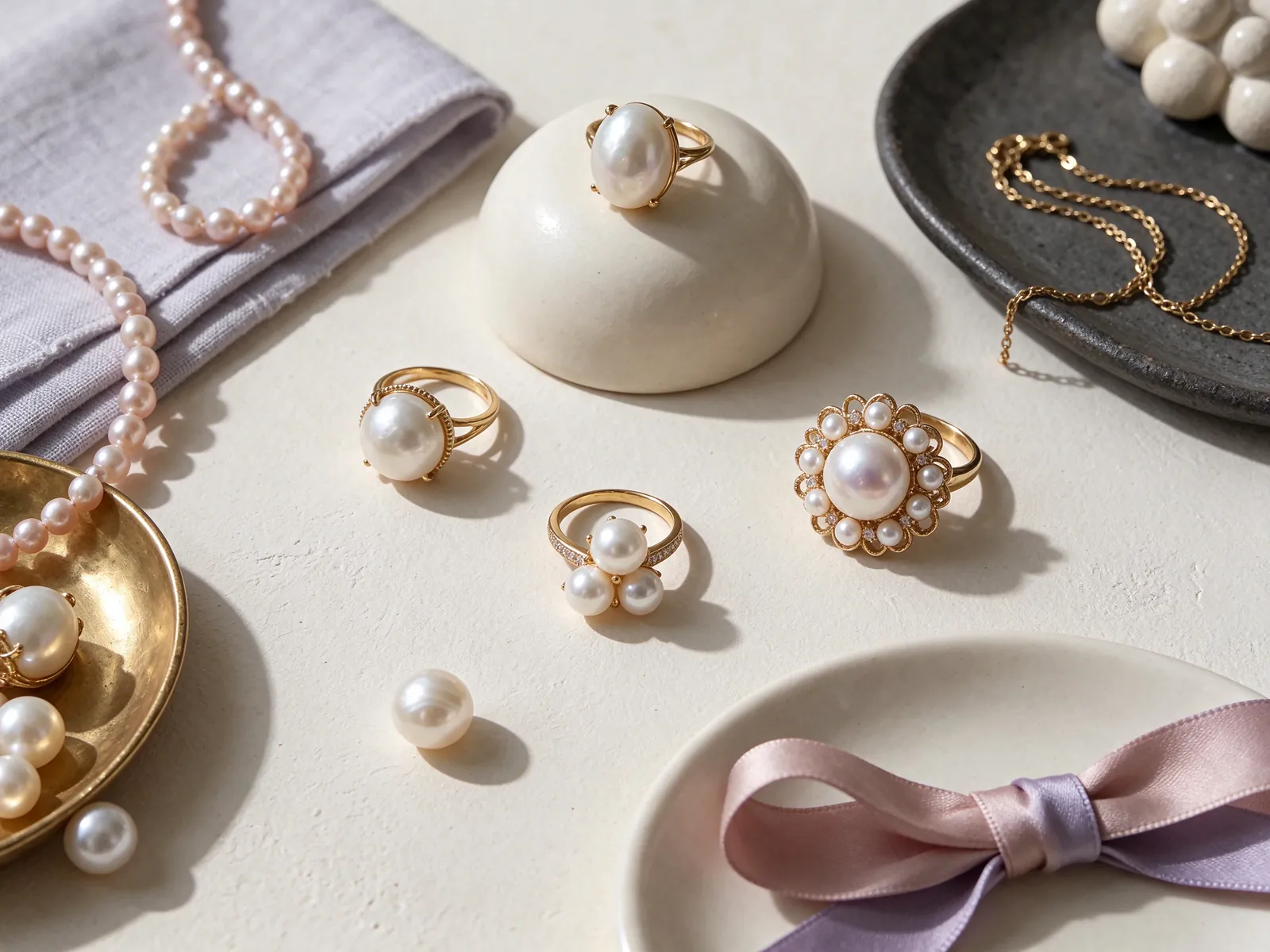
What should you assess beyond the apparent size of the pearl?
GIA describes seven pearl quality factors: size, shape, colour, lustre, surface quality, nacre quality and matching. This framework helps explain why visual size is only part of the choice. For a single-pearl ring, consider the clarity of reflections and the visible surface alongside the overall form. In a multi-pearl composition, the relationship between pearls also matters. These factors are not a claim that a particular ring carries a grade or certificate.
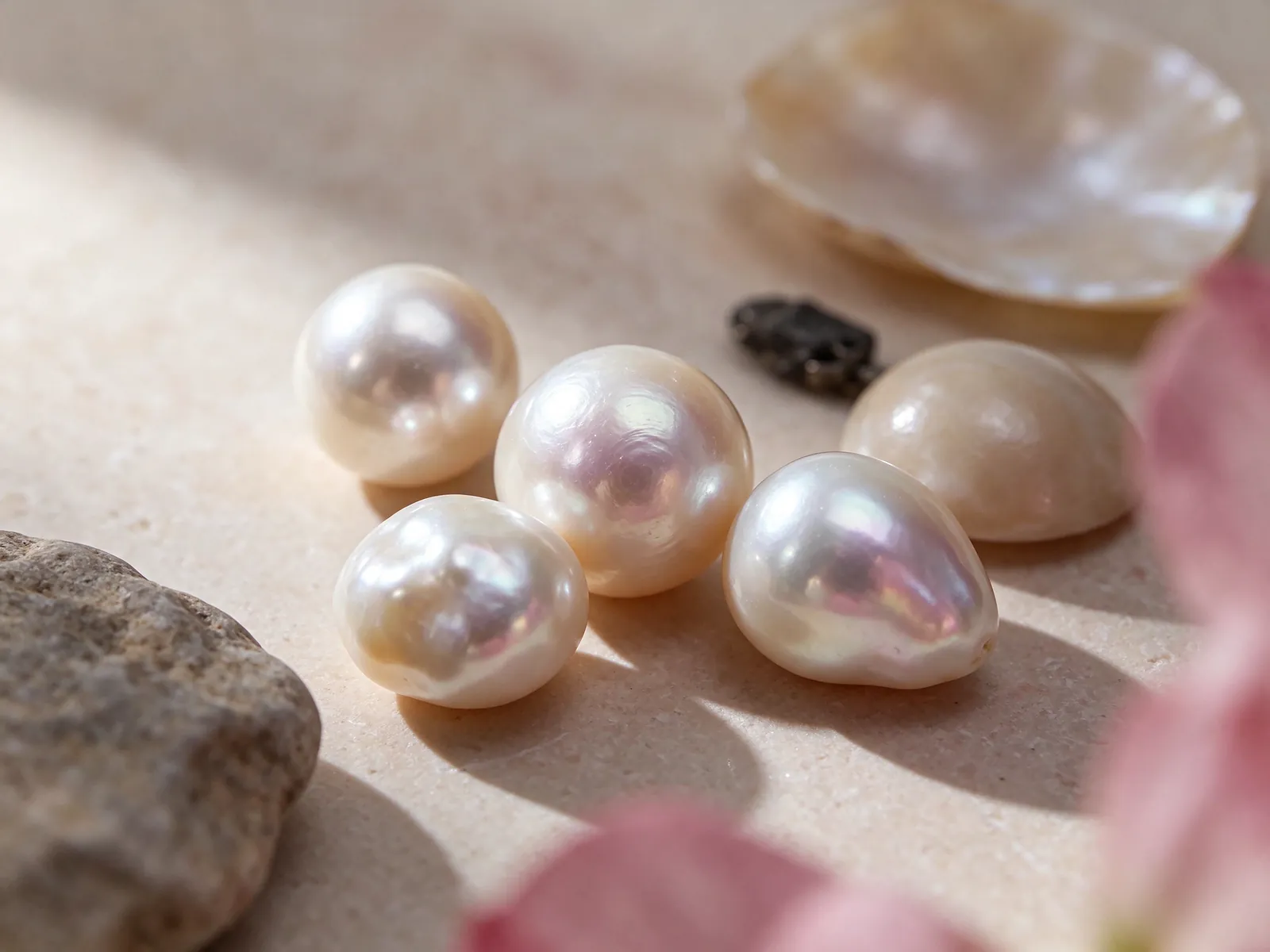
View the pearl in gentle light and change the angle slightly. Look at the overall colour first, then the reflections and any visible surface features. A bright photographic hotspot may reflect the lighting setup rather than the pearl's own lustre. Bodycolour, overtone and orient are distinct colour components, and not every pearl displays all three. Colour or shape alone cannot establish origin or natural-versus-cultured identity.
How can an irregular outline contribute to the design?
An irregular pearl can give the composition a clear direction. Consider which face you want visible and whether a projecting part reaches towards an adjacent finger. A curved setting may echo that outline, while a geometric shoulder may create contrast. Judge the combination as a design decision rather than using an unusual shape to infer pearl species, provenance or value.
How do you style a focal ring with tailoring or evening clothes?
With a plain shirt or structured jacket, a clear ring silhouette can provide the main point of interest on the hand. A patterned sleeve already contributes detail, so consider a simpler outline rather than adding several competing motifs. If you enjoy contrasting reflections, the pearl and diamond ring guide explores how accents at the shoulder or beside the pearl shift attention within a composition.
For evening wear, compare the framed outline of a pearl halo ring with the surface texture discussed in the pavé pearl ring guide. These are different ways to organise sparkle, rather than a scale of how dressed up you must be. If cuffs already have embroidery or shine, leave more space around the focal ring. A bracelet or another ring need not repeat every detail to belong in the same outfit.
Where should other hand jewellery sit?
Check whether another ring's head or band touches the pearl when you bend your fingers. Moving a companion ring to the other hand can retain the layered effect without crowding the setting. Let a bracelet fall naturally towards the wrist and notice its position when you hold your bag. A static photograph does not reveal all the contact that occurs during ordinary movements.
How do height and everyday movements affect your choice?
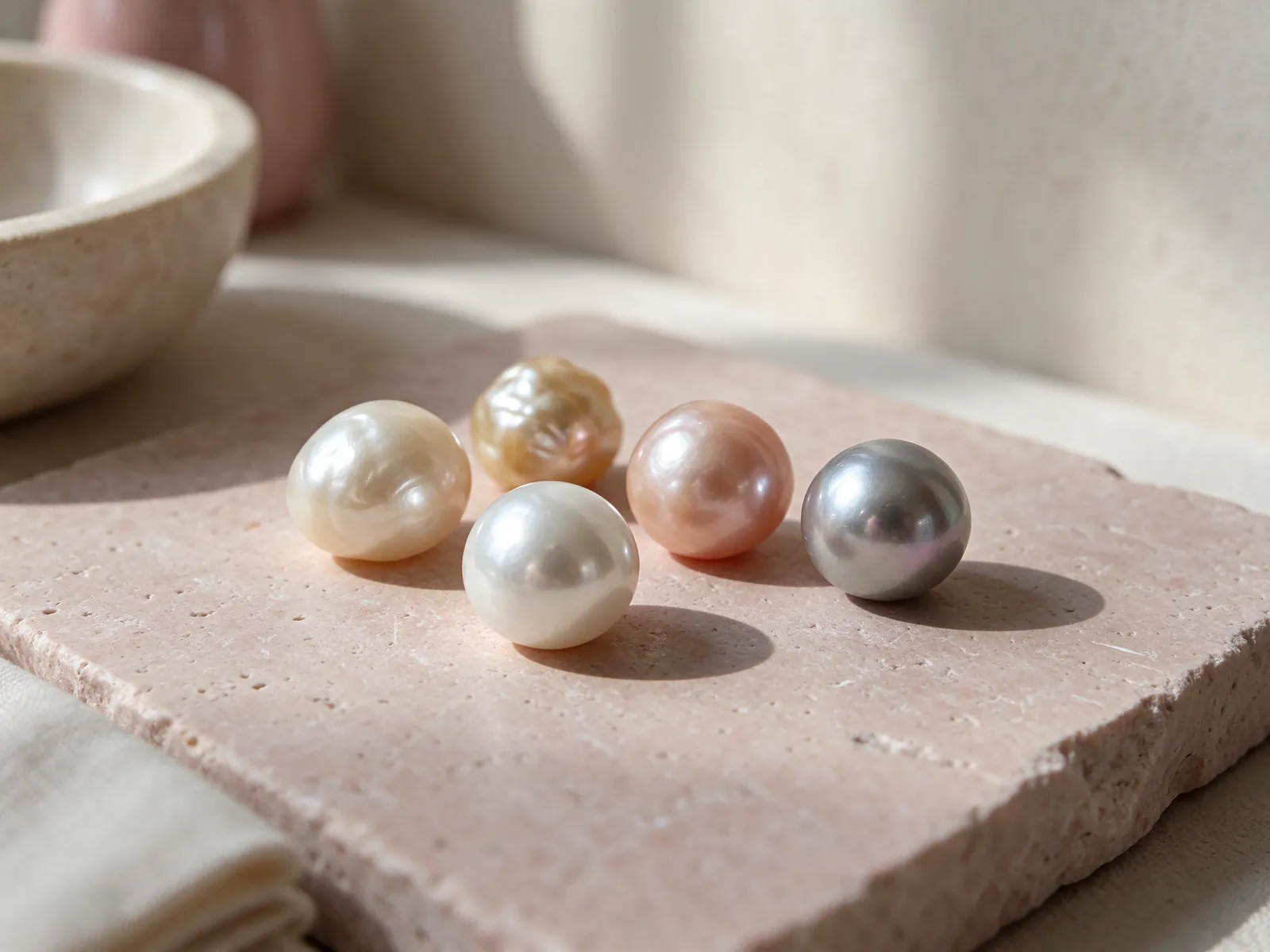
A raised head can make the pearl more visible from the side, but it can also meet a fitted cuff or nearby objects more often. During a try-on, gently handle your phone, bend your fingers and arrange the sleeve you normally wear. Look for contact at the setting's edges as well as the pearl. Do not press or twist the pearl to test security; observing how a ring wears is different from checking its construction.
Try the intended hand rather than assuming both hands need the same fit. A broader band can feel different when fingers close together, and the knuckle may be more noticeable on one hand. Note whether your hands feel swollen or have just been active, so your impression of tightness has context. Pain, numbness or persistent pinching are reasons to stop wearing the ring, not a period of adjustment to endure.
What if a comfortable band still allows the head to turn?
Describe the direction of movement, how often you reposition the head, and whether adjacent fingers touch it. An offset or top-heavy composition may behave differently from a centred one. Reducing size alone may compromise passage over the knuckle without addressing that balance. Decide how much you value the particular silhouette compared with keeping the focal point centred, then compare structures with that preference in mind.
How should you prepare a clear personal design brief?
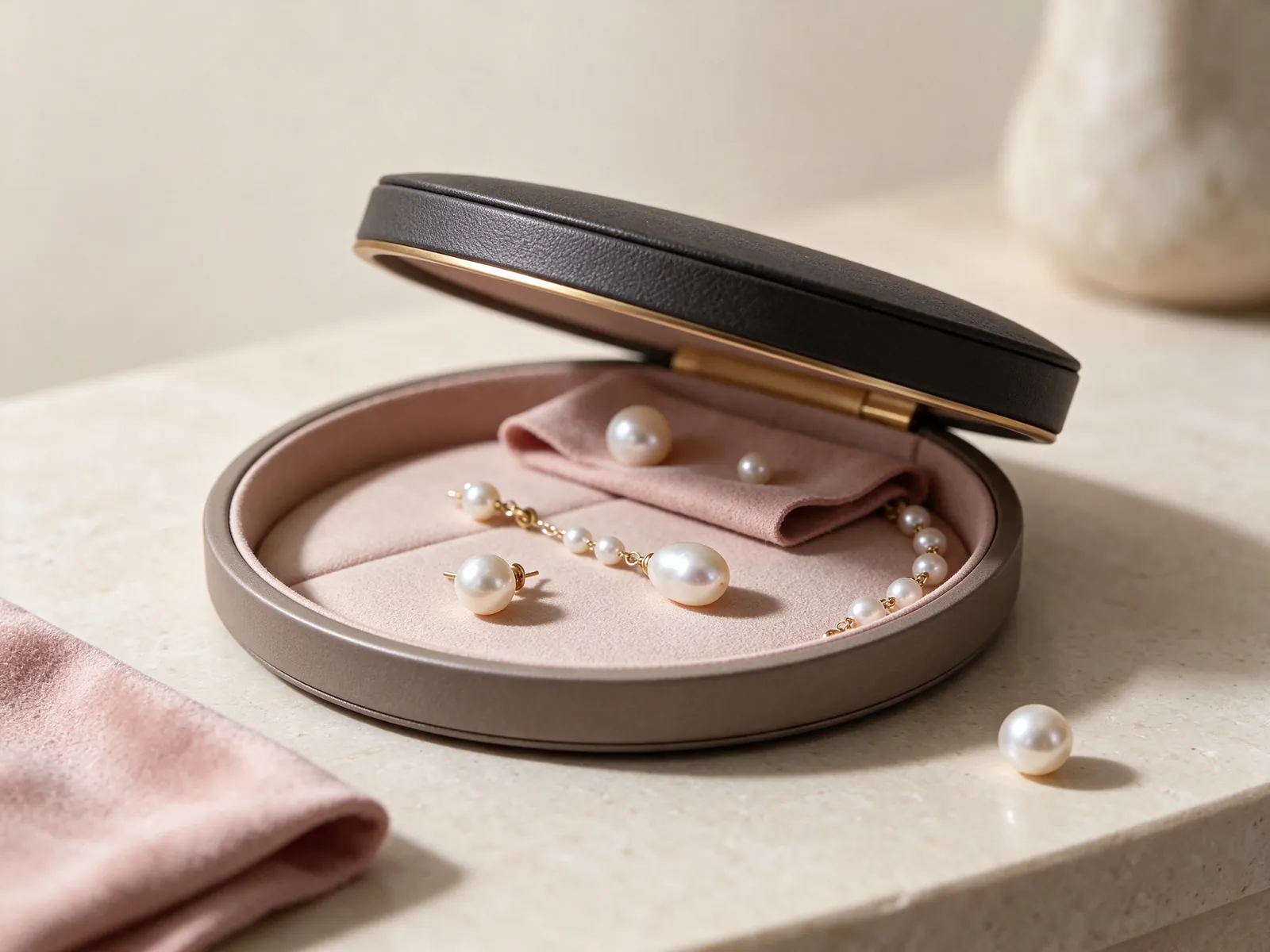
For a customisation discussion, name the hand and finger, the usual sleeve shape and the visual effect you want. Organise inspiration into outline, pearl appearance and outfit rather than treating every detail in a photograph as essential. You might prefer a broad front with a less raised profile, or a directional line with more space beside the finger. Explaining the priority makes the design conversation more concrete.
Flint Jewellery's custom metal options are 18K 750 white gold, 18K 750 yellow gold, 18K 750 rose gold, PT950 platinum and PT900 platinum. Compare the metal colour with jewellery you already enjoy wearing; colour alone does not determine comfort. Keep pearl selection, setting outline, ring size and metal choice as separate decisions when discussing a specific ring, so the eventual design is understood as a whole.
Which questions are more useful than simply asking for a bigger pearl?
Ask whether the desired width could be explored with a lower profile, or where a curved shoulder would sit beside the next finger. Mention the movements that matter to you, such as typing or holding a bag. When contacting Flint Jewellery on WhatsApp, a whole-hand photograph and a short description of both liked and disliked details can communicate proportion more clearly than a close-up alone.
How do you protect a prominent pearl during wear and storage?
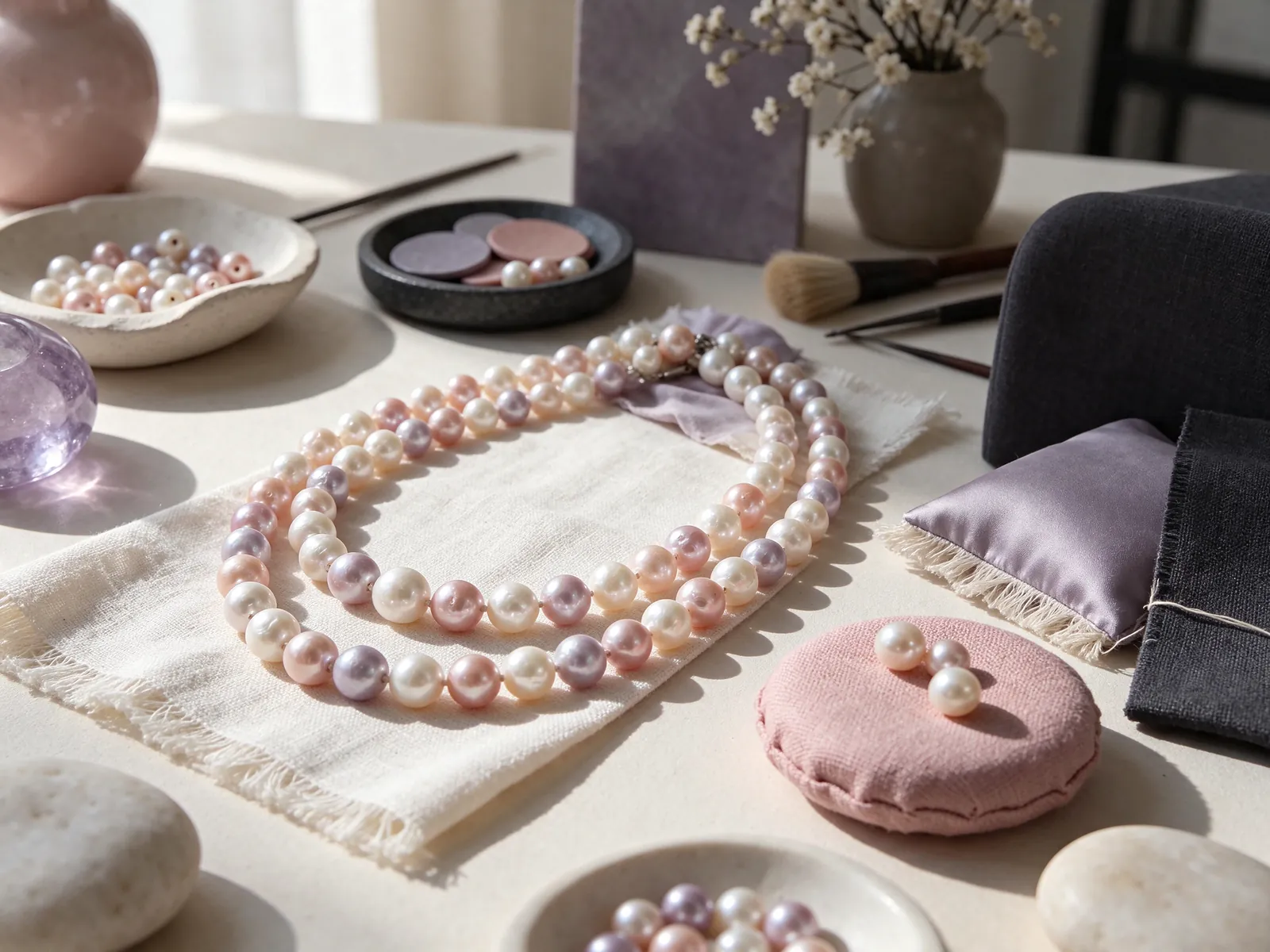
GIA places pearl at 2.5 on the Mohs hardness scale. This is a useful reminder to avoid abrasion, not a prediction of what any individual knock will do. Finish perfume and hair spray before putting on the ring, and remove it before housework, exercise or tasks involving rough contact. Pay attention to bag clasps, desk edges and door handles that may meet a raised focal point.
After wearing, wipe gently with a very soft, clean cloth and store the ring separately from pieces that could rub the pearl. GIA advises against ultrasonic and steam cleaners for pearls, as well as acids and excessive heat. If you notice a change in the pearl or setting, avoid vigorous rubbing, glue or twisting. Record what you noticed instead of trying to force the piece back into position.
What is a practical routine when taking the ring off away from home?
Carry a separate soft pouch or compartmented box rather than dropping the ring among keys, coins and other jewellery. At a table, avoid hiding it in a napkin or leaving it beside a glass where it can be cleared away. At home, put the ring in its usual place before removing makeup or washing your hands, reducing unnecessary contact with cleaning products.
To discuss a ring silhouette alongside your wearing habits, contact Flint Jewellery on WhatsApp about proportions and fit, or call +85260106207.
| Design element | What to observe | Gentle try-on check | Styling consideration |
|---|---|---|---|
| Overall outline | Width across the hand versus length along the finger | View the whole hand and an oblique angle | Keep the focal shape clear beside patterned clothes |
| Profile height | Projection of the pearl and setting from the side | Handle your phone and arrange your usual cuff | Notice contact with fitted or knitted sleeves |
| Balance | Repeated turning in the same direction | Let the hand hang, then close and open it | Weigh the preferred silhouette against repositioning |
| Pearl appearance | Lustre, shape, colour and visible surface features | Change the viewing angle in gentle light | Choose a visual character you enjoy |
| Space around the ring | Contact with fingers, other rings or bracelets | Hold a bag and let neighbouring fingers relax | Use the other hand to avoid crowding |
Pearl knowledge and authoritative references
GIA ranks pearl at 2.5 on the Mohs hardness scale, making abrasion avoidance relevant when choosing and wearing a prominent ring; pearls should not be cleaned with ultrasonic or steam cleaners.
Read the reference for this factFrequently asked questions
Does a statement pearl ring need a very large pearl?
No. Width, open space, a directional curve or an offset composition can create presence. Compare the complete silhouette on the hand rather than using apparent pearl size as the sole measure of impact.
Can I wear a pearl cocktail ring with a shirt and jacket?
Yes, the term can describe a styling focal point rather than a dress code. A plain cuff and simple tailoring can give the ring visual space. Check that the sleeve does not repeatedly catch the setting.
Should I choose a tighter ring if the head rotates?
Not automatically. Rotation may involve the head's balance and band shape as well as size. Observe knuckle passage, contact and movement separately; excessive tightness can create a new problem without resolving the first.
How can I compare rings from photographs fairly?
Use whole-hand views at similar distances for proportion, then close-ups for surface and setting details. A crop showing only the pearl cannot reliably communicate wearing height, band width or neighbouring-finger clearance.
Is an ultrasonic cleaner suitable after an evening out?
No. GIA advises against ultrasonic and steam cleaning for pearls. Use a very soft clean cloth for routine wiping, keep the ring apart from harder jewellery and avoid acids, perfume and excessive heat.
Updated: