
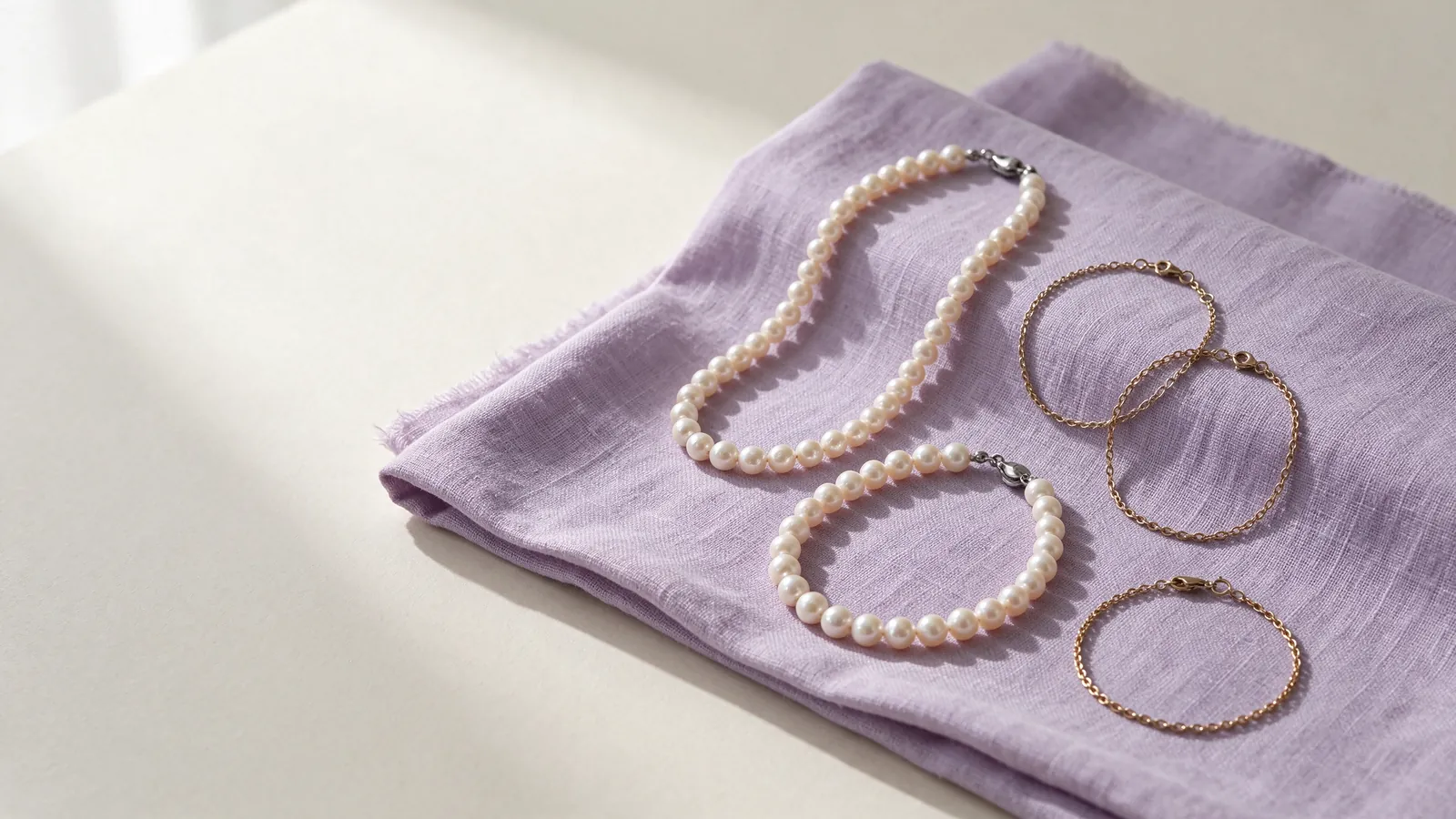
How does one-handed fastening influence your pearl bracelet clasp choice, the best clasp for pearl bracelet wear and your use of a pearl bracelet safety clasp?
Begin with the hand you actually use to fasten jewellery. A clasp that feels straightforward between both hands may become awkward when one end is already around your wrist. Rest your wrist on a clean, soft cloth so the pearl bracelet is supported, and practise bringing the ends together without pulling on the strand. Notice whether your fingertips can hold the metal rather than gripping the neighbouring pearls.
Try opening as well as closing the fastening. Long nails, the direction of a lever and the position of the connecting ring can all change the experience. A larger clasp is not automatically easier if its surface slips between your fingers. If another person normally helps you, ask them to try the complete sequence too; shared understanding is more useful than choosing a clasp that neither wearer nor helper can comfortably release.
Before choosing the best clasp for pearl bracelet wear, what should you check on the pearl bracelet clasp and any pearl bracelet safety clasp?
Look for proper alignment and any obvious gap, confirm closure using the clasp's intended action, and then operate any additional catch. Move your wrist gently to check pressure at the wrist bone. A click is not a substitute for looking at the connection, and a forceful tug is not a suitable test. You should understand which part to release first before wearing the bracelet away from the fitting.
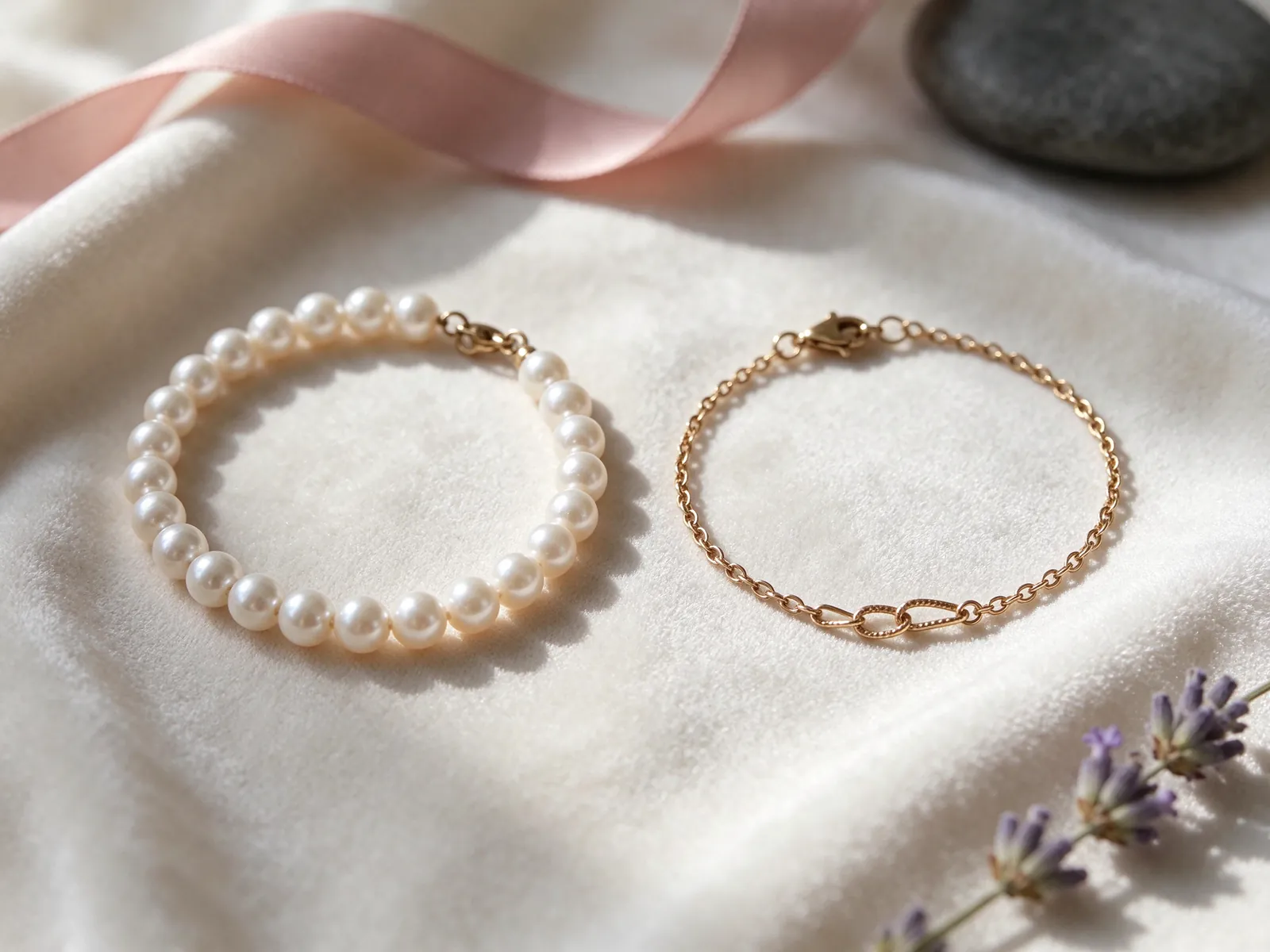
Box and lobster mechanisms: compare the movements your fingers must make
A box clasp generally brings an insert into a receiving box. The practical question is whether you can align both ends without twisting the strand or forcing the insert at an angle. Examine the underside as well as the decorative face: a fastening that looks balanced from above may feel uncomfortable against the wrist. Check whether projecting edges catch the inside of a shirt cuff when you move your arm.
A lobster clasp involves moving a lever and guiding its opening around a connecting ring. Test the ring as carefully as the clasp itself. If it disappears behind a pearl or turns away as you reach for it, the lever may be easy to press while the whole fastening remains difficult to use. Compare how naturally your fingers reach the opening and whether you can release it without putting tension into the strand.
Distinguish an unfamiliar action from an unsuitable mechanism
After a demonstration, repeat the action yourself with the bracelet supported. Changing the wrist angle or finger position may resolve an awkward approach. Persistent stiffness, a bent insert or a lever that does not return normally is different: stop forcing it and have the mechanism examined. Repeatedly opening a difficult clasp is not a sensible way to make it fit your routine.
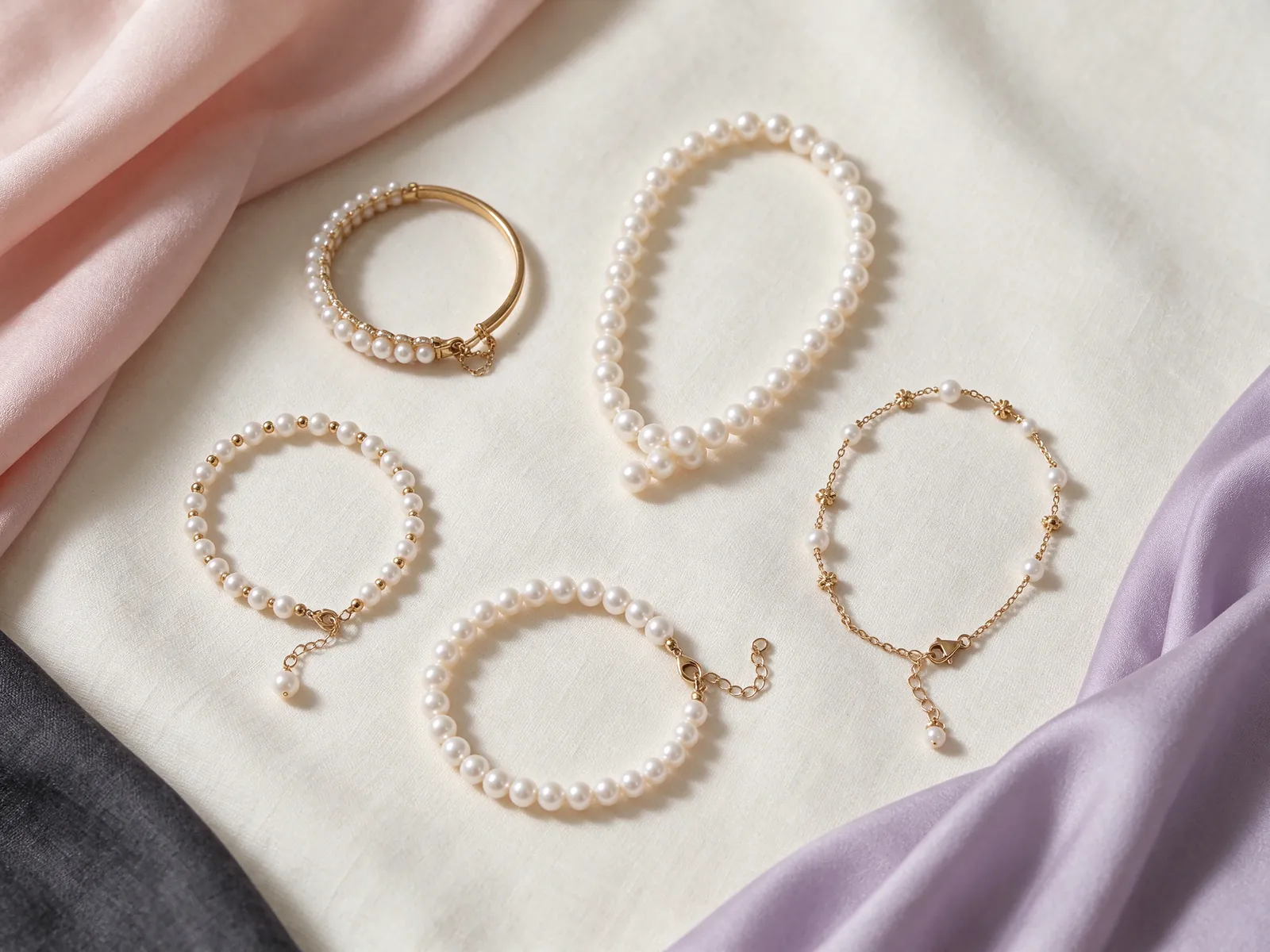
Additional catches and safety chains: understand each separate connection
A pearl bracelet safety clasp should be understood alongside the main fastening, rather than treated as an independent reason to choose a bracelet. A small side catch may require a separate closing action; other constructions work differently. Ask which part provides the main closure, which part is additional, and how each is released. Do not assume that closing one component automatically engages everything visible around it.
A safety chain connects the bracelet ends through an additional chain section. Consider where that section hangs during typing, whether it tangles with another accessory, and what happens when the main clasp opens. Its presence does not make a loose or damaged main fastening acceptable. If closure changes unexpectedly, put the bracelet aside for examination rather than relying on the extra connection to compensate.
Leave room to reach the smaller components
Try the removal sequence without sharp tools or pulling on the pearls. A tiny catch hidden beneath decoration may be harder to operate than the main clasp. The multi strand pearl bracelet guide introduces useful questions about row spacing and end connections. Any proposed clasp change still needs an assessment of the actual attachments, strand layout and one-handed use, rather than relying on the visible clasp width alone.
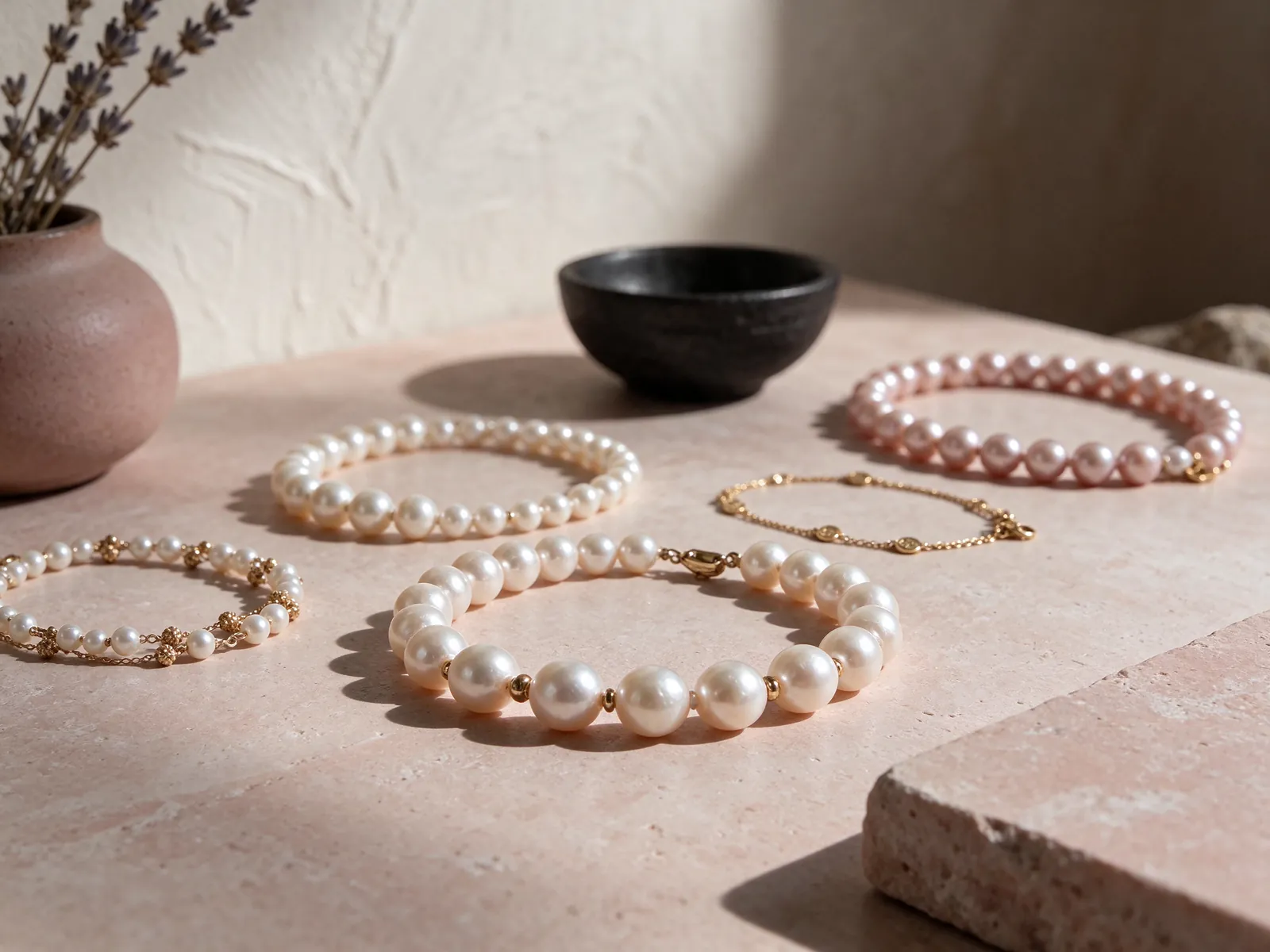
Multi-row layouts: fastening method and strand arrangement are different questions
Box and lobster describe fastening actions, while multi-row describes an arrangement of strands and connection points. These are not interchangeable categories. For a wider bracelet, ask both how the clasp opens and how each row joins it. A broad clasp face alone cannot tell you whether the rows will remain comfortably spaced when the wrist turns or rests on a desk.
Observe the bracelet from the top, side and underside during a fitting. Look for a row drawn noticeably tighter than its neighbour, strands crossing near the ends, or a clasp that tips as the arm moves. If you are considering ideas from a pearl charm bracelet, examine where a charm would sit in relation to the fastening and rows. Extra decoration should not obscure the opening or crowd the connecting points.
Use familiar movements to assess the row spacing
Lift a cup, turn your palm and ease a sleeve over the wrist during the trial. These movements reveal more than a flat photograph. If a row rolls over the clasp, first check for a twisted end connection rather than trying to hold it down by tightening the closure. Choose a layout that suits the space inside your usual cuffs, not only the appearance of the bracelet laid out.
Fit and clasp position: measure the bracelet as a complete structure
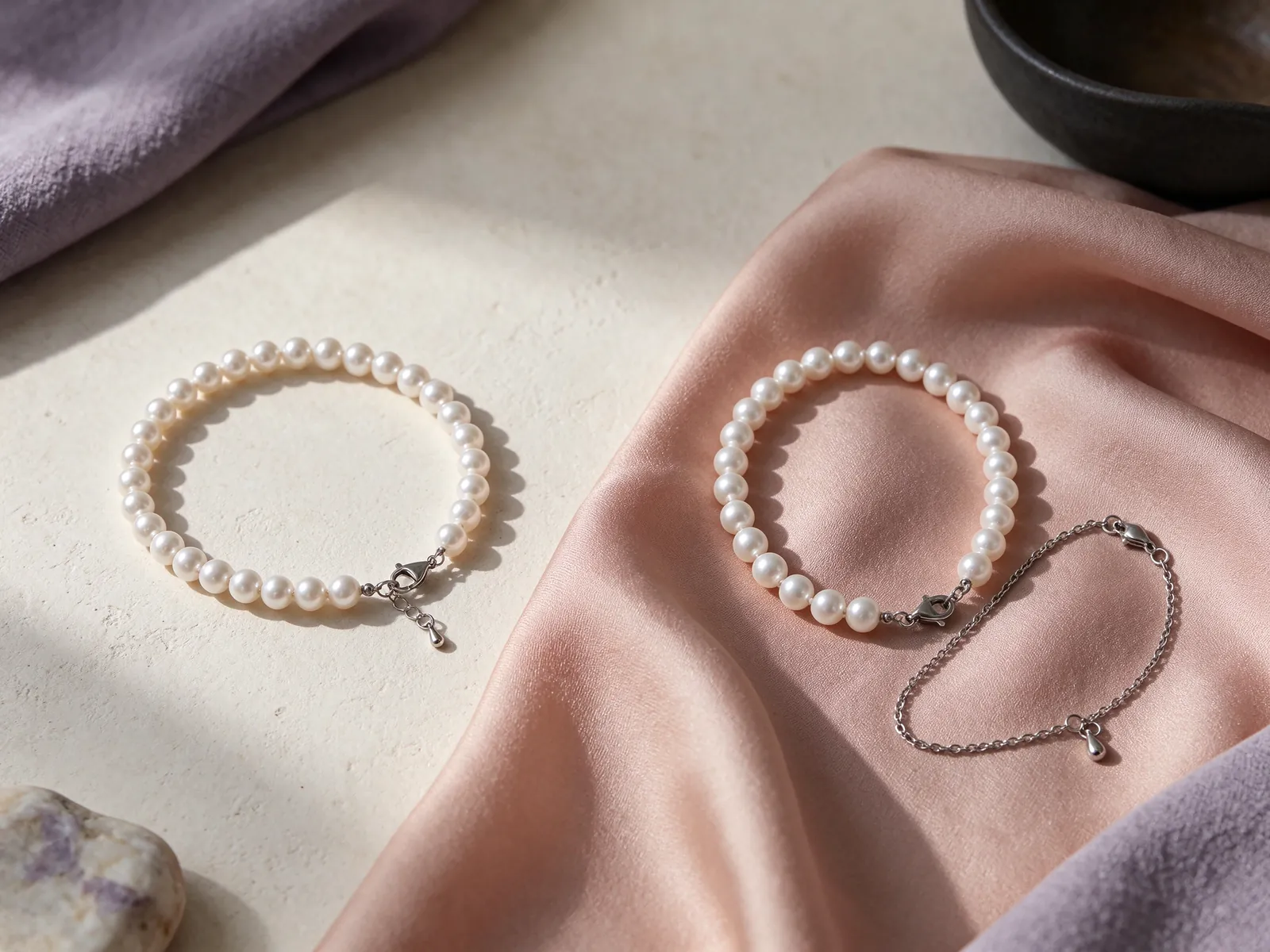
Wrist circumference is the starting point, not the entire fit decision. The clasp contributes to overall length, while its shape and the surrounding pearls affect how the inside of the bracelet sits. Use the pearl bracelet size guide alongside notes on preferred looseness, wrist shape and wearing position. A number without these details cannot show whether your fingers will have enough room to handle the fastening comfortably.
An overly close fit can make it difficult to support the clasp with a fingertip; an overly loose fit may let it rotate towards the back of the hand or the desk. Compare the feel with your wrist relaxed and bent. There is no single allowance that answers every case, particularly with a broad multi-row arrangement or a longer clasp body. Evaluate movement and pressure rather than applying a universal length rule.
Adjustment does not automatically mean easy fastening
For an adjustable pearl bracelet, try changing the setting separately from opening the main clasp. Check how clearly you can identify the adjustment points and where the remaining chain sits afterwards. Then repeat the wrist movements at your chosen setting. A length that can be altered still needs to be comfortable, and its adjustment mechanism may require a different finger action from the main closure.
Metal colour and styling: balance the clasp with the rest of the wrist
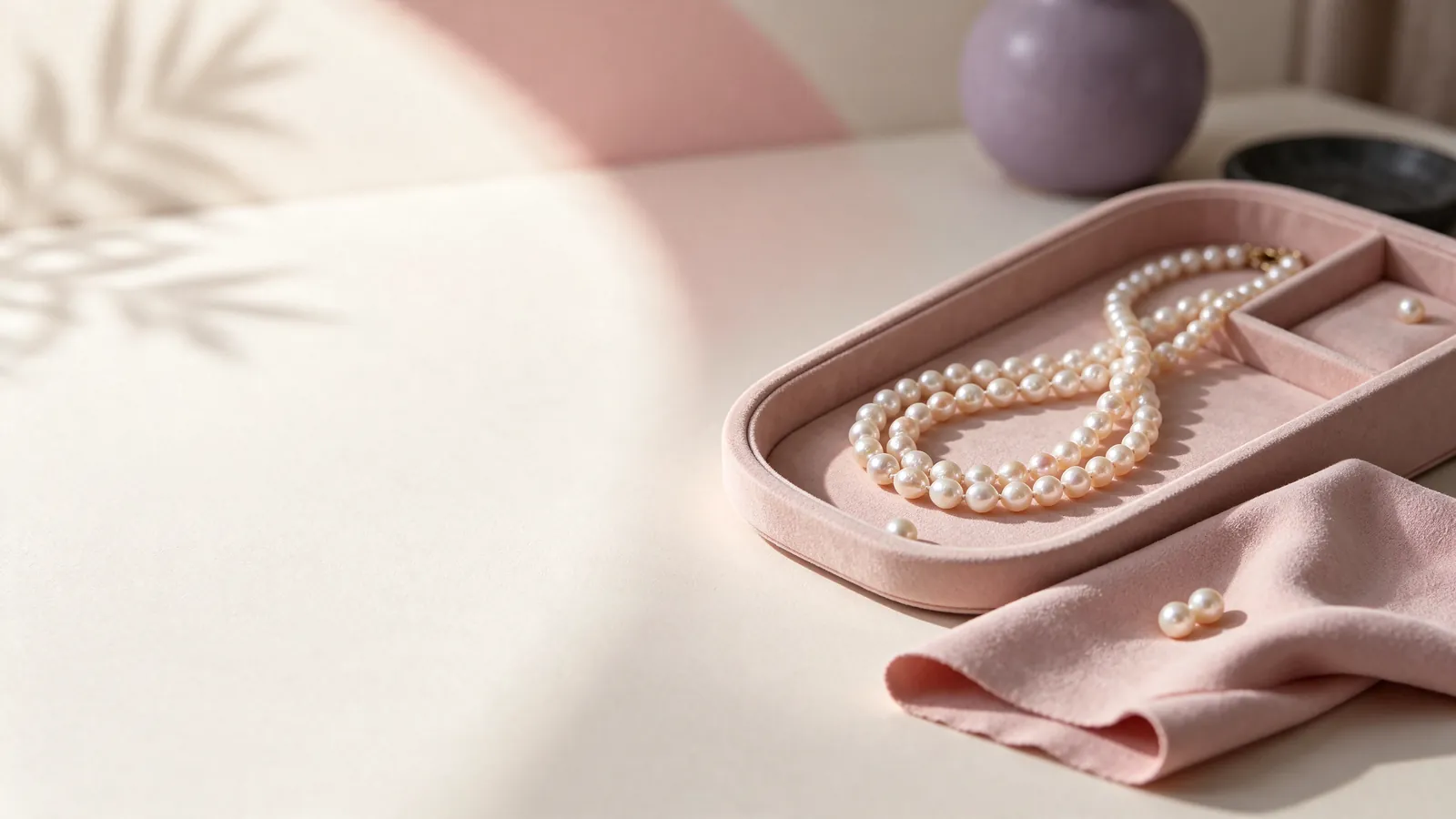
Consider whether you want the clasp to blend into the strand or become a visible design feature. Assess its width, side profile and underside as well as its front. If you wear a watch, check the two pieces together for contact rather than assuming that moving the clasp under the wrist prevents rubbing. The bracelet should remain comfortable when you sit at a desk or carry a bag.
Comparing an 18k gold pearl bracelet with a platinum pearl bracelet can help you think about colour alongside your clothing and existing jewellery. Flint Jewellery's customisation material options are 18K 750 white gold, 18K 750 yellow gold, 18K 750 rose gold, PT950 platinum and PT900 platinum. Discuss the particular clasp and connecting components as part of the design. A metal name alone does not explain lever access, closure alignment or the ease of using an additional catch.
Let sleeves and neighbouring accessories inform the shape
For office shirts, look at edges that might meet cuff seams. With knitwear, pay attention to projecting parts near the fibres. An exposed wrist at an evening event may show the decorative face more clearly, but comfort during sitting and handling a handbag still matters. When layering bracelets, first prevent components from catching each other; coordinating every metal colour is a separate styling decision.
Care and warning signs: protect the pearls when handling the metal
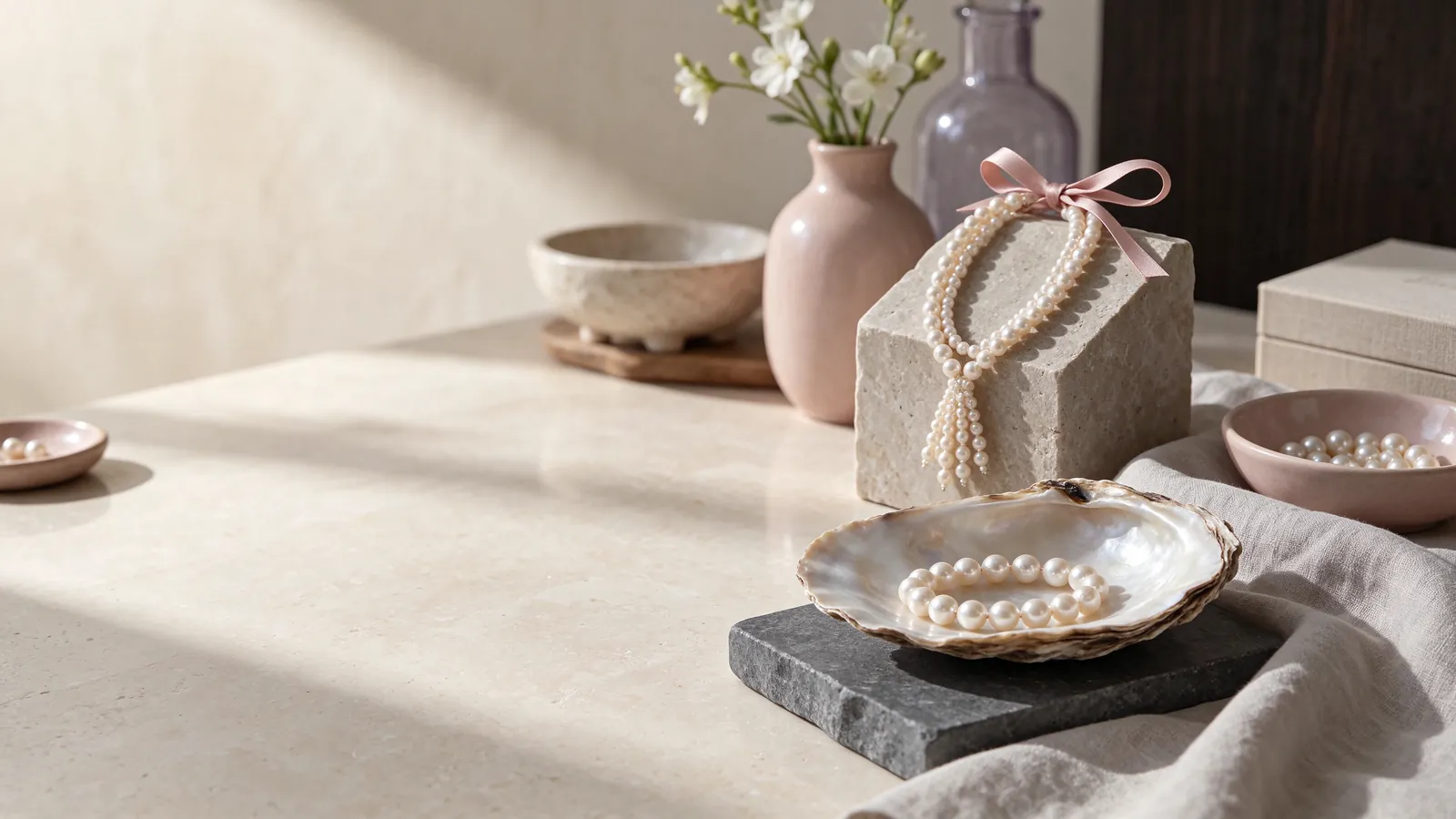
GIA gives pearl a Mohs hardness of 2.5. That makes care around a metal fastening relevant to the neighbouring pearls: avoid scraping them with hard tools while reaching a narrow opening. GIA also says pearls should never be cleaned in ultrasonic or steam cleaners. Do not apply a metal-cleaning method to the entire bracelet simply because the clasp needs attention. After wearing, a very soft, clean cloth is appropriate for routine wiping.
Stop wearing the bracelet if the clasp becomes unexpectedly difficult, a connection stays loose after closure, an end ring opens, or the string near the clasp shows evident wear. Do not bend an insert back yourself or introduce oil or adhesive without understanding the construction. Store the strand smoothly so other jewellery does not press on the fastening, and untangle an additional chain without yanking on the pearls.
Bring the information that matters to a clasp discussion
When speaking with Flint Jewellery, describe the wearing hand, the action you find difficult, your usual sleeves and whether you wear a watch. For an existing bracelet, clear photographs of both clasp faces and the end connections can help explain the concern. Photos assist communication but do not replace a physical examination of the mechanism. Practical details make the discussion of direction, proportions and fit more useful than asking for a clasp name alone. Contact Flint Jewellery on WhatsApp or call +85260106207 to discuss clasp choices and your wearing needs.
| Feature | Action to understand | Fitting check | Styling consideration |
|---|---|---|---|
| Box clasp | Align the insert with its receiving box | Check alignment and underside pressure | Look at edges beside a shirt cuff |
| Lobster clasp | Move the lever and reach the connecting ring | Try both components with one hand | Observe its position as the bracelet turns |
| Additional safety catch | Learn its separate closing and release action | Confirm the sequence alongside the main clasp | Check access beneath decoration |
| Safety chain | Understand the chain section and any opening | Check handling after the main clasp opens | Watch for contact with charms or sleeves |
| Multi-row connection | Identify the mechanism and each row's attachment | Observe spacing during wrist movement | Allow room within the usual cuff |
Pearl knowledge and authoritative references
GIA places pearl at 2.5 on the Mohs hardness scale and advises against ultrasonic or steam cleaning. Avoid hard tools contacting the pearls when attending to a nearby clasp.
Read the reference for this factFrequently asked questions
Does a larger clasp suit long nails better?
Not necessarily. A large but slippery body or an inaccessible lever can still be awkward. Try the fastening with your usual nail length and use your fingertips to find a stable hold. Avoid relying on a nail tip to prise the mechanism open.
What should I check after a box clasp clicks?
Look for alignment and any obvious gap, then operate any additional catch as intended. The sound alone does not confirm every component. Do not use a hard pull on the strand as your closure check.
Can a safety chain compensate for a loose fit?
Choose looseness by comfort, clasp position and wrist movement, not by the presence of a chain. Excess rotation or a dangling chain can remain inconvenient. A safety chain also does not compensate for a faulty main fastening.
Is clasp width enough to choose a replacement for multiple rows?
No. The row attachments, end spacing, strand lengths and mechanism also matter. Similar face widths do not establish connection compatibility. Have the complete end arrangement examined before discussing a replacement and reassess the fit afterwards.
Can steam clear dirt from the clasp of a pearl bracelet?
Do not place the pearl bracelet in a steam or ultrasonic cleaner. GIA specifically advises against both methods for pearls. Persistent dirt in a narrow fastening is a reason to ask a professional familiar with pearls and the clasp construction for appropriate cleaning.
Updated: