
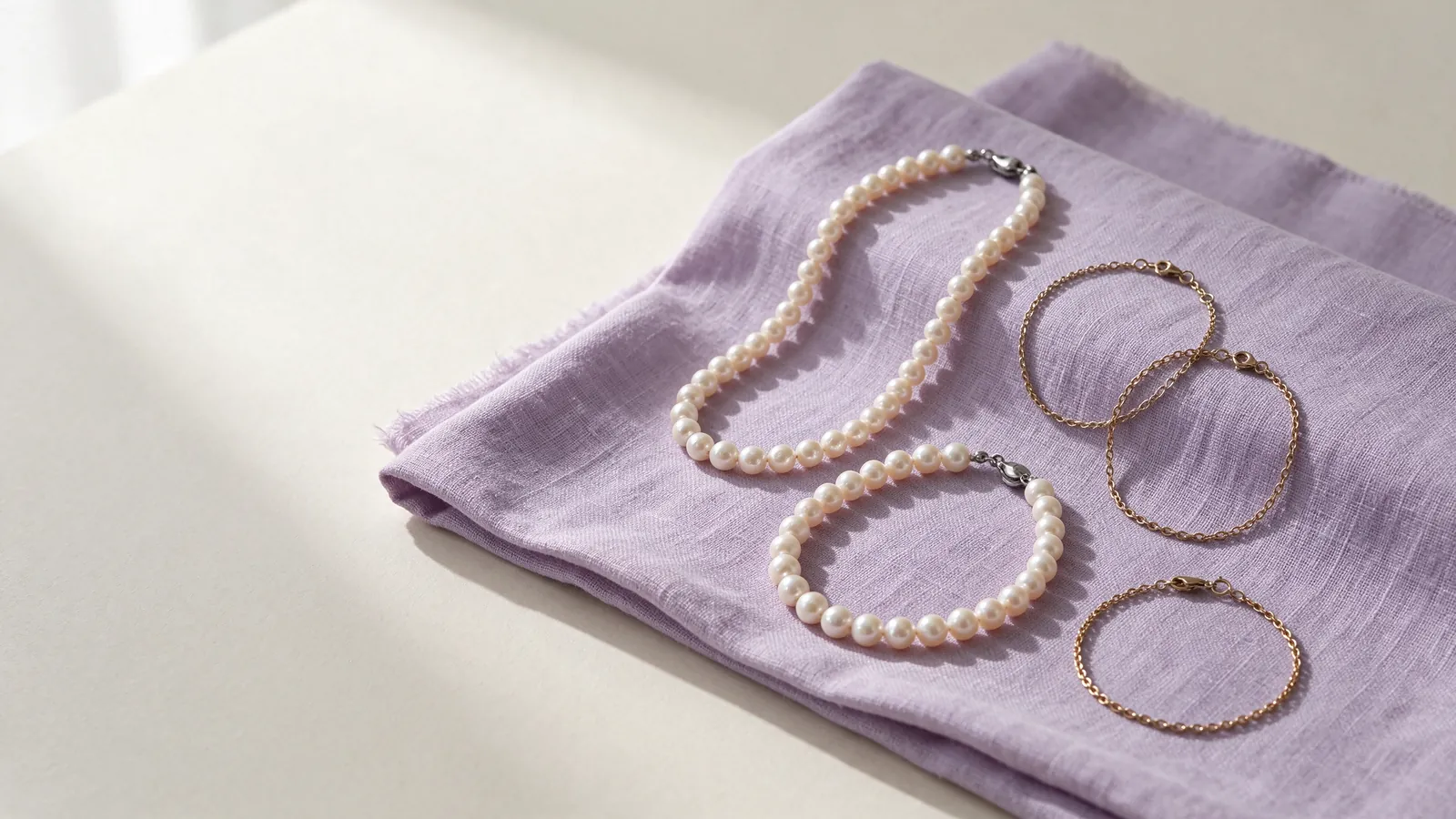
How should a 10k gold pearl bracelet, a K10 pearl bracelet or a 10k yellow gold pearl bracelet suit your wrist and style?
Begin with the movements you make while wearing jewellery: typing, carrying a bag, putting on a jacket or reaching across a dinner table. A chain with spaced pearl details and a continuous strand do not occupy wrist space in the same way. Decide whether you prefer the bracelet to remain near the wrist bone or move a little towards the hand. The broader pearl bracelet guide can help you separate that preference from the metal wording in a search result.
Measure the intended wearing position with a flexible tape resting naturally against the skin, without pulling it tight. Record the unit and the position, rather than just a number. A strip of paper that does not stretch can also be marked around the wrist and measured flat. Your wrist circumference and a bracelet's stated overall length describe different things. Pearl volume, links, decorative elements and the clasp can affect the space inside the bracelet, so a single extra-length rule is not suitable for every construction.
Why does clasp placement matter for the fit of a 10k gold pearl bracelet, whether labelled K10 pearl bracelet or 10k yellow gold pearl bracelet?
Turn your palm upwards and downwards, then bend the wrist gently. Notice whether the clasp moves onto the back of your hand, sits where your wrist meets the desk, or becomes difficult to reach behind a decorative feature. For a design with an extension, consider where the unused portion rests against your sleeve. When reading a listing rather than trying a bracelet, ask whether the quoted length includes the clasp and which part, if any, is adjustable.
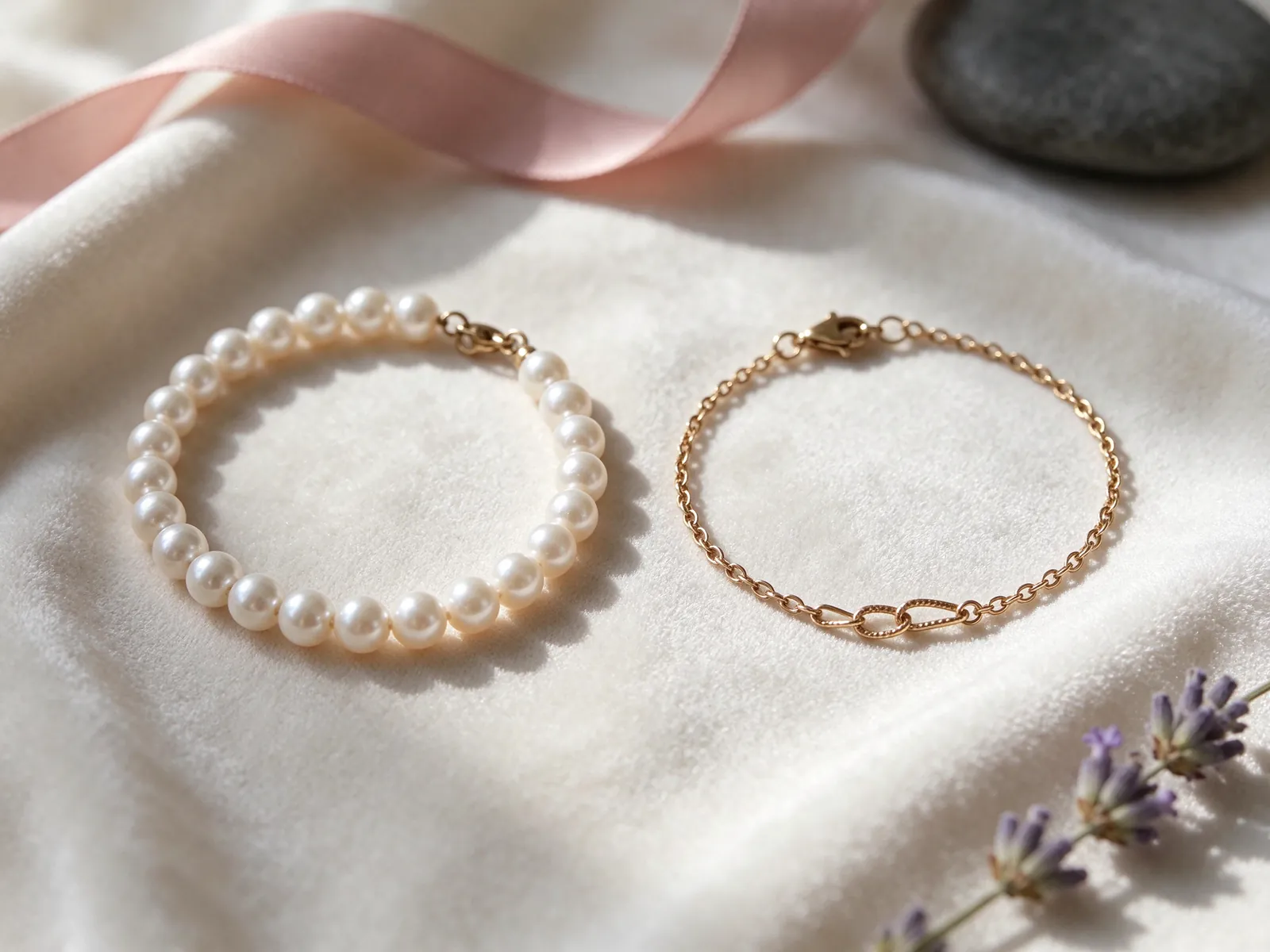
Read K10, 10K and YG in the context of the complete description
WSP's public bracelet information uses K10YG and 10K gold wording. That is a documented market context for the terms K10 pearl bracelet and 10k yellow gold pearl bracelet. The order of letters is not a reason to assume a different construction. Read the full material description alongside the design information, rather than treating the title as a complete specification. Another brand's naming, series details and service terms should not be transferred to Flint Jewellery.
A gold-related title does not, by itself, establish the material of every component. Look for descriptions of the chain, clasp and decorative parts, and keep those details separate from information about the pearls. If a description gives only a title, useful questions concern the components and the way length is measured. Do not fill the gaps by assuming pearl species, origin, treatment, certification or size from a photograph.
Keep pearl quality separate from the metal label
GIA discusses seven pearl value factors: size, shape, colour, lustre, surface quality, nacre quality and matching. For a bracelet, matching offers a useful way to think about the visual relationship between neighbouring pearls. None of these factors is supplied merely by a metal abbreviation. Record the metal wording and the pearl description in separate notes, so that familiarity with one does not turn an unknown feature of the other into an assumption.
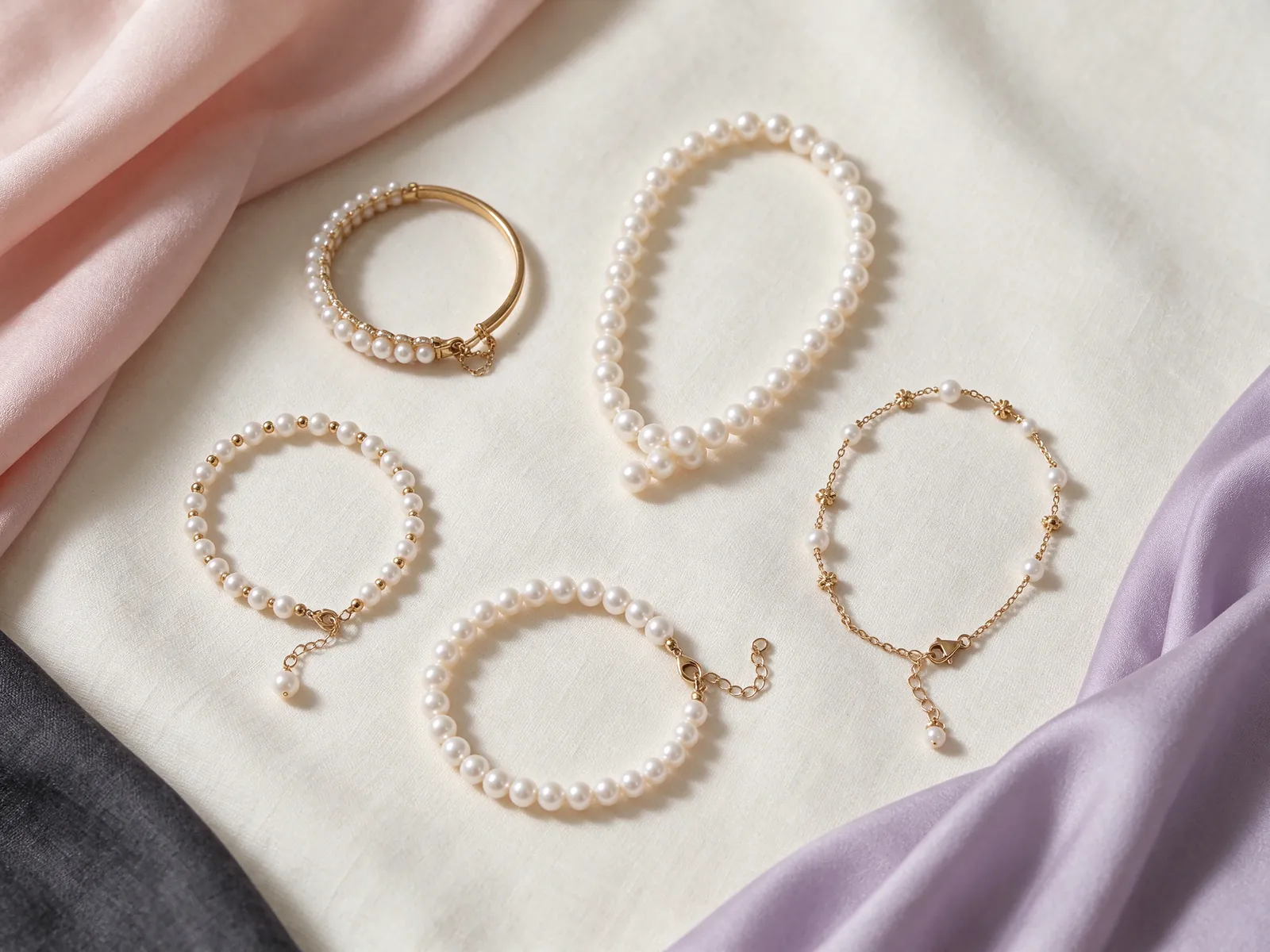
Compare open chain spacing with the rhythm of a pearl strand
A chain-based composition with pearl details can leave visible space around the wrist, while a continuous strand places more emphasis on the sequence of pearls. The useful comparison is not which construction is universally better, but which outline you want beside your usual sleeves. Look at both front and side views where available. Consider whether the decoration is concentrated in one area and whether you still like the composition when the wrist turns.
If you prefer an uninterrupted pearl outline, a pearl strand bracelet raises questions about the arrangement, the curve around the wrist and the finish at the clasp. With a more open chain composition, ask where the decorative weight sits as the bracelet moves. Two bracelets with the same stated length need not offer the same internal wearing space. The visible structure should therefore be considered alongside your measurement, not after it.
Check the composition during ordinary hand movements
Place the preferred front view on the back of your wrist, then gently imitate holding a cup, turning a page or picking up a bag. Watch where the decoration settles and whether the fastening remains easy to identify. These movements reveal your preferences; they are not a strength test. If a detail catches on a sleeve, stop and free it carefully rather than pulling the bracelet through the fabric.
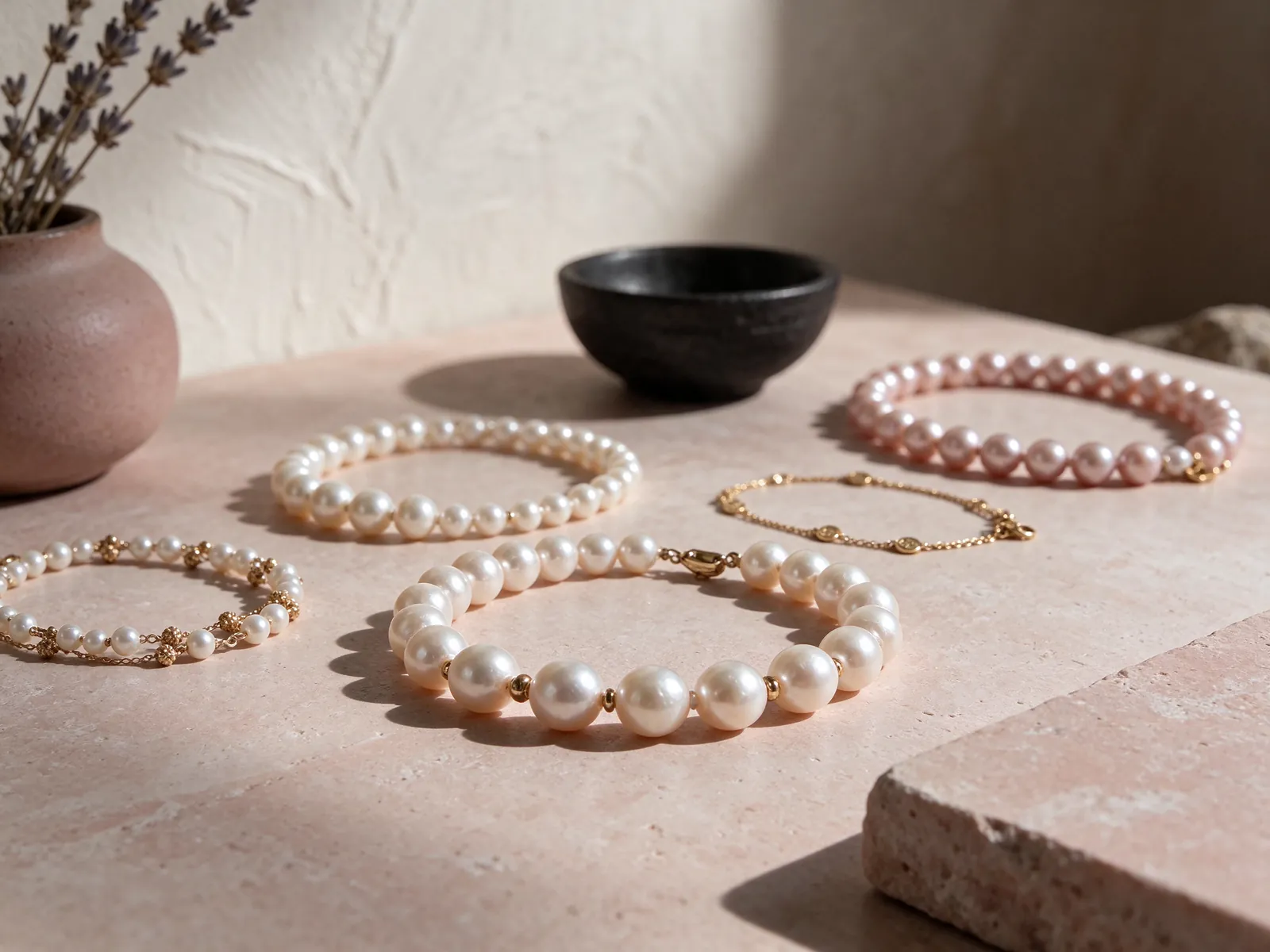
Use sleeves, watch placement and pearl colour to guide styling
For a warm gold-coloured styling direction, start with the fabric nearest your wrist. Ivory, beige and plain dark sleeves give you a clear background against which to judge the contrast between metal and pearls. A cuff with lace, a textured knit or an ornamental button may obscure a fine chain or sit against the clasp. Think about how the cuff moves when you reach or write, rather than judging the pairing only with your arm held still.
A white pearl bracelet is a useful styling topic when you want to explore brightness and lustre, but a white appearance does not establish pearl species or origin. In reasonably neutral light, hold the bracelet near clothing you actually wear and decide whether you want a soft tonal relationship or a stronger contrast. If a watch is part of your daily routine, try assigning it to the other wrist to reduce direct contact between the watch case and pearl surfaces.
Stacking is about contact as well as colour
Matching metal colours does not remove contact between pieces. A watch crown, rigid bangle, prominent link or raised ornament may approach a pearl as your wrist bends. Observe those meeting points before choosing a stack, and consider wearing just one piece on that wrist. For an occasion outfit, a bracelet can be the sole wrist accent while earrings or a necklace repeat its colour direction elsewhere.
Distinguish market material names from Flint's available metal options
Flint Jewellery's metal options are 18K 750 white gold, 18K 750 yellow gold, 18K 750 rose gold, PT950 platinum and PT900 platinum. The 10K label is not an option in that list. When reading about an 18k gold pearl bracelet, describe the colour direction, construction and wearing habits that interest you. That creates a discussion around Flint's actual options instead of treating another market label as a Flint customisation request.
If your search also includes a sterling silver pearl bracelet or a stainless steel pearl bracelet, keep these as material-reading comparisons. Then examine the stated construction, fastening and care guidance on their own terms. A material name does not establish that a bracelet will be more comfortable, more durable or suitable for sensitive skin. If a photograph appeals to you, identify the outline or placement you like without assuming that another brand's design can be reproduced in a different material.
Make a comparison sheet that records questions, not winners
Useful headings include the exact material wording, stated length, construction, fastening and intended occasion. Where information is absent, leave a question rather than filling the space with a guess. This prevents unrelated brands' conditions from being combined and helps reveal your real priority. You may care most about recognising a closed clasp or avoiding a bulky cuff, rather than the metal term that first caught your attention.
Pearl care still matters when a bracelet has a gold label
A pearl bracelet combines components, so its cleaning method should not be chosen solely from the metal name. GIA lists pearl at 2.5 on the Mohs hardness scale and states that pearls should never be cleaned with ultrasonic or steam cleaners. For bracelet wear, the practical relevance is attention to contact with harder objects. A substantial-looking metal component is not permission to apply any jewellery-cleaning method to the entire piece.
After wearing, use a very soft, clean cloth for gentle wiping. GIA advises avoiding acids, perfume, hair spray and excessive heat. Put the bracelet aside while applying personal-care products or changing clothing that might catch a clasp. Store it so pearl surfaces do not rub against other jewellery. A liquid intended for cleaning metal should not automatically be treated as suitable for every part of a pearl bracelet.
For strung pearls, pay attention to the string after water cleaning
GIA advises that the string must be completely dry before strung pearls are worn after cleaning with water. This is a condition relevant to that construction, not a statement that every pearl bracelet may be immersed. When taking a piece from storage, also notice whether the clasp closes normally and whether a connection has visibly changed. If something seems wrong, stop wearing it and ask about appropriate handling rather than forcing a component back into position.
Prepare a useful enquiry about fit and visual preferences
Write a short description of your wrist measurement, where you measured, your usual sleeve shape and whether you wear a watch. Add whether you prefer open chain spacing or a continuous pearl outline, and where you would like the main decoration to sit. These details communicate a real wearing need without guessing pearl identity or a quality grade. They are more informative than sending only a 10k gold pearl bracelet search phrase.
For a gift, learn what you can from the recipient's existing habits: which wrist carries a watch, whether their jewellery is understated or prominent, and whether cuffs sit close to the wrist. A wrist measurement alone does not determine the wearing result of every construction. If you do not know the measurement, distinguish that uncertainty from the preferences you do know instead of presenting an estimated length as confirmed.
Ask questions that can be answered one by one
Ask how length is measured for the construction, where the clasp sits, how closure can be recognised and what storage considerations apply. Then discuss how Flint's actual metal options relate to the colour direction you prefer. If a styling photograph is useful, explain the visual effect rather than asking for another brand's series to be copied. Clear questions support a considered choice without promising availability or a particular fit outcome. Share your wrist measurement and styling preferences with Flint Jewellery using this page's WhatsApp enquiry to discuss metal options and wearing considerations, or call +85260106207.
| Comparison point | Read first | Question to ask | Wearing consideration | Do not assume |
|---|---|---|---|---|
| Material wording | Complete material field and K10/10K wording | How are chain and clasp described? | Colour beside existing jewellery | A market label is a Flint material option |
| Length and wrist | Wearing position and stated overall length | Does length include the clasp? | Typing, bending and cuff contact | Equal lengths mean equal internal space |
| Construction | Open chain spacing or continuous pearls | Where is the decoration concentrated? | Appearance when the wrist turns | A photograph proves pearl identity or size |
| Fastening | Closure method and position | Is a closed clasp easy to identify? | Desk contact and reach for fastening | A delicate appearance suits every user |
| Pearl care | Care instructions for the whole piece | What happens to string after water cleaning? | GIA lists Mohs hardness 2.5; avoid rubbing | A metal label permits ultrasonic cleaning |
Pearl knowledge and authoritative references
GIA lists pearl at 2.5 on the Mohs hardness scale. This makes contact with other wrist accessories a relevant care consideration; GIA also advises against ultrasonic and steam cleaning for pearls.
Read the reference for this factFrequently asked questions
Are K10 pearl bracelet and 10k gold pearl bracelet necessarily different designs?
No design difference can be established from the order of the letters alone. WSP's public bracelet information uses K10YG and 10K gold wording. Compare the complete material, construction, length and clasp descriptions for the particular piece; these market labels do not create a Flint 10K option.
Should the bracelet length be identical to my wrist measurement?
Do not treat those measurements as interchangeable. Wrist circumference measures your body, while overall bracelet length may include the clasp. Pearl volume and construction also affect internal space. First establish how length is stated, then consider your preferred movement and fit.
How can I describe a warm gold look without requesting 10K from Flint?
Explain the colour contrast you like, whether you prefer an open chain or pearl strand, and what you normally wear beside the bracelet. The conversation can then concern Flint's actual metal options. A market search term is not a material specification for Flint customisation.
Can a pearl bracelet share a wrist with a watch?
Observe whether the watch case, crown or links meet the pearls when you bend your wrist or hold an object. Wearing them on separate wrists is one way to reduce direct contact. Matching colours alone does not address surface contact in a stack.
Does a 10K metal label make ultrasonic cleaning appropriate?
No. GIA advises that pearls should never be cleaned with ultrasonic or steam cleaners. Gentle wiping with a very soft, clean cloth is routine care. If strung pearls are cleaned with water, the string must be completely dry before wearing them again.
Updated: