
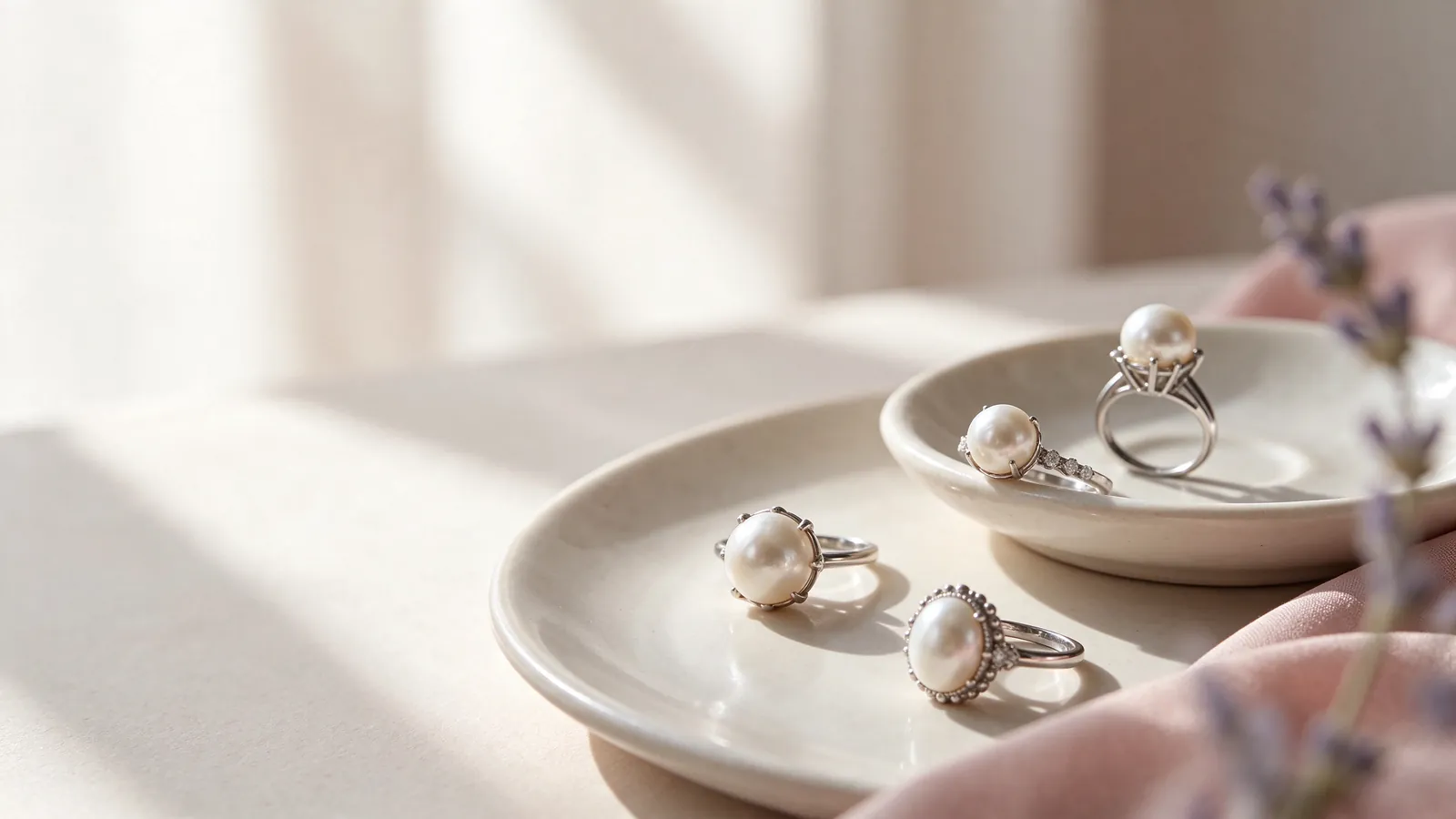
How do setting lines shape the look of a Tahitian pearl ring or Tahitian black pearl ring?
A dark pearl can create a strong focal point, but the band determines how that focus is framed. A fine band may make the pearl appear more prominent, while broader shoulders can connect it visually to the rest of the ring. Look at the ring with your hand relaxed, not only with your fingers carefully posed. Check whether you can still see the setting details you enjoy and whether the overall outline feels balanced on your own hand.
A front-facing photograph cannot show everything about proportions. The space beneath the pearl and the way the shoulders rise become clearer from the side. When exploring pearl rings Hong Kong, separate your preferences for the band from your preferences for the pearl: you may want a strong dark centre but a restrained metal outline. That distinction helps you discuss a Tahitian black pearl ring without relying on an impression such as 'larger' or 'more dramatic'.
When trying on a Tahitian pearl ring or Tahitian black pearl ring, how do band fit and setting height affect comfort?
Check that the band passes the knuckle comfortably and settles without pinching or slipping easily. Then bend your fingers, hold your phone and gently close your hand. A high profile may interact with a neighbouring finger or sleeve even when the band feels right. Record fit and profile separately; making a band uncomfortably tight is not a sensible substitute for assessing the ring's balance.
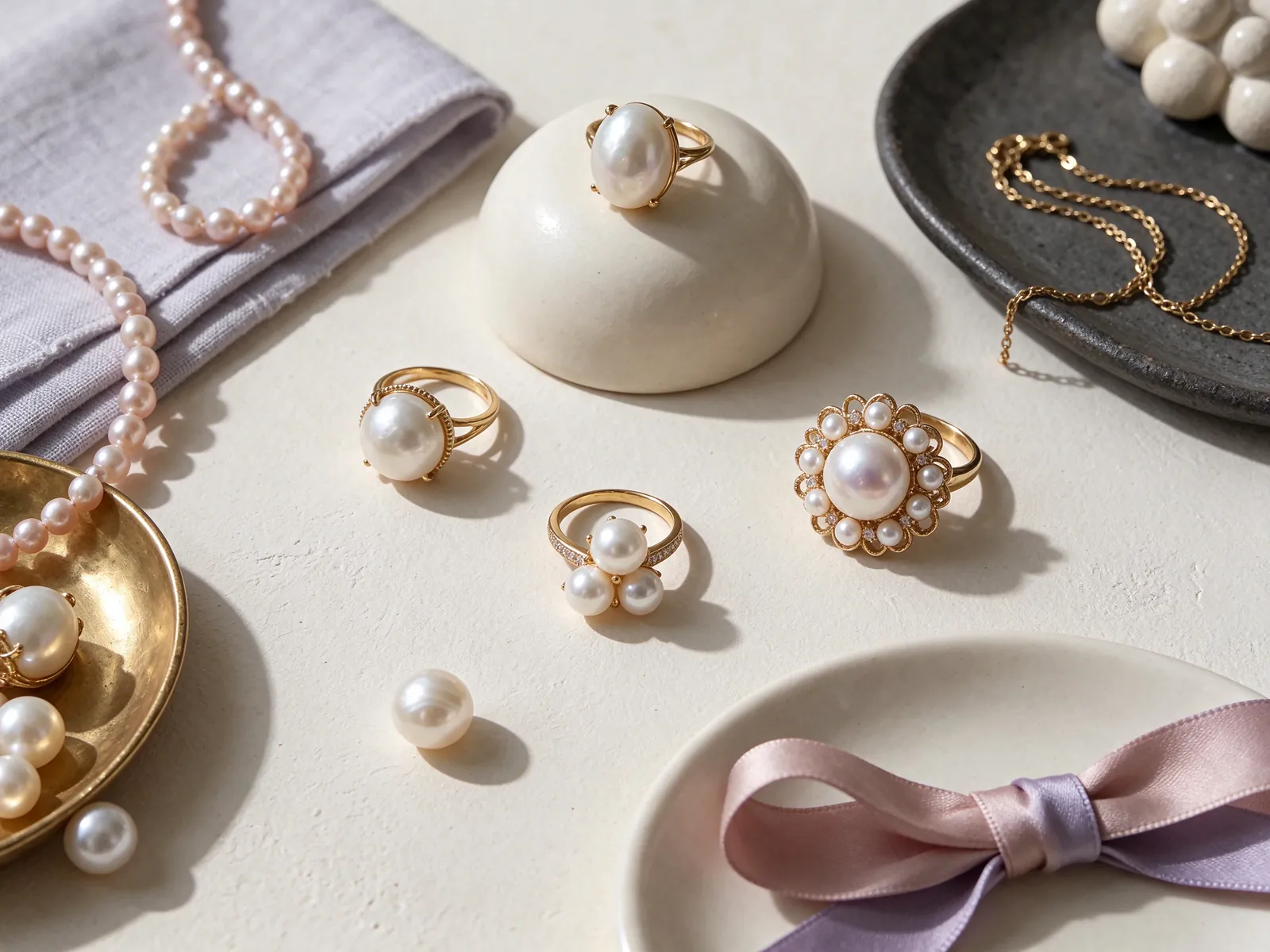
Read dark colour in the light you actually use
The phrase black pearl ring is a starting point, not a complete colour description. Observe how dark the pearl looks, whether the impression feels cool or warm, and what changes as you turn it. GIA distinguishes bodycolour, overtone and orient, and notes that not every pearl displays all three. A bright spot or a coloured reflection from nearby clothing should not be mistaken for the whole pearl's colour.
Compare the pearl in soft daylight and ordinary indoor light, keeping the background reasonably consistent. Place it near a shirt you often wear and consider whether the contrast is gentle or striking. For background knowledge, what are Tahitian pearls helps separate a pearl-type question from a styling question. A colour photograph on its own cannot establish origin, natural-versus-cultured identity or the existence of a certificate.
Keep comparison photographs consistent
Use a similar distance and include the hand in each comparison. Heavy filters and different exposure settings can exaggerate differences and hide the setting's proportions. Write down what you see in plain language, such as a softer dark tone or a clearer contrast against your skin. This is more useful than choosing whichever photograph looks blackest on a screen.
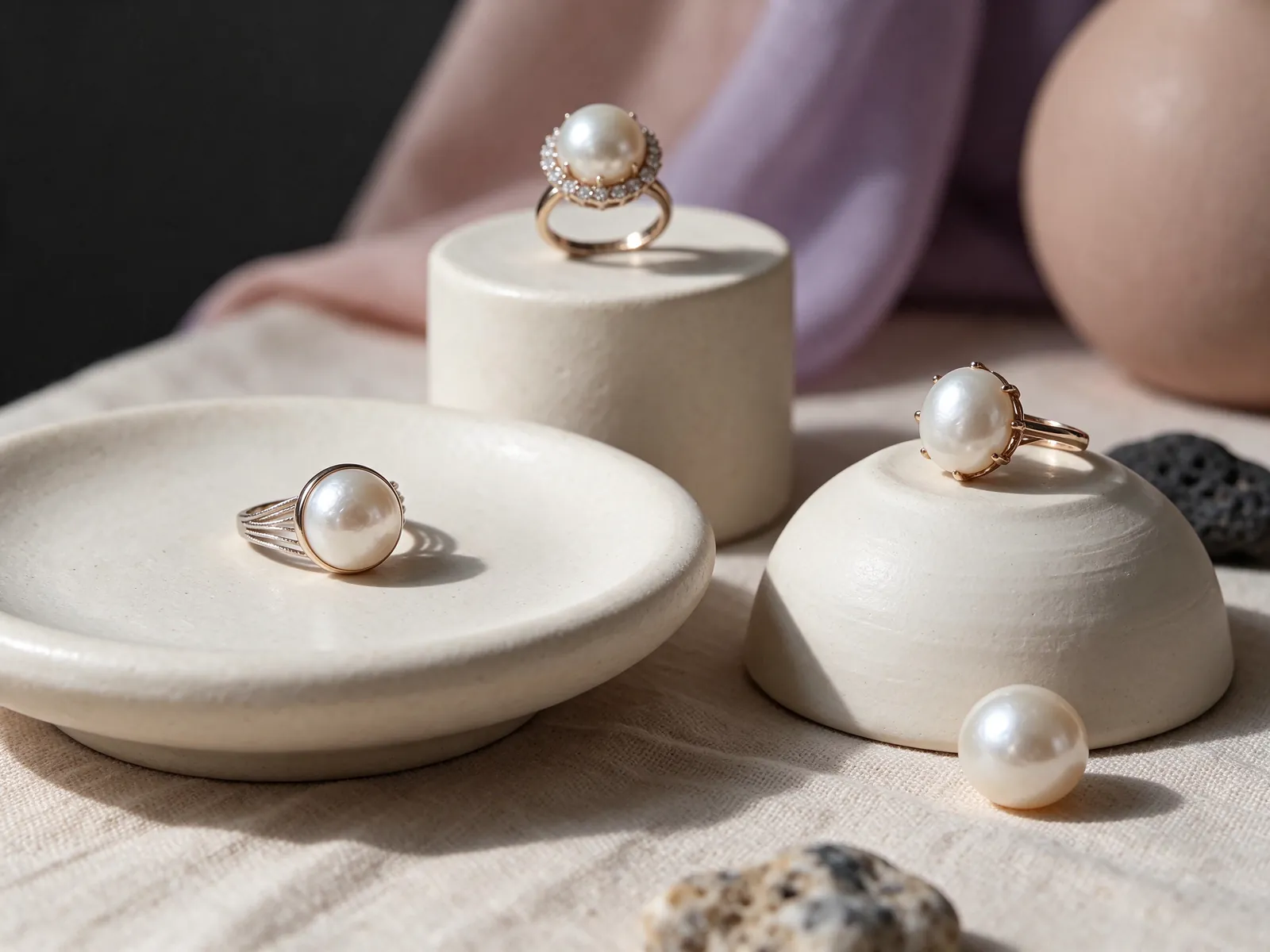
Look beyond a single highlight or grade label
Lustre is worth observing across the pearl rather than at one intense reflection. Turn the ring slowly and examine the clarity and brightness of the reflections over different areas. For the surface, notice visible textures or irregularities and where they sit in relation to the face-up view. A feature close to the setting may affect your impression differently from one at the centre. Ask for those positions to be explained rather than treating every surface detail as equivalent.
GIA describes seven pearl value factors: size, shape, colour, lustre, surface quality, nacre quality and matching in multi-pearl jewellery. Use them to organise questions, not to infer that one attractive feature proves overall quality. Matching has a more immediate role when you want the ring to coordinate with another pearl piece. For a single-pearl ring, the individual pearl and its relationship with the setting remain central to your visual decision.
Separate your style notes from identity information
Your style notes might say dark, bright-looking and visually simple. Identity information concerns the description of the particular pearl, any treatment information and accompanying documents. Neither a pleasing shape nor a colour alone settles those questions. Keeping two lists allows you to enjoy the design while asking precise questions about what is actually being described.
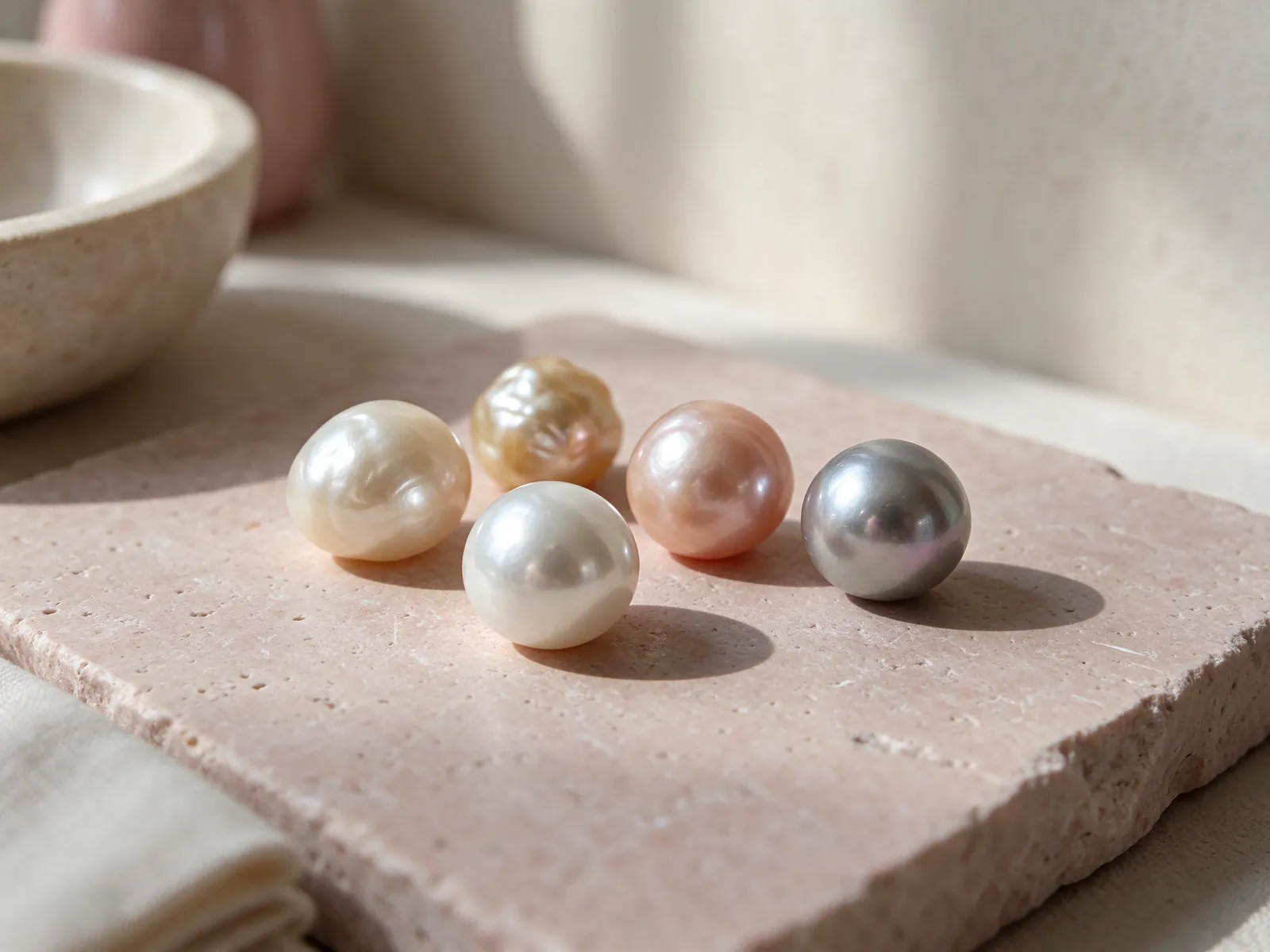
Choose metal colour and profile as one composition
White-toned metal can create a crisp border around a dark pearl, while a warmer tone can echo warmer clothes and accessories. View the colours together rather than making a decision from a metal name. Flint Jewellery's material discussion options are 18K 750 white gold, 18K 750 yellow gold, 18K 750 rose gold, PT950 platinum and PT900 platinum. Band width and the visual finish should be considered alongside the colour.
A setting with open visual space directs attention differently from one with decorative shoulders. If you enjoy sparkle beside a dark centre, the pavé pearl ring guide offers another design direction to consider. Think about whether the surrounding decoration supports the pearl or becomes the main attraction. More decoration is not automatically more suitable for work or evening wear; the complete silhouette matters.
Let a sleeve move naturally over the ring
If you regularly wear cuffs or knitwear, try the normal movement of the sleeve over your hand. Notice any catching and whether you change your gesture to avoid contact. A lower profile still needs this assessment: edges and decorative details can matter as much as height. Choose according to the interaction you feel, not a promise suggested by the silhouette.
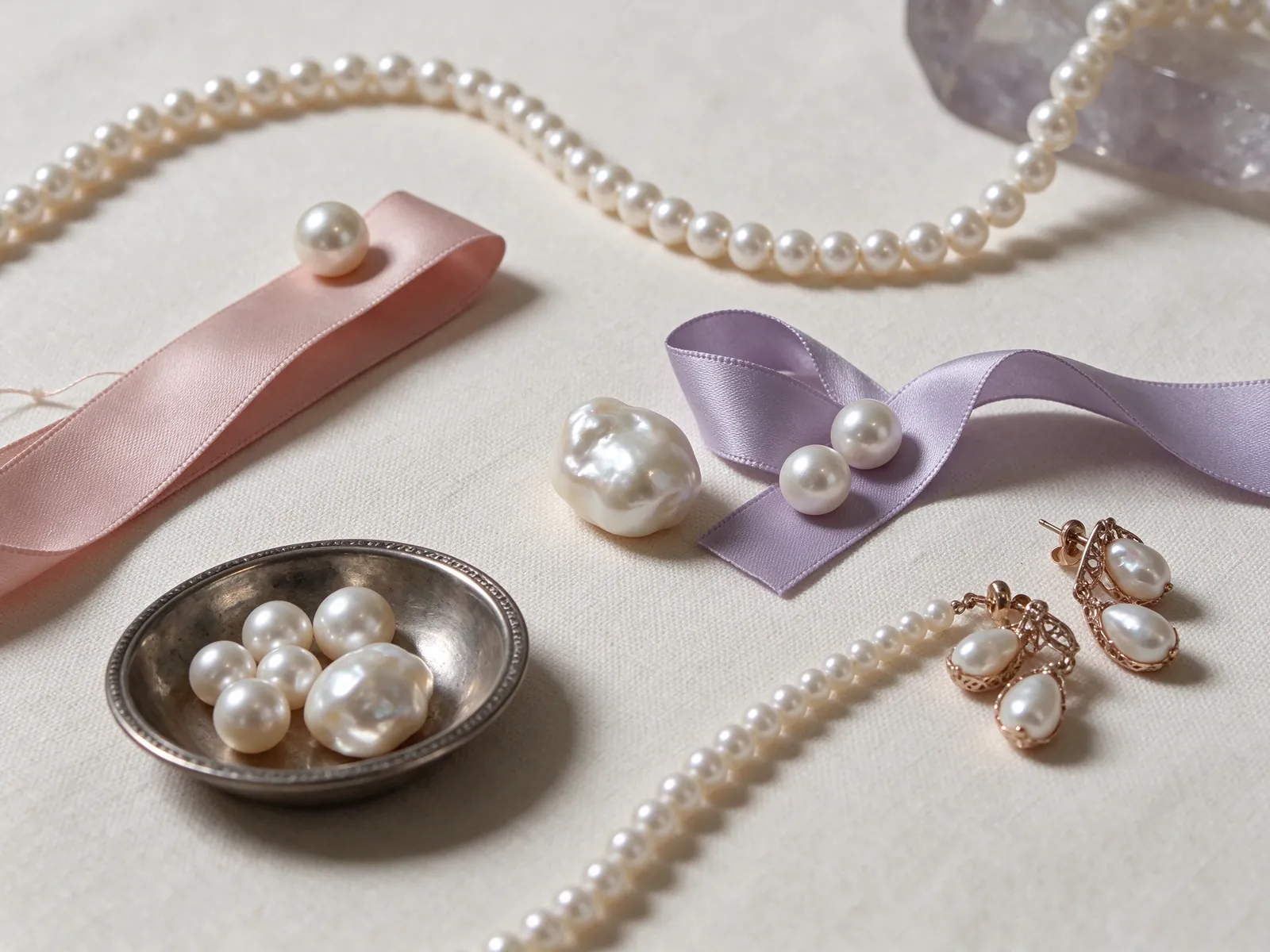
Use your wardrobe to compare pearl-ring directions
Start with one familiar outfit and let the dark pearl be the principal detail on that hand. A plain shirt or a cleanly cut jacket makes it easier to judge the contrast. If you prefer a lighter visual impression, read the South Sea pearl ring guide alongside this one and compare styling priorities. Different pearl-type names should not be arranged into an automatic ranking of suitability or value.
The freshwater pearl ring and Akoya pearl ring guides can also help you articulate what you want from a ring. Use the same questions for each: do you favour a rounded outline, an understated band or coordination with existing jewellery? A pearl-type name does not determine the dimensions, grade or price of an individual ring. Compare the actual visual features instead of treating the category as the answer.
Check the effect at normal viewing distance
Look at the hand beside your body as well as close to your face. A watch, bracelet or patterned sleeve can change where attention lands. For occasional wear, use the fabric and cuff shape of that occasion as your comparison. Keeping the outfit constant helps you distinguish a genuine preference for the ring from enthusiasm for a beautifully styled photograph.
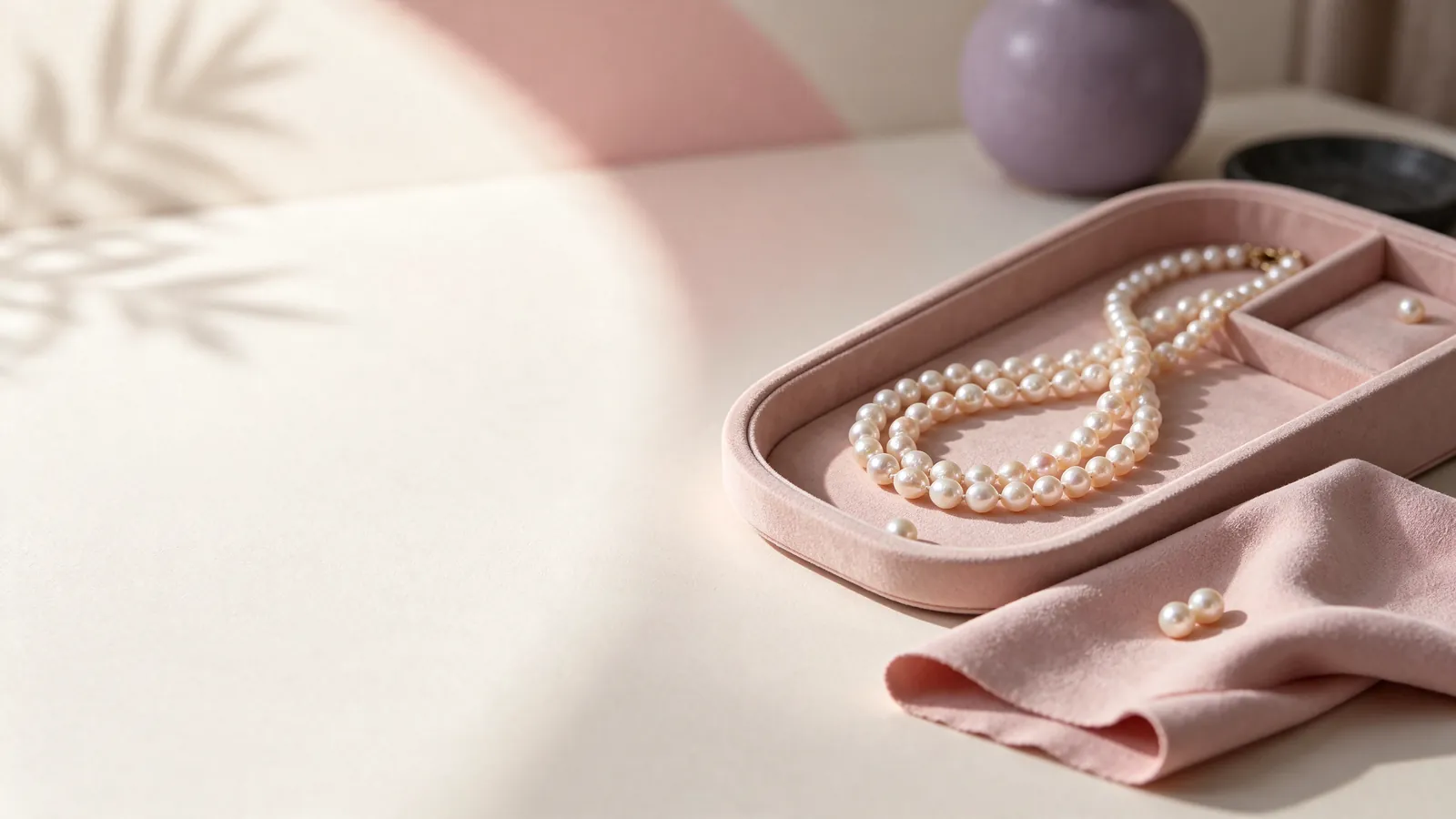
Consider shape and stacking without crowding the pearl
A rounded outline and a freer outline offer different visual rhythms. If you enjoy asymmetry, the baroque pearl ring guide can help you consider whether changing views are part of the appeal. Shape is a design preference as well as a pearl characteristic; perfect symmetry need not be your only objective. Check whether your favourite angle is the one you will actually see most often while wearing the ring.
Before stacking, check that a neighbouring band or ornament does not press against the pearl. A narrow companion ring may still make contact if its edge sits at the wrong height. Test the combination with relaxed and bent fingers. If the rings push each other or the main ring starts turning, wearing them on separate hands can preserve visual coordination without forcing a tightly packed arrangement.
Add companion rings one at a time
Begin with the pearl ring alone, then add each companion and repeat the same hand movements. This makes it easier to identify which piece changes the fit or creates contact. Moving a ring to an adjacent finger also requires checking the space between fingers. A still-life arrangement is not enough to judge how a combination behaves on an active hand.
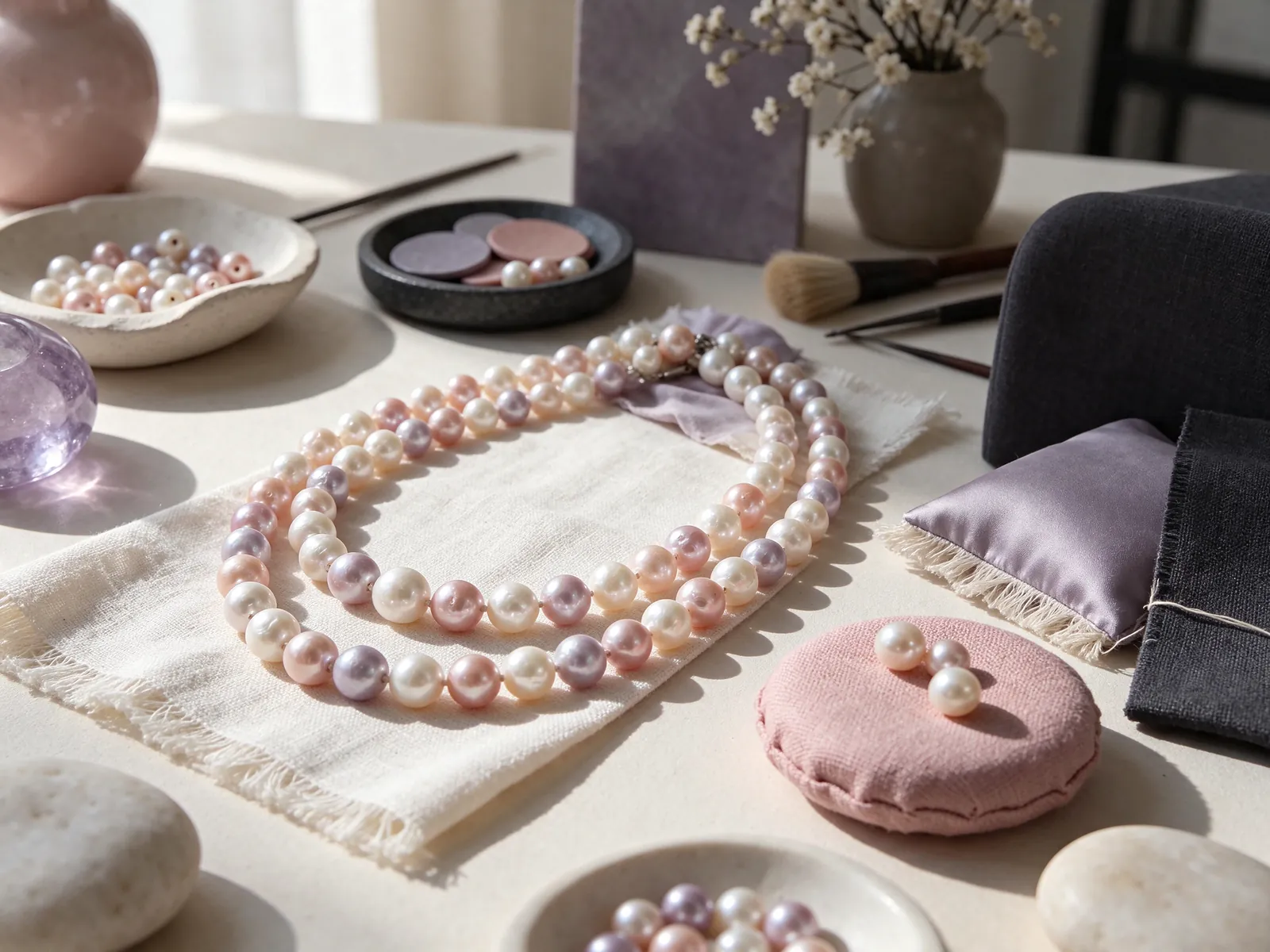
Build pearl care into the way you wear the ring
Hands meet desks, handles and personal-care products, so a pearl ring needs thoughtful wearing habits. GIA gives pearl a Mohs hardness of 2.5 and says never to use ultrasonic or steam cleaners. Avoid acids, perfume, hair spray and excessive heat. Remove the ring before tasks involving cleaning products or likely knocks, and remember that a dark appearance does not make the pearl more resistant to scratching.
After wearing, gently wipe with a very soft, clean cloth and store away from jewellery that could rub against the pearl. If the pearl or its fixing appears unusual, avoid twisting it or scraping at it with a tool; seek professional inspection. For a discussion of style and fit, bring notes about your usual outfits, the way a comfortable ring sits and the colour contrast you prefer.
Choose a safe place for temporary storage
If your day involves frequent handwashing or handling products, decide in advance where the ring will go when removed. A basin edge is an easy place for it to fall or be forgotten. This practical habit belongs in your buying decision: explain when you expect to take the ring off so that comfort, handling and the intended wearing occasions are considered together. Contact Flint Jewellery on WhatsApp at +85260106207 to discuss your preferred colour contrast, setting outline and ring fit.
| Consideration | Front view | Side view or movement | Outfit connection | Preference to record |
|---|---|---|---|---|
| Colour | Darkness and warm or cool impression | Changes as the ring turns | Contrast with skin and clothing | Soft or striking contrast |
| Lustre and surface | Clarity of reflection and visible texture | Appearance from several angles | How it looks at close range | What matters most visually |
| Setting proportions | Balance between pearl and band | Height and rising shoulders | Relationship with a watch or bracelet | Single focus or fuller outline |
| Fit | Position at the base of the finger | Bending, holding a phone and moving cuffs | Usual wearing activities | Comfort without easy slipping |
| Stacking | Space between neighbouring rings | Contact or pressure during movement | Same hand or separate hands | Solo wear or room for a companion |
Pearl knowledge and authoritative references
GIA ranks pearl at 2.5 on the Mohs hardness scale and advises against ultrasonic and steam cleaning, a useful care consideration for a ring worn on an active hand.
Read the reference for this factFrequently asked questions
Should I choose the darkest-looking Tahitian pearl ring?
Only if that appearance suits your preferences in ordinary light. Compare warmth, coolness and contrast against your clothes and skin. Darkness is not a substitute for looking at lustre, surface or the information describing the particular pearl.
Will a smaller band stop a pearl ring from turning?
Not necessarily. Note the fit at the finger base, comfort over the knuckle and when the ring turns during movement. The balance of the upper profile also deserves attention. Do not choose a painfully tight band simply to hold the face-up view in place.
How can I choose between white-toned and warmer metal?
Compare the pearl and setting against jewellery and clothes you already use. Consider the whole outline, including band width and visual finish. The metal's colour name alone does not tell you which combination will feel most natural on your hand.
Can I stack a black pearl ring closely with another ring?
Check the combination with your fingers relaxed and bent. The other ring should not press against the pearl or crowd the band. If contact or pushing occurs, change the finger arrangement, separate the rings between hands or wear the pearl ring alone.
Can an ultrasonic cleaner be used just for the metal setting?
GIA says pearls should never be cleaned in ultrasonic or steam cleaners, so do not treat the assembled ring as though it were only metal. For everyday care use a very soft, clean cloth after wearing. Ask a professional about persistent dirt or an unusual fixing.
Updated: