
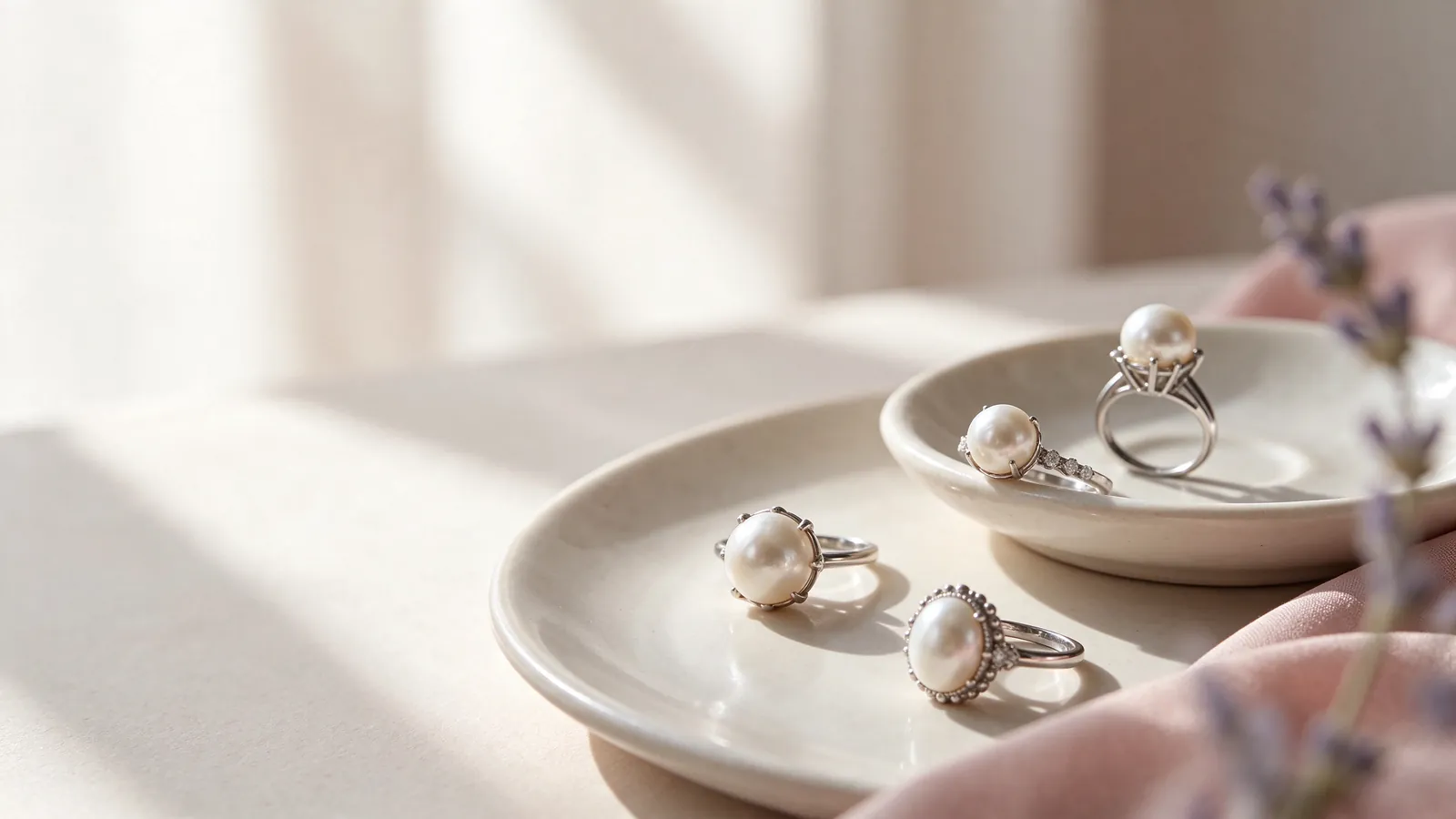
Proportion and comfort in an Akoya pearl pinky ring or another pearl little finger ring
A pinky ring has a different position from a ring worn near the centre of the hand. Its pearl sits at the outer edge, where both the silhouette and contact with everyday objects become noticeable. Begin with your hand relaxed rather than posed: look at the pearl against the width of the finger, then turn your hand to see the setting from the side. A compact outline and an elongated outline can create different balances without either being universally better. The wider design discussion around pearl rings Hong Kong is useful for identifying the shapes you enjoy before narrowing the choice to little-finger proportions.
Remove your other rings for the first comparison. This makes it easier to distinguish the pinky ring's own presence from the overall effect of several accessories. Then put your usual jewellery back on and check whether the pearl crowds the neighbouring finger. A ring that looks delicate from above may have a substantial base underneath, so appearance alone cannot explain how it will feel.
Checking band width and knuckle fit for an Akoya pearl pinky ring or another pearl little finger ring
Slide the ring over the knuckle gently and assess removal as well as putting it on. Once seated, close your fingers, make a loose fist and open your hand again. Wider and narrower bands touch different areas of skin, so an identical size label does not settle the comfort question. Notice whether pressure comes from the band itself or from a setting pressing against the ring finger.
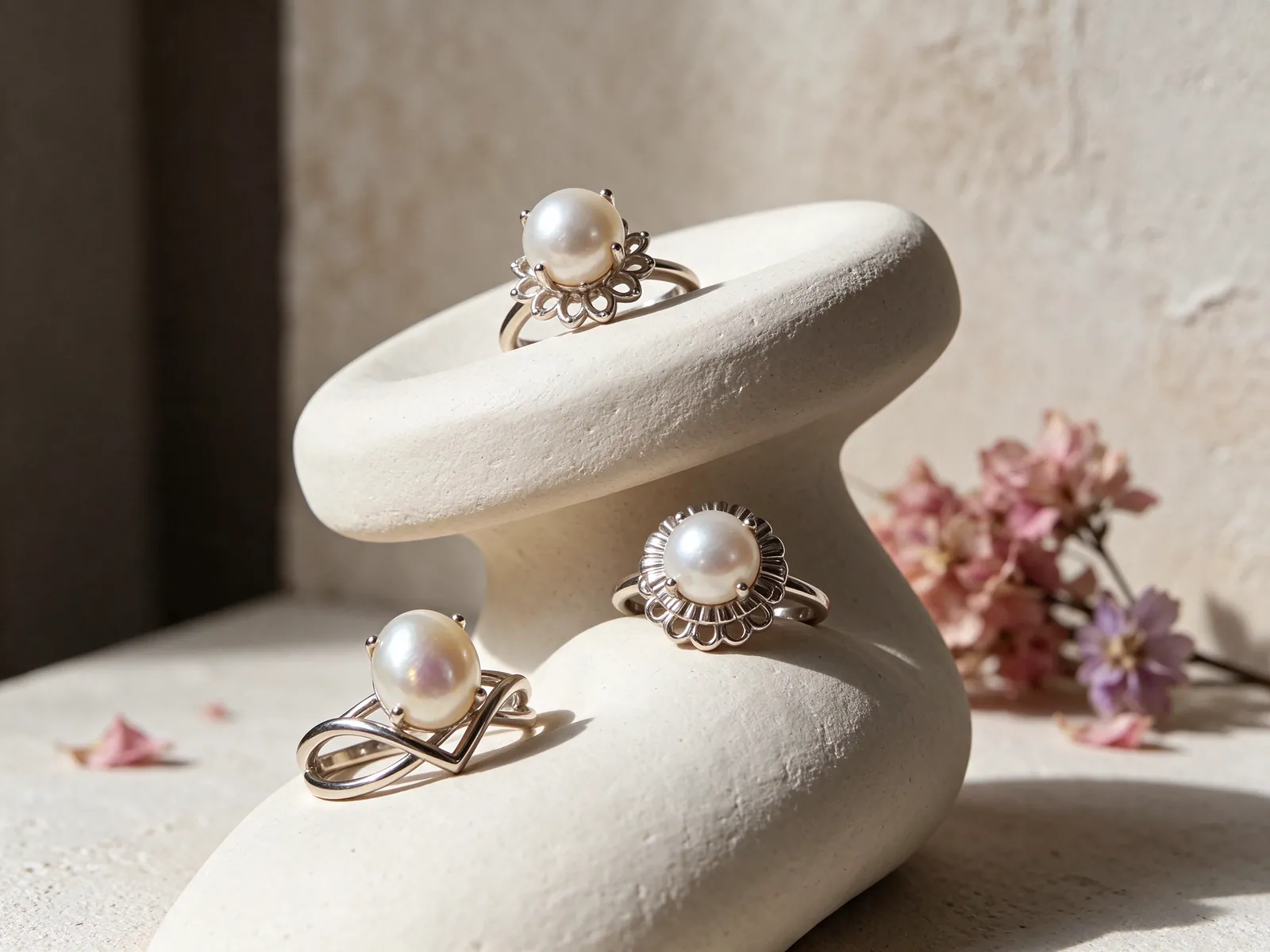
Separate sizing concerns from a pearl that turns
Measure the little finger on the hand you intend to use. Do not assume the opposite hand matches, or that a ring-finger size can be adapted by guesswork. If taking an initial measurement with a flexible strip, keep it close to the skin without pulling it tight. Knuckle clearance and the fit at the base of the finger are separate observations. An existing ring is only a useful comparison if it genuinely fits that particular finger and its band shape is understood.
A pearl turning towards the palm does not automatically mean the ring needs to be smaller. A raised setting and an off-centre pearl can influence balance, while the finger's own contours affect where the band settles. If the ring already struggles to pass the knuckle, reducing its size may make removal more difficult. Consider the outline, band contact and direction of movement together rather than treating rotation as a single sizing problem.
Keep a useful record of the try-on
Write down practical observations such as easy knuckle passage, rotation at the base or contact when holding a bag. These are more informative than a simple comfortable or uncomfortable label. Hand conditions can vary with temperature and activity, so notice the fit in ordinary circumstances rather than only during a hurried appointment. Persistent pain or numbness is not a styling compromise to accept.
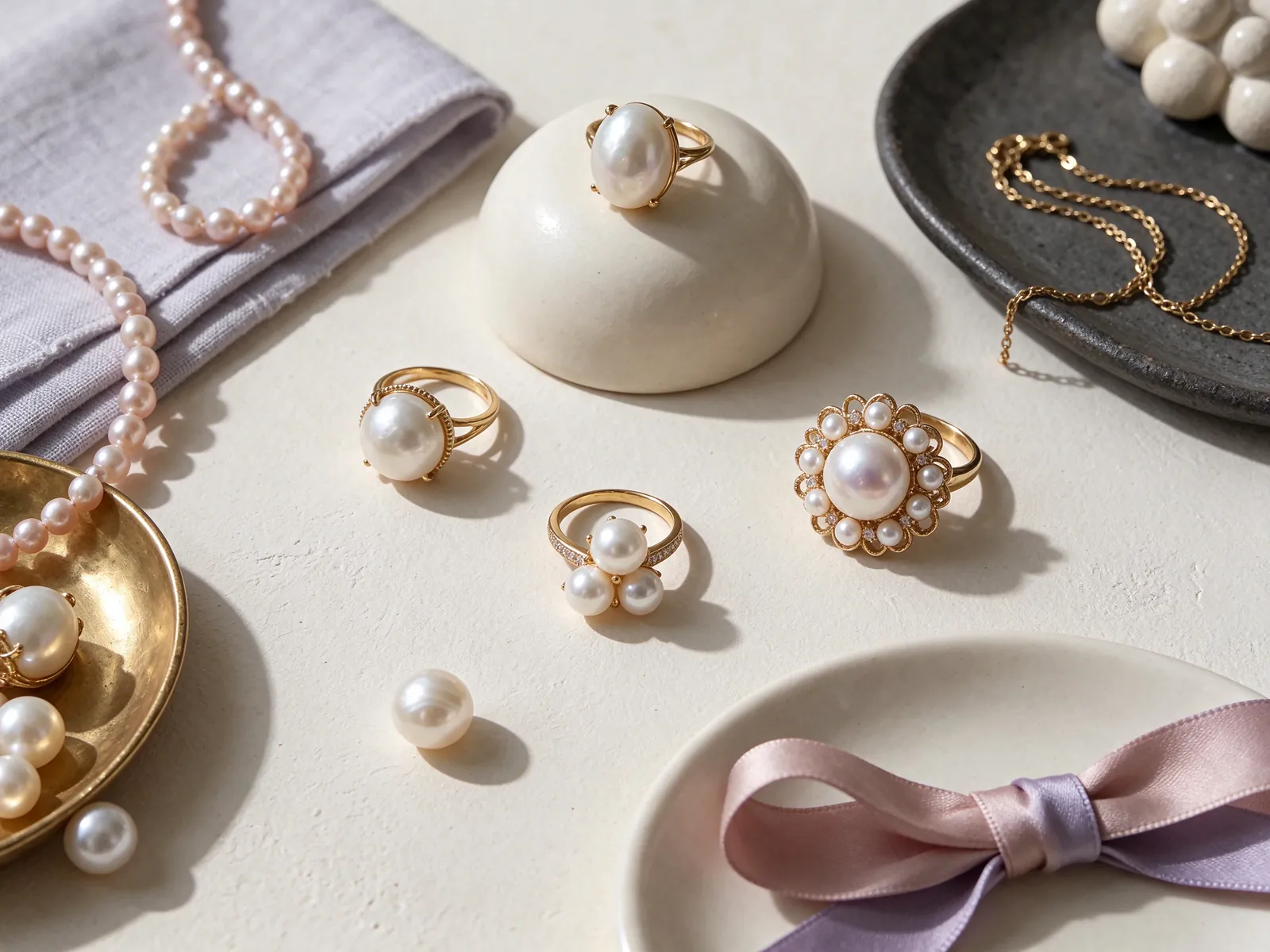
Assess the pearl beyond its name or apparent size
An Akoya pearl pinky ring is a pearl-selection topic, not an identity that can be established from a small white sphere in a photograph. Colour, roundness and size alone do not demonstrate origin or natural-versus-cultured identity. Likewise, the description baby pearls should not be treated as interchangeable with seed pearls or Keshi. Read the actual pearl description and distinguish a size expression from an identity statement.
GIA identifies seven pearl value factors: size, shape, colour, lustre, surface quality, nacre quality and matching for multi-pearl jewellery. For a single-pearl ring, visible lustre and surface features deserve attention alongside proportion. Compare the pearl in soft daylight and normal indoor lighting, without relying on strong flash. If you enjoy an airy silhouette, an open pearl ring offers a useful design comparison, but an opening does not itself establish that a ring may be freely adjusted.
Look at the direction of the outline
A round outline can create a concentrated accent; a non-round outline may extend along the finger. Check where its widest part sits. An outward projection may meet a sleeve or bag, while an inward projection needs clearance beside the ring finger. Neither shape is a guarantee of comfort, and neither provides a basis for inferring a certificate or pearl origin.
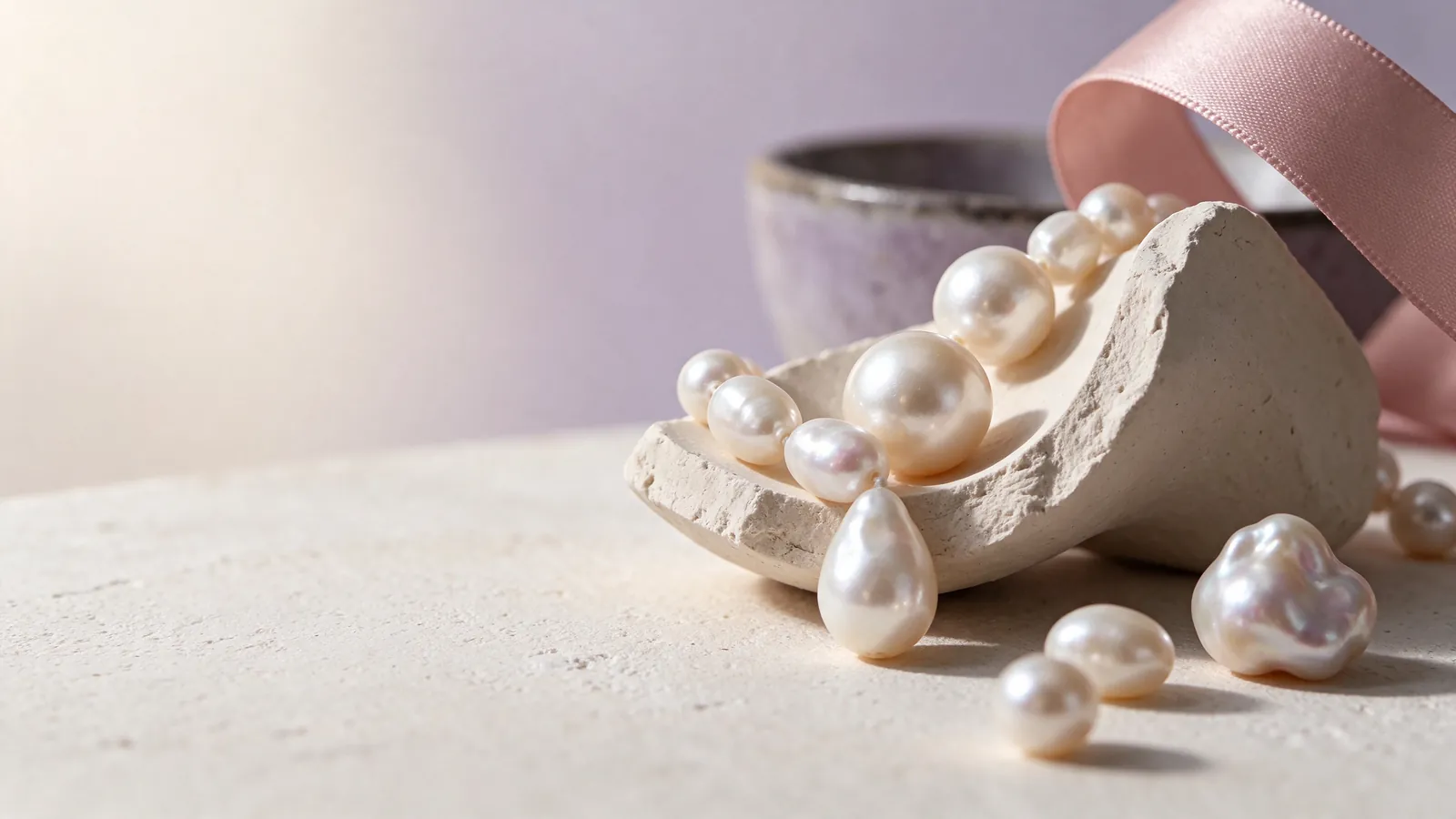
Setting height matters at the edge of the hand
The little finger frequently passes close to cuffs, pockets and bag handles. Examine the setting from the side for raised areas and edges that could catch fabric. A lower profile may reduce protrusion, but it is not proof against impact. If you prefer a broader face, compare the visual weight of a pearl signet ring without assuming that a signet-shaped design is automatically appropriate for your pinky.
Moving elements require a different check. With a pearl charm ring, observe where the suspended element rests and whether it reaches the palm when you grip something. Fixed and suspended pearl arrangements cannot be judged by the same front view alone. If you support your phone with your little finger, notice whether the setting occupies that support point rather than changing your grip unconsciously throughout the try-on.
Rehearse familiar movements without testing impact
Try a usual sleeve and gently hold a smooth handle. Type with your normal hand position instead of keeping the pearl facing upwards for display. These movements reveal contact points; they are not durability tests. Do not strike the pearl against a desk. A recurring collision during an ordinary task is a reason to reconsider the silhouette or reserve the ring for another occasion.
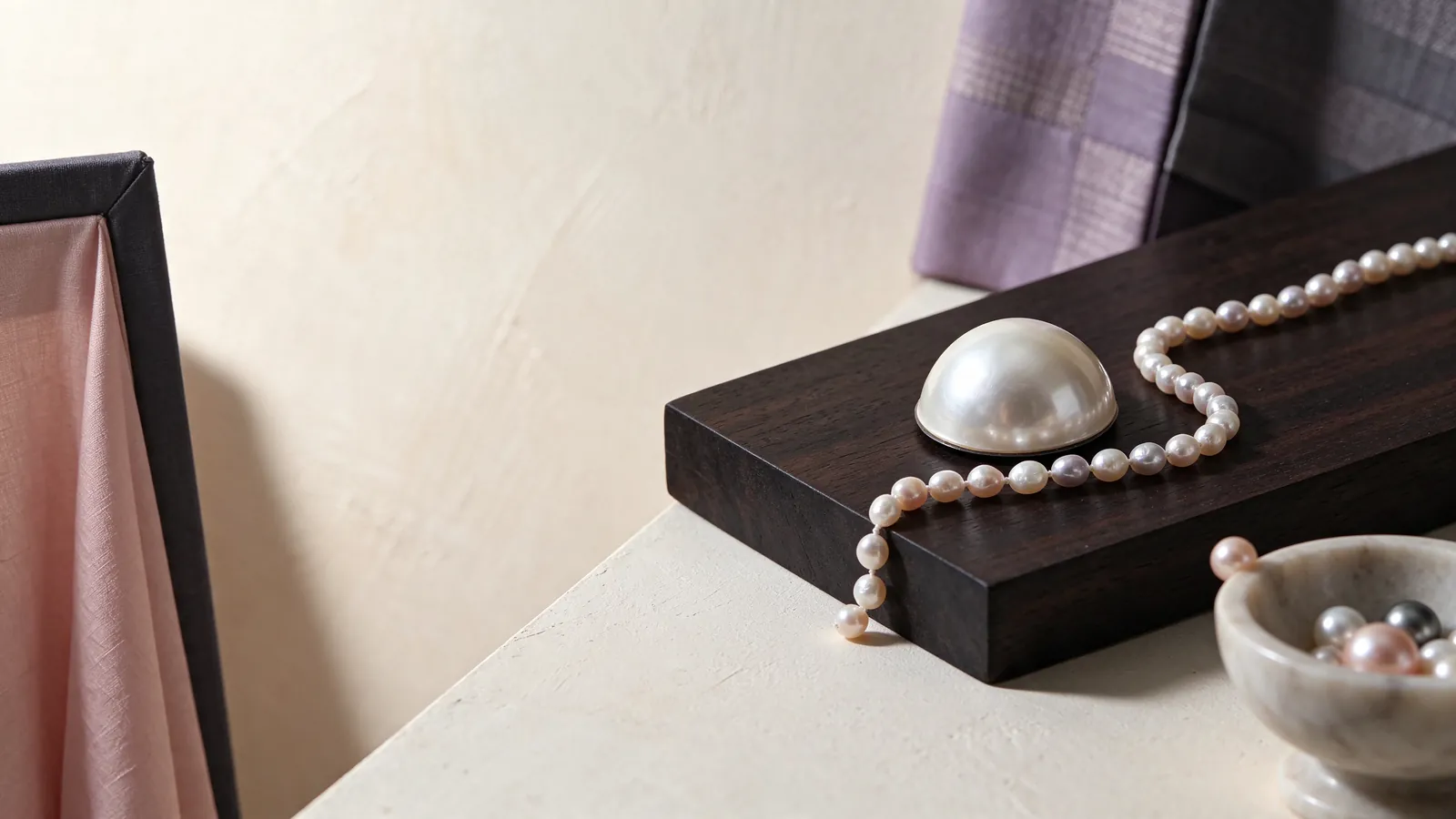
Style the accent without crowding neighbouring fingers
A single pinky ring can be the only focal point on the hand. Plain cuffs and quieter wrist accessories let its outline remain clear. Adding complexity does not necessarily require more bands: a multi pearl ring already introduces a sequence of pearl surfaces. Look at your hand hanging naturally as well as laid flat, because a watch, bracelet and outer-finger ring can concentrate visual weight on the same side.
When considering pearl stacking rings, examine spacing rather than simply the number of pieces. Another band on the same little finger increases the total width and may change a previously comfortable fit. A ring on the neighbouring finger may instead bring the two settings into contact when the hand closes. Moving an accent to the other hand can preserve the styling idea without requiring pearl surfaces to touch.
Let the occasion change the arrangement
For a working day, favour an arrangement that suits typing and is straightforward to remove before manual tasks. For an evening outfit, the pearl can echo the soft colour of an earring or fabric without every accessory matching in size. Lace, loose weaves and fringe deserve a closer check for catching. Styling should accommodate the material you wear, not just the photograph you hope to take.
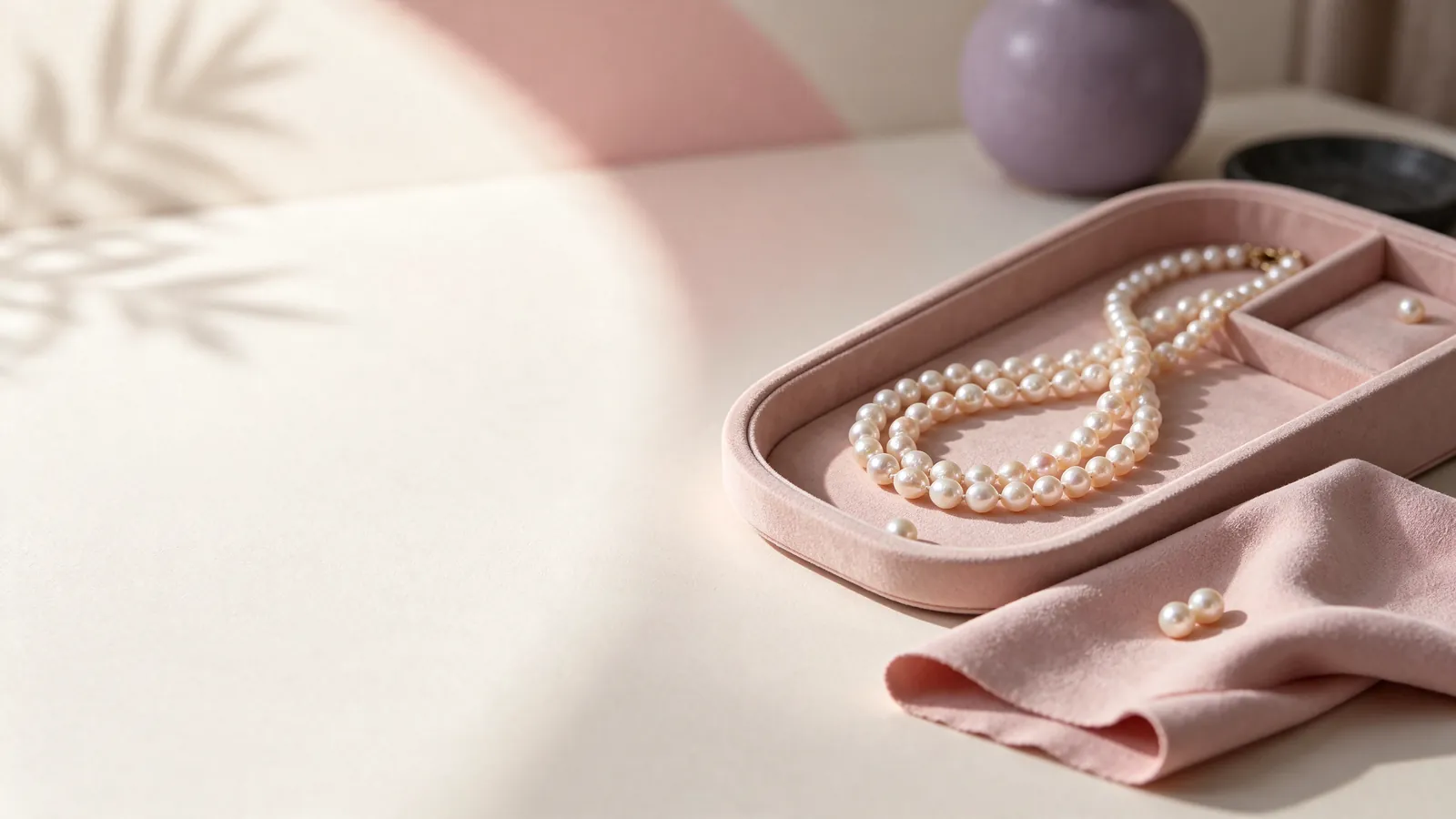
Care begins with how the ring is worn
GIA lists pearl at 2.5 on the Mohs hardness scale. This is a reason to consider scratching, not a promised lifespan or an impact rating. Remove a pearl pinky ring before handling tools, moving boxes or activities that press it against rough surfaces. Do not leave it loose beside keys in a bag. The presence of a metal setting does not make the exposed pearl immune to damage.
Put the ring on after applying perfume and hair spray, and avoid direct contact with cleaning chemicals. After wear, gently wipe with a very soft, clean cloth. GIA states that pearls should never be cleaned with ultrasonic or steam cleaners, so a method used for another piece of jewellery must not be transferred automatically. Avoid scraping trapped dirt from the setting with a sharp implement.
Store separately and notice changes before wearing
Give the ring its own soft storage space away from excessive heat and other jewellery that could rub against it. Before wearing, notice unusual pearl movement, a distorted setting or fibres caught around the edges. Stop wearing a loose assembly and seek an appropriate inspection. Twisting the pearl or applying household glue is not a sensible way to investigate the problem.
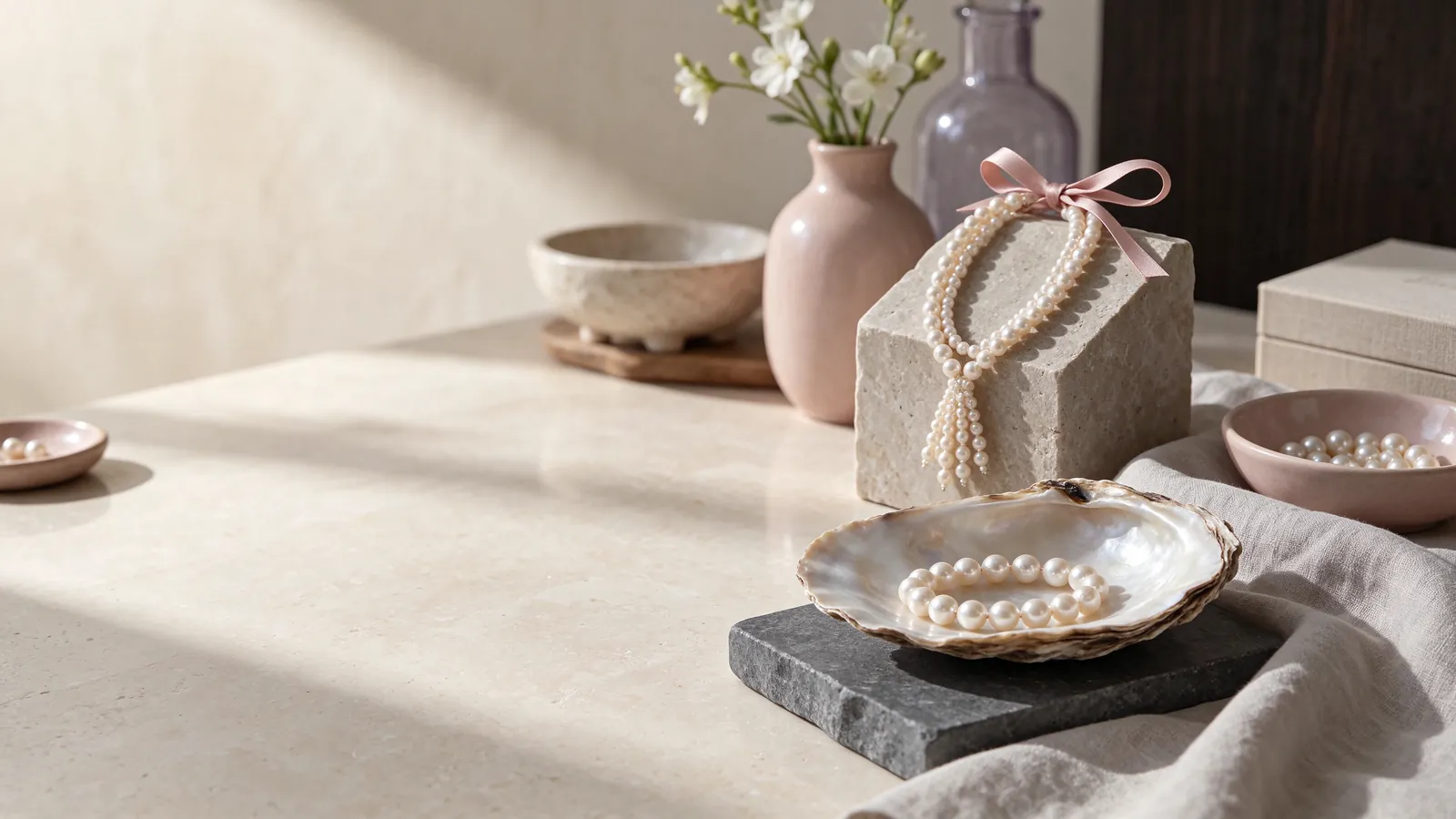
Bring a clear brief to the selection conversation
Describe the intended hand, your usual sleeves, whether the ring will be worn alone and the movements you perform most often. Keep appearance preferences separate from fit observations: a pearl outline you admire may still occupy an awkward contact point. If Akoya is your preferred direction, ask what the actual pearl description says rather than assuming the search phrase settles its identity.
Compare candidates first for unobstructed movement, then for the visual balance you enjoy. When discussing the choice with Flint Jewellery, useful questions concern little-finger position, band width, setting height and how the design relates to your daily habits. Pearl identity, design details and fit are distinct matters. Clarity on one does not provide an answer to the others.
Choose the ring you want to wear, not only photograph
Ask whether you can close your fingers naturally, pass a sleeve over the hand and store the ring safely when it needs to come off. If the tall pearl is attractive in a photograph but distracting in use, a different silhouette may suit you better. A considered choice balances the accent with the structure and care it requires.
To discuss pinky-ring proportions, fit and everyday contact points, use the WhatsApp enquiry on this page to contact Flint Jewellery, or call +85260106207. Describe the intended finger and the movements that matter most to you.
| Observation | What to compare | Possible trade-off | Everyday check |
|---|---|---|---|
| Pearl outline | View from above and from the palm | Concentrated accent versus lateral width | Try alone before adding other jewellery |
| Band width | Knuckle passage and closing the hand | Different contact areas affect comfort | Recheck total width when stacking |
| Setting height | Side profile and sleeve clearance | Less protrusion is not impact protection | Use a familiar phone grip |
| Rotation | Band contact and pearl balance | A smaller size may complicate removal | Record where the pearl turns |
| Pearl appearance | Soft daylight and indoor light | Photographic lighting can change impressions | Observe lustre and visible surface features |
Pearl knowledge and authoritative references
GIA lists pearl at 2.5 on the Mohs hardness scale, a useful reminder to avoid scratching and unsuitable cleaning methods when a pearl is worn at the outer edge of the hand.
Read the reference for this factFrequently asked questions
Can I use my ring-finger size for a pearl pinky ring?
No reliable fit follows from that substitution. Measure the intended little finger and assess both knuckle passage and the fit at its base. Band width and inner profile can also change how a labelled size feels.
Does a pearl turning towards the palm mean the ring is too large?
Not necessarily. Setting balance, finger contours and band contact all influence rotation. If the knuckle is already difficult to pass, making the ring smaller may create another problem rather than solving the first.
Are baby pearls the same as Keshi or seed pearls?
Those terms should not be treated as synonyms. Small size does not establish pearl identity. Read the actual description instead of inferring Akoya, Keshi or another identity from a photograph.
Can I wear another ring beside the pinky ring?
Compare them with the hand relaxed and closed. The settings should not continually collide. If stacking on the little finger itself, reassess the combined band width rather than assuming the original fit remains unchanged.
Is ultrasonic cleaning suitable for a pearl pinky ring?
No. GIA advises against ultrasonic and steam cleaning for pearls. Use a very soft, clean cloth for routine wiping, and seek suitable inspection if dirt is trapped around the setting or the pearl seems loose.
Updated: