
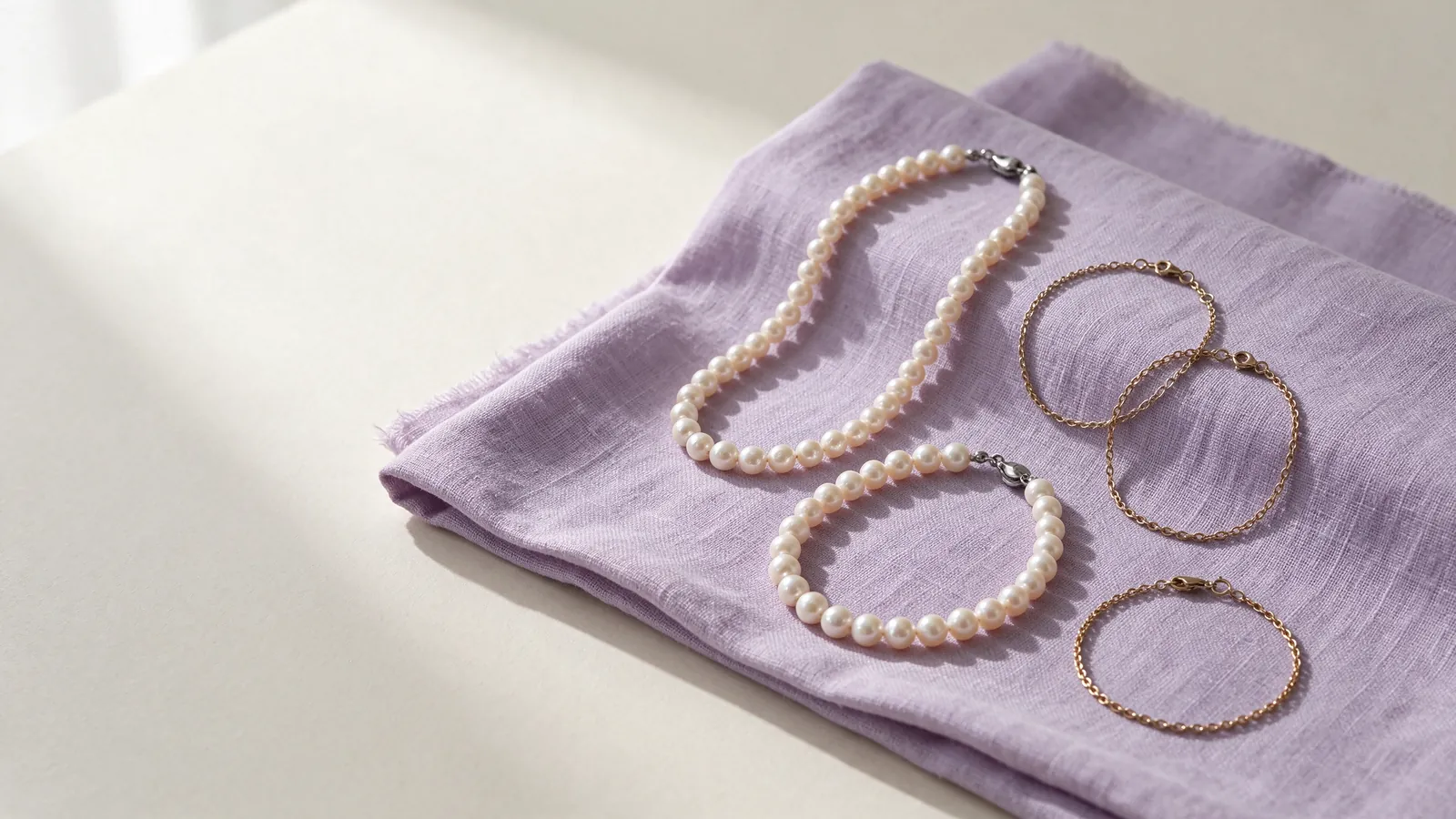
When comparing a sterling silver pearl bracelet with a 925 silver pearl bracelet, which parts are silver?
A bracelet title brings pearls and metal into a single phrase, but the object you wear contains several distinct parts. WSP's pearl bracelet descriptions include sterling silver for clasps and chains, alongside SV925 wording. Read each description in relation to the component it names. Information about a clasp does not automatically describe an extension chain, connecting ring or the structure between pearls.
For a useful comparison, make a small component list for each bracelet: clasp, chain sections, connecting points and pearl arrangement. Match the written material information to that list. Photographs can clarify the silhouette, but a bright, silver-coloured reflection cannot identify a metal. If the title is the only material description, ask the seller which parts it covers rather than assuming every visible fitting is identical.
For a sterling silver pearl bracelet or 925 silver pearl bracelet, do the clasp and chain have the same material description?
Start with the clasp description, then read the chain description separately. In a predominantly strung pearl bracelet, the word chain may refer only to a short metal section rather than the whole bracelet. Different wording needs an explanation of scope; matching wording still does not tell you how easily the fastening operates or how the bracelet feels against your wrist.
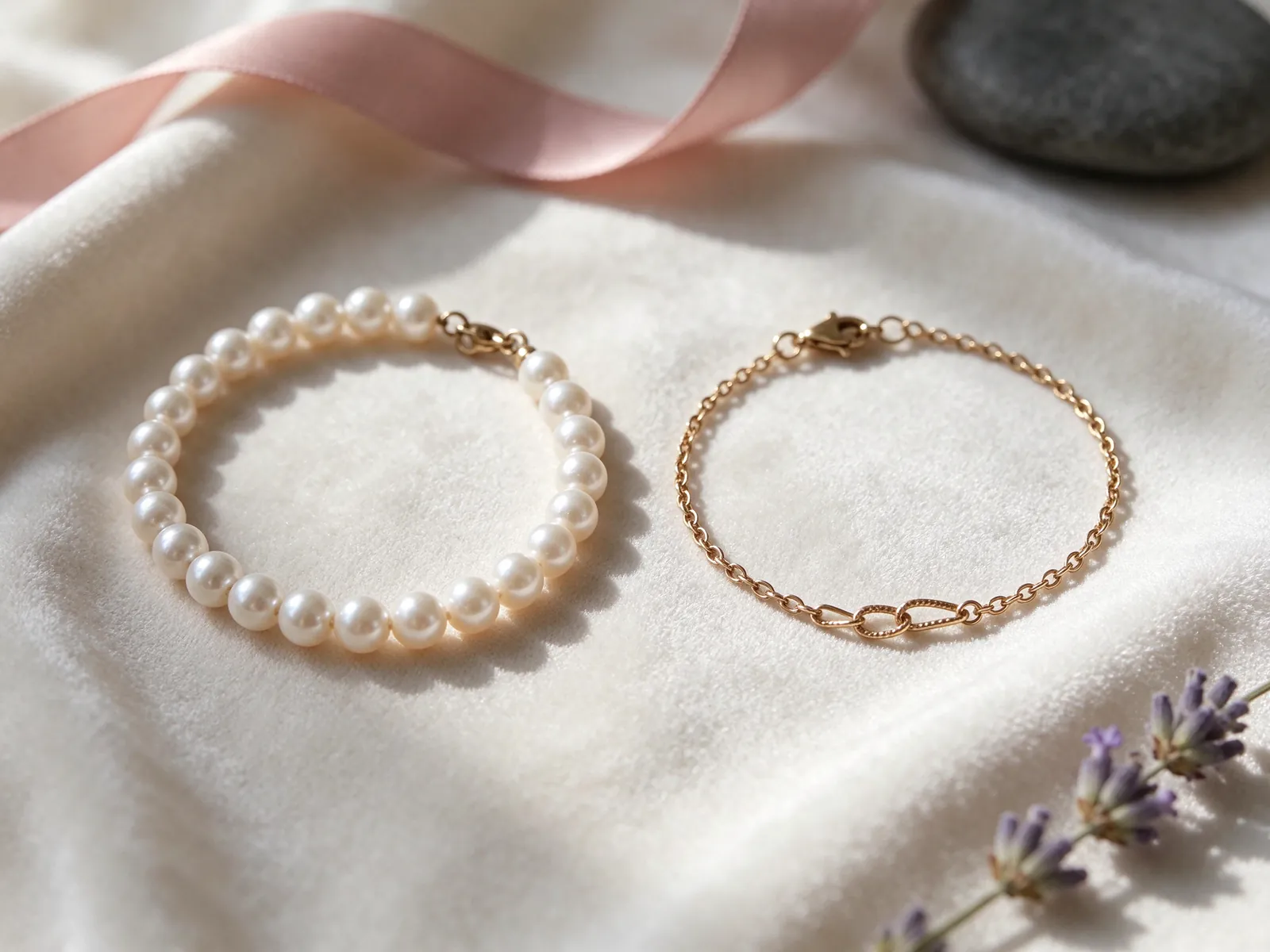
Compare wrist fit through structure and movement
Decide whether you prefer a close position at the wrist, gentle movement or a looser drape. Measure around the place where you intend to wear the bracelet with a flexible tape, without pulling it tight. Then distinguish total bracelet length from an adjustable range or a stated wearable length. Pearl arrangement and clasp shape affect the result, so a universal extra-length rule is not a reliable substitute for understanding the design.
When trying a bracelet, lower your hand, bend your wrist gently and imitate everyday actions such as typing or carrying a bag. Notice whether the clasp rotates underneath your wrist, whether pearls meet the desk edge and whether the bracelet travels farther than you like. A loose fit is not automatically comfortable, and a close fit is not automatically restrictive: your activity and preference are the deciding factors.
Test the cuff and watch together
Fasten a shirt cuff while wearing the bracelet and check how the sleeve edge meets the pearls. If you wear a watch, try the pieces on separate wrists before considering a stack. Assess repeated contact, not just a still photograph. For a gift, asking about watches, work sleeves and preferred looseness gives more useful direction than guessing the recipient's wrist size from appearance.
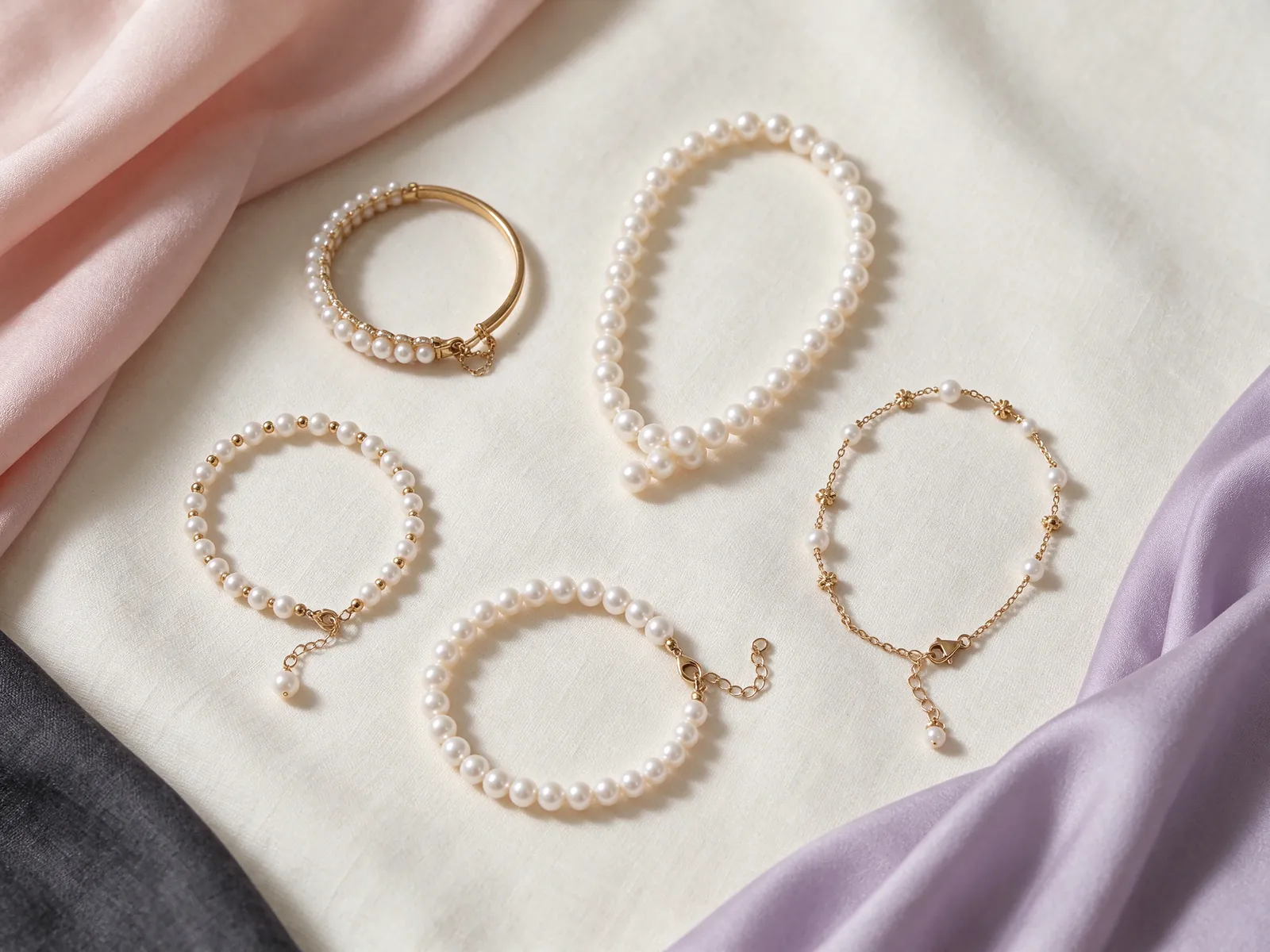
Style the silvery appearance without confusing it with material
A search for a silver pearl bracelet may express a colour preference rather than a firm material requirement. Look at the pearls and metal sections in soft light, then in the indoor lighting you normally use. Backgrounds and clothing change the overall impression. The white pearl bracelet guide offers a related way to consider pale colours and contrast, without treating a photograph as proof of pearl type or origin.
With navy, grey or white clothing, the bracelet can act as a small visual highlight. Decide whether the main feature is the pearl arrangement, a visible chain section or your watch, then keep nearby accessories from competing with it. A patterned sleeve may benefit from a clear jewellery outline. This is a styling choice, not a rule that one metal colour must suit every skin tone.
Give mixed metal colours a shared visual detail
Existing rings or earrings do not all need to be the same colour as the bracelet. A shirt button, bag fitting or simple repeated line can connect different finishes visually. Compare a full outfit photograph with a close wrist view: one reveals proportion, while the other reveals crowding. Colour coordination and material identification remain separate questions even when the combination looks harmonious.
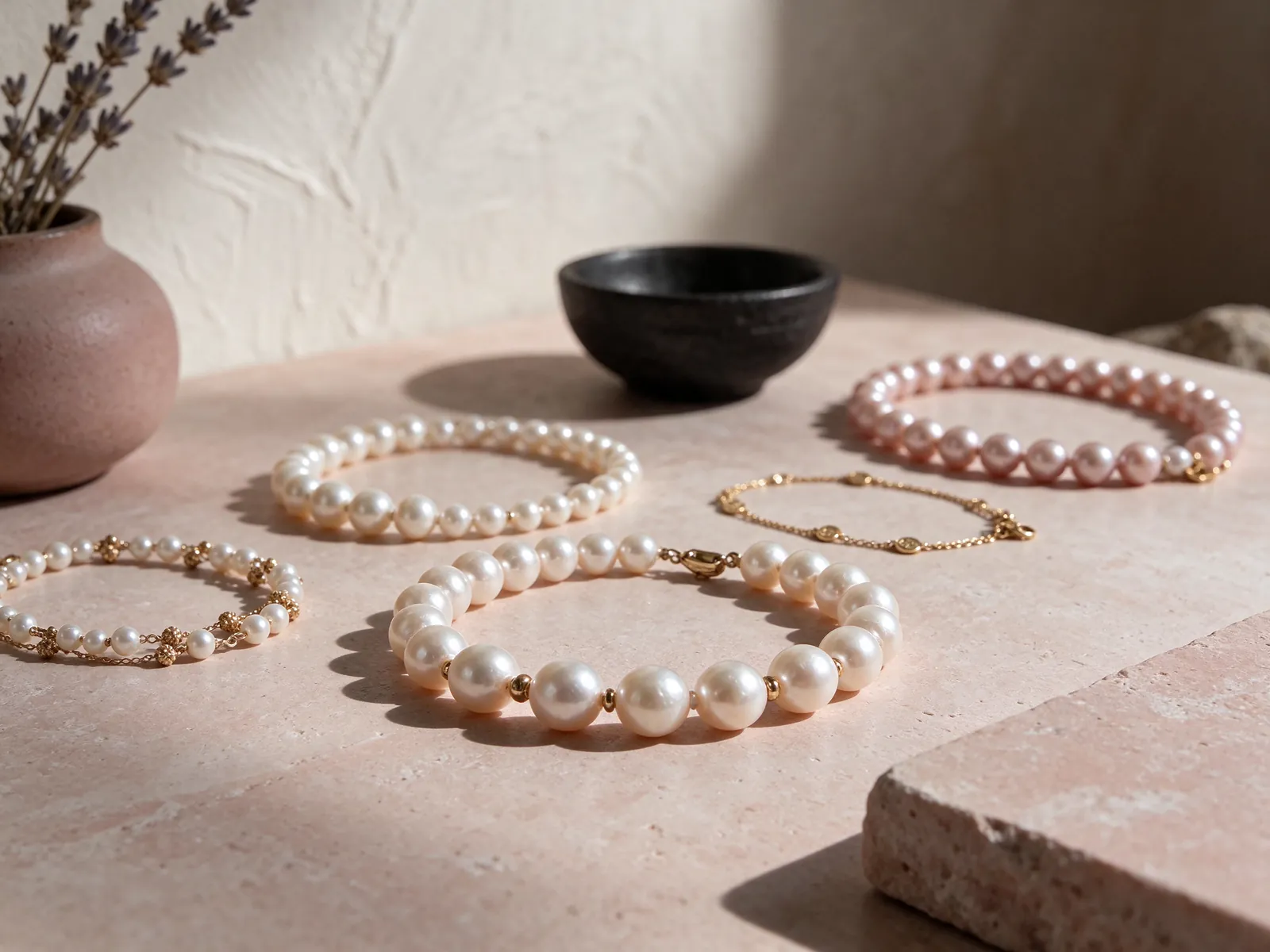
Separate silver comparisons from gold and platinum choices
Ask what attracted you to silver in the first place: the pale appearance, the chain silhouette or the specified material. The pearl bracelet clasp guide helps you consider fastening needs separately from the material name. Flint Jewellery's choices are 18K 750 white gold, 18K 750 yellow gold, 18K 750 rose gold, PT950 platinum and PT900 platinum. These are distinct from the silver bracelet category discussed here, even when colours appear similar.
If coordinating with your existing jewellery is the priority, an 18k gold pearl bracelet offers a related topic for considering white, yellow or rose-coloured directions. If the named material is platinum, use the platinum pearl bracelet guide to organise that discussion. Neither topic replaces checking the clasp, chain proportions and pearl appearance. A material label alone cannot rank two different bracelet structures for your particular routine.
Keep different numerical labels in their own category
Search results may place 925 and other metal labels next to similar-looking thumbnails. Read the label with the part it describes before comparing the design. A 10k gold pearl bracelet is a separate material-comparison topic, not another name for silver and not one of Flint Jewellery's metal choices. If your real requirement is simply a silvery appearance, record colour and material as two separate preferences.
Assess the pearls independently of the metal label
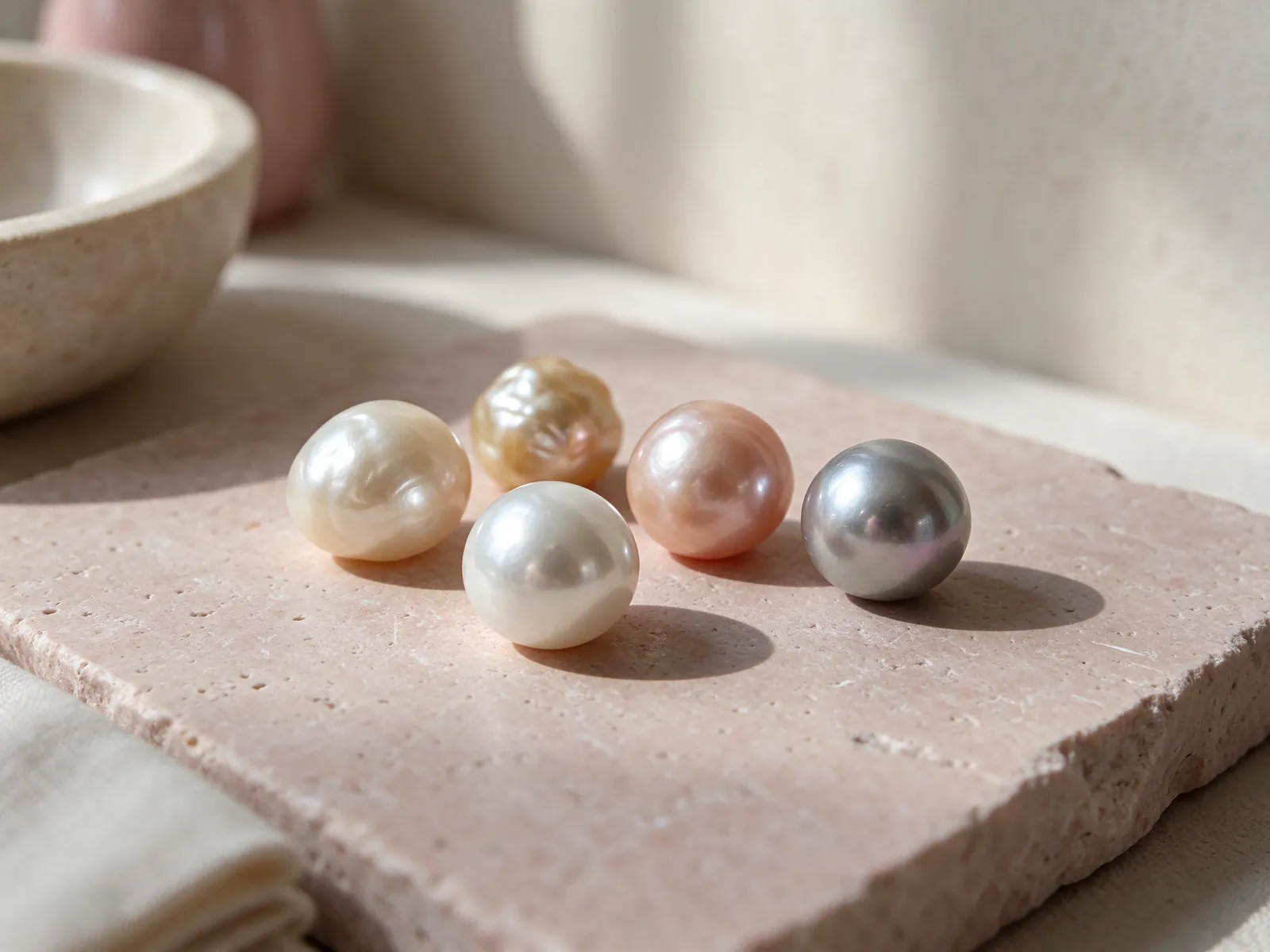
GIA describes seven pearl value factors: size, shape, colour, lustre, surface quality, nacre quality and matching. This gives you a broader comparison framework than the word silver. For a bracelet, look along the whole arrangement for the relationship between reflections, outlines and colour. The clasp may be visually bright, but the pearls remain a substantial part of what you see when the bracelet moves.
Use photographs with reasonably comparable lighting and backgrounds so that exposure does not dominate the comparison. Look at the clarity of reflections, visible surface details and the rhythm of the arrangement. Some people prefer orderly repetition; others enjoy a varied outline. A photograph cannot supply an unstated pearl diameter, and roundness or colour alone cannot establish origin, natural-versus-cultured identity or the existence of a certificate.
Switch between the overall strand and individual details
View the bracelet laid out, then from a wearing angle, to understand how its arrangement changes in motion. GIA distinguishes bodycolour, overtone and orient, and not every pearl displays all three. Small colour differences between images therefore should not be turned into a pearl-type conclusion. Describe the visual matching or shape variation you prefer rather than assigning an unsupported category to what you see.

Care for the pearls, not only the metal fittings
GIA places pearl at 2.5 on the Mohs hardness scale and states that pearls should never be cleaned in ultrasonic or steam cleaners. For a wrist piece, this is a useful reminder to consider desk edges, adjacent jewellery and routine contact. The number is not a durability score for an entire bracelet. A process intended for metal does not automatically suit the pearls attached to it.
After wearing, wipe the pearls with a very soft, clean cloth. Avoid acids, perfume, hair spray and excessive heat. Put the bracelet somewhere away from spray while getting ready, then wear it after those steps are finished. Store it apart from pieces that could rub against it. A metal clasp does not make the whole bracelet a metal-only item for cleaning or storage.
Remember the string and connecting points
If strung pearls have been cleaned with water, GIA advises waiting until the string is completely dry before wearing them. During ordinary handling, look for a clasp that is not closing properly or an obvious change at a connecting point, without pulling repeatedly to test strength. Stop wearing a piece that shows a problem and seek advice from someone familiar with that particular construction.
Turn the comparison into a practical buying brief
Organise your preferences into fixed requirements, desired appearance and questions that need a wearing test. A specified metal belongs in the first group; coordination with a grey wardrobe belongs in the second; easy one-handed fastening belongs in the third. This prevents the words sterling silver from doing all the decision-making. Compare the bracelet for your most frequent setting before considering its occasional use with a more formal outfit.
For gifting, consider the recipient's regular jewellery colours, watch habits, sleeves and desk-based activities. Ask whether they enjoy a neat pearl arrangement or a more varied outline. Presentation photographs cannot answer those questions. A material-focused recipient needs a clear component description, while a style-focused recipient may place greater emphasis on visible chain proportions and the way the bracelet sits beside other accessories.
Bring your wearing context to a customisation discussion
For a conversation about Flint Jewellery's gold and platinum directions, bring your wrist measurement method, photographs of typical sleeves and the colours of jewellery you already wear. Explain what you want to preserve and what feels inconvenient in your current routine. Discuss material, pearl description and silhouette separately before combining them. That makes the brief more useful than asking only for something that looks silver. Contact Flint Jewellery on WhatsApp at +85260106207 to discuss 18K 750 gold or PT950 and PT900 platinum directions, with your preferred bracelet shape and daily wearing habits in mind.
| Comparison point | Read or observe | Wearing consideration | Do not infer |
|---|---|---|---|
| Clasp and chain | Material wording for each component | Fastening action and position | Every fitting has the same material |
| Fit and structure | Length meaning and pearl arrangement | Typing, wrist movement and cuffs | Equal total length means equal fit |
| Silvery appearance | Colour in everyday lighting | Relationship to clothing and a watch | Similar colour identifies the metal |
| Pearl appearance | Lustre, surface, shape and matching | Overall rhythm and individual detail | Photographs establish origin or certificates |
| Care | Pearl and string cleaning needs | Soft wiping and separate storage | Metal-only cleaning suits the whole piece |
Pearl knowledge and authoritative references
GIA ranks pearl at 2.5 on the Mohs hardness scale and says pearls should never be cleaned in ultrasonic or steam cleaners. Bracelet care must therefore consider the pearls as well as the metal.
Read the reference for this factFrequently asked questions
Does a sterling silver clasp description cover an extension chain?
Not automatically. Read the extension chain and connecting-point descriptions separately. A material statement is useful only when its component scope is clear; the bracelet title is not a substitute for that detail.
How should I compare two bracelets with the same listed length?
Check what the length means, then consider pearl arrangement, clasp shape and any stated adjustment. Try normal wrist movements where possible. The same total length does not necessarily create the same wearable space or drape.
Can a pale pearl photograph tell me which pearl type is used?
Colour alone does not establish pearl type or origin. Lighting and background affect photographs, while bodycolour, overtone and orient are distinct visual components. Use an explicit pearl description rather than assigning an identity from the image.
Should pearl bracelets go into an ultrasonic cleaner?
No. GIA states that pearls should never be cleaned in ultrasonic or steam cleaners. Routine care uses a very soft, clean cloth after wearing, with attention to the string and other components rather than just the metal.
Is this a Flint Jewellery sterling silver collection?
No. This page explains material descriptions and buying comparisons. Flint Jewellery's metal choices are 18K 750 white gold, 18K 750 yellow gold, 18K 750 rose gold, PT950 platinum and PT900 platinum; silver is a separate category discussed for comparison.
Updated: