
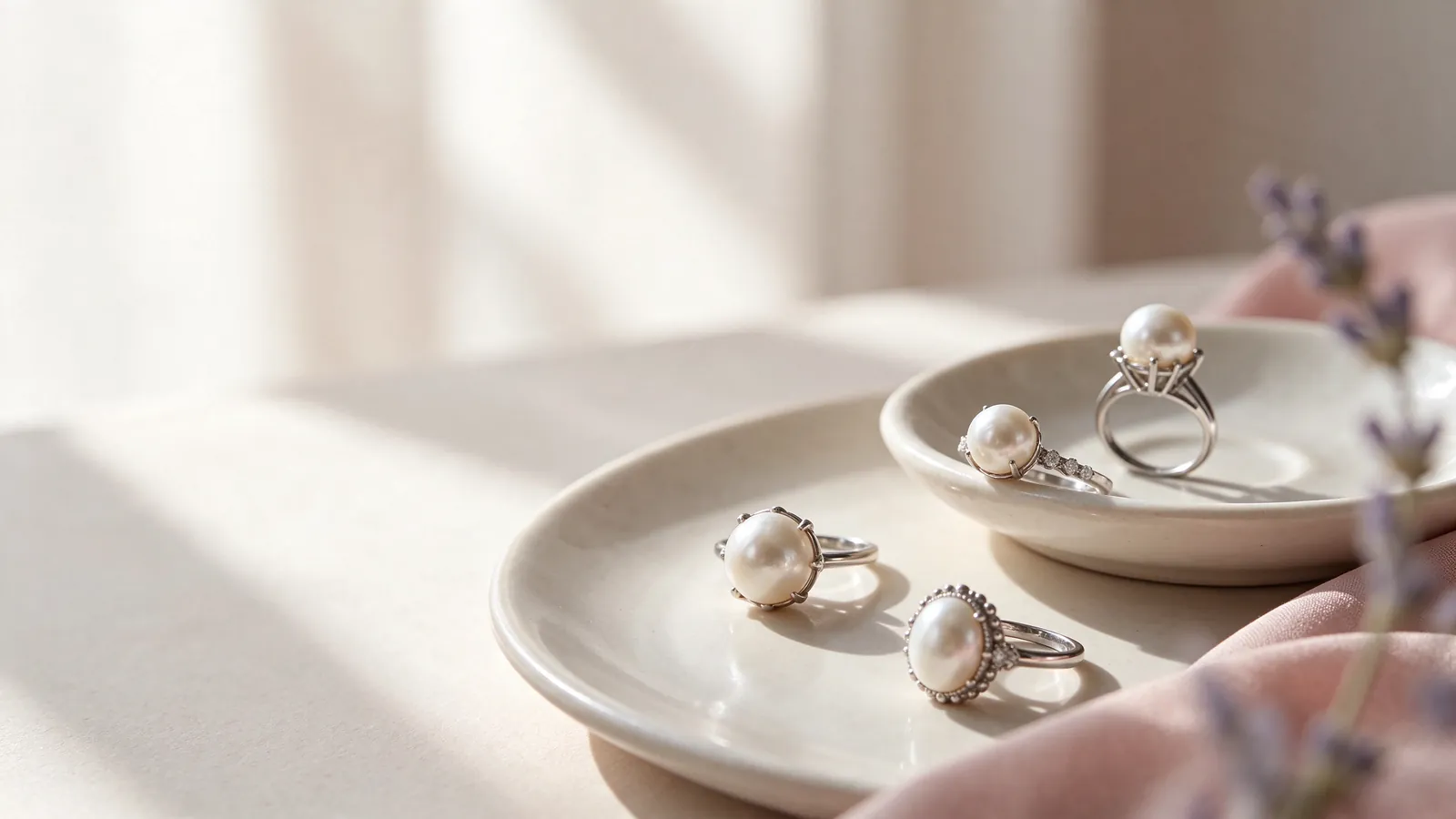
Why style and fit matter beyond a 10K gold pearl ring, K10 pearl ring or 10 carat pearl ring label
A 10K gold pearl ring and a K10 pearl ring use a different order for the gold designation. In this context, a 10 carat pearl ring refers to that metal description, not a pearl weighing ten carats. None of these phrases gives you a finger size or a pearl diameter. Start by separating the band material from the pearl description; similar names do not establish identical settings, proportions or comfort.
For a useful comparison, picture the ring during a normal day rather than only in a close-up photograph. You may be typing, reaching into a handbag or putting on a jacket. A raised setting and a broader band introduce different practical questions from a narrow, unobtrusive outline. The sterling silver pearl ring comparison offers a separate way to explore another metal label without confusing it with fit; like K10 and 10K, sterling silver is not among Flint Jewellery’s material choices.
When comparing a 10K gold pearl ring with a K10 pearl ring or a 10 carat pearl ring, how should the band fit?
Check both the knuckle and the base of the finger. The ring should not require forceful pulling on the pearl to remove it, nor turn so readily that the setting constantly moves away from your preferred position. Bend your fingers and hold a pen to notice pressure at the edges. Record the band width and inner profile as well as the stated size, because another ring with the same size may feel different.
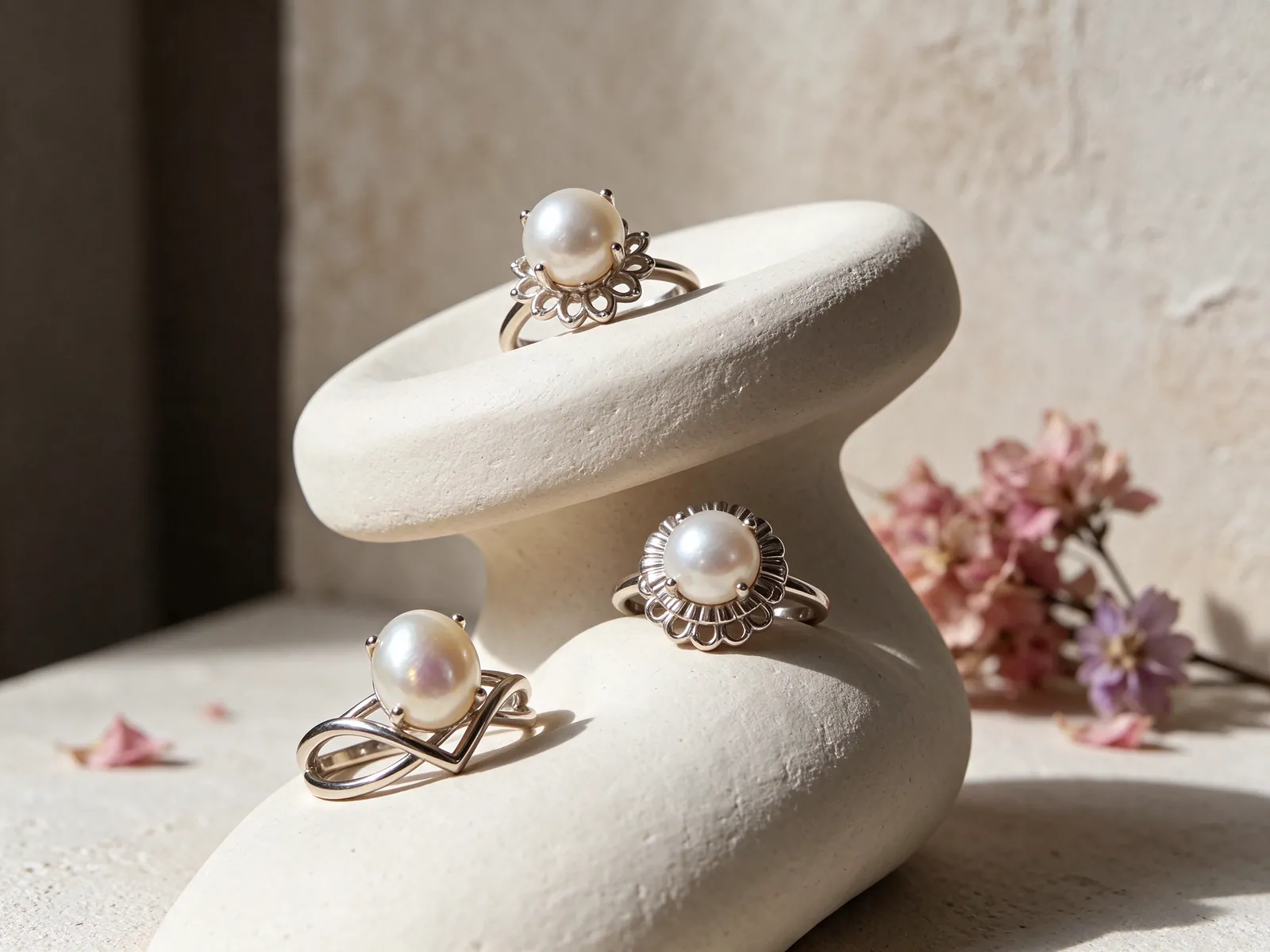
Read the metal description before judging its colour
A white appearance in a photograph does not distinguish white gold from platinum. Those are different material descriptions, and lighting, reflection and the background can change how either looks on screen. Look for the stated metal rather than treating brightness as identification. If your interest is a warmer or cooler frame around the pearl, an 18K gold pearl ring discussion can help you organise colour preferences without guessing the material from an image.
The K10 designation also cannot settle how a ring will feel or perform in every activity. Band dimensions, joints and the position of the pearl matter alongside the material name. When considering a platinum pearl ring, keep those design questions in the comparison rather than relying on a white finish alone. Neither the colour in a photograph nor a short metal label establishes comfort, a skin response or the outcome of future alterations.
Use existing jewellery as a styling reference, not a metal test
Think about the watch, earrings or wedding band you wear most often. Matching their general colour can create a quieter arrangement, while a deliberate contrast can make one piece stand out. Describe the effect you want as warm, cool or mixed rather than claiming that two photographic colours prove the same metal. This gives a design conversation a clear visual direction while keeping material identification separate.
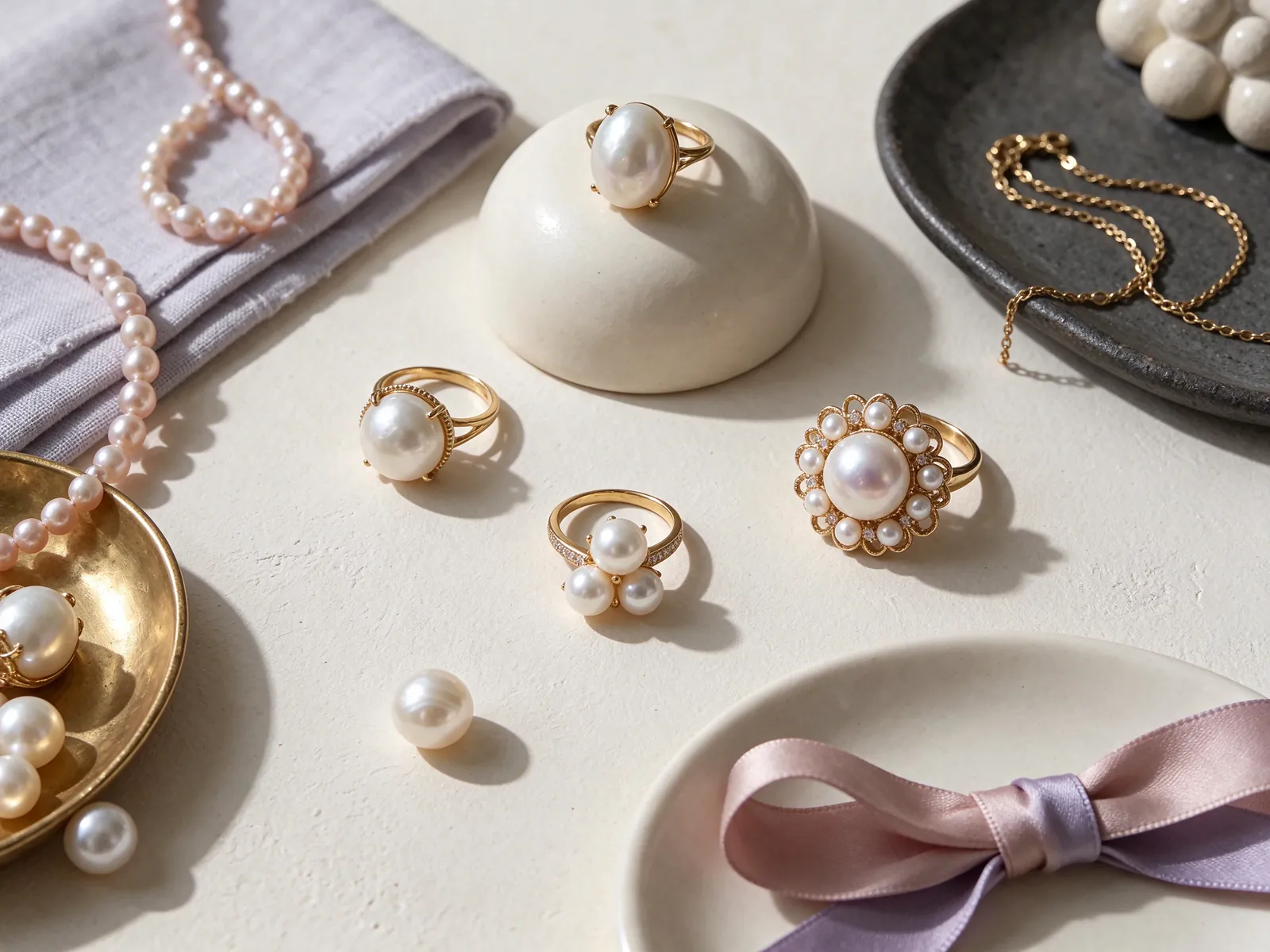
Assess the pearl independently of the K10 label
GIA describes seven pearl quality factors: size, shape, colour, lustre, surface quality, nacre quality and, for multi-pearl jewellery, matching. A K10 or 10K label supplies none of that information. For a ring, the pearl is often the visual focus, so consider the clarity of its reflections, its outline and visible surface features alongside the setting. A larger appearance alone is not a complete quality assessment and does not necessarily suit your preferred proportions.
In a single-pearl design, look at both the front and side views; in a multiple-pearl arrangement, consider how the colours and shapes work together. A round shape, a white bodycolour or a bright highlight cannot by itself establish origin, natural-versus-cultured identity or certification. If any of those matters to your purchase, ask the seller about that specific point instead of deriving an answer from the metal designation or the photograph.
Turn a visual preference into a precise question
You might prefer a soft outline, more distinct reflections or a less conspicuous surface feature. Such descriptions are more useful than assuming a metal category selects the pearl for you. Ask for a view that reveals the pearl’s side and its connection to the setting if those areas are not visible. Remember that differing exposure and lighting limit direct comparisons between photographs, even when the ring names appear similar.
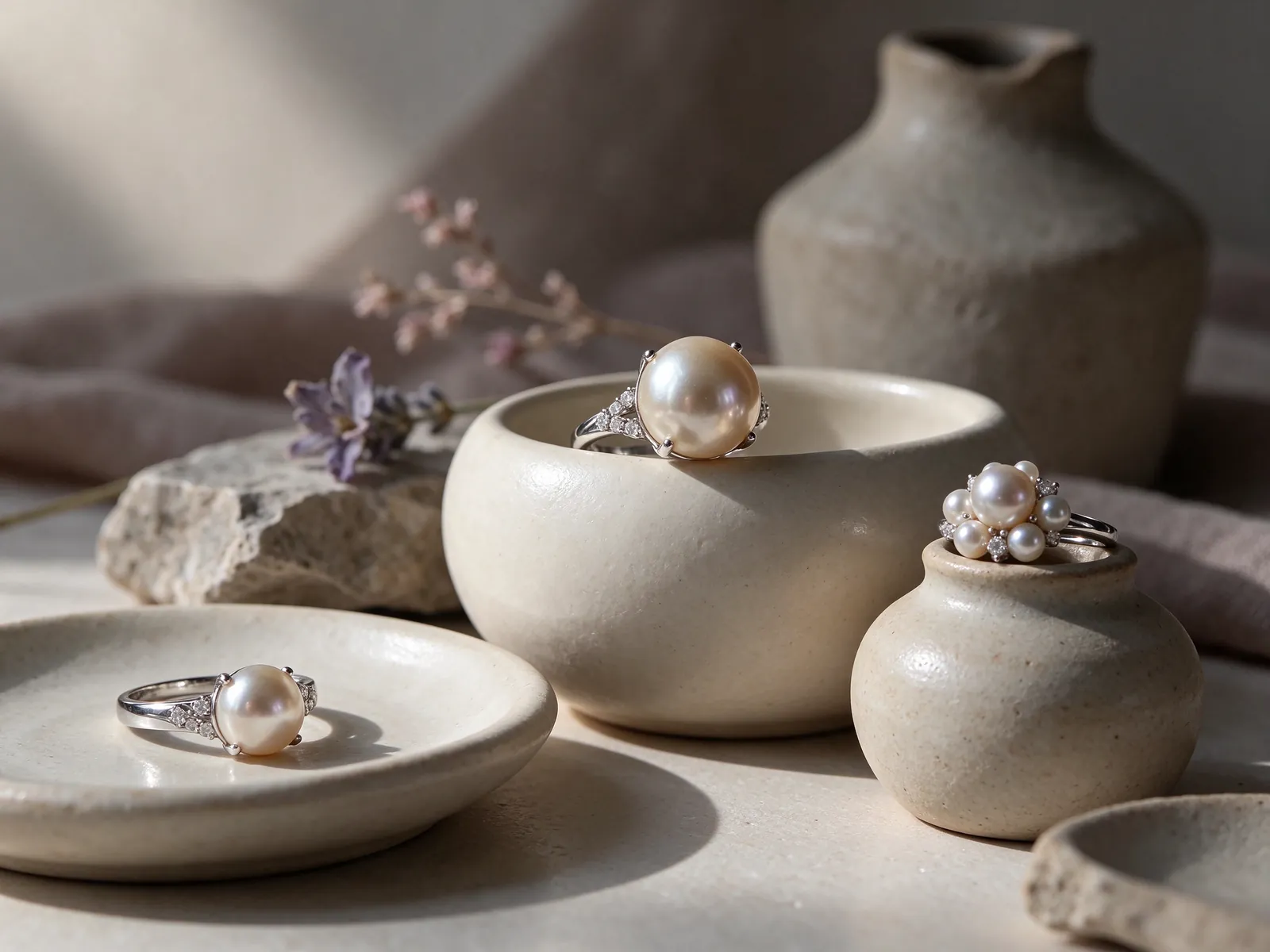
Compare band width, inner profile and open construction
A broad band covers more of the finger than a narrow one and may feel more restrictive to you. Its inner curve and edges also affect the sensation when you bend your hand. Treat wide band pearl ring sizing as a fit question for the particular design, not a reason to apply an automatic size adjustment. The size of a comfortable slim ring is a starting reference, not proof that a wider ring will feel identical.
A visible gap is not an invitation to bend a ring repeatedly. When you ask “are open pearl rings adjustable”, the answer depends on the band construction and its relationship to the pearl setting. Ask the seller or the professional handling that ring about its adjustment limits. During a fitting, notice where the opening rests and whether it catches a sleeve; do not test flexibility by pulling on the pearl or forcing the ends apart.
Check contact points before stacking two rings
A pearl that overhangs a neighbouring band may come into contact with its hard edge. Examine how the two settings sit together without pushing them tightly against each other. Stacking also changes the total width against the finger, so comfort when worn alone may not carry over. Wearing the rings on separate fingers can preserve a clear outline and avoid trying to force an unsuitable arrangement.
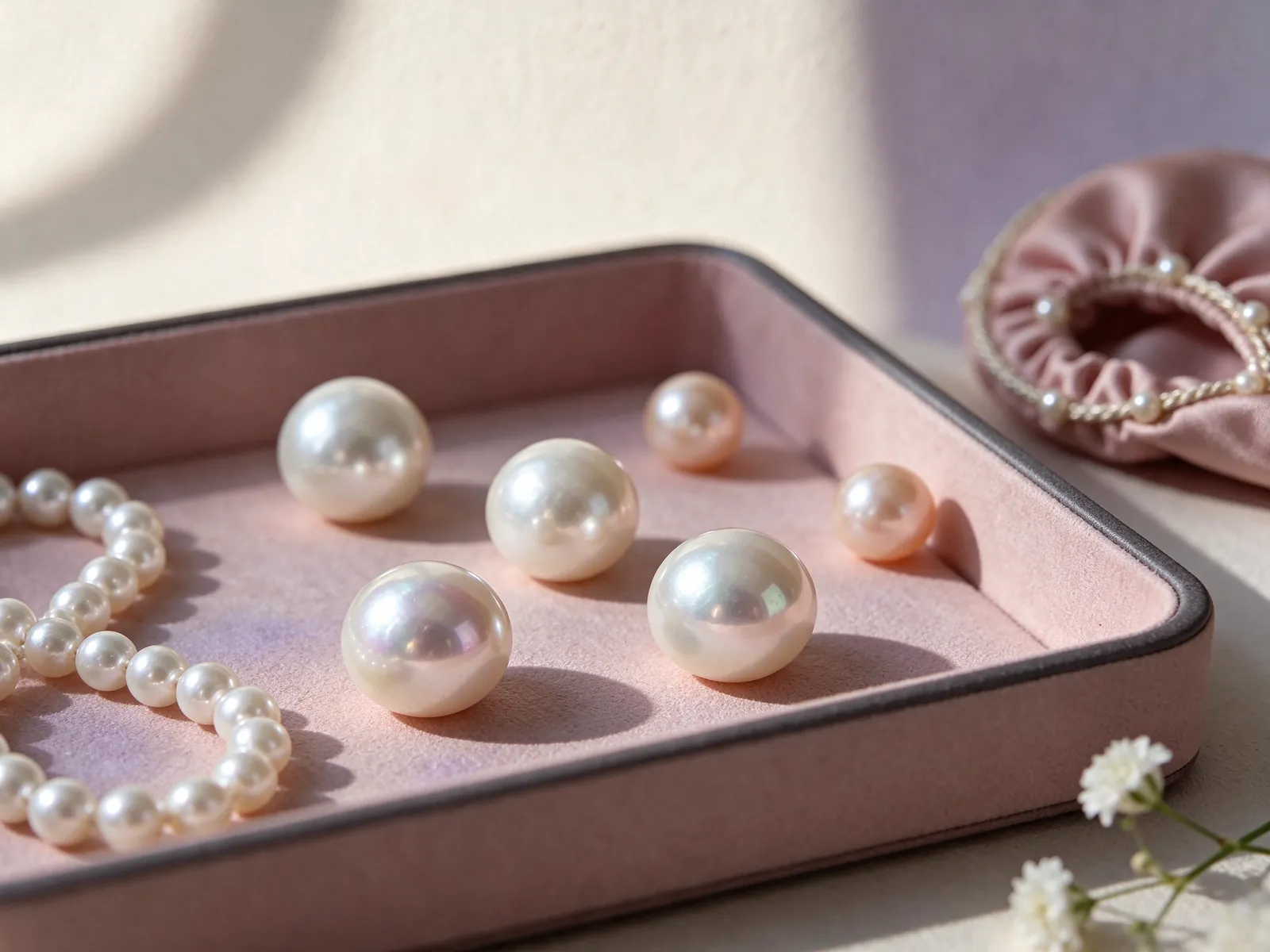
Choose proportions around sleeves and everyday movement
For office dressing, consider cuffs and hand movement before deciding how prominent the ring should look. A shirt sleeve, knitted cuff and jacket lining can interact differently with a raised setting. Exploring a single pearl ring is a useful way to think about open space and visual focus, but a simple front view does not automatically mean a low side profile. Examine the structure rather than assigning a style to the K10 label.
For dinner or an occasion, decide which piece should carry the main emphasis. Distinctive earrings or a necklace may work with a quieter ring outline; a simpler outfit can leave more room for a sculptural ring to stand out. Coordinating every metal colour is not compulsory. What matters is whether the pearl, the metal shape or another accessory provides the focal point you intended, and whether the arrangement remains comfortable.
Try the movements that your photographs cannot show
Reaching for a phone, lifting a bag handle and drawing a sleeve over the hand reveal practical details that a styled image cannot. If you often wear gloves or reach into narrow pockets, mention those habits when discussing a setting. Observe whether the pearl or its support meets fabric repeatedly. This is an individual suitability check, not a promise that a particular ring profile will never catch.
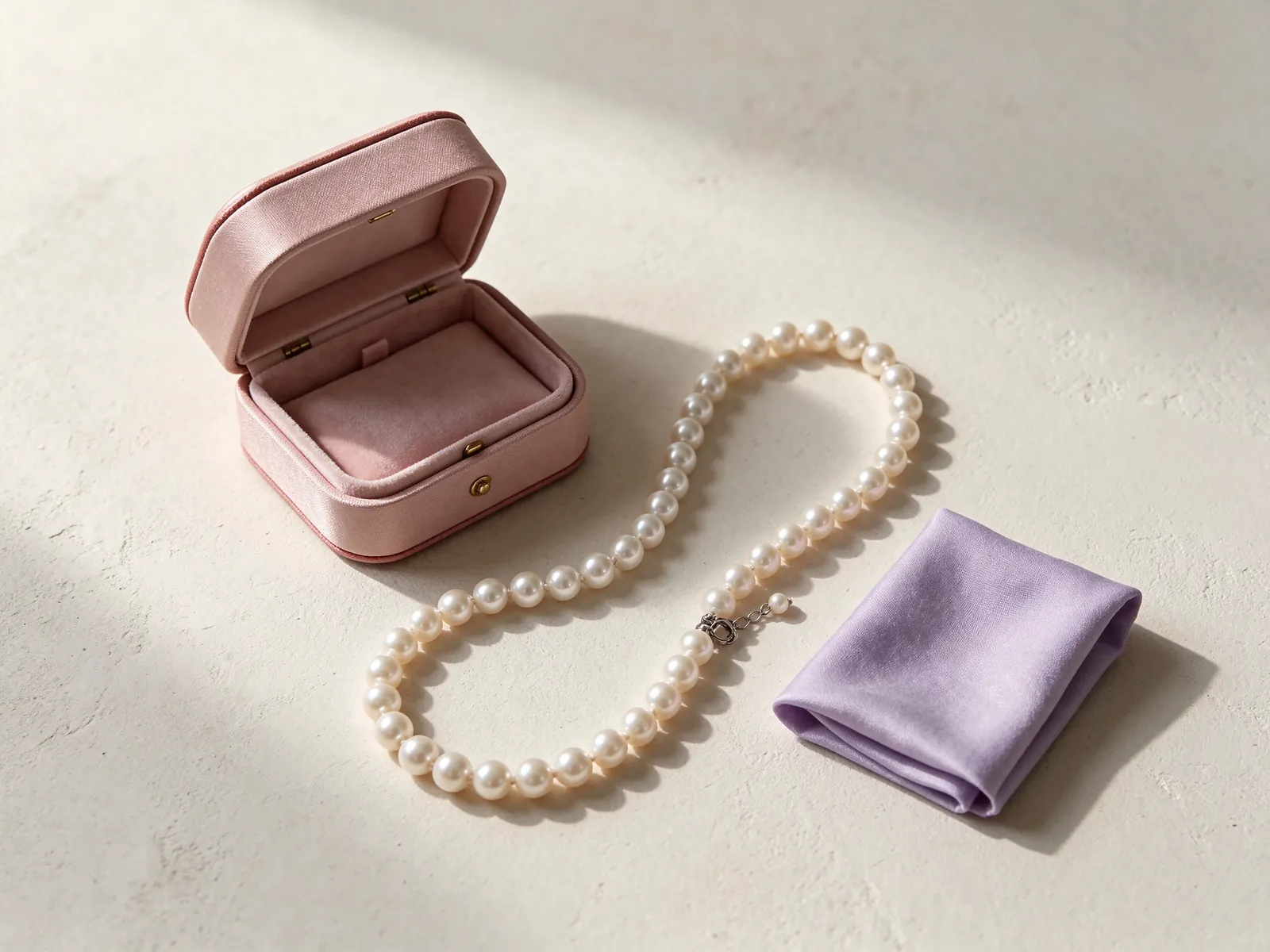
Care for the pearl as well as the band
GIA places pearl at 2.5 on the Mohs hardness scale. That is relevant whatever gold designation appears on the band: avoid unnecessary contact between the pearl and hard objects. Remove the ring before lifting heavy items or doing work likely to knock your hands. The hardness number does not specify a service life or an allowable number of impacts, and a substantial-looking setting does not protect every exposed part of the pearl.
After wearing, use a very soft, clean cloth for a gentle wipe. GIA advises avoiding acids, perfume, hair spray and excessive heat, and states that pearls should never be cleaned with ultrasonic or steam cleaners. A method suitable for the metal alone may be unsuitable for the pearl or its setting. For persistent dirt, seek advice about the particular ring rather than escalating to strong cleaning chemicals at home.
Create a simple removal and storage routine
Give the ring a designated storage place away from a sink edge, and remove it before bathing, swimming or household cleaning. Store it so the pearl does not rub directly against hard edges of other jewellery. If the pearl or setting seems loose, stop wearing it and arrange a specific inspection. These habits reduce avoidable exposure; they do not amount to a waterproof, permanent-colour or damage-free guarantee.
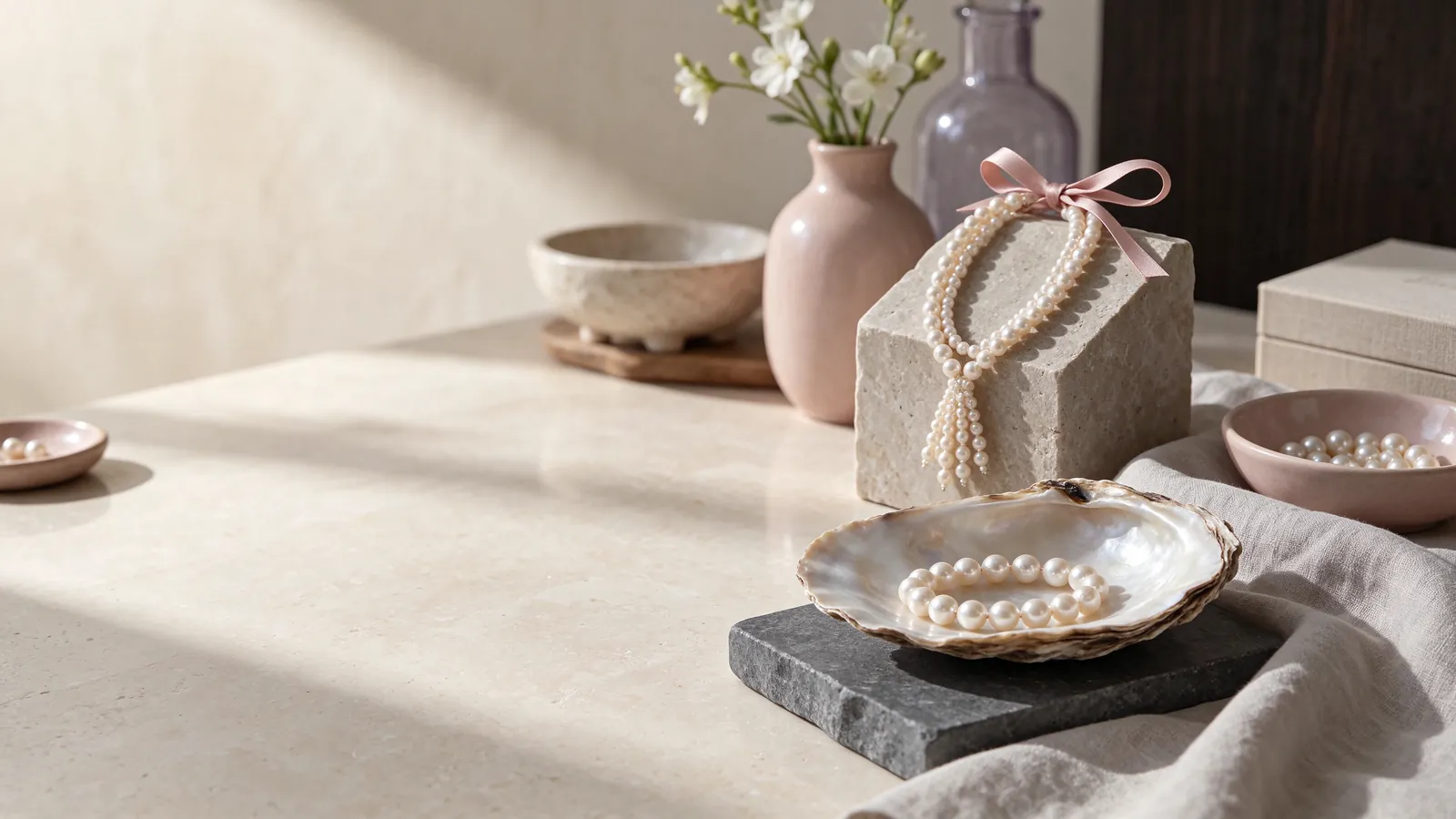
Compare the information you need, then discuss a material direction
When considering K10 or 10K rings from a seller, make a short comparison list: the written metal description, pearl details, band width, setting profile and fit. Design details omitted from the description should be discussed with that seller, not inferred from the designation itself. Ask questions that relate to your use, such as how the ring sits next to an existing band or what the side of the setting looks like.
Flint Jewellery’s material choices are 18K 750 white gold, 18K 750 yellow gold, 18K 750 rose gold, PT950 platinum and PT900 platinum; K10 and 10K are not included. If your real priority is a colour, a pearl-to-hand proportion or a comfortable band outline, a conversation can focus on those needs within these choices. Describe the finger you intend to use, regular activities and jewellery you already wear.
Explain the feature you like rather than requesting a copied design
A request such as ‘I wear knitted cuffs and want less contact with a raised setting’ is clearer than asking for another brand’s ring by name. You can also explain that you prefer separate-finger wear with coordinating metal colours. Refer to a proportion or a wearing experience without expecting a proprietary design to be reproduced. This turns a naming comparison into a practical discussion of your own preferences. Contact Flint Jewellery on WhatsApp at +85260106207 to discuss your preferred proportions, band outline and wearing needs within the five material choices described above.
| Comparison point | What the label tells you | What to ask about | Practical check | Do not assume |
|---|---|---|---|---|
| Metal designation | K10 or 10K names the gold designation | Stated material and colour | Compare with regularly worn jewellery | Pearl quality or finger size |
| Pearl appearance | The metal label does not describe it | Lustre, shape and visible features | Consider front and side views | Origin, identity or certification |
| Band construction | The name is not a complete shape description | Width, inner profile and any opening | Bend fingers and assess pressure | Identical comfort at the same size |
| Setting profile | The label does not state side height | Contact with cuffs and neighbouring rings | Try normal hand movements | A simple front view means a low setting |
| Care | The designation is not protection for the pearl | Cleaning suitable for the whole ring | Wipe gently and store separately | Waterproof or damage-free wear |
Pearl knowledge and authoritative references
GIA identifies seven pearl quality factors: size, shape, colour, lustre, surface quality, nacre quality and, for multi-pearl jewellery, matching. A K10 or 10K metal label does not replace these seven areas of assessment.
Read the reference for this factFrequently asked questions
Does ‘10 carat pearl ring’ mean the pearl weighs ten carats?
In the gold-naming context discussed here, it refers to the metal designation. It does not provide a pearl weight, diameter or ring size. If wording is ambiguous, ask the seller which part of the ring the number describes.
Can a white-looking K10 ring be identified as platinum from a picture?
No. White gold and platinum are different material descriptions, and photographic lighting can alter their appearance. Read the stated material and markings instead of using brightness as a metal test.
Should I automatically choose a larger size for a broad band?
There is no single adjustment that follows from the K10 label. Band width, inner shape and your finger affect comfort. Compare the specific design and check both the knuckle and finger base rather than applying an automatic increase.
Is an open pearl ring safe to adjust by hand?
An opening does not establish that the ring is intended for repeated bending. Ask about the particular construction and adjustment limits. Avoid pulling on the pearl or forcing the ends apart to test it.
Does Flint Jewellery offer K10 as a material choice?
No. Flint’s material choices are 18K 750 white, yellow or rose gold, and PT950 or PT900 platinum. You can discuss a preferred colour, band outline and wearing needs within those choices rather than requesting K10 or 10K.
Updated: