
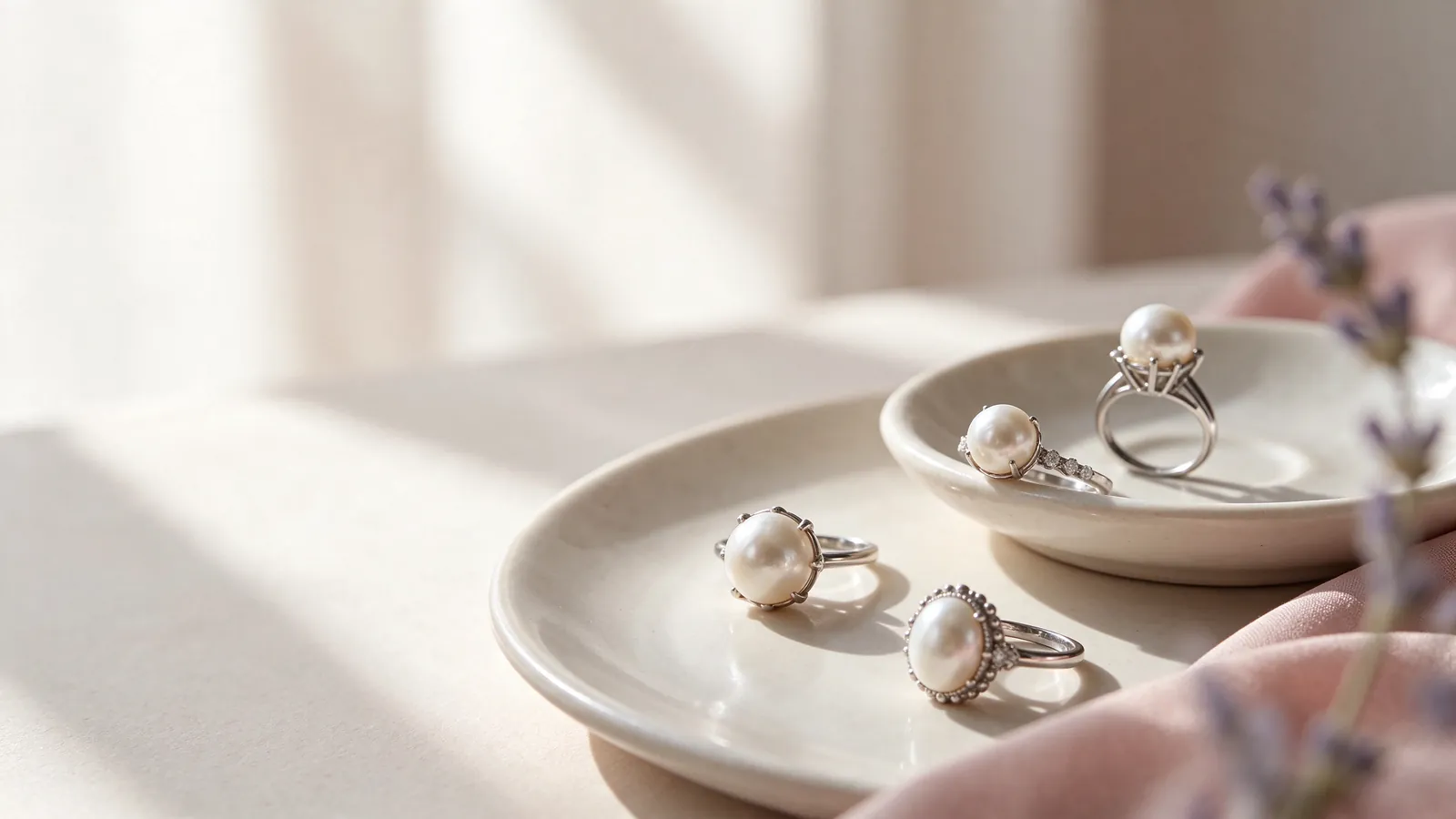
For pearl rings Hong Kong shoppers have in mind, which proportions matter in bespoke pearl rings and custom pearl rings?
Begin with the whole hand rather than an isolated photograph of the pearl. The length of your finger, the position of the knuckle and the space at its base all influence the apparent balance of a ring. A centred outline may give the clear focal point you want, while an offset composition can introduce movement. Neither approach belongs exclusively to a particular hand shape; the useful comparison is how each looks when your hand rests naturally. To discuss your preferred outline and finger fit, contact Flint Jewellery on WhatsApp at +85260106207.
The side view deserves equal attention. A ring that appears compact from above may sit higher than expected, affecting how it meets a cuff or an object you hold. Straighten and gently bend your fingers, then turn your hand towards yourself. When considering pearl rings Hong Kong shoppers may wear throughout different occasions, these ordinary viewing angles tell you more about personal suitability than a carefully posed image.
For pearl rings Hong Kong shoppers have in mind, how should finger size and band width inform bespoke pearl rings and custom pearl rings?
A wider band contacts a different area of the finger from a narrow one, so an existing ring size should not simply be copied without considering the intended profile. Compare a fitting band close to the proposed width, noting how it passes the knuckle and settles at the base. For bespoke pearl rings and custom pearl rings, explain the chosen finger, the inside contour you find comfortable and any pressure against neighbouring fingers, not just a size number.
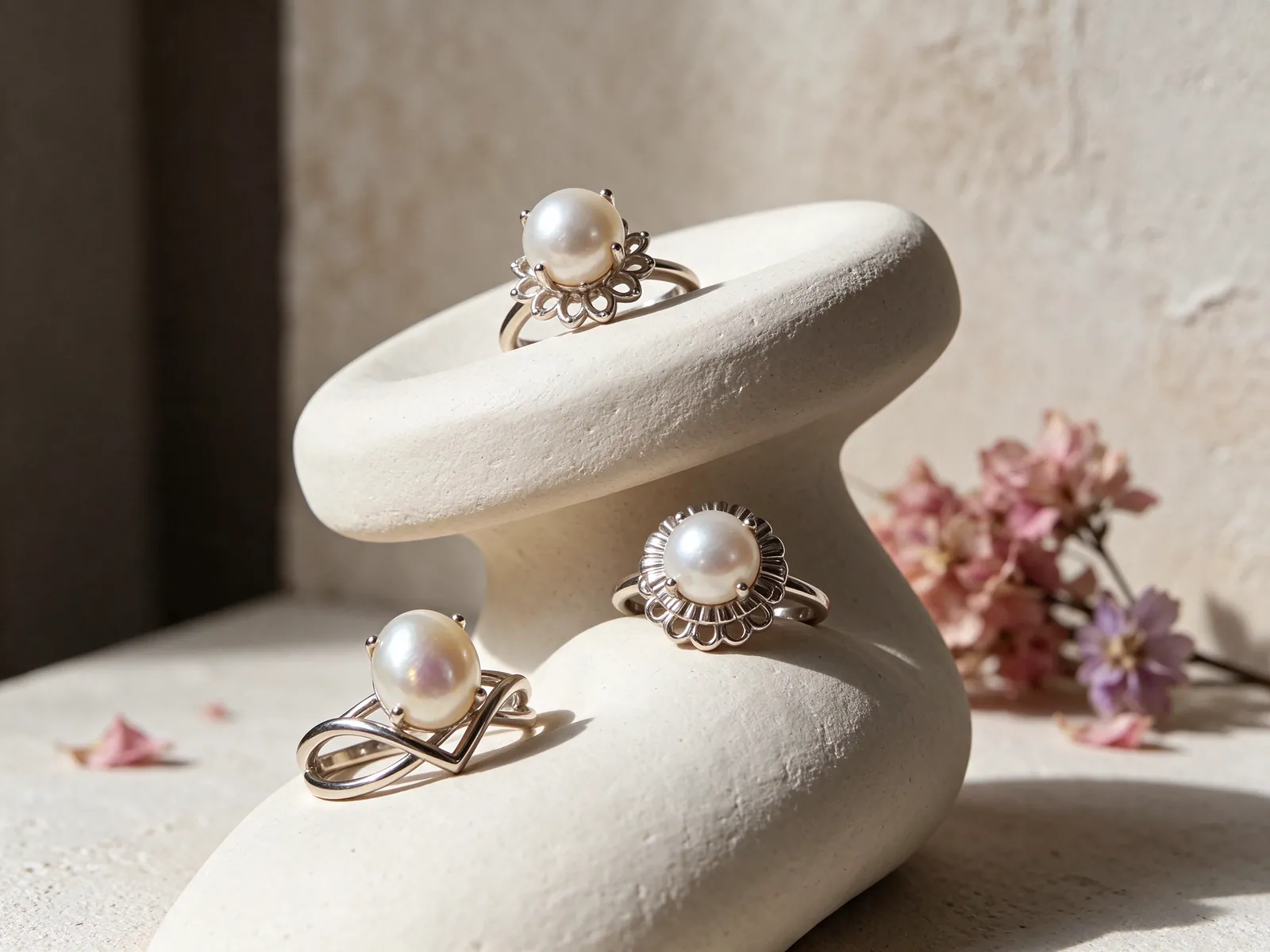
Decide whether you want one focal point or a broader arrangement
A single pearl ring directs attention to one main element, making the relationship between pearl and band particularly noticeable. Compare a central position with an offset one, and look at the transition into the supporting metal. Simple styling does not mean identical construction. The space around the pearl, the supporting profile and the underside can all affect the way a visually restrained ring feels in use.
A multi pearl ring creates a different rhythm through grouping, spacing or an extended outline. Look at the overall area across your finger before concentrating on individual pearls. Gently bring neighbouring fingers together to assess the room on either side. A larger arrangement is not automatically more formal: a loose composition can feel relaxed, while a close grouping can read as a distinct focal point. Choose the arrangement you enjoy on your own hand.
Use irregular outlines as a design choice, not an identity test
An irregular outline may extend towards the fingertip or spread across the finger. Compare that direction with the lines of your hand and the jewellery nearby, rather than assuming symmetry is always preferable. Shape and colour can describe appearance, but neither establishes pearl species, origin or natural-versus-cultured identity. If those distinctions matter to your purchase, read the information relating to the individual pearl instead of inferring identity from its silhouette.
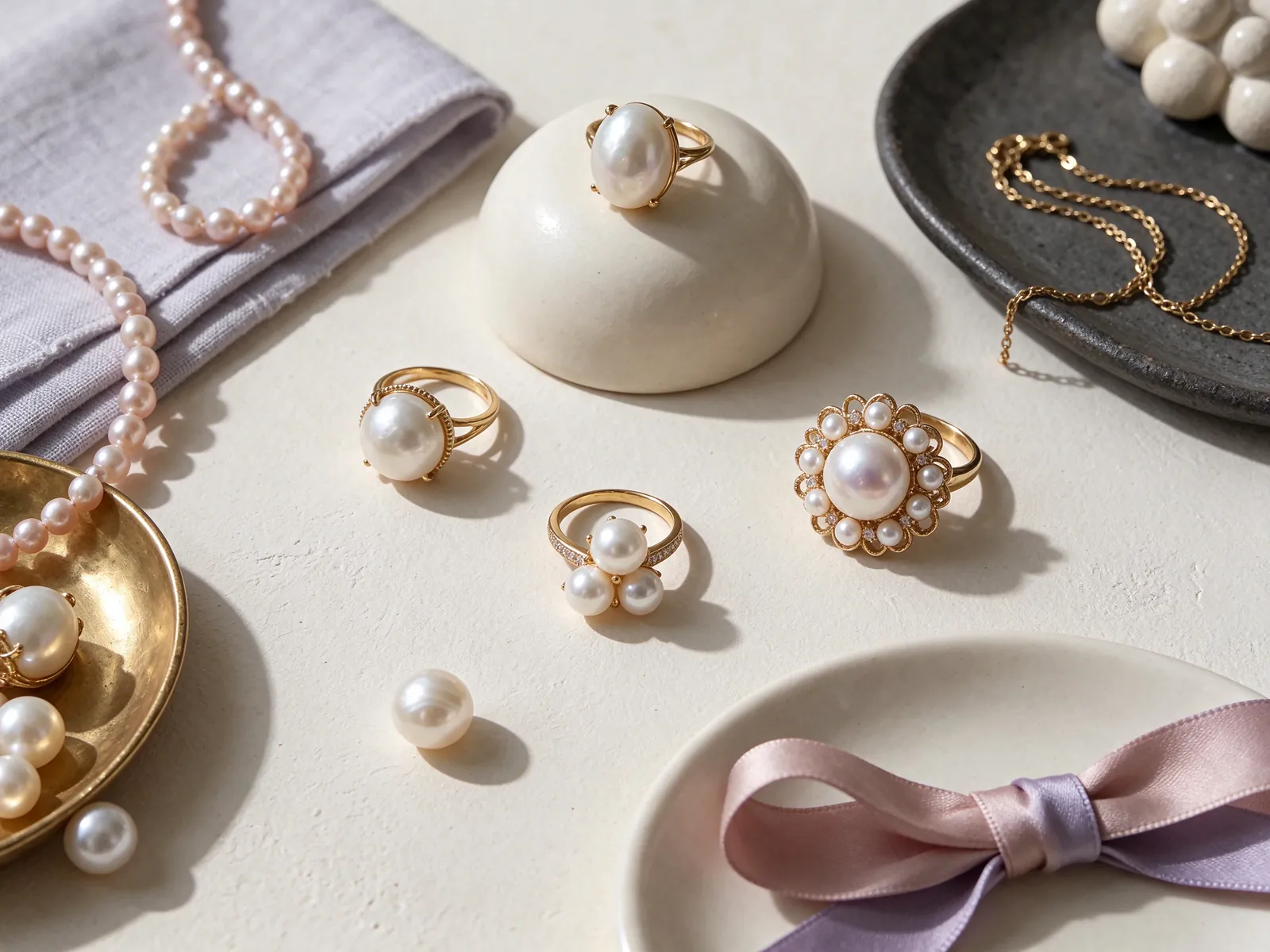
Examine lustre, surface and colour as separate observations
View the pearl under soft, reasonably even light, rather than relying only on a bright display spotlight. Notice the clarity of reflections and how the appearance changes as you turn the ring. Surface marks and lustre are different observations: an appealing reflection can coexist with visible dots or texture. Consider which part of the pearl you will usually see while wearing it, and whether you are comfortable with the features visible from that angle.
GIA describes seven pearl value factors: size, shape, colour, lustre, surface quality, nacre quality and matching. Together they provide a useful vocabulary for questions, rather than a shortcut that makes one attractive feature stand for overall quality. For a ring with several pearls, consider whether differences in their appearance support the intended composition. Matching can matter to visual harmony without requiring every element of a deliberately varied arrangement to appear identical.
Separate a preferred colour from what a photograph can establish
GIA distinguishes bodycolour, overtone and orient, and not every pearl displays all three. A phone camera's white balance and the background can also alter the colour you perceive. Compare the pearl against clothing you actually wear and in more than one soft lighting environment when possible. Enjoying a pink, white or dark appearance is a styling preference; it is not proof of species, treatment status or origin.
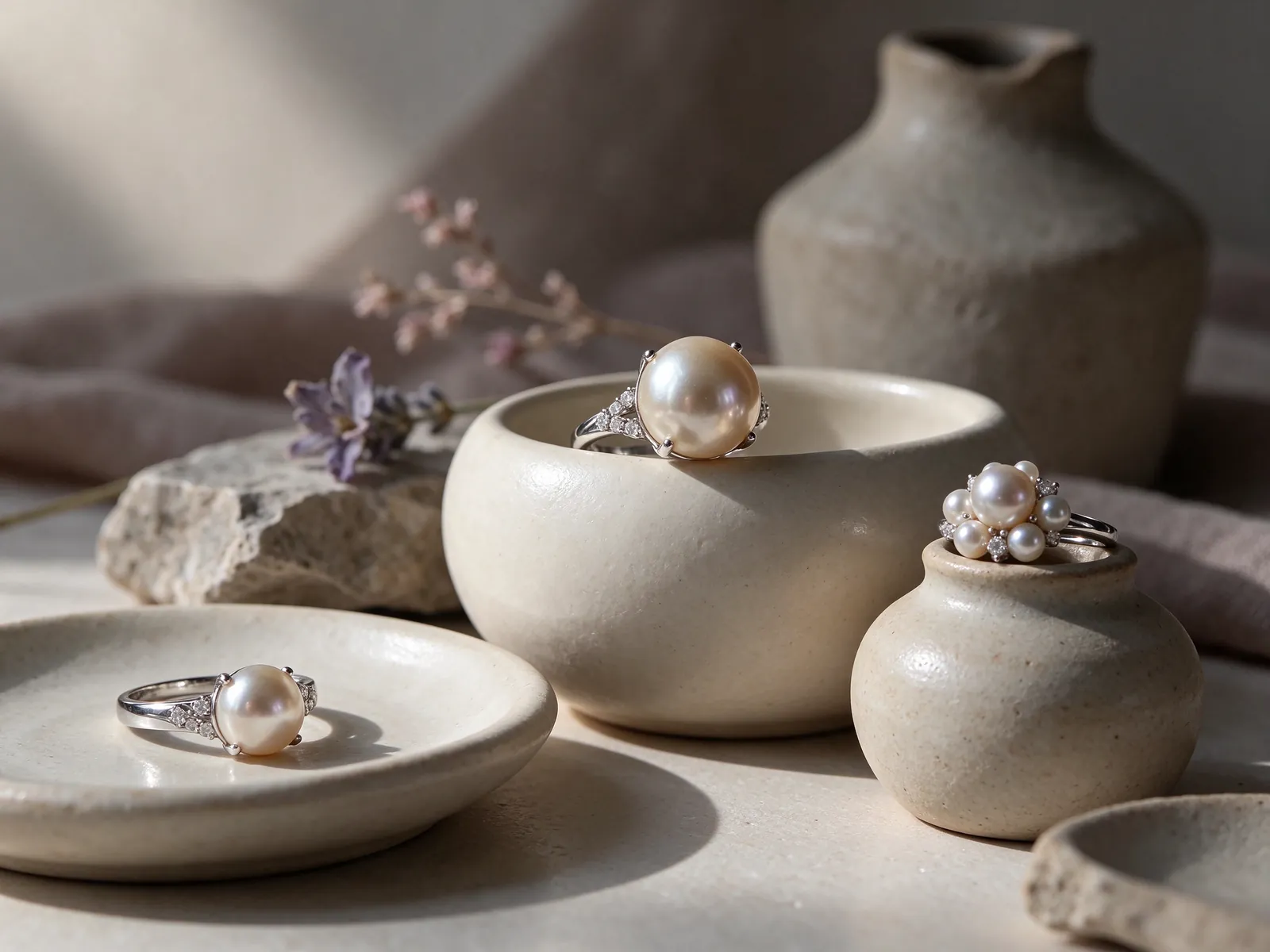
Let daily activities guide the profile and care routine
A ring meets more working surfaces than jewellery worn at the ear or neck. Think about typing, opening bags, handling papers and lifting objects, then gently imitate those movements during fitting. Notice contact with the ring and whether its outline catches a sleeve. A lower profile may suit your preferences, but it does not make a pearl impact-proof. Remove the ring for activities involving repeated abrasion, knocks or contact with cleaning chemicals.
GIA lists pearl at 2.5 on the Mohs hardness scale. This supports taking surface scratching seriously; it cannot predict how many knocks a particular ring will withstand. Avoid direct contact with perfume and hair spray, and wipe pearls after wear with a very soft, clean cloth. GIA says pearls should never be cleaned in ultrasonic or steam cleaners. The presence of a metal band does not make those methods appropriate for the complete ring.
Plan where the ring goes when you take it off
Keep a separate, softly lined place for the ring instead of dropping it loose into a handbag or leaving it beside a basin. Remove it before hand cream, washing or cleaning, and keep it away from abrasive jewellery and excessive heat during storage. If the pearl seems loose or the support has changed, stop wearing the ring and seek a physical assessment. Do not twist the pearl to test its attachment.
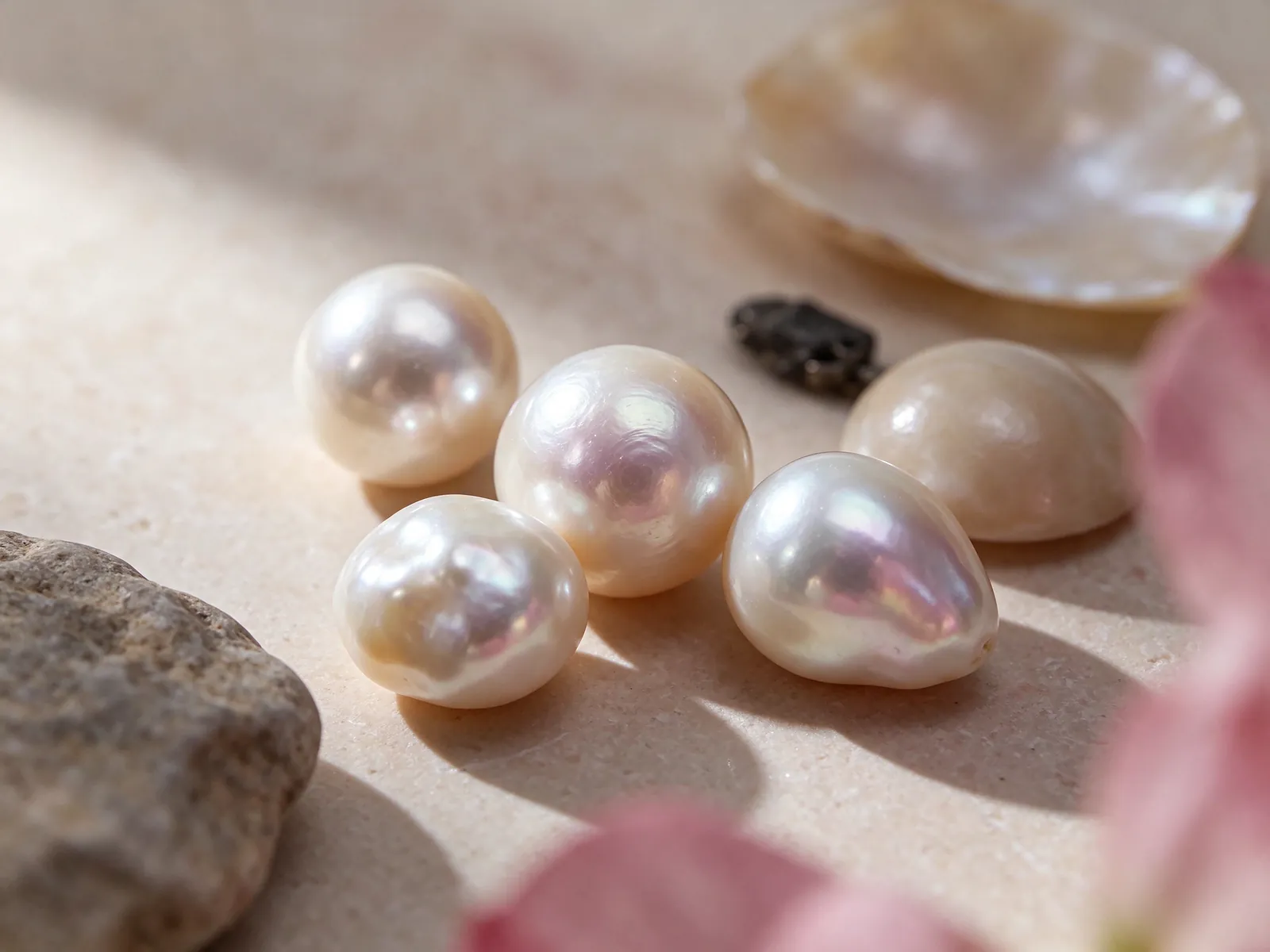
Check fit on the intended finger, including open outlines
Choose the hand and finger before treating any measurement as a useful starting point. Equivalent fingers on opposite hands should not automatically be assumed to fit alike. Compare how the ring passes the knuckle with how it rests at the base, preferably in conditions close to your usual wear. It should be removable without being so loose that an ordinary movement makes it slip away. Comfort includes both security and freedom to move.
An open pearl ring can create visual space or an asymmetric outline, but the gap is not evidence that the ring can be freely resized. Look at where the ends sit, how they meet neighbouring fingers and where the pearl support lies in relation to the band. Easy entry onto the finger is only one part of fit; rotation, pressure and catching during wear still need attention.
An open gap is not an invitation to bend the band
The question are open pearl rings adjustable requires a distinction between an open appearance and a structure intended for adjustment. Repeated bending can transfer force to the band, connecting areas or pearl support. Rather than widening the gap yourself, describe the present fitting problem and the finger you want to use. Any discussion of alteration should begin with the actual construction, not with the assumption that a visible opening guarantees adjustability.
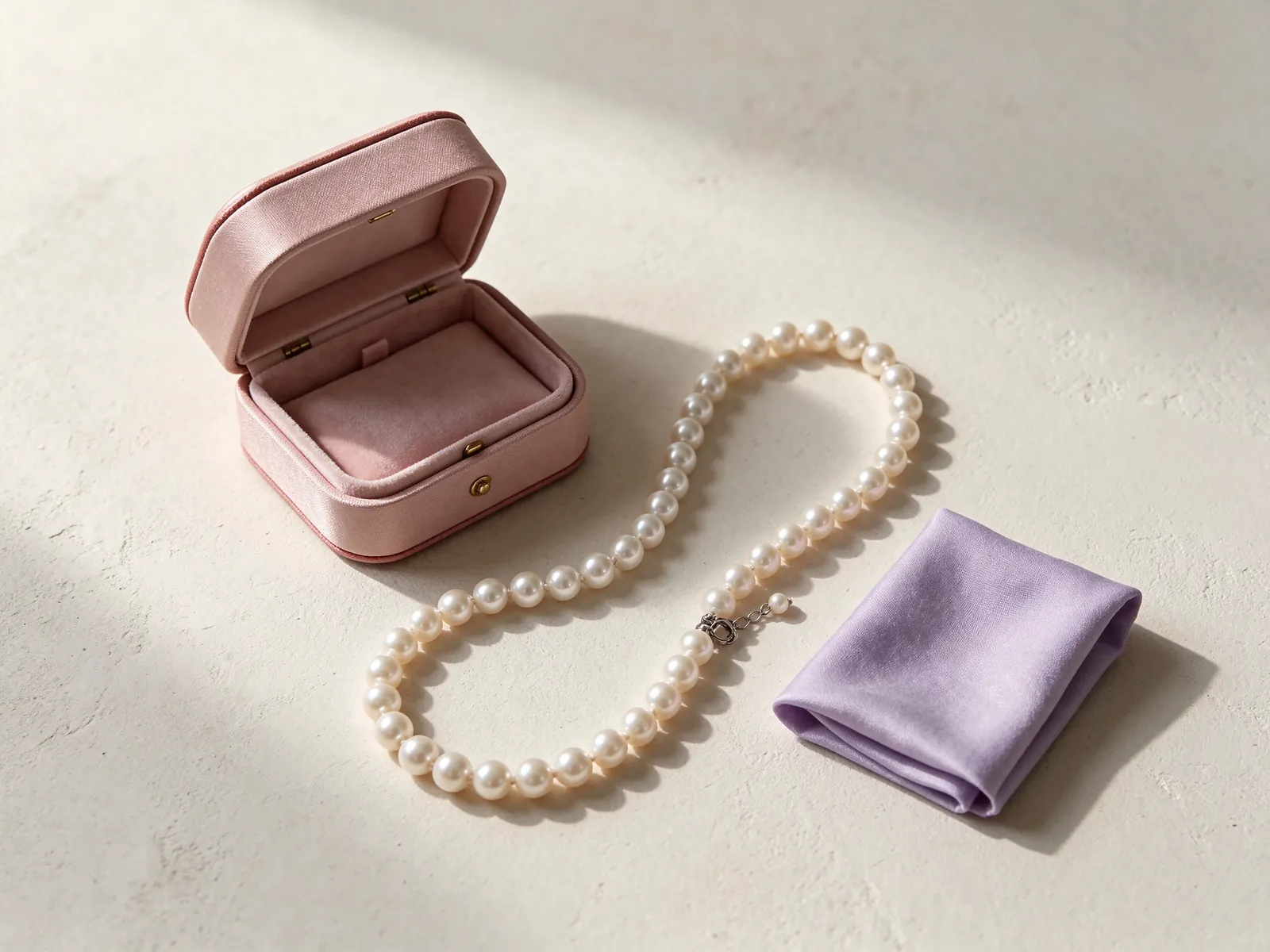
Coordinate metal colour, cuffs and neighbouring rings
Decide which part of the outfit should lead. A patterned cuff or prominent earrings may already supply enough visual activity, leaving room for a quieter ring outline. With a plain sleeve, the ring can provide the main gesture. Check the outfit with your hands relaxed, not only raised for a photograph. This makes it easier to see whether the jewellery supports the clothes or competes with them.
For the metal direction, the five options are 18K 750 white gold, 18K 750 yellow gold, 18K 750 rose gold, PT950 platinum and PT900 platinum. Compare your preferred colour with your watch and existing jewellery, deciding whether you want continuity or a deliberate contrast. Colour choice does not establish pearl quality or comfortable fit. Keep the band profile, width and contact with your finger as separate considerations.
Check contact points before wearing a stack
When combining pearl stacking rings, examine whether the neighbouring ring touches the pearl surface, support or underside of the ring head. Gently close your hand and check for pinching or rings pushing against one another. A visible gap need not be removed at all costs; wearing the pieces on separate fingers can preserve the layered effect. Assess the comfort of the complete combination rather than relying only on how each ring fits alone.
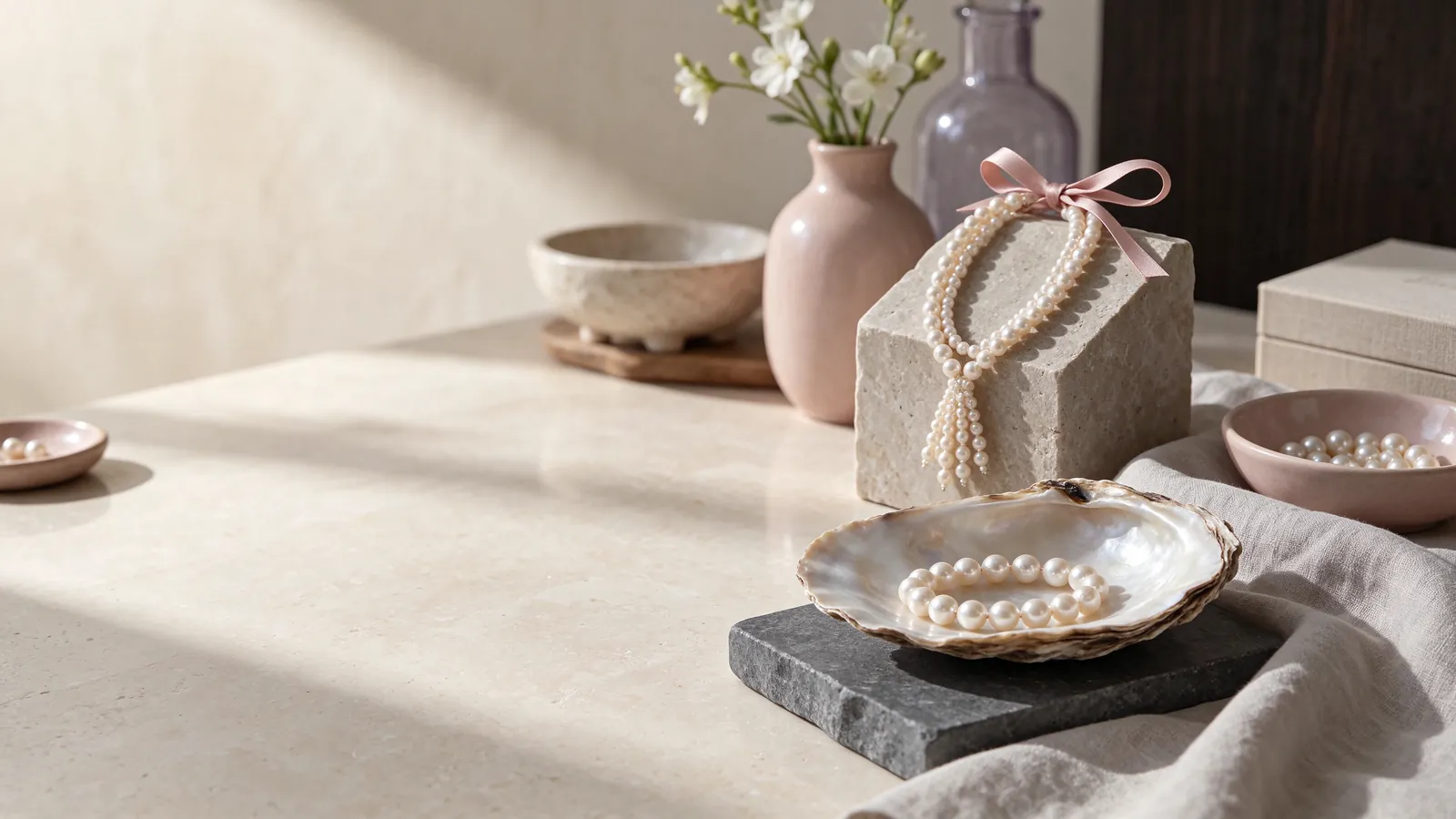
Prepare a personal design brief built around wearing needs
Before a discussion about a personal ring, collect preferences that describe both appearance and use. Saying that you want an offset focal point, dislike contact with cuffs or prefer to wear the ring separately from an existing band is more specific than asking for something elegant. Images can communicate lines and mood, but should not be treated as measurements or proof of the pearl identity in an imagined design.
Distinguish essential needs from preferences you can compare. The intended finger and comfortable movement deserve priority, while metal colour, outline and coordination can be explored together. The wider Pearl Jewellery context can help you decide how much visual emphasis the ring should carry beside pieces worn at the ear or neck. Read the individual pearl information, design details and written quotation together so the discussion remains tied to the ring being considered.
Compare concepts with the same practical questions
For each concept, note its front outline, side height, band width, intended finger and companion jewellery. If a striking front view conflicts with comfortable handling, retain the colour or line you enjoy and reconsider the structure. Keeping appearance and wearing observations in separate notes makes the trade-off clearer. Customisation is most useful when it connects the visual idea with the way you actually plan to wear the ring. Share your outline preferences and fitting questions with Flint Jewellery on WhatsApp at +85260106207 to begin a focused design conversation.
| Design direction | What to observe | Movement to try | Trade-off to record |
|---|---|---|---|
| One focal pearl | Central or offset position and transition into the band | Turn the wrist and look from the side | Clear focus versus height above the finger |
| Several pearls | Spacing, overall width and colour relationships | Bring neighbouring fingers gently together | Visual presence versus room at either side |
| Band width | Balance between band and ring head | Pass the knuckle and gently close the hand | Settled fit versus neighbouring finger contact |
| Open outline | Position of the gap and ends | Check rotation and sleeve contact | Visual openness versus structural limits |
| Stacked combination | Overall rhythm and contact near the pearl | Close the hand without forcing the rings together | Layered appearance versus comfort and clearance |
Pearl knowledge and authoritative references
GIA's Pearl Care and Cleaning guidance lists pearl at 2.5 on the Mohs hardness scale and says pearls should never be cleaned in ultrasonic or steam cleaners. For rings, this makes surface contact and the intended cleaning routine important buying considerations.
Read the reference for this factFrequently asked questions
How can I plan a pearl ring gift without knowing the recipient's size?
Establish the intended hand and finger first. An existing ring is a more useful comparison only when it belongs to the same wearing position. Do not assume an open outline solves sizing or that later alteration is always possible. You can collect style preferences first and involve the recipient in a separate fitting discussion.
Does a ring that turns on the finger always need a smaller size?
Not necessarily. The difference between knuckle and finger base, the size and the distribution of weight above the band can all influence rotation. Note when turning happens and whether the ring risks slipping off. Avoid choosing an uncomfortably tight band simply to keep the front view fixed.
Must the ring match my pearl earrings exactly?
No. Similar metal colour or a related visual softness can connect pieces with different outlines. If both areas feel prominent, reduce the emphasis of one. Outfit coordination is about the overall rhythm, not a requirement for every pearl to appear identical in a photograph.
Does mentioning GIA quality factors mean the ring has a GIA report?
No. GIA's educational framework explains observations about pearls; it does not establish the documentation accompanying a particular ring. If a report matters to your decision, read the document that relates to the individual item and distinguish its findings from general information about appearance.
Should I prioritise the ring's front view or how it feels?
Use the outline to identify directions you like, then check the side view, knuckle passage and relaxed hand movements. If the visual idea and comfort conflict, describe the specific feature you enjoy and the movement that causes trouble. That gives a clearer basis for reconsidering proportion or wearing position.
Updated: