
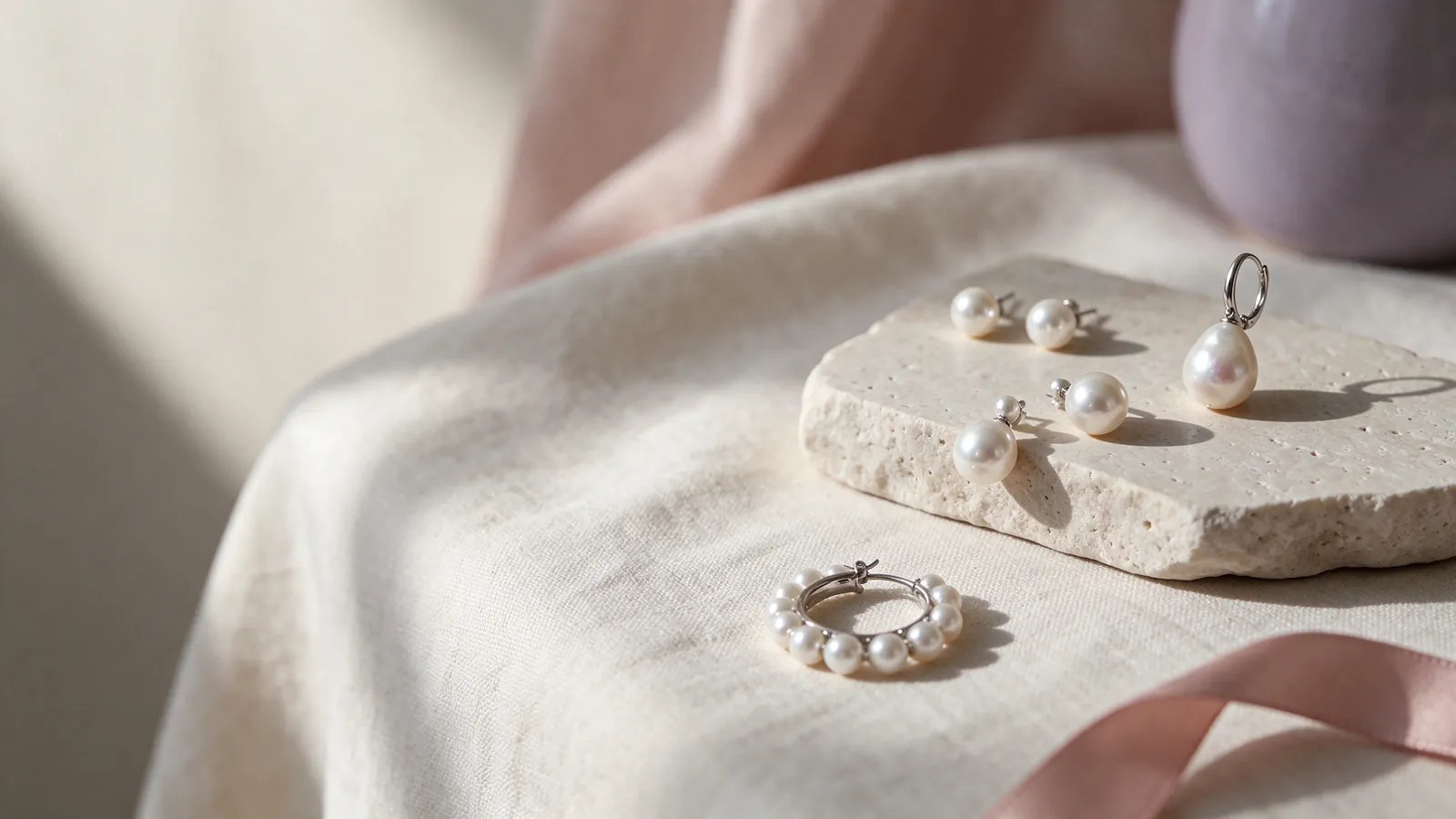
How piercing position shapes pearl earring size for small earlobes: a pearl earring fit guide to pearl studs for small earlobes
The outline of a small earlobe tells only part of the story. A piercing close to its lower edge can make a pearl cover that edge, while a higher piercing may place the same pearl nearer the ear cartilage. Neither appearance automatically means the diameter is wrong. Look at where the pearl sits within your own lobe, rather than trying to match the position in someone else's wearing photograph.
Compare both ears together. Piercings and earlobe outlines may differ from side to side, so identical studs can leave different amounts of visible skin around each pearl. The pearl earring size guide helps explain changes in visual scale, but it cannot replace this individual comparison. Notice whether you prefer a clearly outlined pearl surrounded by space or a fuller pearl that becomes the main feature of the ear.
Checking pearl studs for small earlobes from the front and side: a pearl earring fit guide to assessing pearl earring size for small earlobes
Move your hair away and stand naturally. From the front, check coverage and the space around the pearl; from the side, check projection and whether the stud tilts forward. Then step back to see the pearl beside your whole face. A close-up can make coverage seem dominant even when the overall look feels balanced, so decide which view matters most to your intended style.
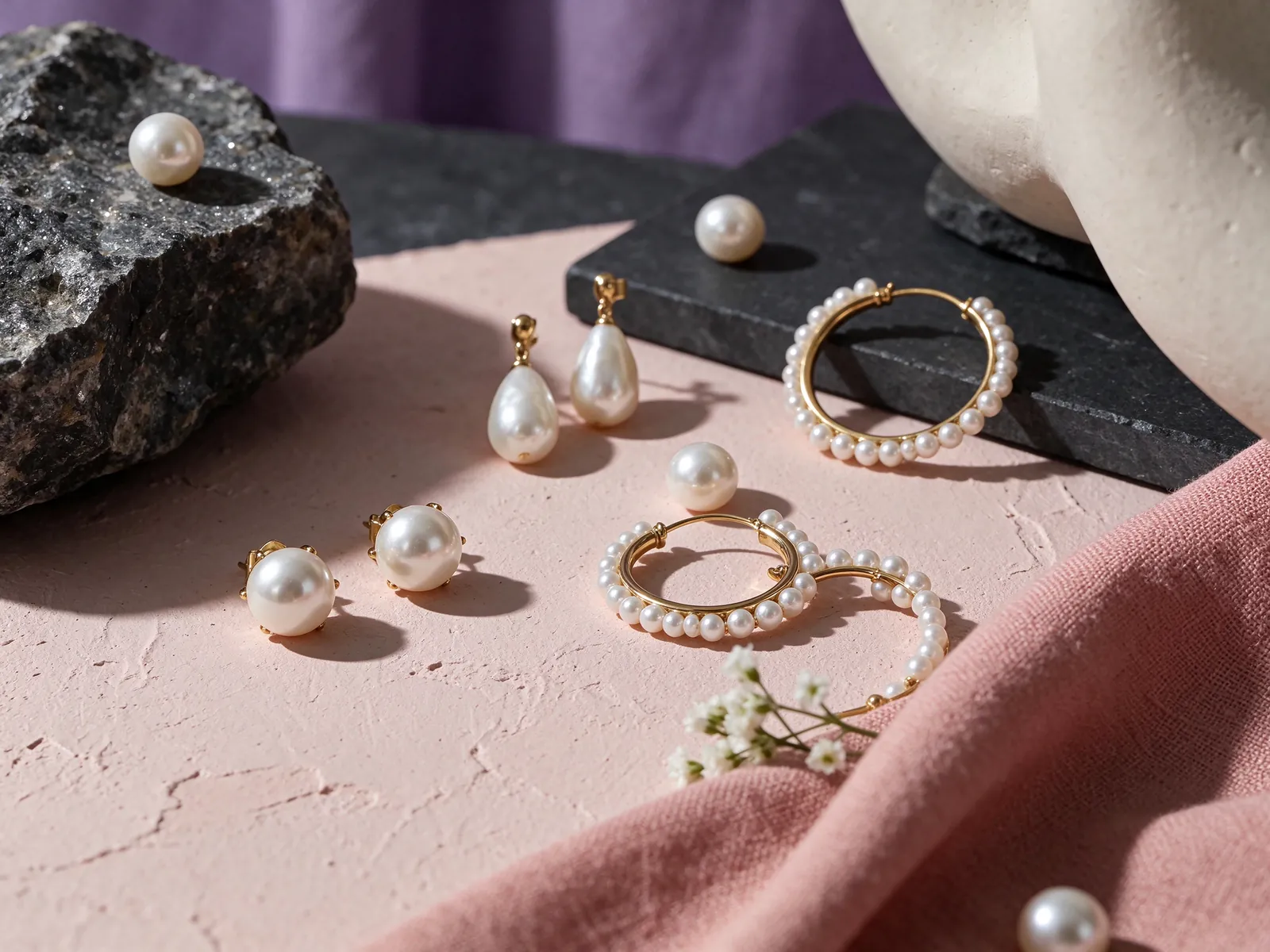
Use visible space to compare sizes, not a universal diameter rule
For an understated look, compare studs that leave the earlobe outline visible. For a stronger focal point, compare a pearl face that approaches or covers part of the outline. These are styling directions, not prescribed fit margins. The shape of the lobe and how closely it sits against the face change the result, so a fixed coverage percentage would not describe every ear usefully.
Keep shape, mounting and lighting as similar as possible when comparing diameters. Otherwise, a brighter reflection or wider setting may be mistaken for a larger pearl. Exploring small pearl stud earrings can help you identify a delicate direction without implying that a small lobe must always wear the smallest option. If a fuller pearl suits your taste, assess its side view and actual feel before dismissing it.
Separate the pearl measurement from the whole earring outline
A stated pearl diameter does not necessarily describe the complete earring, which may include a surrounding setting. Read the measurements that are actually provided; when comparing pearl stud earrings, distinguish the pearl diameter from the overall outline before assessing the setting. Enlarging an online image cannot establish a size, and a model photograph cannot reveal how the same stud will sit on your particular piercing.
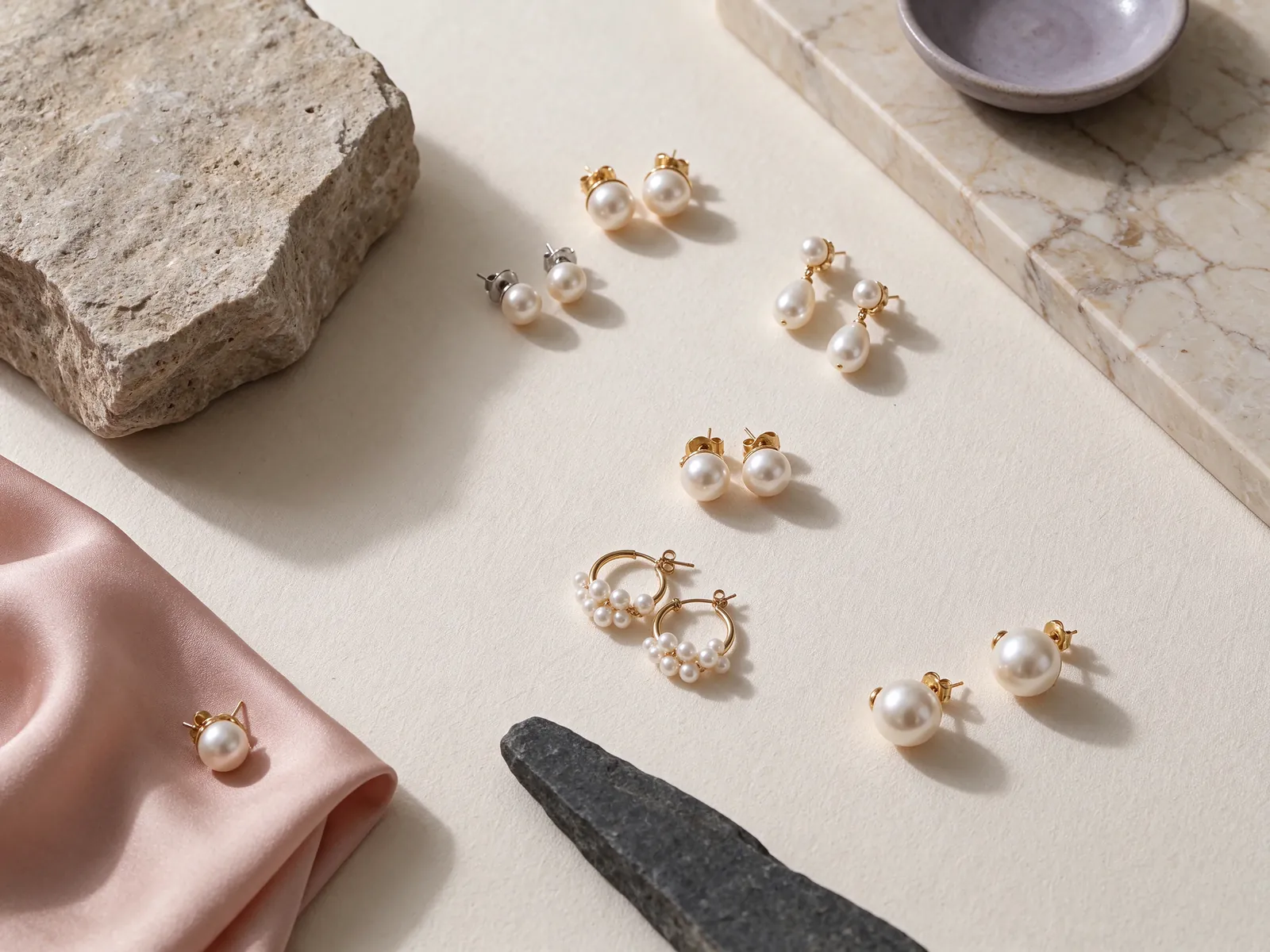
Consider the post, setting and back alongside the pearl
A setting can hold the pearl away from the lobe, changing its side profile even when the diameter stays the same. The position of the post and the distribution of weight also affect how an earring sits. If a stud points downwards, first distinguish between a prominent pearl face and an earring that actually tilts. Simply choosing a smaller diameter may not address every structural difference.
An earring back should work with the post and the overall construction; tightening it as much as possible is not the aim. Look for visible pinching, unexpected changes in angle when you move your head, and contact with your glasses behind the ear. Reading about earlobe support backs for pearl earrings can help you consider the rear of the earring as carefully as its decorative front.
Keep visual preference and physical sensation separate
First assess whether you like the appearance, then pay attention to how wearing it feels. A balanced photograph is not proof of a suitable wearing experience, and a light feeling does not guarantee your preferred proportions. If wearing causes pain, swelling or persistent irritation, stop and seek appropriate professional advice rather than tightening the back to tolerate it. A size discussion is not a treatment for a sore piercing.
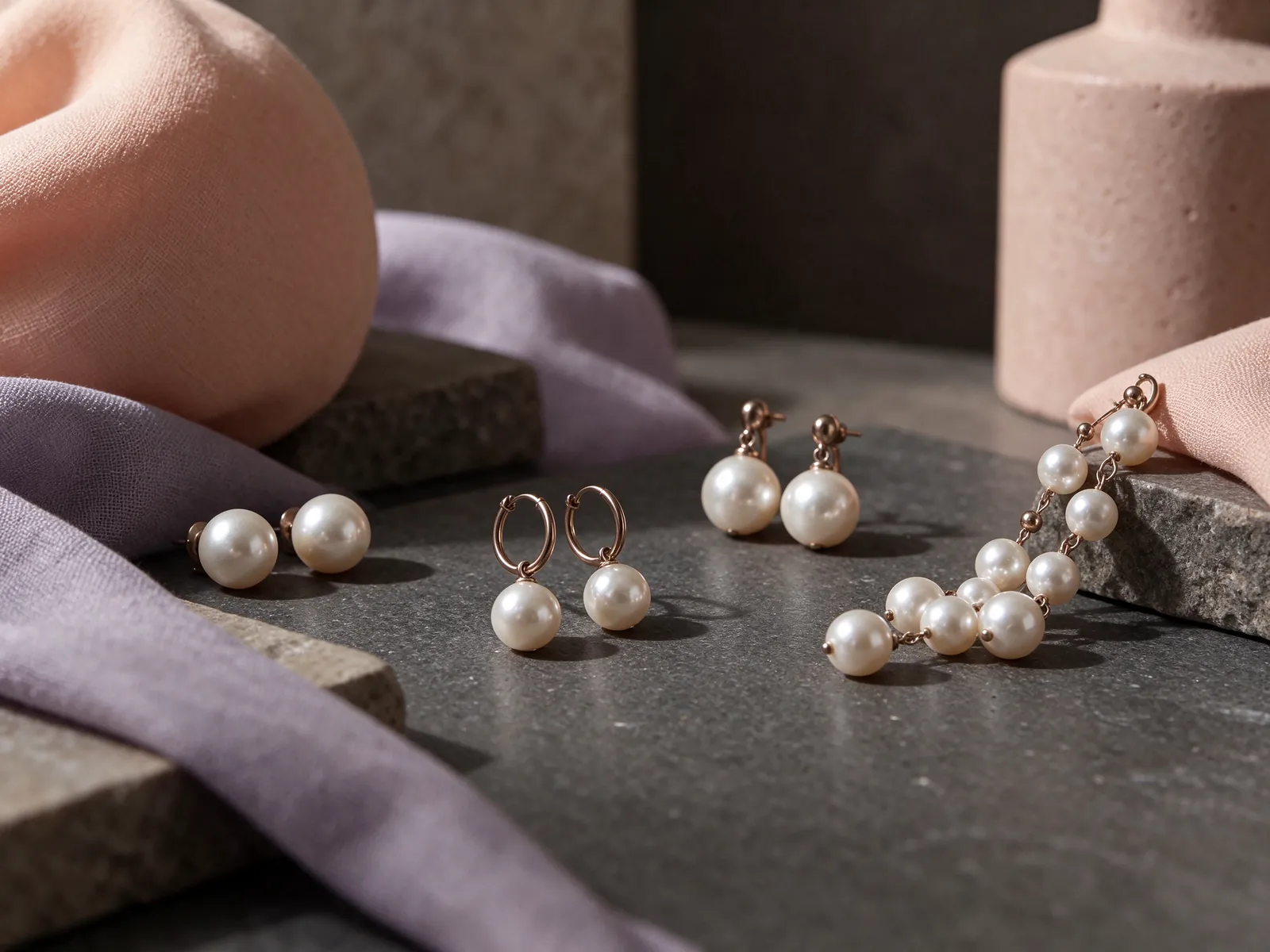
Shape, lustre and matching can change visual presence
Two pearl faces of similar size can still draw different levels of attention. A clear outline and strong reflections can make a pearl more noticeable, while softer reflections may blend more gently with an outfit. Compare them under similar lighting before attributing the difference to diameter. Colour alone does not establish pearl identity, and a bright studio image does not predict the appearance in every room.
Look at a pair together, especially when the earlobes are fully exposed. Differences in apparent size, shape or lustre may be more noticeable in a simple stud arrangement. GIA identifies seven pearl quality factors: size, shape, colour, lustre, surface quality, nacre quality and matching. This is a useful reminder that diameter is one consideration, not a complete explanation of either pearl quality or earring fit.
Would a different silhouette achieve the look more effectively?
If you dislike covering the lobe, reducing diameter is not the only styling direction to explore. The comparison of pearl studs vs drops vs dangles can help you think about placing the visual focus below the lobe instead. A suspended style has its own length, movement and weight distribution, so assess those features separately rather than applying the same coverage judgement used for a stud.
Choose the level of emphasis for work and dressier occasions
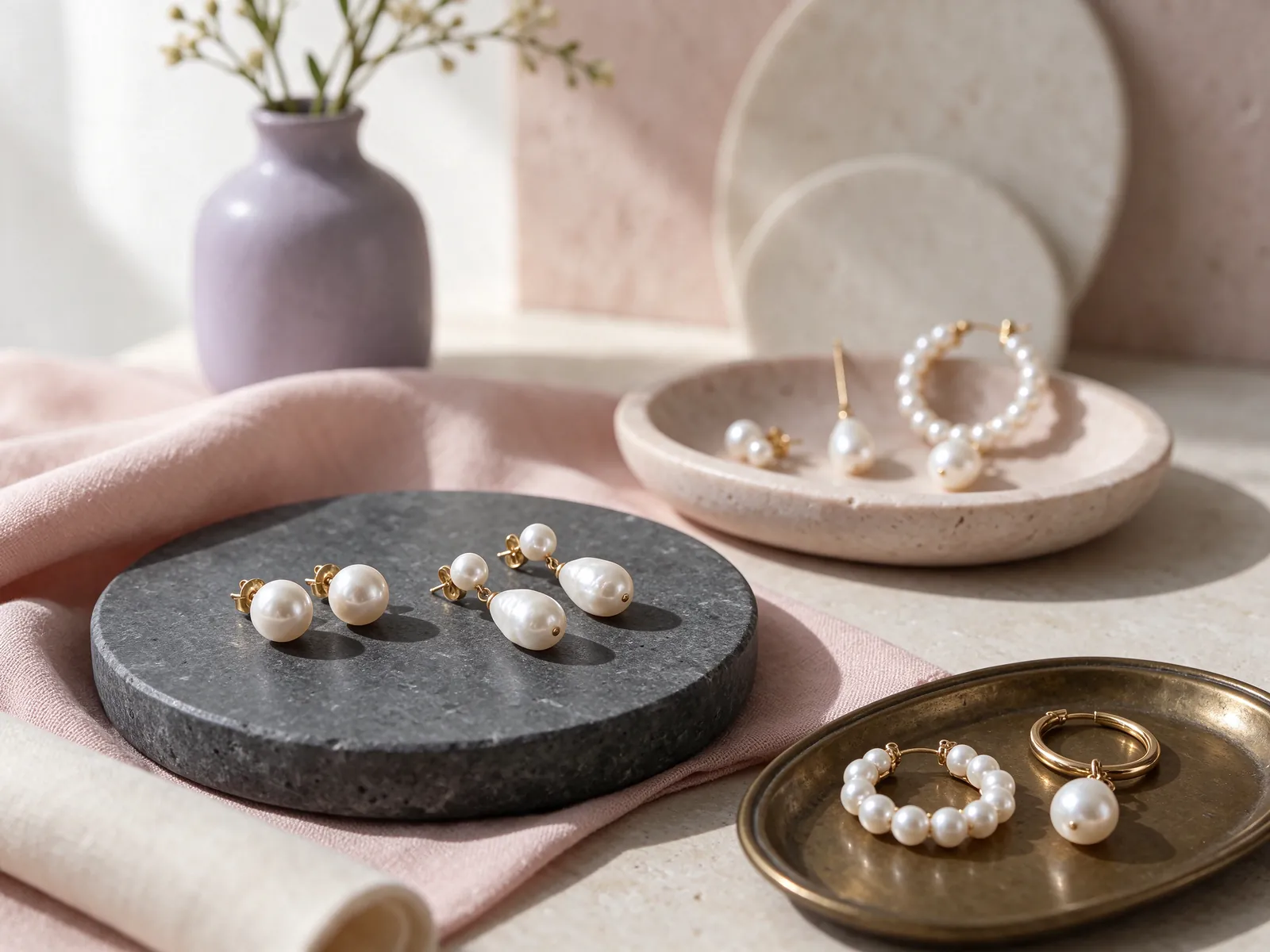
Start with your clothes rather than an age- or height-based sizing rule. A neat shirt collar may give even a delicate pearl a clear presence, while soft knitwear or a heavier jacket can make the same stud seem quieter. For everyday pearl earrings, decide whether the ear should provide a small finishing detail or a visible focal point, then compare that intention with the space around the pearl.
For a dinner or formal outfit, try the earrings with the neckline and other jewellery you expect to wear. An updo exposes the lobe and can make familiar studs feel more prominent. If a necklace or embellished collar already draws attention close to the face, consider whether you want the earrings to echo it gently or take priority. The occasion does not require a particular diameter.
Check your usual hairstyle before judging the close-up
Hair tucked behind the ear reveals the full relationship between pearl and lobe. Loose hair may leave only a small reflective detail visible. Evaluate both looks if you use both regularly, rather than selecting a smaller stud solely because it seems large in an exposed-ear photograph. The most useful comparison is the one that reflects how you normally dress and move through your day.
For a second piercing, compare spacing before building a stack
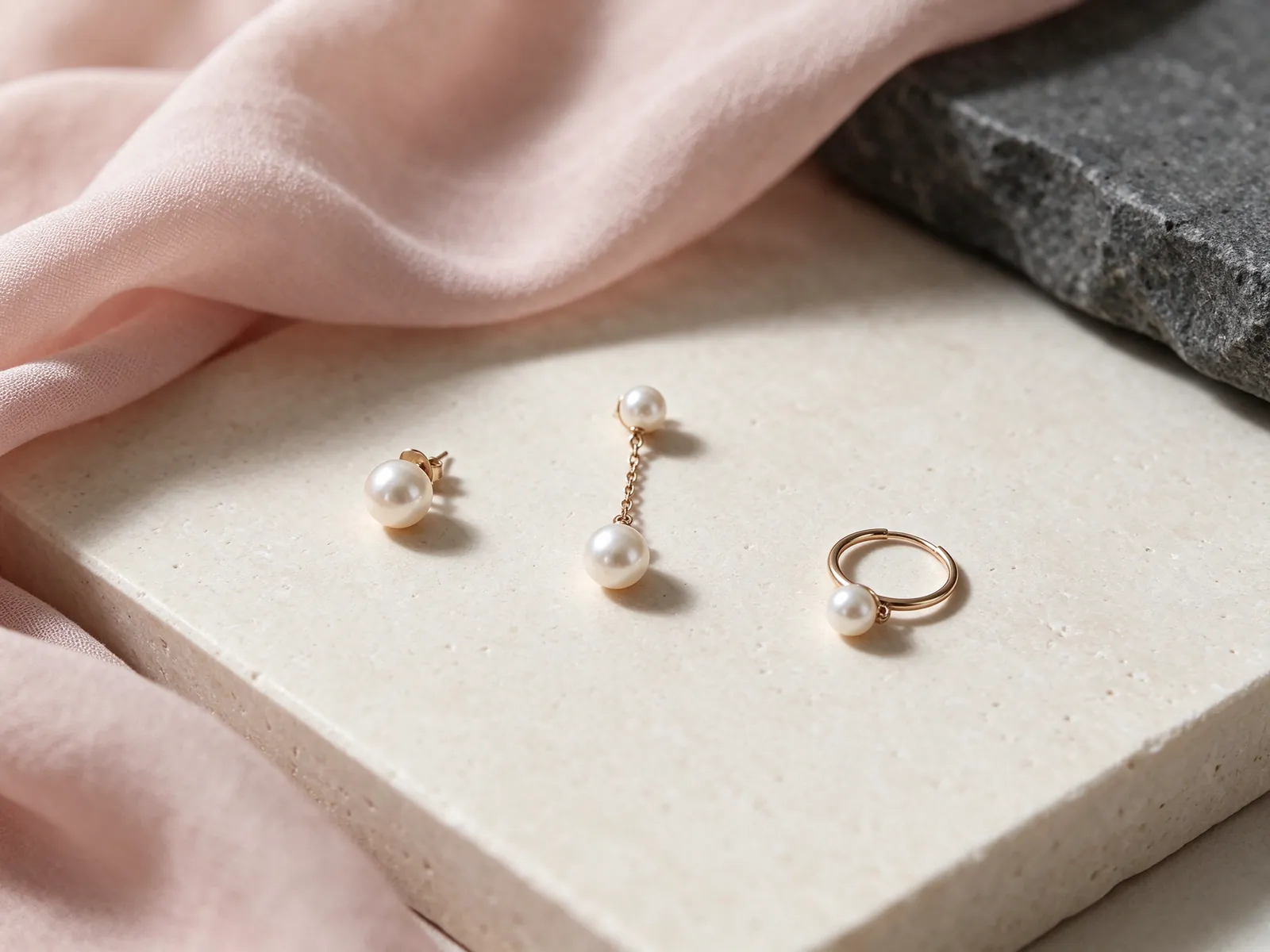
With two earrings on a small lobe, their relationship matters as much as the size of either pearl. From the front, check whether one face overlaps or hides the other. From behind, notice whether the backs touch. Try each earring separately before combining them, so you can identify which element changes the balance rather than judging the entire arrangement as simply too large.
You might use the main stud as the focal point and keep the second detail visually quieter, or wear only the main stud to preserve space. The guide to pearl studs for a second piercing develops this spacing question without assuming that everyone needs another piercing. Work with the positions you already have rather than expecting a photograph of someone else's ear to provide an exact arrangement.
Allow for different spacing on each ear
If the two ears have different piercing gaps, matching earrings may not form identical patterns. Check the overall appearance before trying to correct every difference. A deliberate arrangement on one side and a single main stud on the other can be a styling choice, but assess the position and contact of each earring independently. Visual layering should not depend on pieces pressing against one another.
Turn your observations into a useful fitting brief
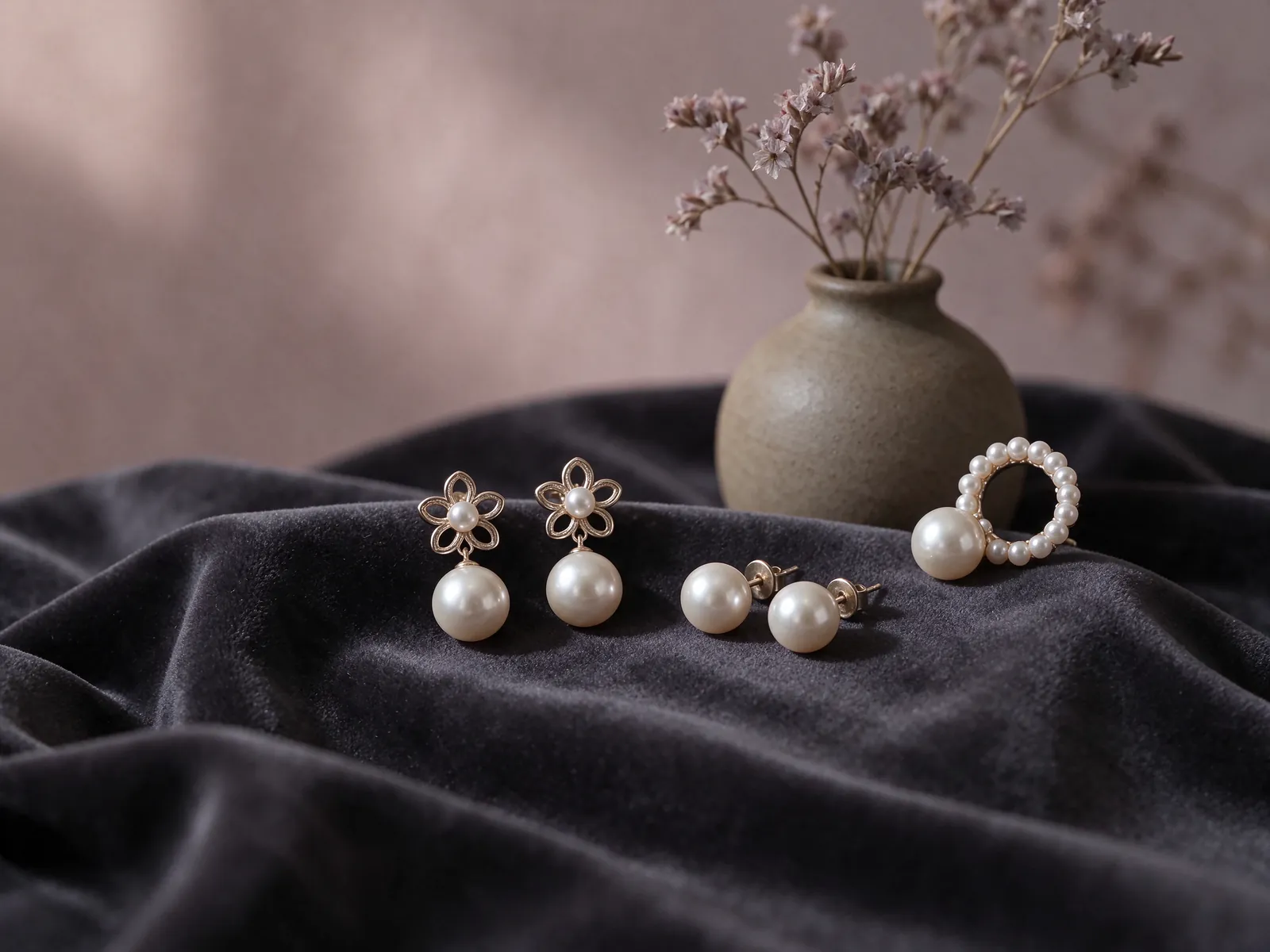
Before comparing options, write down whether you want visible space, a clear pearl accent or fuller coverage. Record the pearl measurement, any stated overall dimensions, the position on your lobe and the side profile instead of labelling a result only small or large. If you take photographs, keep angle and light similar and include both ears and the face, not just a tightly cropped lobe.
When discussing size with Flint Jewellery, describe your usual hairstyle, glasses and piercing position, plus the parts of a previous earring you liked or disliked. Saying that you enjoy a fuller pearl but dislike a forward tilt makes the conversation more specific than asking for the single correct size for a small earlobe. Your preferences help separate a diameter question from a mounting or proportion question. Discuss your preferred proportions and earring size with Flint Jewellery on WhatsApp.
Care for the pearl face after choosing the proportions
After wearing, gently wipe pearls with a very soft clean cloth and store them apart from jewellery that could rub their surfaces. GIA lists pearl hardness as 2.5 on the Mohs scale and advises against ultrasonic and steam cleaning. Small pearls need gentle care just as larger faces do. Put earrings on after using cosmetics and hair products to reduce direct contact with those products.
| Observation | Front view | Side view | Styling context | Decision focus |
|---|---|---|---|---|
| Piercing position | Notice which lobe edge is nearest | Check the relationship to the ear outline | Exposed-ear hair makes placement clearer | Compare on your own piercing |
| Visible space | Compare outlined and fuller coverage | Coverage does not describe projection | Choose subtle or prominent emphasis | No universal coverage ratio |
| Setting and back | Look for an unexpected angle | Check projection and forward tilt | Try with your glasses | Assess front and rear together |
| Pair matching | Compare size, shape and lustre | View both ears for overall balance | An updo exposes differences | Diameter is not the only quality factor |
| Second piercing | Check for overlapping faces | Notice contact between backs | Try individually before combining | Use your actual piercing gap |
Pearl knowledge and authoritative references
GIA describes seven pearl quality factors: size, shape, colour, lustre, surface quality, nacre quality and matching. For small-earlobe studs, diameter is therefore one consideration alongside the appearance of the pair and the earring construction.
Read the reference for this factFrequently asked questions
Must a small earlobe wear the smallest pearl available?
No. Visible space around a pearl creates a delicate look, while fuller coverage creates more emphasis. Compare the position of your piercing and both front and side views. A larger-looking pearl can be a valid preference if its appearance and your actual wearing experience suit you.
Is a pearl that extends below the lobe automatically too big?
Not automatically. Covering the lower edge may be the intended style. Distinguish that front-view effect from a stud tilting forwards. If you dislike coverage, compare smaller faces; if you dislike the angle, assess the setting, post and back as well.
Can identical studs look different on my two ears?
Yes. Differences in piercing height and lobe outline can change the visible space around an identical pearl. Check both ears together in a natural position before deciding whether the variation matters to your preferred overall look.
Can a phone close-up tell me which diameter to choose?
It can help show the lobe edge and placement, but it cannot decide the whole look. Add a photograph that includes your face, using similar angles and lighting for comparisons. Neither image tells you the weight or how the earring feels when worn.
How can I keep a second-piercing combination from looking crowded?
Begin with the main stud, then add the second piece and check overlap and contact between backs. Keep one element visually quieter if that suits your taste, or wear only the main stud. Your actual piercing spacing is more useful than copying another person's arrangement.
Updated: