
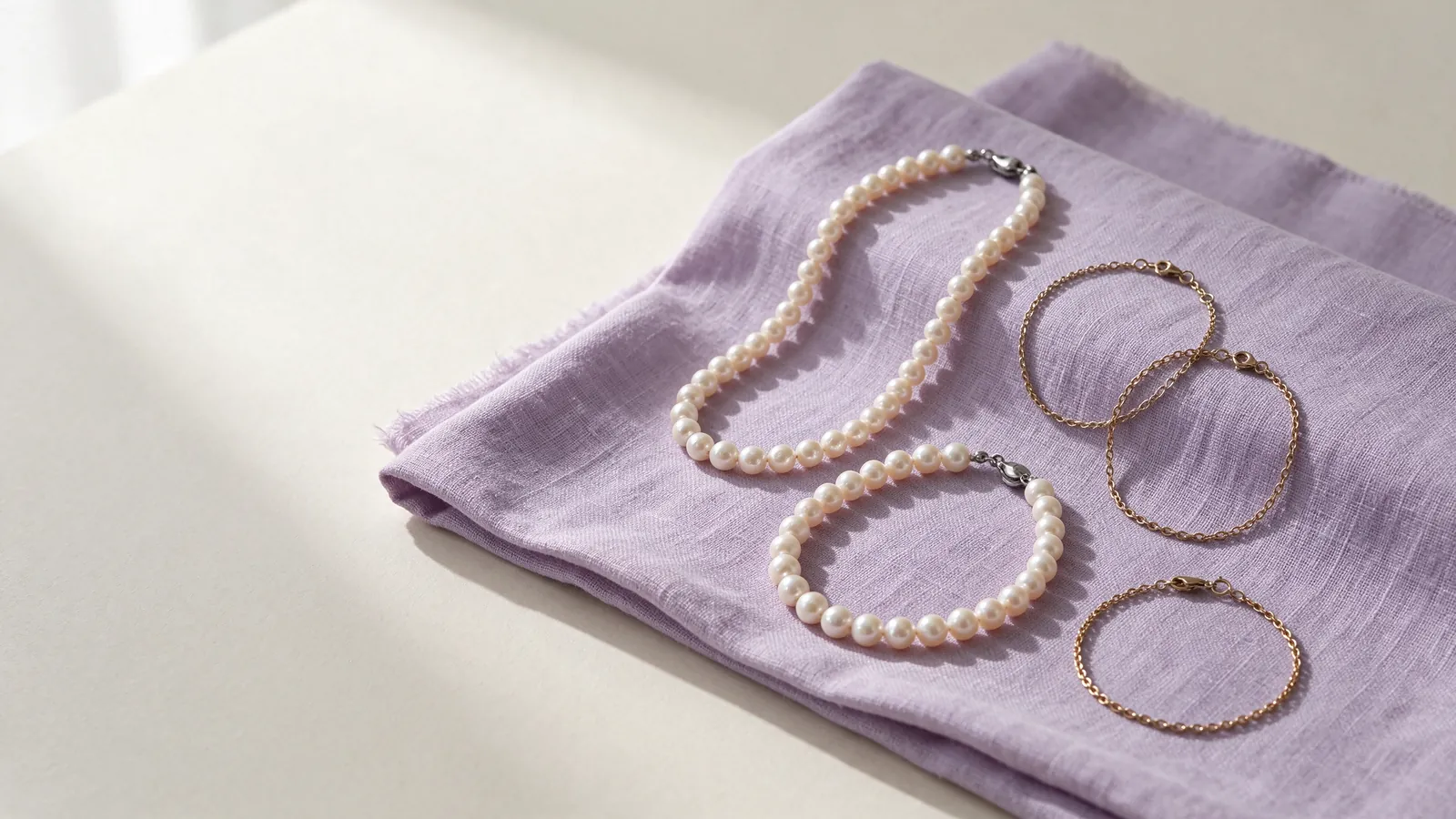
How does wrist fit shape your choice of a freshwater pearl bracelet, whether a freshwater cultured pearl bracelet or a freshwater pearl chain bracelet?
Measure around the place where you intend to wear the bracelet, keeping a soft tape close to the skin without pulling it tight. A non-stretching paper strip can also be marked and measured flat. Note whether you measured above the wrist bone or nearer the hand. When comparing a freshwater pearl bracelet, this gives you a useful starting point, not an automatic finished length.
Pearls occupy space inside the bracelet, while links and clasp shapes affect how the piece settles. Try the actual fastening position you expect to use, particularly if there is an extension chain. Let your arm hang, bend your wrist and imitate typing. Look for pressure at the wrist bone, pulling when you make a fist, or enough movement for the bracelet to slide towards your palm.
What should you check at the clasp of a freshwater pearl bracelet, whether a freshwater cultured pearl bracelet or a freshwater pearl chain bracelet?
Open and close the clasp using the hand and position you normally rely on. Check that it closes completely and that nearby pearls do not obstruct its moving parts. Watch where the chain tail falls when your hand rests on a desk. A clasp that turns towards the front may reflect weight distribution rather than a fault; decide whether that movement suits your preferred appearance and comfort.
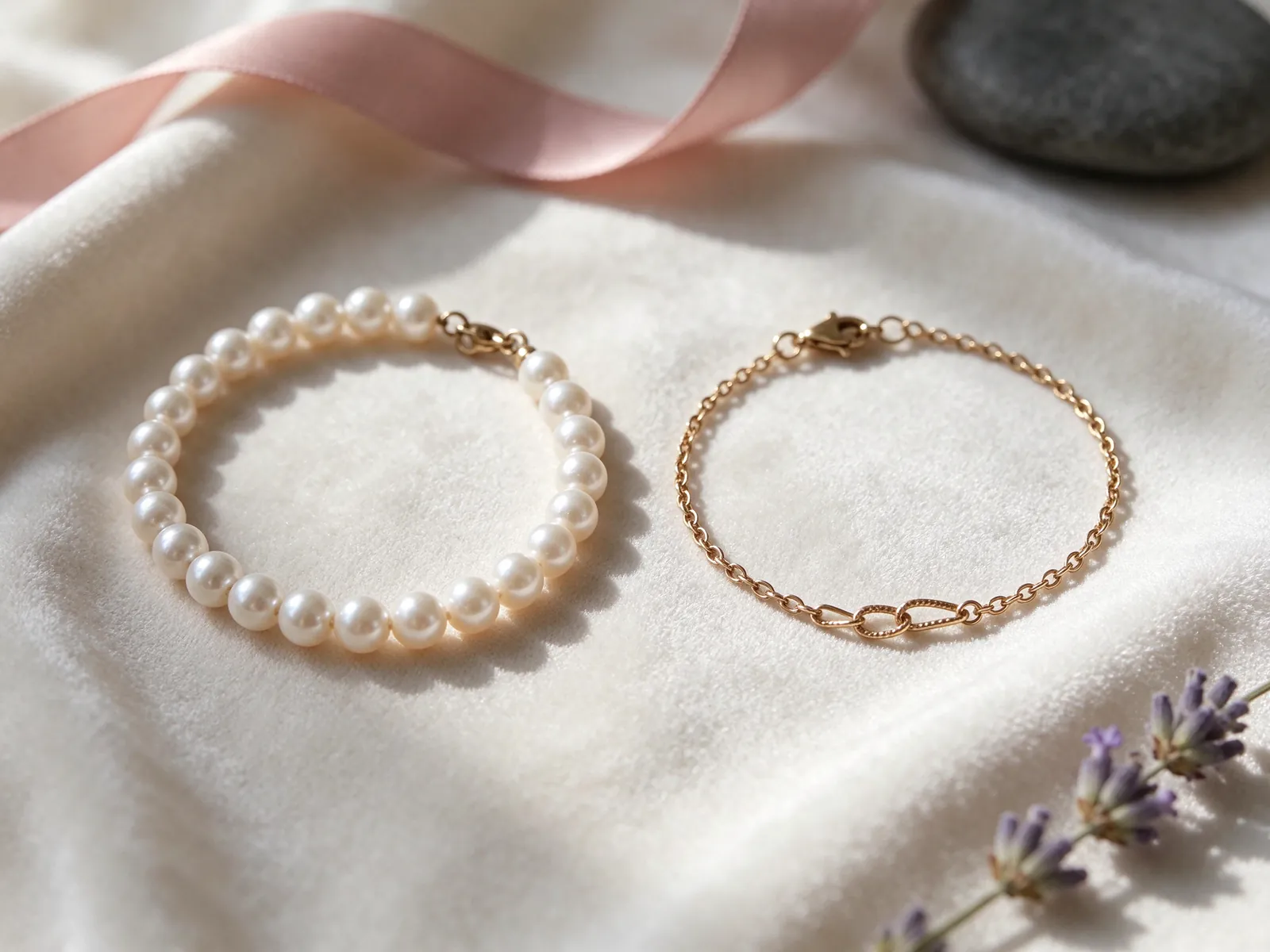
Read pearl identity separately from the bracelet's structure
A freshwater cultured pearl bracelet describes both a pearl category and cultured formation. A freshwater pearl chain bracelet describes a pearl category together with the use of chain in the design. These descriptions can apply to the same piece. If you are asking what are freshwater pearls, start with that identity question before comparing how the bracelet is assembled. A shortened name that omits cultured does not establish wild-natural identity.
Shape is a different layer of information. Round-looking, oval, flattened or irregular outlines can guide your style preferences, but a photograph cannot establish pearl type, origin or treatment status from those outlines alone. A baroque pearl bracelet introduces an irregular visual rhythm; the word baroque does not, by itself, identify freshwater pearls. Keep the pearl description and the design description in separate notes when comparing pieces.
Which description answers which buying question?
Look for clear wording about pearl type and cultured identity, then examine whether chain links connect individual pearls or appear only beside a pearl section. If a document accompanies a piece, read which item it describes and which characteristics it addresses. A decorative presentation, a grading letter or a close-up image does not answer every identity question. This approach lets you appreciate the design without turning appearance into identification.
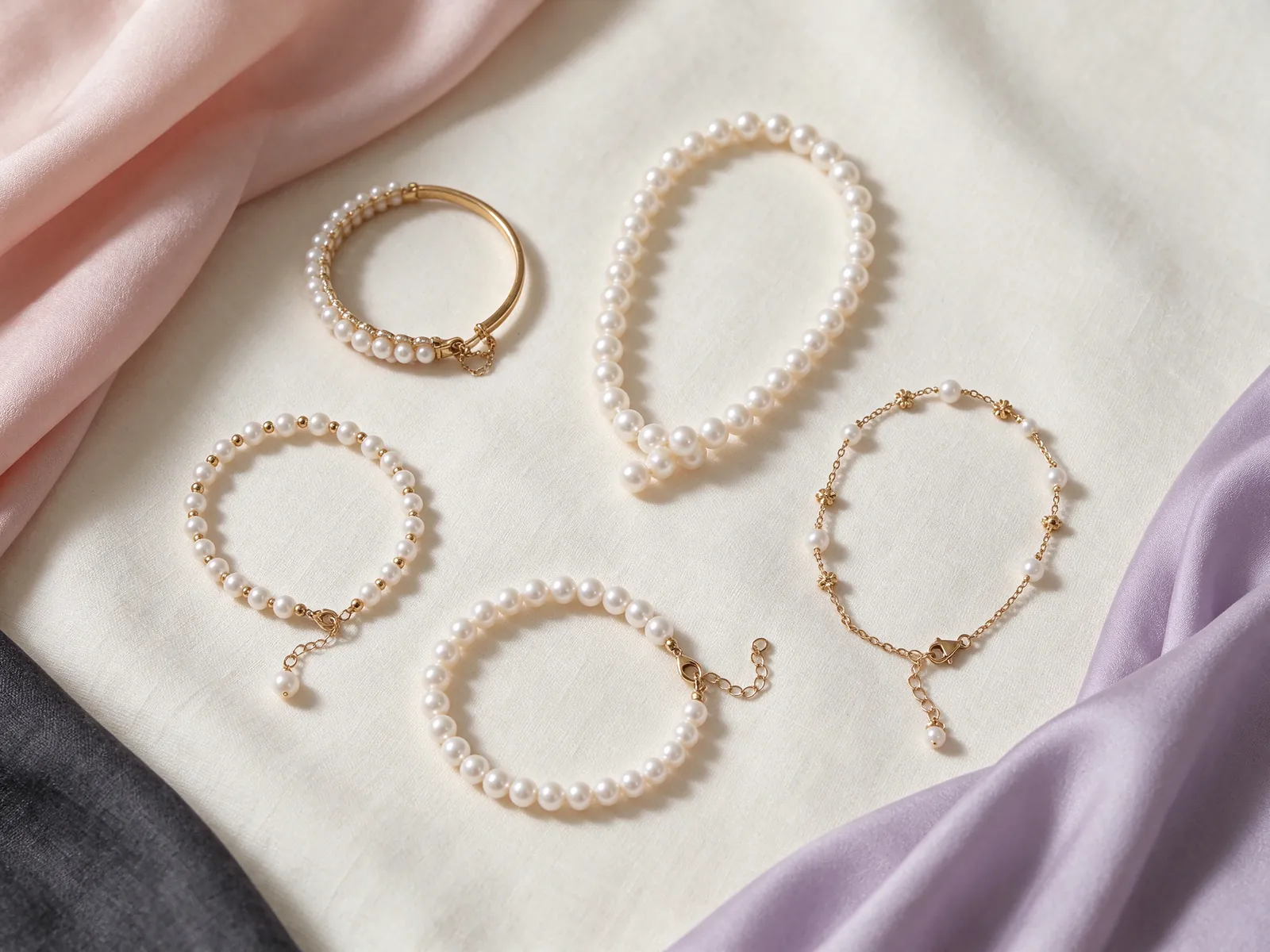
Compare continuous strands, chain sections and several rows
A continuous strand draws attention to the sequence of pearls around the wrist. During fitting, check whether the row follows your wrist comfortably or presses pearls together near the wrist bone. Chain sections add visible intervals and another kind of movement. Their effect depends on the connections, so a flat front view is less informative than seeing the bracelet from the side and while you turn your hand.
With several rows, allow the strands to settle naturally before deciding how they fit. Turn your forearm and watch whether rows overlap, twist or pull against a shared clasp. A wider arrangement also changes how much of the bracelet meets a shirt cuff or the edge of a desk. Compare these contact points with your normal working posture rather than assuming a visually delicate arrangement will always feel unobtrusive.
Observe pearl rotation and the chain tail in motion
A prominent pearl on a moving chain may change its facing as your wrist turns. If you prefer one surface to remain visible, observe it while standing, sitting and holding a bag handle. Look at the tail in the fastening position you intend to use; it may meet a sleeve or desk differently at another position. These small movement tests are more useful than relying only on the word lightweight.
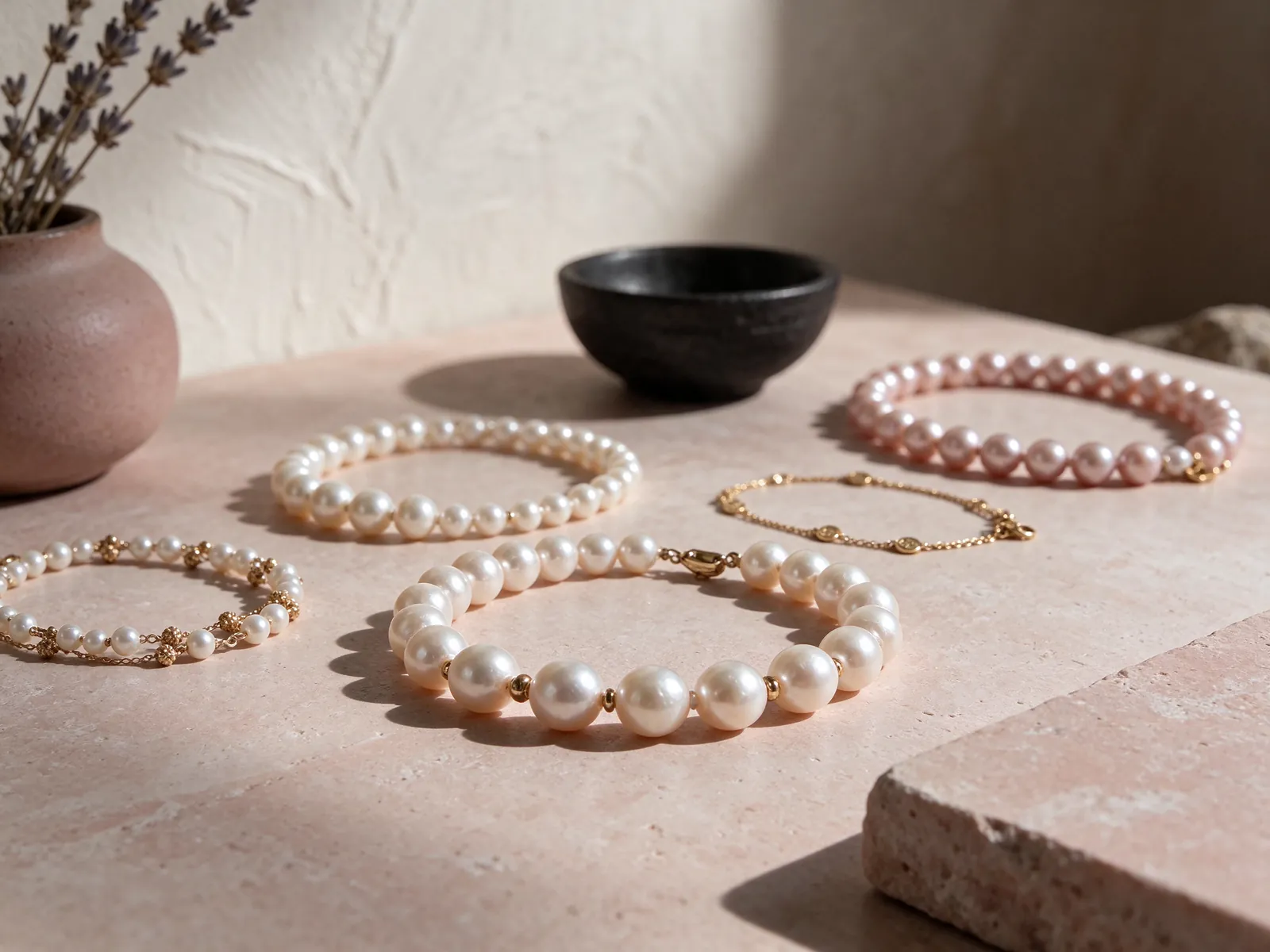
Assess lustre and matching across the whole bracelet
GIA describes seven pearl quality factors: size, shape, colour, lustre, surface quality, nacre quality and matching. For a bracelet, begin by looking at the clarity of reflections, the placement of visible surface features and the relationship between neighbouring pearls. Move the piece in softer light where possible. A bright highlight on one pearl in a photograph should not stand in for the appearance of the full row.
Matching need not mean removing every visible difference. A regular strand may depend on consistent colour and outline, while an irregular design can use variation to create a deliberate rhythm. When comparing an Akoya pearl bracelet, apply the same attention to the actual piece rather than ranking bracelets by type name alone. Your preferred reflection, silhouette and balance on the wrist remain practical parts of the choice.
Distinguish bodycolour from changing colour effects
GIA distinguishes bodycolour, overtone and orient, and not every pearl shows all three. Hold the bracelet near a sleeve colour you often wear and look at how its main colour reads beside your skin. Enjoy changing reflections without using a pink or grey appearance as proof of origin or untreated colour. Where colour identity matters to your decision, rely on an explicit description or relevant documentation rather than styling impressions.
Style around sleeves, watches and everyday hand movements
With a shirt or fine knit, check whether the bracelet clears the cuff as you lift your arm. A narrow sleeve can press on pearls or catch a clasp, even when the bracelet looks balanced with your arm still. The proportions discussed in a small pearl bracelet guide can help you think about a restrained everyday look, but small should not be treated as a promise of durability or universal fit.
For stacking, observe whether a watch case or rigid bangle meets the pearls when you hold your phone or carry a bag. Wearing the watch and bracelet on opposite wrists can preserve a coordinated look without direct contact. If you prefer them together, avoid trapping pearls between hard parts. A single bracelet with a simple top can also make the alternating pearl and chain line the focus without additional layers.
Bring your usual cuff and bag handle into the comparison
Think about the sleeves you reach for most often: a wide cuff may hide the bracelet, while a zip or tight opening may meet its surface. A bag handle can push jewellery towards the hand, so an empty-handed fitting misses an important movement. For an evening outfit, decide whether the wrist or neckline is the focal point; quieter wrist styling can leave breathing room beside prominent earrings or a necklace.
Choose metal colour as part of the overall line
Visible chain sections make metal colour an active part of a bracelet's design. An 18k gold pearl bracelet offers a useful styling topic for considering white, yellow and rose tones alongside pearl colour. Compare the bracelet with the rings you normally wear, including the clasp and tail rather than only the central pearls. Similar metal colours can still reflect light differently because the parts have different shapes and finishes.
A platinum pearl bracelet is another direction for considering the relationship between a restrained metal line and pearl lustre. Read material descriptions for the relevant components: 18K 750 white gold, 18K 750 yellow gold, 18K 750 rose gold, PT950 platinum or PT900 platinum. Metal choice does not replace an assessment of the pearls, and the same colour can look quite different in a dense strand and an open chain arrangement.
Include the clasp in colour and comfort decisions
A clasp that is discreet in a front photograph may become visible as the bracelet moves. Consider whether its appearance belongs with the rest of the design and whether you can operate it comfortably. If you have known reactions to particular metal contact, ask about the relevant components instead of assuming that a colour or material name guarantees suitability. Skin-contact needs and pearl colour preferences are separate decisions.
Care for the pearls as well as the connections
GIA places pearl at 2.5 on the Mohs hardness scale. Reduce repeated contact with harder jewellery and wipe pearls after wearing with a very soft, clean cloth. Avoid acids, perfume, hair spray and excessive heat. Never use ultrasonic or steam cleaners for pearls. The presence of a metal chain does not make those methods appropriate for the whole bracelet; its cleaning needs must account for the pearls too.
Store the bracelet separately from pieces that could rub its surface, with the tail arranged so it does not drag across the pearls. If a strung bracelet is cleaned with water, let the string dry completely before wearing it again. When picking it up, notice loose thread, unusual gaps at connections or a clasp that no longer closes normally. Seek appropriate professional advice rather than pulling, bending or adding adhesive yourself.
Describe fit concerns with useful detail
For a focused fit conversation, note where you measured your wrist, which fastening position you use and which movement causes discomfort. Mention your watch and usual sleeves, as well as whether you prefer a close or more draped look. You can discuss wrist-fit considerations with Flint Jewellery on WhatsApp. Specific observations such as pulling during typing help clarify the question more effectively than simply describing the bracelet as too loose or too tight.
| What to compare | What to observe | Movement to try | Misreading to avoid |
|---|---|---|---|
| Wrist measurement and length | Wearing position, inner space and the chosen fastening link | Let the arm hang, bend the wrist and make a fist | Treating circumference as the finished bracelet length |
| Chain and continuous strand | Visible gaps, pearl connections and clasp movement | Turn the wrist and watch the pearl facing | Treating chain as a pearl type |
| Several rows | Row alignment and movement at a shared clasp | Rest the wrist near a desk edge and turn the forearm | Judging fit from a flat front view alone |
| Lustre and matching | Reflections, colour relationships and the full outline | Rotate the piece in softer light | Judging the whole strand by one bright highlight |
| Sleeves and stacking | Cuff contact, watch collisions and the chain tail | Lift an arm, hold a phone and carry a bag | Confusing a styling preference with abrasion resistance |
Pearl knowledge and authoritative references
GIA describes seven pearl quality factors: size, shape, colour, lustre, surface quality, nacre quality and matching. In a freshwater pearl bracelet, consider the appearance and matching of the full arrangement rather than relying on the pearl type name alone.
Read the reference for this factFrequently asked questions
Can a freshwater cultured pearl bracelet also be a chain bracelet?
Yes. Cultured describes pearl formation, while chain describes construction. Read the pearl identity wording separately from the way links and pearls are connected; neither description needs to exclude the other.
Why can two bracelets with the same stated length feel different?
The pearls take up inner space, and clasp shape, links and the fastening position affect how the bracelet settles. Compare the actual wearing position and test wrist movement rather than using finished length as the only fit measure.
Does a baroque outline identify freshwater pearls?
No. Baroque describes irregular shape. It does not establish freshwater type, origin, cultured identity or treatment status. Use the outline to assess the design, and read explicit item descriptions or relevant documents for identity.
Should I tighten the bracelet to stop a chain-mounted pearl turning?
Not automatically. Rotation may come from its moving connections and weight distribution. A tighter fit might press the pearl against your wrist bone. Compare usable fastening positions during ordinary movements and decide whether the pearl facing and comfort suit you.
Can I clean the whole bracelet ultrasonically because it includes chain?
No. GIA advises that pearls should never be cleaned with ultrasonic or steam cleaners. Use a very soft, clean cloth for routine wiping. If a strung piece is cleaned with water, allow the string to dry completely before wearing it.
Updated: