
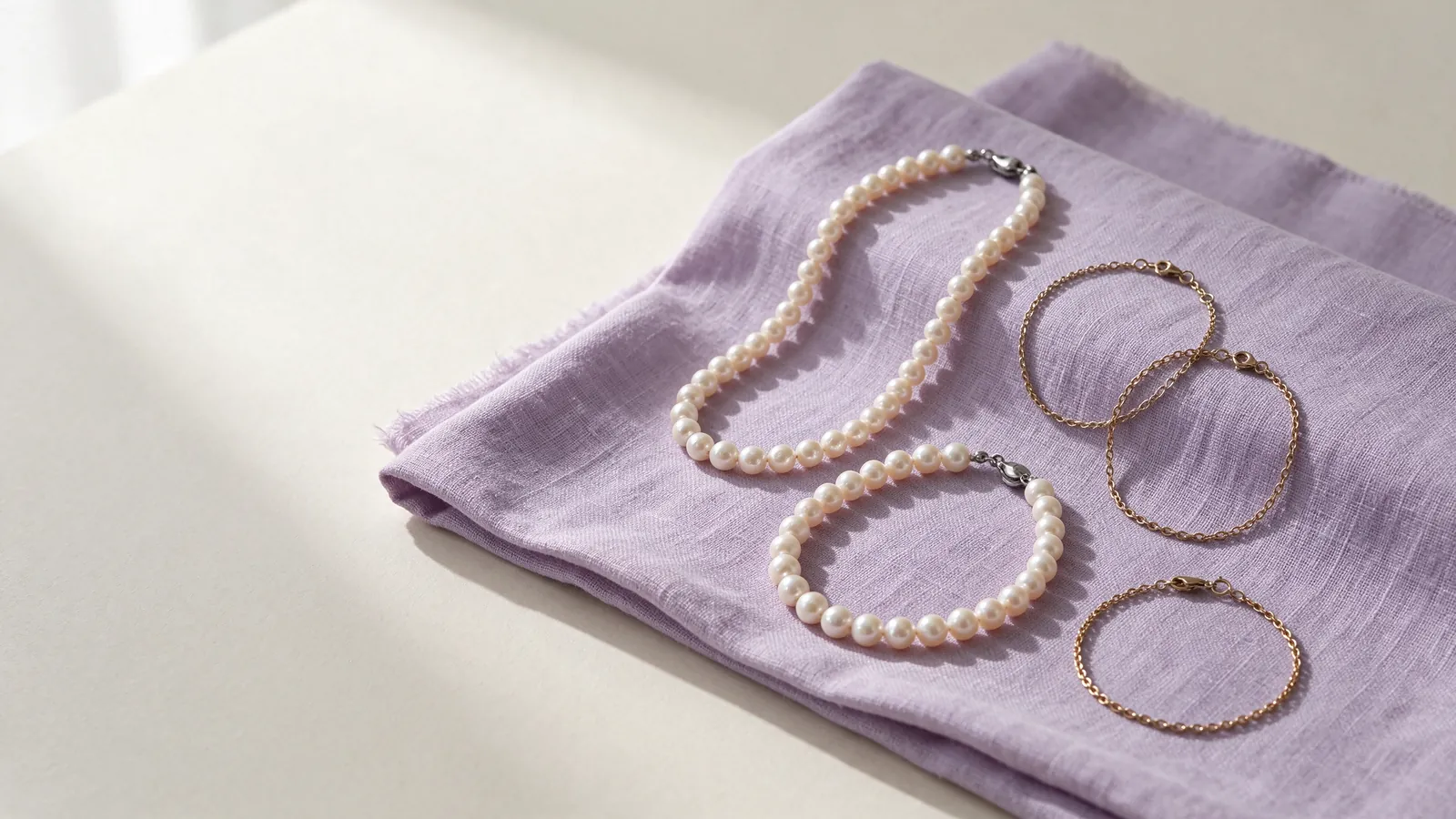
How does wrist fit shape your choice of a freshwater pearl bracelet, whether a freshwater cultured pearl bracelet or a freshwater pearl chain bracelet?
Decide where you want the bracelet to rest before measuring. Wrap a flexible tape around that point without compressing the skin, or mark a non-stretching paper strip and measure it flat. Record the position as well as the measurement. For a freshwater pearl bracelet, wrist circumference helps begin the comparison, but the right finished length also depends on how the piece occupies space and moves.
Try the bracelet at the fastening point you would actually use. Lower your arm, flex your wrist and hold your phone as you normally would. A fit that looks neat in a posed photograph may pull during movement or slide farther onto the hand than you like. If there are several usable links, compare their effects instead of judging only by the longest stated length.
What should you check at the clasp of a freshwater pearl bracelet, whether a freshwater cultured pearl bracelet or a freshwater pearl chain bracelet?
Check that you can reach, open and fully close the clasp without nearby pearls getting in the way. Look at its position after a few ordinary hand movements, not just immediately after fastening. Notice whether the tail touches your hand or a desktop. A clasp moving around the wrist may be part of the piece's weight balance; assess whether it is comfortable and visually acceptable to you.
Understand what each part of the name tells you
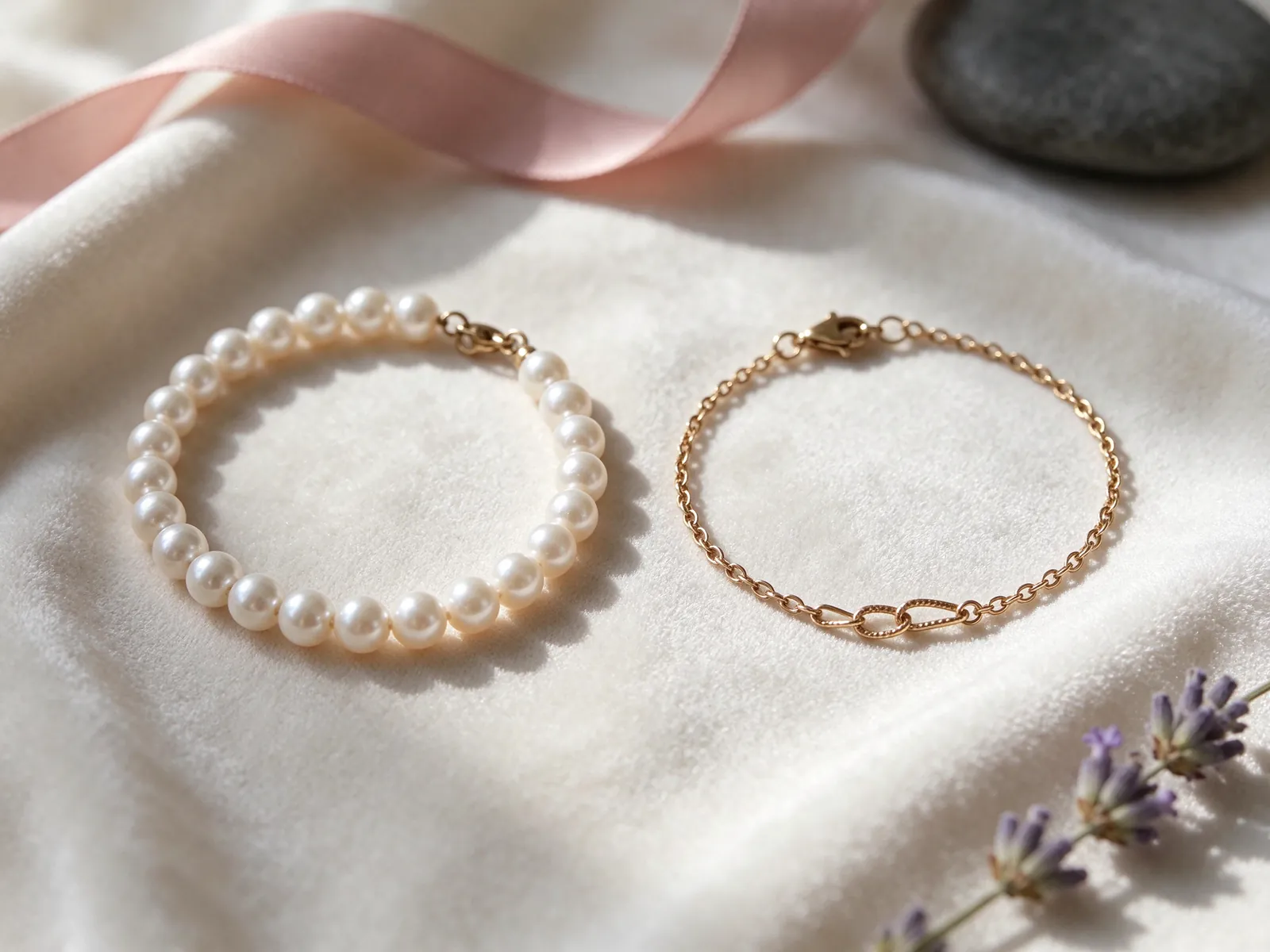
The wording freshwater cultured pearl bracelet addresses pearl category and cultured formation. The wording freshwater pearl chain bracelet combines a pearl category with a construction description. They are not competing categories, and one bracelet can fit both. If your first question is what are freshwater pearls, resolve that distinction before using the design name to make assumptions about how the pearls were formed.
Do not interpret an abbreviated name without cultured as proof of wild-natural identity. Likewise, an irregular silhouette does not identify freshwater pearls. A baroque pearl bracelet describes a shape-led design direction, not a complete account of pearl type, origin or treatment. Separate those identity questions from your response to the outline so that an appealing photograph does not carry more meaning than it can support.
Make a comparison note with identity and construction apart
Use one part of your notes for the stated pearl category and cultured identity, and another for how the pearls connect to the bracelet. Is chain used throughout, at the sides, or around a focal pearl? If documentation accompanies a piece, read which object and characteristics it covers. A grade letter or a polished presentation should not be treated as an answer to every pearl identity question.
Choose an arrangement by the way it behaves on the wrist
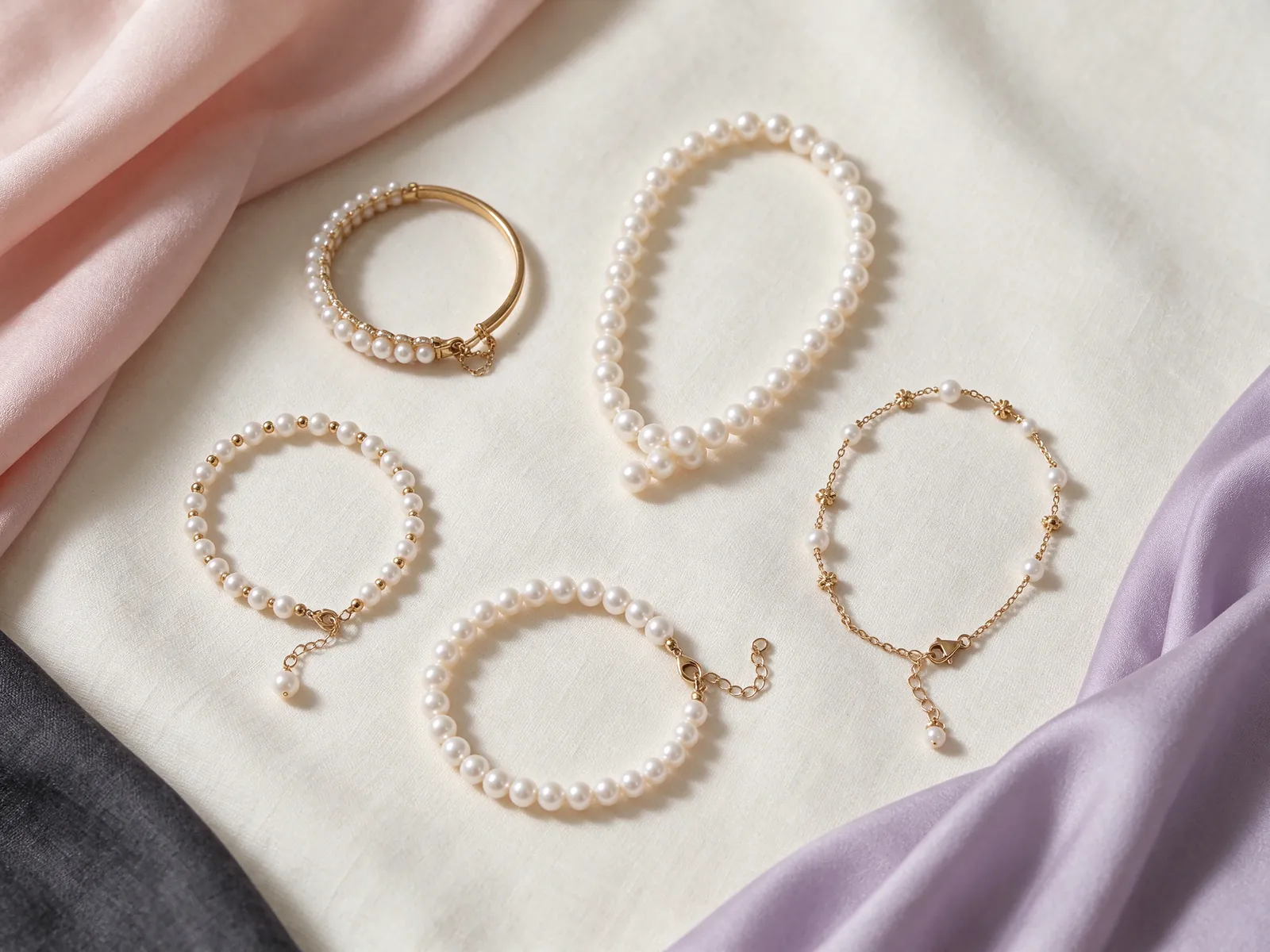
A continuous strand emphasizes the sequence of pearls, so look at how that sequence curves around your wrist. Check for crowding near the wrist bone and whether the row rests as expected from the side. Chain sections create open intervals between visual elements, but their drape depends on the actual connections. Look beyond a flat product view to understand where the pearls sit while the wrist turns.
Several rows create a broader visual area and require a separate check of alignment. Let the rows settle, then rotate your forearm and rest your wrist near the edge of a table. Watch for overlapping strands, twisting or pulling at a shared clasp. These observations help distinguish an arrangement you enjoy wearing from one that only looks appealing when perfectly laid out for a photograph.
Check the focal pearl and chain tail from more than one position
A pearl suspended within a moving chain may turn as you stand, sit or hold a bag. If one face is important to your preferred look, see how often it remains visible during those movements. Also check the chain tail at each fastening position you are considering. Tightening is not a universal solution to rotation; it can change where the pearl presses against the wrist.
Evaluate the full row rather than a single highlight
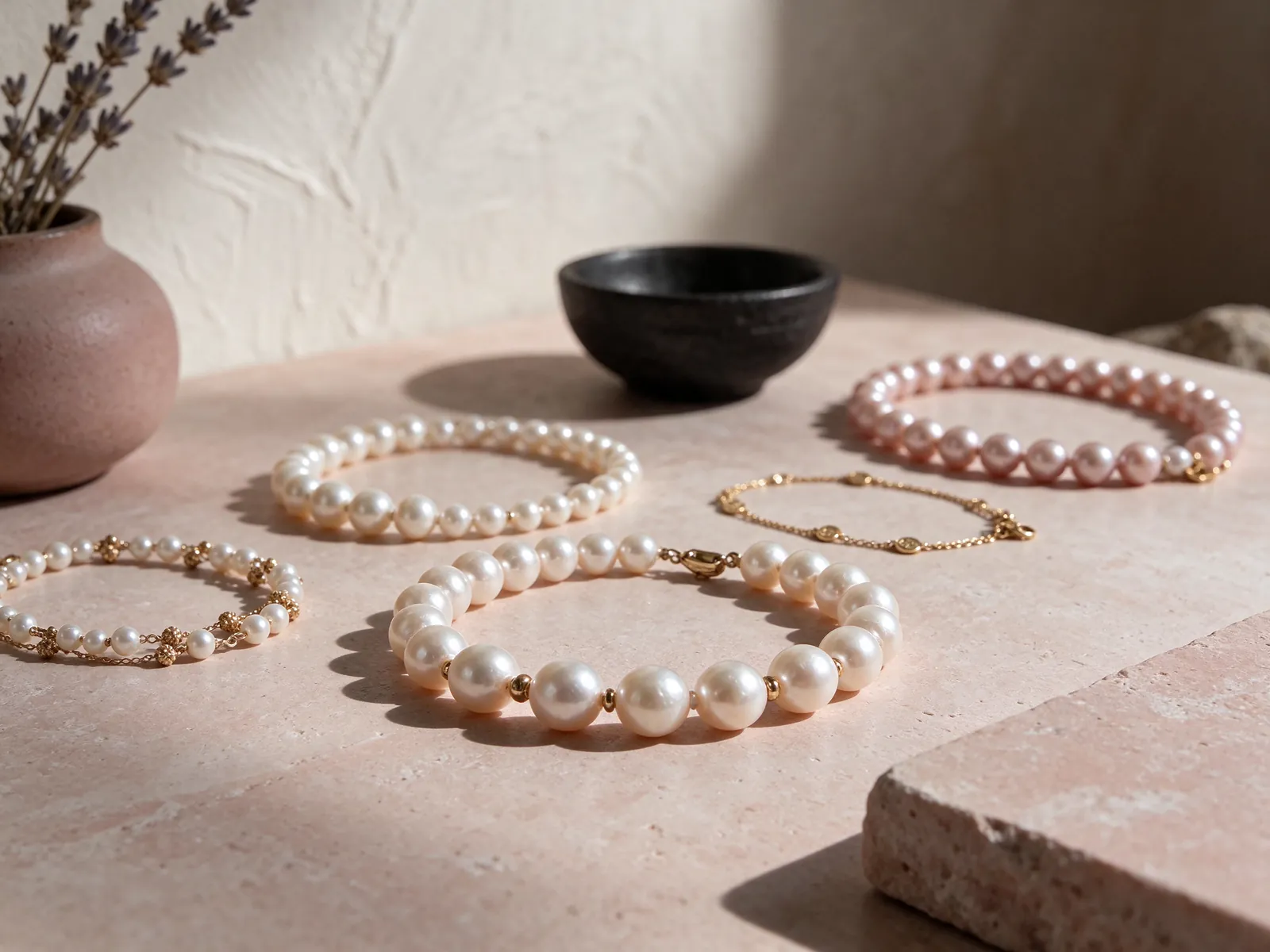
GIA identifies seven pearl quality factors: size, shape, color, luster, surface quality, nacre quality and matching. For a bracelet, useful visible comparisons include the clarity of reflections, the placement of surface features and the relationship between adjacent pearls. View the arrangement in softer light and from different angles. The brightest reflection in one close-up does not represent every pearl or the bracelet's overall appearance.
Matching can support different design goals. A regular strand may rely on coordinated color and outlines, while an irregular arrangement may use variation as its rhythm. An Akoya pearl bracelet comparison should still examine the individual piece through those factors, not rank it by its category name alone. Decide which balance of reflection, silhouette and variation works with the look you want on your wrist.
Consider color beside your skin and clothing
GIA distinguishes bodycolor, overtone and orient; not all pearls display all three. Compare the bracelet beside a shirt or jacket color you wear often, then turn it to see how the reflections change. That is a styling exercise, not proof of natural color, origin or treatment status. If color identity is important to the purchase, read a clear item description or relevant documentation separately.
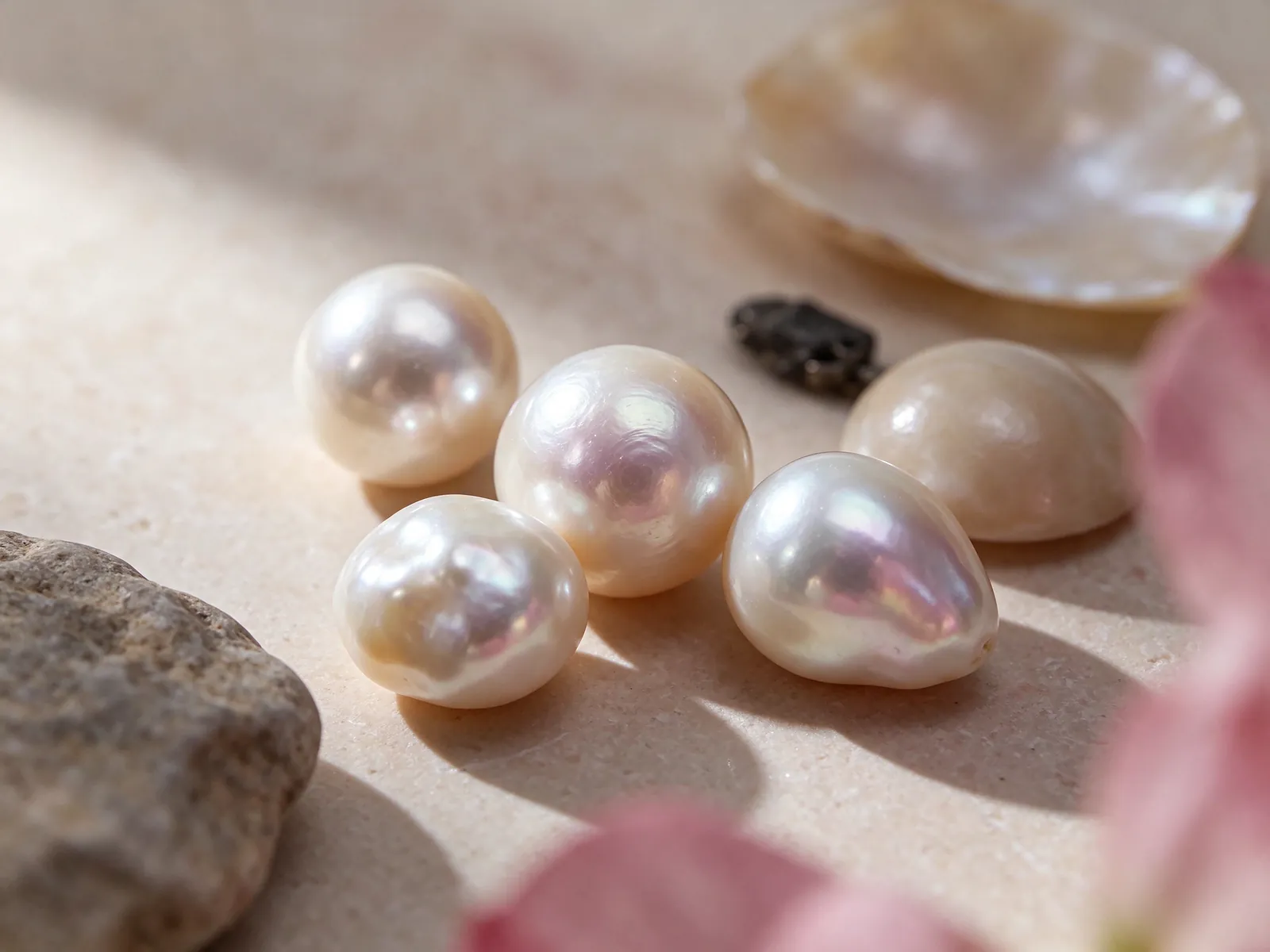
Plan the bracelet around your sleeves and other jewelry
A bracelet can look different beside a fitted cuff and an open sleeve. Lift your arm to check whether fabric catches the clasp or pushes against a pearl. For a quieter everyday look, the proportions considered in a small pearl bracelet guide can help you think about how much of the line should show. Small describes scale; it does not establish durability or make one fit suitable for everyone.
If you wear a watch, observe contact between its case and the pearls when your hand bends or rests. Opposite-wrist styling can keep a coordinated appearance while avoiding direct collisions. If you stack pieces on the same wrist, do not let pearls become trapped between rigid parts. A single bracelet with a simple outfit can also give the pearl-and-chain pattern room to stand out without a crowded arrangement.
Use the recipient's routine when choosing a gift
For a gift, a useful measurement includes where the person likes a bracelet to sit, not just a number. Ask whether they prefer a close fit, wear a watch, or usually choose narrow cuffs. An extension chain may offer different fastening positions, but that alone does not guarantee comfort. Focus the choice on known habits and actual fit information rather than guessing wrist size from height or appearance.
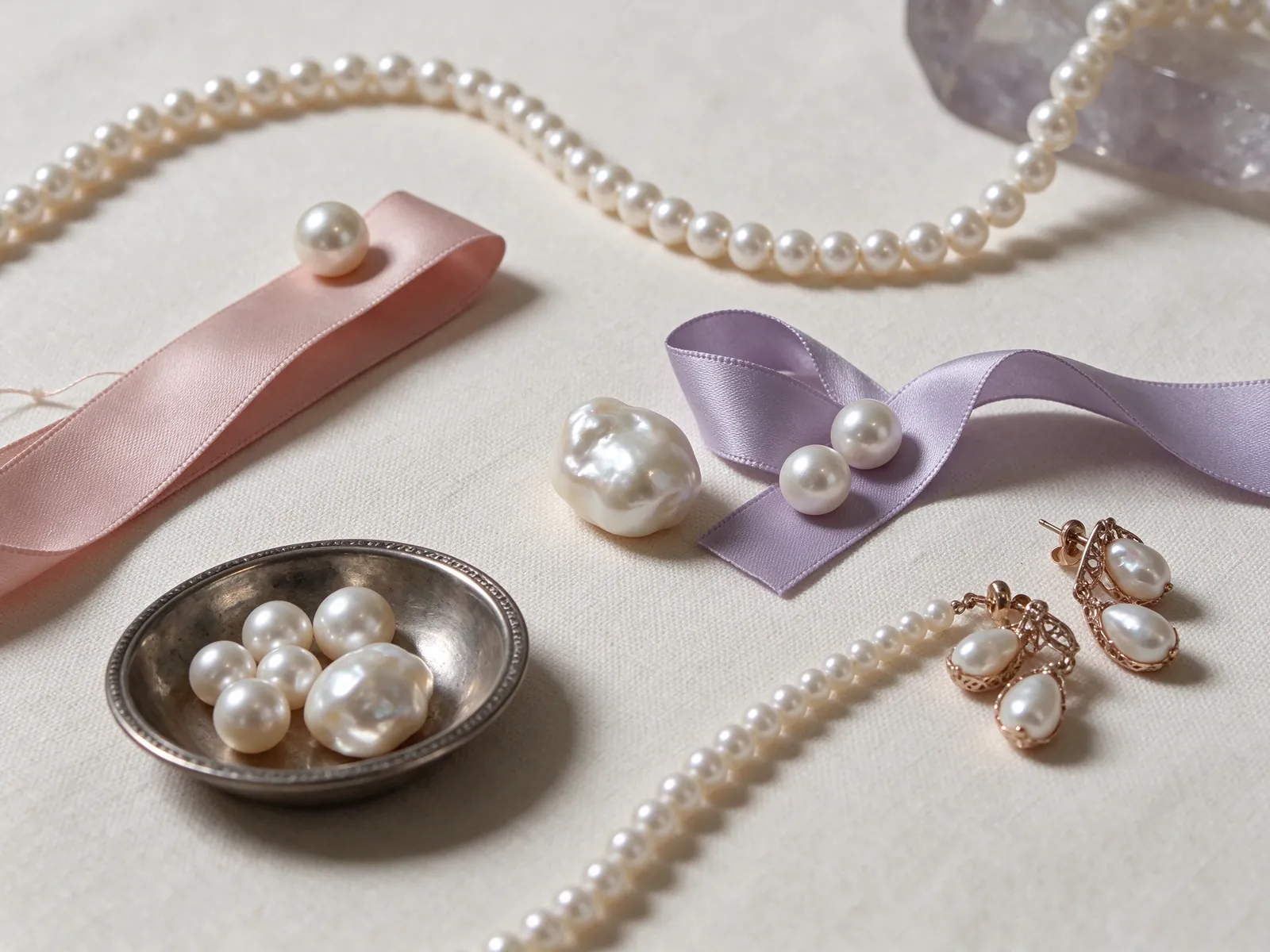
Let metal color support the pearls instead of defining them
In a chain design, visible metal contributes to the rhythm between pearls. An 18k gold pearl bracelet is a useful styling direction for comparing white, yellow and rose tones with your usual rings and pearl colors. Include the clasp and tail in that comparison. Even similar colors can create a different visual effect when a bracelet uses closely spaced pearls rather than open chain intervals.
When considering a platinum pearl bracelet, evaluate the metal line and pearl luster together without treating the metal name as a pearl-quality grade. Material wording should identify the relevant components as 18K 750 white gold, 18K 750 yellow gold, 18K 750 rose gold, PT950 platinum or PT900 platinum. The choice of metal and the choice of construction answer different questions about how the bracelet looks and fits.
Look beyond the front view to clasp access and skin contact
As the bracelet moves, the clasp and connectors may become more prominent than they appear in a front photograph. Check both their contribution to the design and your ability to operate the fastening. If you know you react to certain metal contact, ask about the specific parts involved. Neither a metal color nor a material name should be treated as a guarantee that every wearer will find it suitable.
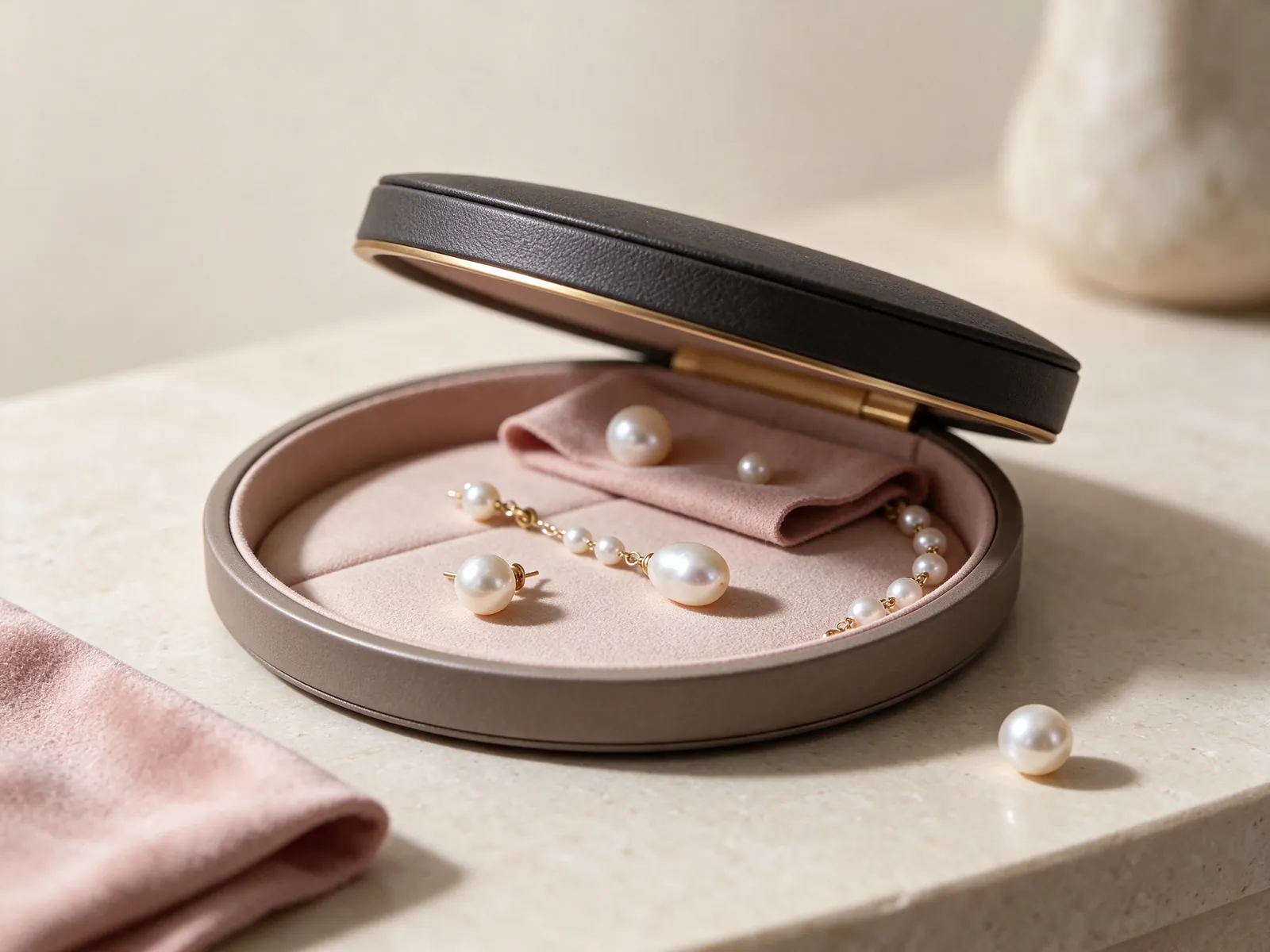
Keep pearl care in mind even when the design includes chain
GIA lists pearl at 2.5 on the Mohs hardness scale. Limit repeated rubbing against harder objects, and use a very soft, clean cloth after wearing. Avoid contact with acids, perfume and hair spray, as well as excessive heat. Pearls should never go into ultrasonic or steam cleaners. A metal section needing attention does not make either method appropriate for a bracelet that also contains pearls.
Place the bracelet separately from other jewelry in a soft compartment or individual pouch, keeping the tail from dragging across pearl surfaces. If strung pearls are cleaned with water, the string must be completely dry before the bracelet is worn again. Notice frayed thread, unusual connector gaps or a clasp that does not close normally. Stop pulling at a changed connection and seek appropriate professional advice instead of bending or gluing it yourself.
Prepare a clear wrist-fit question
When discussing fit with Flint Jewelry on WhatsApp, describe where you measured, which fastening position you use and what happens during the movement that concerns you. Add whether you wear a watch and whether you prefer a closer or more draped line. Details such as sliding towards the hand while carrying a bag help focus the conversation more than a general statement that a bracelet feels wrong.
| Comparison | Details to inspect | Useful fitting test | Assumption to avoid |
|---|---|---|---|
| Measurement and finished length | Preferred wrist position, inner space and fastening point | Lower the arm, flex the wrist and hold a phone | Equating wrist circumference with finished length |
| Strand versus chain | Pearl connections, open intervals and side profile | Turn the wrist and look at where pearls rest | Reading chain as a separate pearl category |
| Multiple rows | Alignment, overlap and movement at the common clasp | Rest the wrist near a table edge | Assuming a laid-flat arrangement predicts comfort |
| Luster and matching | Reflections, surface appearance and the full sequence | View from different angles in softer light | Letting one bright pearl represent the whole piece |
| Sleeves and watches | Fabric catching, hard-part contact and tail position | Lift an arm and bend the hand with usual accessories | Treating a coordinated look as protection from abrasion |
Pearl knowledge and authoritative references
GIA identifies seven pearl quality factors: size, shape, color, luster, surface quality, nacre quality and matching. Use them to consider the freshwater pearl bracelet as a full arrangement rather than treating its pearl category name as a complete quality assessment.
Read the reference for this factFrequently asked questions
Does chain construction mean the pearls cannot be cultured?
No. Chain refers to how the bracelet is built, while cultured refers to pearl formation. A freshwater pearl chain bracelet can also be described as a freshwater cultured pearl bracelet when its pearl identity supports that wording.
What fit information is useful when giving a bracelet as a gift?
Use the recipient's wrist measurement together with the intended wearing position, preferred looseness and usual watch or sleeves. Do not estimate wrist size from appearance. Multiple fastening positions can be useful to compare, but they do not by themselves guarantee a suitable fit.
Can an irregular pearl shape tell me its origin or treatment status?
No. Shape helps you understand the design's outline, but it does not identify freshwater type, origin, cultured identity or treatment. Read an explicit item description or relevant documentation for those questions rather than relying on a photograph.
Can I wear a freshwater pearl bracelet next to my watch?
Check what happens when your wrist bends and rests. A watch case or rigid parts may repeatedly meet the pearls. Wearing them on opposite wrists avoids that direct contact while still allowing a coordinated look; same-wrist styling needs careful attention to collisions and trapped pearls.
When is a water-cleaned pearl strand ready to wear again?
GIA advises that the string must be completely dry before wearing strung pearls after cleaning with water. Do not judge readiness only by a dry-looking pearl surface. For routine care, use a very soft, clean cloth, and never use ultrasonic or steam cleaners for pearls.
Updated: