
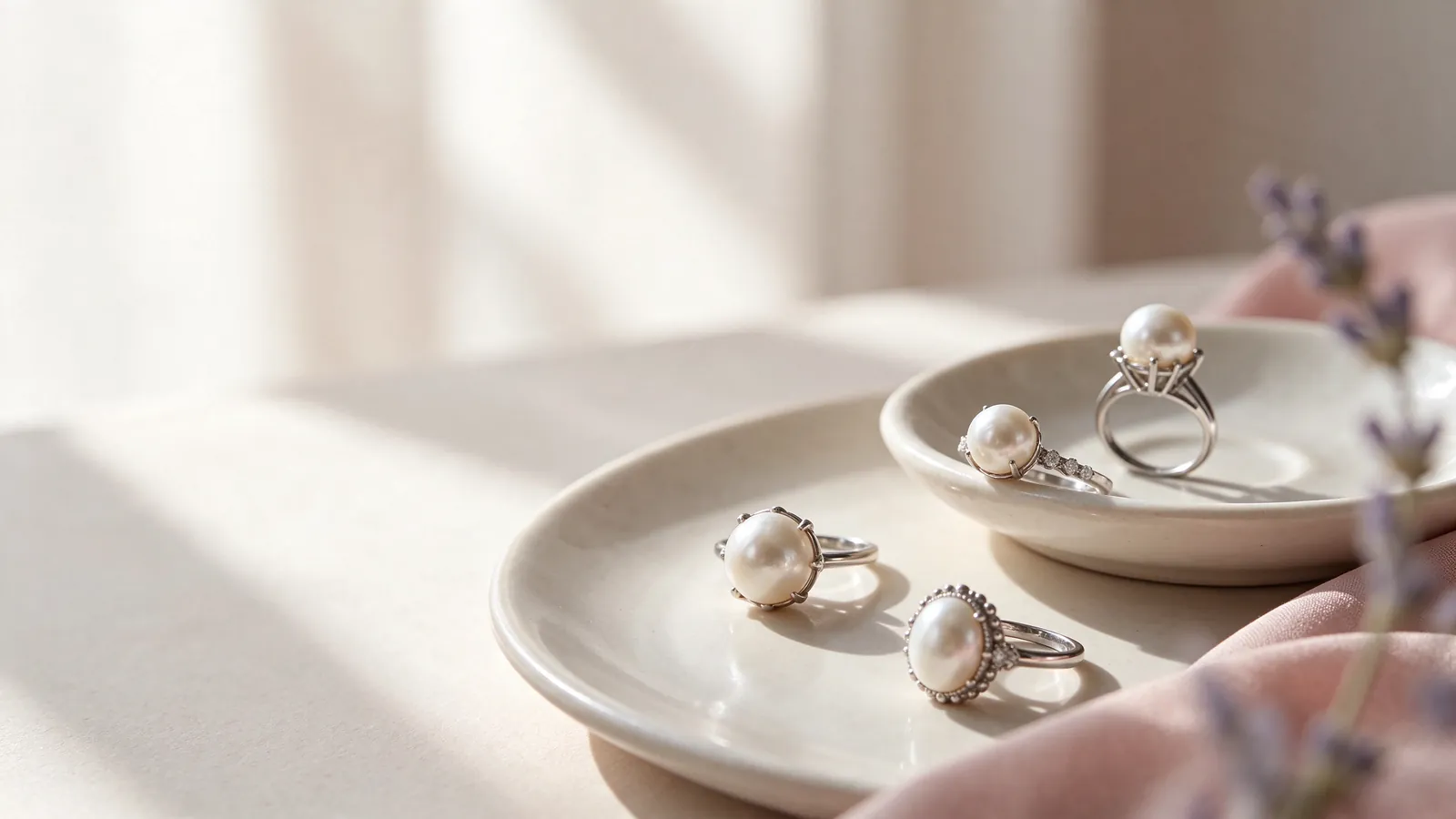
Beyond the gap: are open pearl rings adjustable, and can an open pearl ring be resized? Why structure matters in open pearl ring size selection
Open is a description of shape. The ends may face each other, sit at different angles or frame a pearl with empty space, yet the ring can still have a fixed intended size. When choosing an open pearl ring, distinguish the style name from its fit instructions. The appearance of a gap alone does not tell you whether the maker allows any adjustment.
A design intended for adjustment and a ring suitable for professional resizing are not interchangeable ideas. The first needs explicit instructions and limits; the second needs an evaluation of the individual structure. Do not assume the pearl ends can be squeezed in and pulled out whenever your preferred finger changes. If the listing gives a fixed size, treat that size as the starting point for a fitting.
When open pearl ring size selection leaves a loose or tight fit, are open pearl rings adjustable, and can an open pearl ring be resized? Seek a design assessment before any alteration
A ring that requires spreading to go on, or squeezing to stay on, needs a different decision before it needs force. Identify whether the difficulty occurs at the knuckle, at the base or during movement. Tell a jeweler the original size and intended finger, then discuss fit options. Pulling on the pearl to test flexibility is not a reliable way to answer the sizing question.
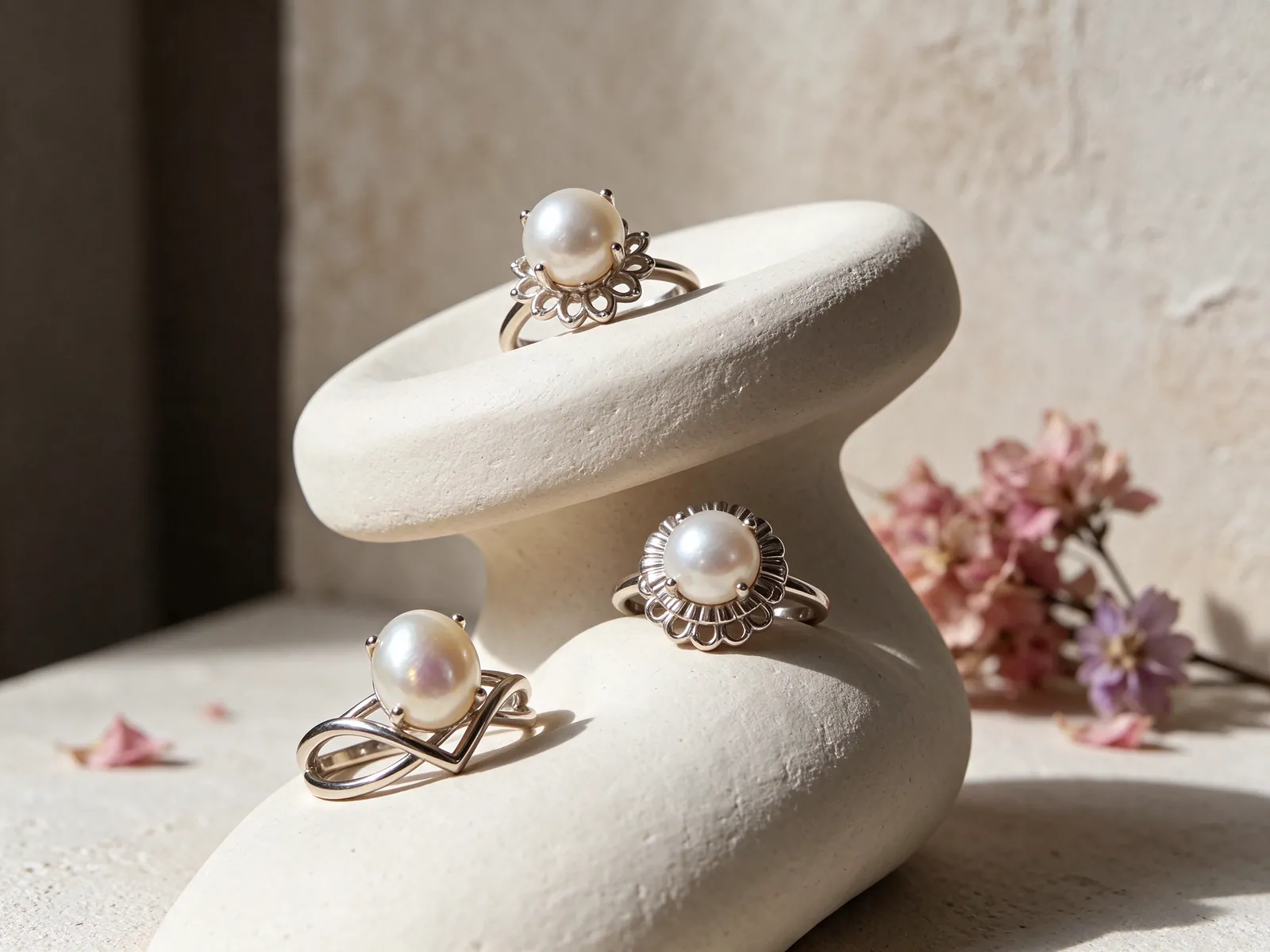
Build your size choice around the finger you plan to use
Start with the actual hand and finger, even if you already know the size of another ring. The same named finger on your opposite hand may not give the same fit. Follow how to measure ring size with attention to both the knuckle and finger base. A paper estimate should lie flat and straight; an angled, folded or overtight strip can make the result misleading.
For a ring listed in Japanese sizing, do not read the number as a US size. Japanese to US ring size conversion is useful only when you know what the original number represents. Also distinguish inside diameter from inside circumference when dimensions are provided. The open space is a design feature, not a separate measurement you should add to the finger circumference to calculate a preferred size.
Compare profiles as well as size numbers
A familiar ring offers useful context if it fits the target finger. Bring it to a fitting and point out whether you like a close or more relaxed feel. Then compare its width and inner curve with the proposed ring. A thin closed band and a broader open band may not feel alike even when their labeled sizes match, so use the reference as evidence of preference rather than a guarantee.
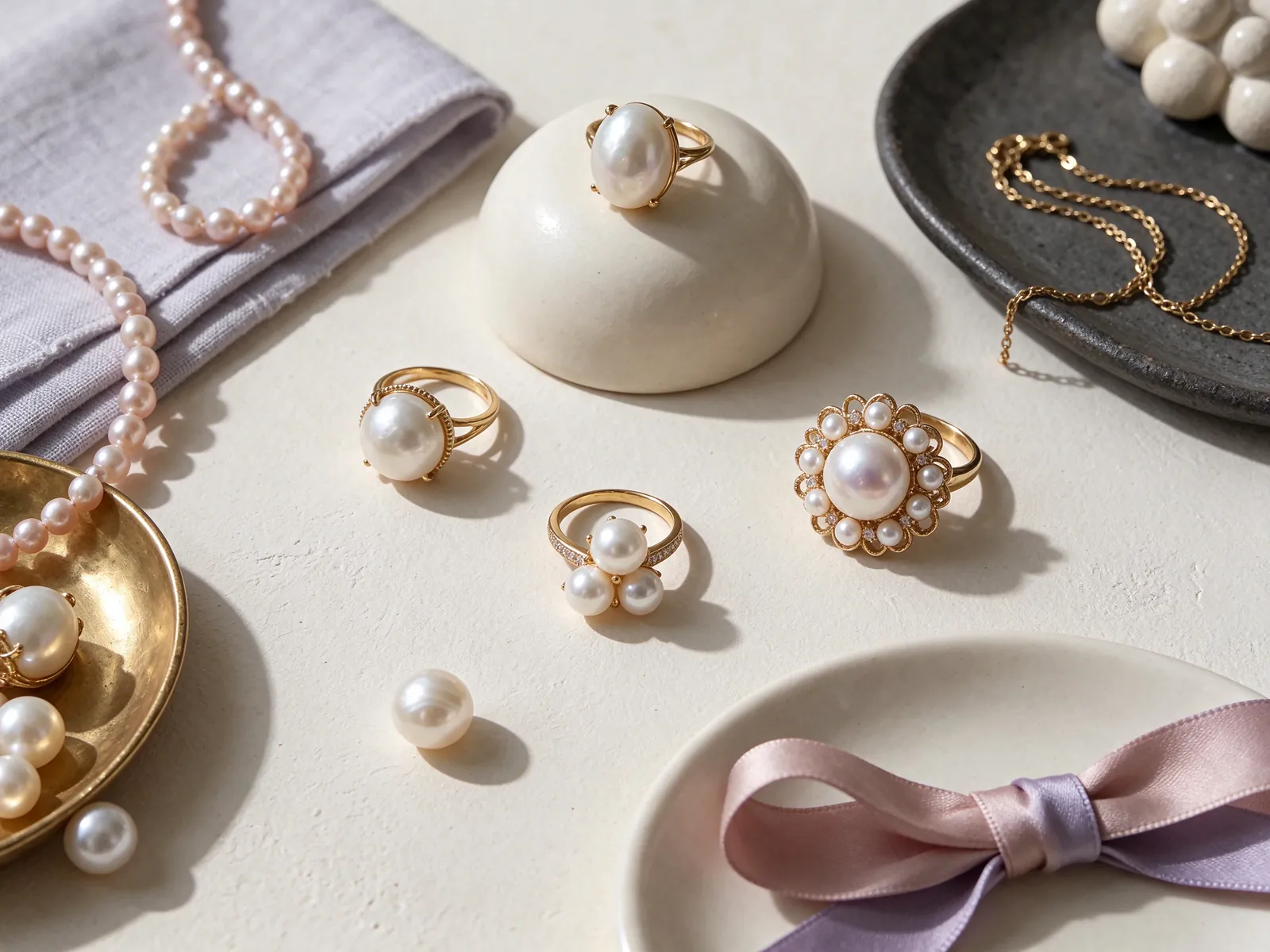
Test comfort and stability with gentle hand movements
Getting the ring past your knuckle is not the whole fit test. Let your hand relax, gently make a fist and notice how the ends sit against your skin and nearby fingers. Check whether the top continually shifts toward your palm. When removing the ring, handle the band instead of tugging the pearl. Everyday comfort is easier to judge through these simple movements than through a posed photograph.
If you prefer a substantial band, review wide band pearl ring sizing and compare the area that touches your finger. The open shape does not erase pressure from a wide contact surface or a projecting end. An uncomfortable spot can be a shape issue rather than only a size issue. Spreading the opening might alter the look while leaving the same contact problem in place.
Separate a turning top from a too-large size
An off-center pearl is a reason to observe balance, not proof that the ring will turn on every hand. If it does shift, consider band contact, finger shape and top position together. Do not choose a painfully tight fit just to hold the decoration upright. Clear pain or persistent pressure during a fitting is a reason to remove the ring and consider another fit or design.
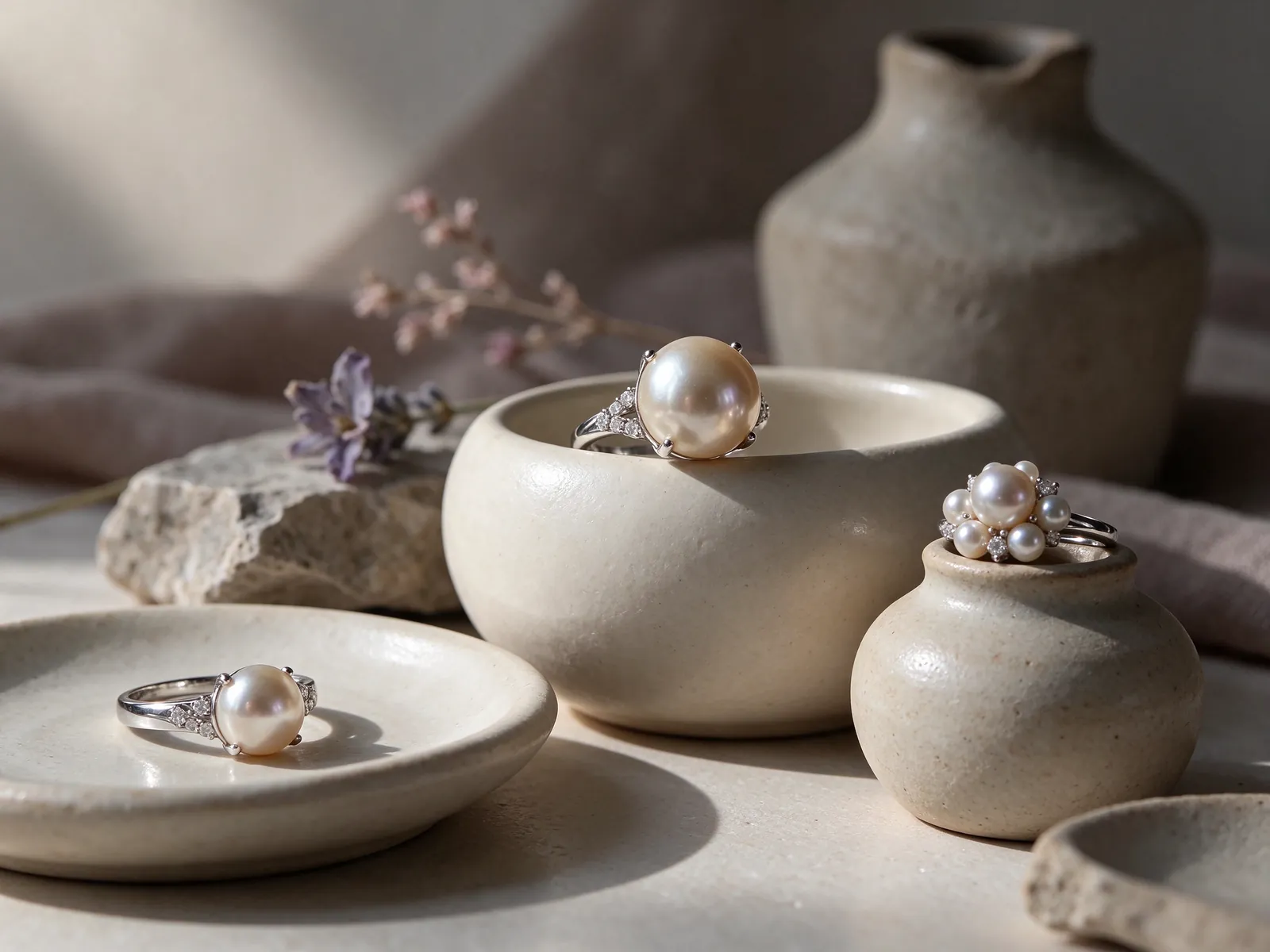
Look beyond the band to pearl height and practical clearance
View the ring from the side as well as above. The pearl and its setting may project beyond the band, and that projection can matter around sleeves or adjacent fingers. Looking at a pearl solitaire ring helps you consider proportions, but the pearl diameter does not define total setting height. For an individual ring, rely on stated measurements and a fitting rather than guessing dimensions from an image.
Consider the clothes and objects you handle regularly: a knit cuff, a bag strap, paperwork or a keyboard. During a fitting, observe ordinary light movements without deliberately catching fabric on the ends. A practical choice allows you to enjoy the design in suitable situations. It does not require treating the pearl or setting as something to test with impacts, pulls or friction.
Evaluate another finger on its own terms
Trying a different finger can avoid altering a ring, but repeat the full fit check there. The knuckle, base and neighboring fingers create a new relationship with the open ends and pearl. If the setting interferes with movement or presses sideways, a different band arrangement may be more useful than changing fingers again. Comfort should guide the choice, not a desire to make one silhouette work at any cost.
Get design-specific answers before buying
Ask the seller to identify the size system, whether the ring is intended to remain fixed-size and any expressly permitted adjustment method. If adjustment is allowed, clarify who should perform it and how its limits are described. Ask separately about options for an unsuitable fit. A shop's general resizing information should not be interpreted as permission to alter every open ring it discusses or sells.
While comparing pearl rings, use multiple views to understand the gap direction, underside and position of the setting. Those details help a conversation about fit, but a photograph cannot establish resizing suitability. For an online purchase, obtain clear sizing information and relevant arrangements before deciding. Do not select a clearly wrong size on the assumption that the visible opening will let you correct it at home.
Plan a gift around fit, not an assumed universal size
An open style does not remove the need to know the recipient's intended finger. A reference ring is useful only if it actually fits that location. If the gift must remain a surprise, ask about size choices and the conditions for handling a poor fit before purchase. The shape itself provides no assurance of exchanges, alterations or a fit that suits every wearer.

Let the open space lead the styling without reshaping it
A single open pearl ring can give a simple shirt or clean-lined outfit a clear hand-level focal point. Before adding jewelry on the neighboring finger, check that the pieces do not touch the pearl or ends. Position the design where it feels secure as well as visually balanced. A placement chosen only for a photograph may not be comfortable for normal movement.
A second ring on the same finger can push against the pearl setting or crowd the gap. Each may fit separately while the combined width feels restrictive. Try a non-adjacent finger, or echo the pearl with earrings instead. Altering the opening to make room for a stack confuses a styling preference with a structural change and should not be your fitting solution.
Choose when to wear it according to hand activity
Dinner, an office meeting and a day of lifting objects involve different contact with your hands. Consider the day's clothing and tasks, and remove the ring before housework, exercise or handling bulky items. If the ring only feels right when you hold your hand a certain way, return to the fit question rather than continually opening and closing the band to suit each occasion.
If the opening changes, stop before trying a home correction
A shifted end, changed gap or newly tilted pearl deserves attention without more bending. Set the ring aside separately and retain an earlier photograph if available. Describe any pulling, impact or attempted adjustment to the jeweler evaluating it. A small visible difference does not tell you what has happened elsewhere in the structure, and bending it back by eye is not a dependable remedy.
GIA places pearl at 2.5 on the Mohs hardness scale and says pearls should not be cleaned with ultrasonic or steam cleaners. This is useful care information, not a measure of how far an open metal band may be adjusted. Wipe the pearl gently with a very soft, clean cloth after wearing, and avoid perfume, hair spray, acids and excessive heat rather than using aggressive cleaning methods.
Consider the complete ring before deciding on resizing
Ask an evaluator to consider the band, both ends, pearl setting and present fit together. Discuss how a proposed alteration could affect the top's orientation, finger contact and overall comfort. Another size, another finger or another design may be a better choice. Do not use pliers, apply heat or attempt to remove the pearl yourself; an appropriate plan depends on the individual ring. To discuss pearl ring fit, contact Flint Jewelry on WhatsApp at +85260106207. Describe your intended finger, sizing system and the point of discomfort to make the inquiry specific; whether an alteration is suitable still depends on an evaluation of the individual ring.
| Decision point | Detail to confirm | Fitting observation | Avoid | Next action |
|---|---|---|---|---|
| Gap and design | Fixed sizing or explicit adjustment directions | Comfort without changing the shape | Treating empty space as sizing allowance | Ask for design-specific guidance |
| Sizing system | US or Japanese size; diameter or circumference | Size on the intended finger | Reading a Japanese number as a US number | Confirm the system before conversion |
| Finger clearance | Knuckle and base measurements | Ease of passage and resting comfort | Pressing the ends inward to stop slipping | Compare fit options |
| Setting clearance | Pearl profile and open-end positions | Contact with sleeves and neighboring jewelry | Spreading the gap for a stack | Use a combination with space between pieces |
| Visible change | Earlier shape and any impact or force | Shifted ends or altered setting angle | A home attempt to bend it back | Pause wear and request evaluation |
Pearl knowledge and authoritative references
GIA gives pearl a Mohs hardness of 2.5. The figure supports gentle pearl care; it is not an adjustment range for the metal band and does not rate the durability of the assembled ring.
Read the reference for this factFrequently asked questions
Is an open ring a safe choice when I do not know someone's ring size?
The open style does not establish a universal fit. Find out the intended finger or arrange a fitting, and ask about size-selection options before buying. Do not rely on the possibility of spreading the ends to make a surprise gift work.
Can I treat a Japanese size number as the same US size?
No. Identify the sizing system before using a conversion chart, and distinguish diameter from circumference if measurements are supplied. The gap does not change the need for correct sizing information or a design-specific fit check.
Will spreading the gap make a stacked set more comfortable?
Do not use bending as a styling adjustment. A second band changes the contact area and may press against the setting or ends. Try wearing the other ring on a different finger or use another jewelry pairing instead.
If I have already squeezed the ring, should I pull it back open?
Stop further adjustment and have the ring evaluated. Keep it separate and explain where you applied force and what changed. Reversing the movement by eye does not establish that the band and pearl setting have returned to a suitable condition.
Does pearl hardness tell me whether the ring is adjustable?
No. GIA's Mohs hardness figure describes the pearl, not the metal band's adjustment limits. It helps explain gentle surface care. Adjustability and resizing suitability depend on the particular ring design and its instructions or evaluation.
Updated: