
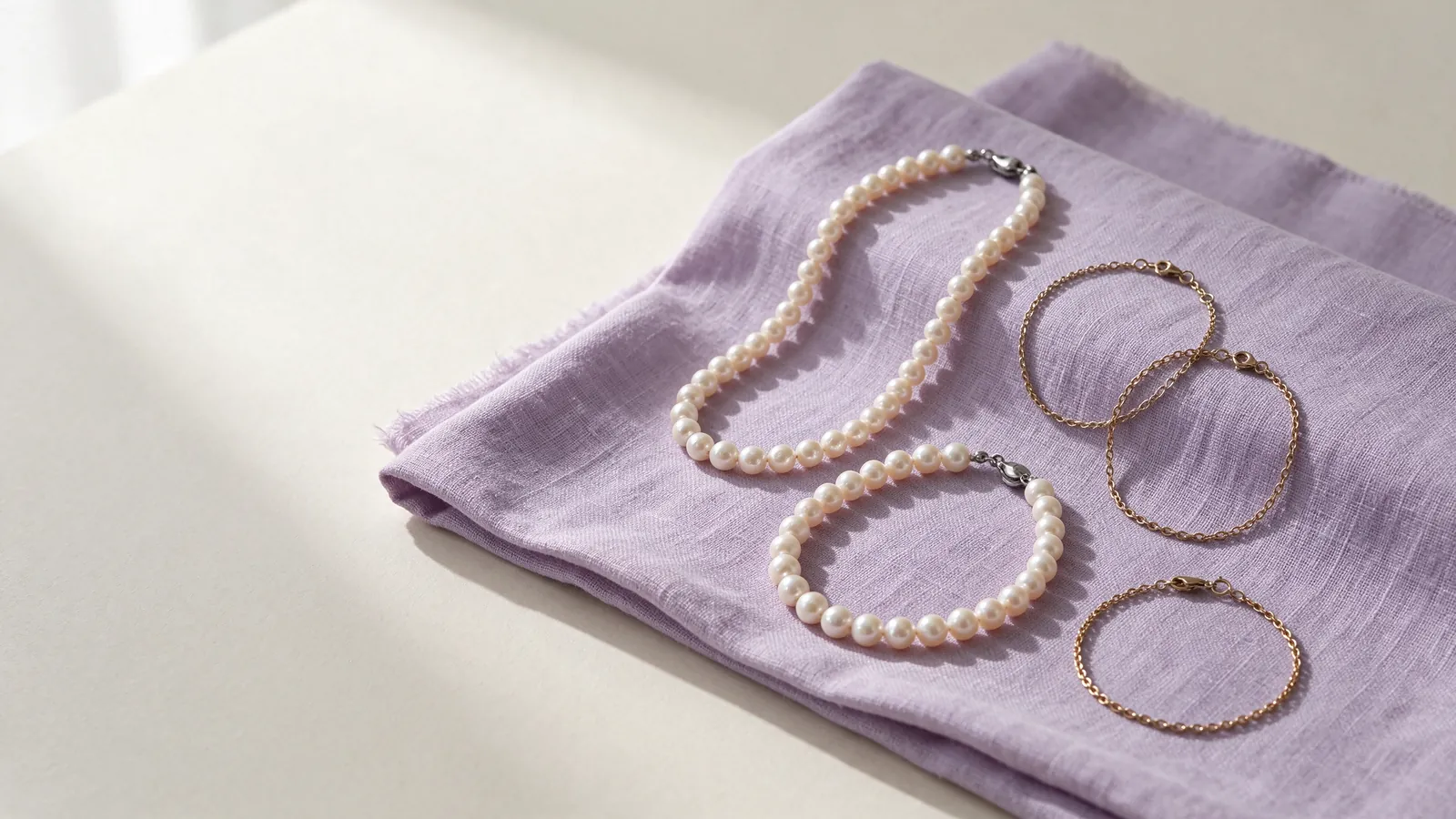
When comparing a sterling silver pearl bracelet with a 925 silver pearl bracelet, where is silver used?
Begin with the construction rather than treating the bracelet name as a complete specification. WSP's descriptions identify sterling silver in pearl bracelet clasps and chains, and include SV925 wording. Those descriptions apply to named components. They should not be extended automatically to every connecting ring, extension or structure between pearls. The pearl arrangement and the metal fittings answer different questions about the piece you are considering.
When comparing listings, draw up a short list of the visible parts and place the written material description beside each one. This makes an incomplete description easier to recognize without guessing. A photograph helps explain where a chain section sits, but its silver-colored shine cannot identify the material. If the listing only names the bracelet as a whole, ask the seller which components the wording includes.
For a sterling silver pearl bracelet or 925 silver pearl bracelet, what do the clasp and chain descriptions confirm?
Read the clasp and chain entries independently, including the scope of the word chain. On a bracelet made mainly of strung pearls, that word may describe a short section rather than the entire structure. Even identical material wording does not explain clasp operation, wrist clearance or pearl quality. Use it to answer the material question, then evaluate those other practical features on their own.
Understand the fit before choosing the silhouette
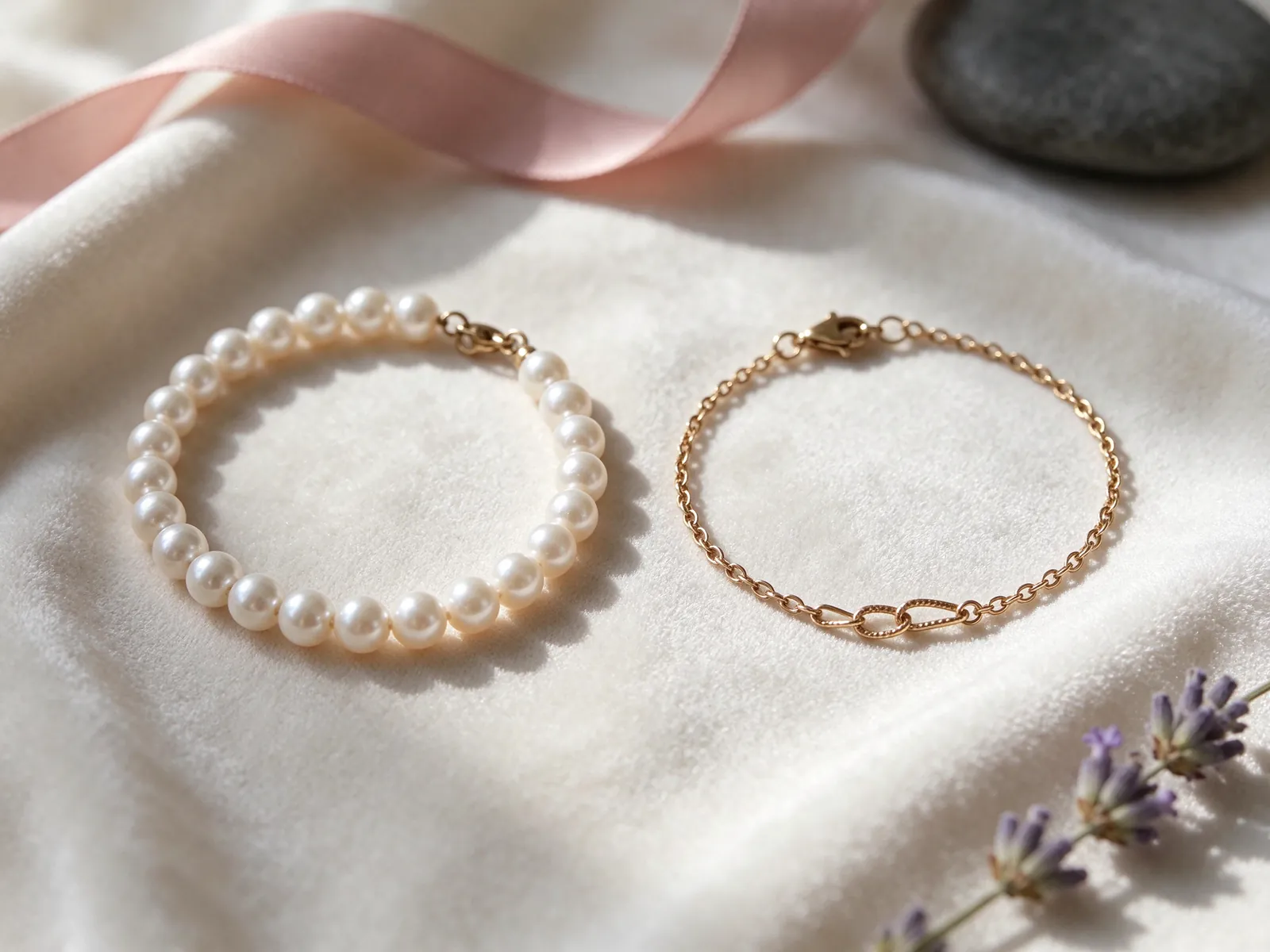
Think about how you want the bracelet to move: remain close to the wrist, shift gently or hang with a more relaxed drape. Measure the intended wearing position with a flexible tape that touches the skin without squeezing. Next, check whether the listing gives total length, an adjustment range or wearable length. A clasp and pearl arrangement take up space differently, so the number alone cannot predict comfort.
A wearing test should include the movements that matter to you. Rest your hands as if typing, bend the wrist gently and let your arm hang at your side. Watch for a clasp rotating underneath, pearls meeting a hard desk edge or the bracelet sliding into an inconvenient position. Do not choose looseness simply because it sounds comfortable; compare how the actual structure behaves during your routine.
Check sleeves and daily accessories in the same test
Try the bracelet with a buttoned cuff if you regularly wear shirts. Look for contact between the sleeve edge and the pearl arrangement when your wrist bends. A watch adds another moving object, so testing opposite wrists is a useful starting point. For a gift, learn whether the recipient works at a desk, wears fitted cuffs or already uses bracelets alongside a watch.
Build an outfit around color, not an assumed metal identity
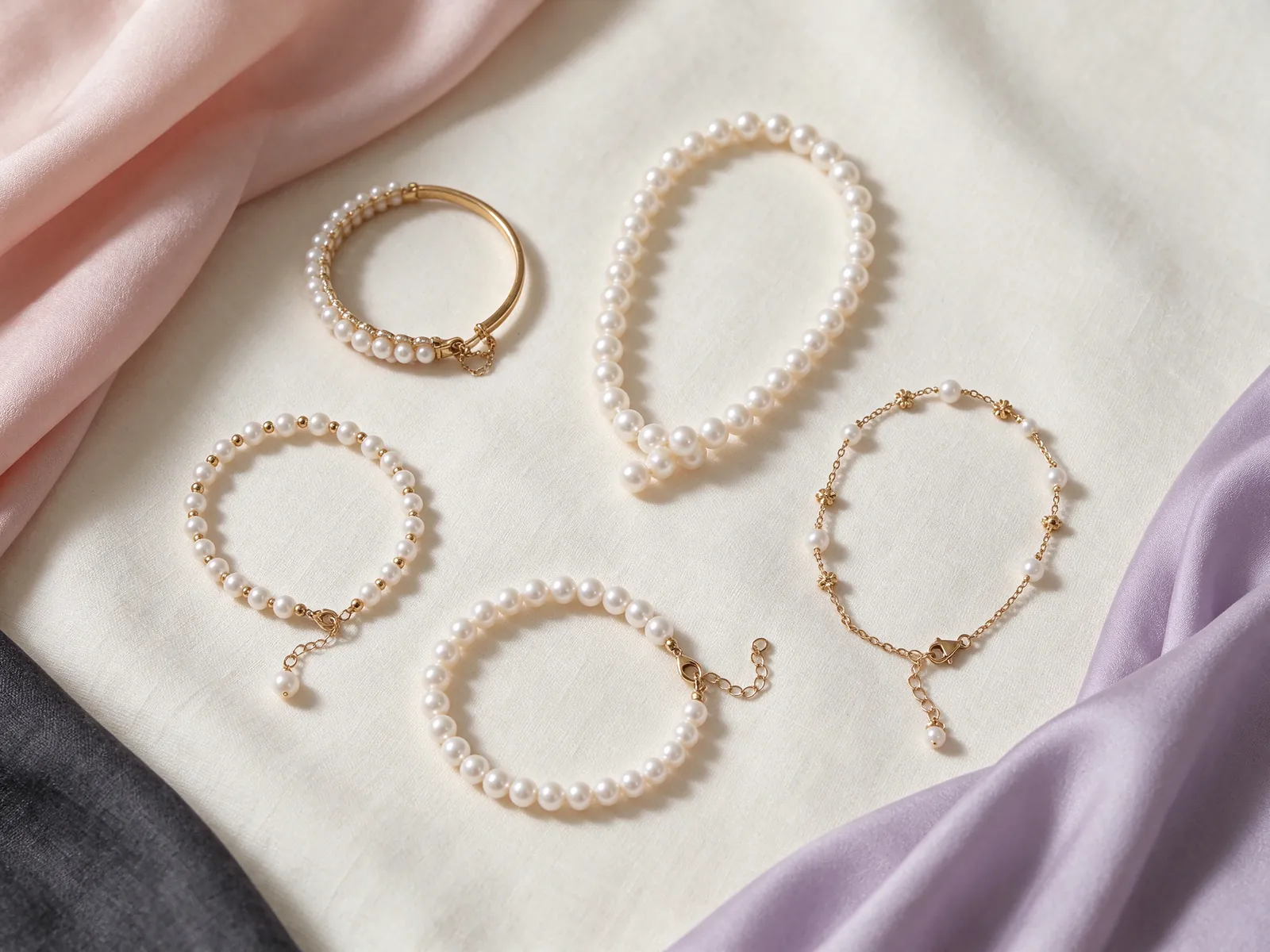
The phrase silver pearl bracelet can mean a visual direction to a shopper, even when a particular metal is not essential. Compare the piece in soft light and in the lighting where you normally dress. Clothing and backgrounds influence the impression. For related pale-color styling ideas, the white pearl bracelet topic helps you consider contrast and visual space without assigning a pearl type from a picture.
Choose what should lead the look: a line of pearls, a visible metal chain or another accessory. Against a navy jacket, gray knit or white shirt, the wrist can become a small point of brightness rather than a crowded display. If a sleeve already carries a busy pattern, consider how clearly the bracelet outline reads beside it. These are outfit decisions, not universal rules about which color suits a person.
Connect mixed finishes through one repeated detail
A ring or earring in a different metal color does not necessarily disrupt the outfit. Simple shapes, a clothing fastener or a bag fitting can provide a visual connection. Use both a full outfit view and a wrist close-up when comparing combinations: the first shows balance, and the second shows crowding. A coordinated appearance still leaves each item's material description to be read separately.
Keep silver, gold and platinum decisions distinct
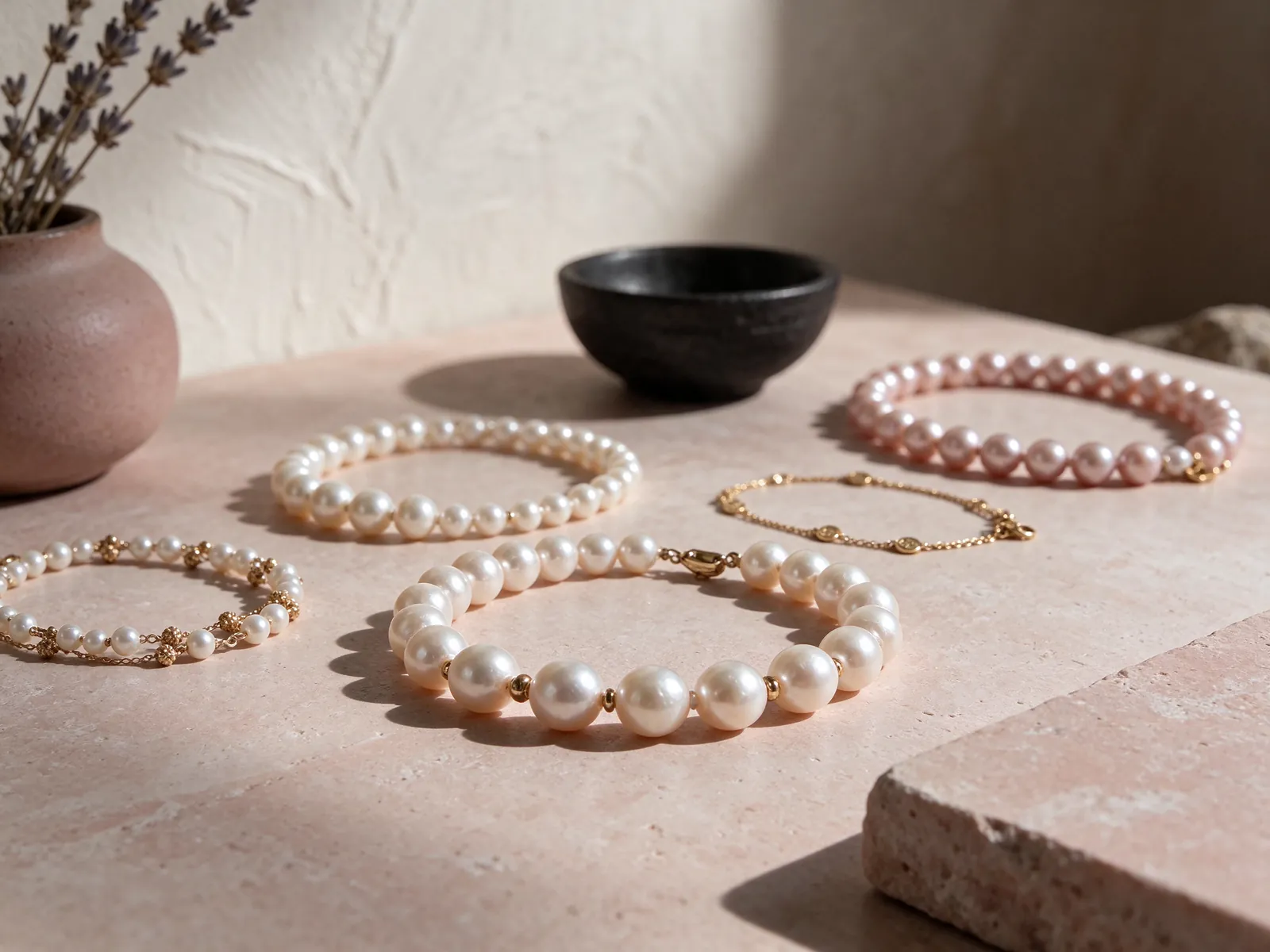
Identify the requirement behind your original search. If it is a named material, keep that requirement explicit; if it is the pale appearance, consider color separately. The pearl bracelet clasp guide helps you evaluate fastening needs separately from the material name. Flint Jewelry's options are 18K 750 white gold, 18K 750 yellow gold, 18K 750 rose gold, PT950 platinum and PT900 platinum. They are separate from the silver bracelet category explained on this page.
The 18k gold pearl bracelet guide is relevant when you want to organize white, yellow or rose-colored styling preferences around gold. The platinum pearl bracelet guide is a separate direction when platinum is the specified material. Compare each against your intended silhouette and daily use instead of assuming a single material ranking can settle the choice. Fastening, visible chain proportions and pearl arrangement continue to matter.
Do not merge different numbered labels from search results
Similar thumbnails can sit beside very different material names. Before comparing their style, identify the label and the component it describes. A 10k gold pearl bracelet is another material-comparison topic, not a synonym for a silver bracelet or one of Flint Jewelry's metal options. Keeping separate notes for material, color and construction prevents an attractive image from replacing the information you actually need.
Look beyond the fittings to the pearl arrangement
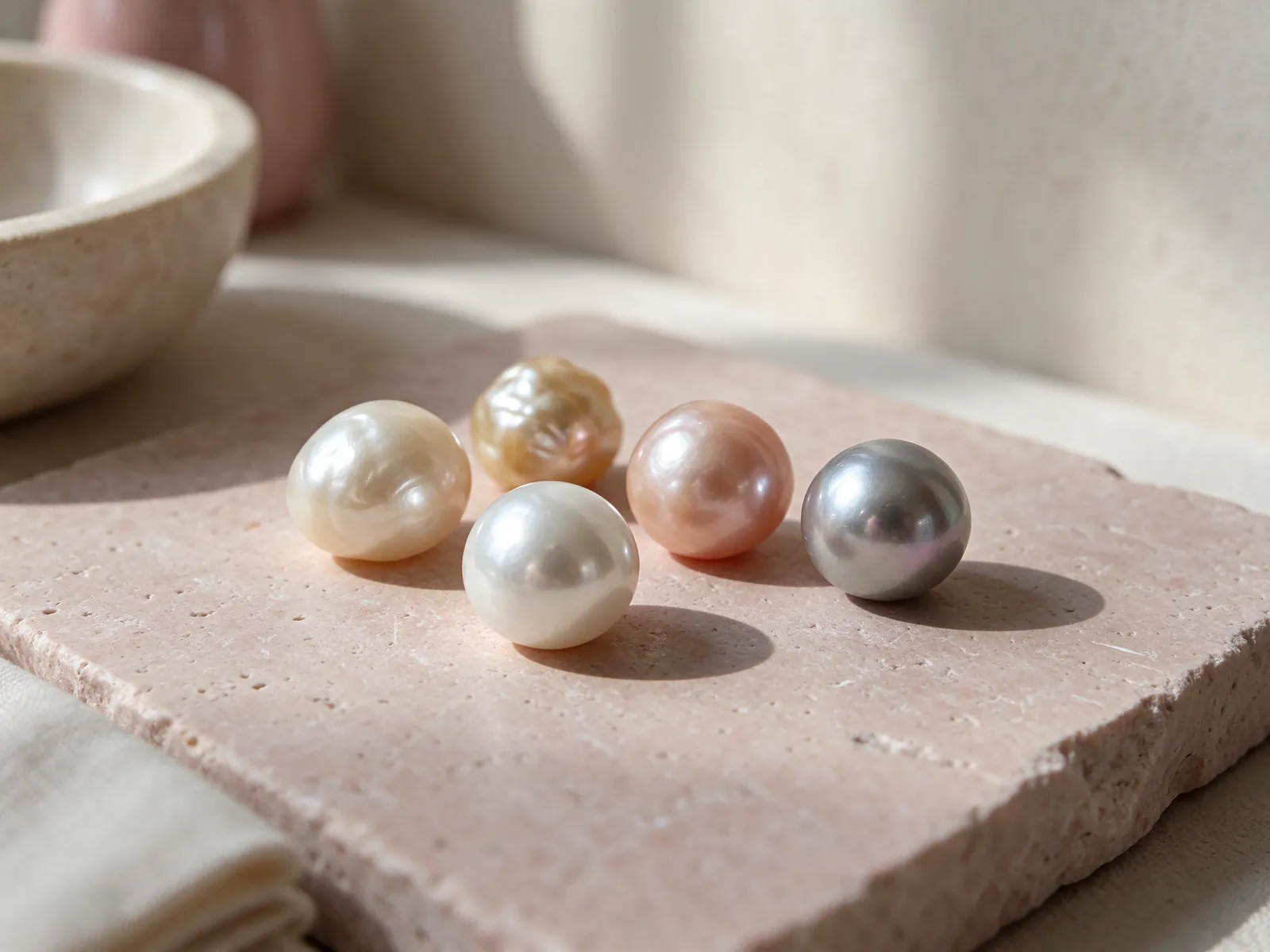
GIA identifies seven pearl value factors: size, shape, color, luster, surface quality, nacre quality and matching. These give the pearl part of the comparison its own structure. Follow the arrangement from one end to the other, looking at how reflections, shapes and color relate. A bright clasp is only one visual element; it should not distract you from the pearls that form the bracelet's main pattern.
Try to compare images taken under similar lighting conditions. A brighter exposure can make one listing look more vivid without answering how the pearls compare in person. Examine visible surface details and decide whether you prefer regular repetition or varied contours. Neither preference establishes pearl origin or natural-versus-cultured identity. Photographs also cannot provide an unstated diameter or demonstrate that a certificate exists.
Evaluate the overall rhythm and the close-up separately
A bracelet can look different laid flat and wrapped around a wrist. Assess both views to see whether the arrangement still gives the effect you enjoy. GIA distinguishes bodycolor, overtone and orient, noting that not every pearl shows all three. Subtle color differences should therefore remain a visual observation rather than a guessed pearl classification. Describe the matching and outlines you want in plain, specific terms.

Plan care for the pearl-and-metal combination
Pearl ranks 2.5 on the Mohs hardness scale according to GIA, which also states that pearls should never be cleaned in ultrasonic or steam cleaners. The hardness figure is relevant to everyday contact at the wrist, not a guarantee or a whole-bracelet durability rating. Think about adjacent jewelry, desk surfaces and the cleaning process as separate considerations. A method designed for metal alone may not suit the complete piece.
Use a very soft, clean cloth to wipe pearls after wearing. GIA advises avoiding acids, perfume, hair spray and excessive heat. While applying sprays, keep the bracelet out of their path and put it on afterward. Store it separately from items likely to rub against the pearls. The presence of silver-colored fittings should not lead you to clean or store it as though pearls were absent.
Include the string and connections in your routine
If strung pearls are cleaned with water, allow the string to become completely dry before wearing, as GIA advises. When handling the bracelet, notice a clasp that is not closing or a visible change at a connection without repeatedly tugging to test it. If something appears wrong, stop wearing the piece and consult a professional familiar with its construction rather than improvising a treatment for every component.
Make a buying brief that reflects real use
Write down three types of preference: a requirement you will not change, an appearance you want and a question that needs a wearing test. Specified material, coordination with a work wardrobe and ease of fastening belong to different groups. Keeping them separate stops a sterling silver label from answering questions it cannot address. Compare the piece for your regular routine first, then consider less frequent formal occasions.
A gift comparison benefits from knowing the recipient's current jewelry colors, watch use and usual sleeves. Ask whether they favor closely matched pearls or a varied outline, and whether bracelets tend to interrupt desk work. A presentation image does not reveal those preferences. Clear material descriptions are important for a material-focused shopper; a style-focused shopper may care more about proportions and how the bracelet relates to existing accessories.
Use daily-wear details in a customization conversation
When discussing Flint Jewelry's gold and platinum directions, bring the way you measured your wrist, examples of your usual cuffs and the colors of pieces you already wear. Explain which aspects of a bracelet appeal to you and which movements you find inconvenient. Keep the material, pearl description and design shape distinct before bringing them together. A practical brief is more informative than a request for a silver-looking bracelet alone. Contact Flint Jewelry on WhatsApp at +85260106207 to discuss 18K 750 gold or PT950 and PT900 platinum directions, bringing your preferred bracelet shape and everyday wearing habits to the conversation.
| Decision area | Useful information | Real-life test | Unsupported shortcut |
|---|---|---|---|
| Metal components | Clasp, chain and connection descriptions | Identify each part and its role | Assuming the title covers every fitting |
| Wrist fit | Meaning of length and arrangement | Bending, typing and lowered hand | Treating equal lengths as equal comfort |
| Outfit color | Appearance in familiar lighting | Compare cuffs, watch and other jewelry | Using shine to identify a metal |
| Pearl arrangement | Luster, surface, outlines and matching | Whole bracelet and close-up views | Guessing pearl identity from a photograph |
| Care routine | Pearl and string requirements | Soft wiping and separate storage | Applying a metal-only process to everything |
Pearl knowledge and authoritative references
GIA places pearl at 2.5 on the Mohs hardness scale and states that ultrasonic and steam cleaners should never be used on pearls. This informs care of a bracelet that combines pearls with metal fittings.
Read the reference for this factFrequently asked questions
Can a silver-colored clasp tell me the bracelet's material?
No. Color and reflections in a photograph do not identify the metal. Read the clasp description, then check the chain and other fittings separately so that a visual impression does not replace component information.
What should I test if I type while wearing bracelets?
Rest your hands in your usual typing position and check contact with the desk, clasp rotation and movement toward the hand. Include your normal sleeve and any watch in the comparison rather than judging a still wrist photograph alone.
Do more uniformly shaped pearls prove a particular origin?
No. Shape and matching are useful visual comparison points, but they do not establish origin or natural-versus-cultured identity. An explicit description is needed for those questions; an orderly arrangement is not a certificate.
When can I wear strung pearls after cleaning with water?
GIA advises that the string must be completely dry before wearing. Do not rely only on the visible pearl surfaces appearing dry. Pearl care also excludes ultrasonic and steam cleaners, even when the piece includes metal fittings.
What if I want the pale look but not specifically silver?
Record the visual color preference separately from material. Flint Jewelry's choices are 18K 750 white gold, 18K 750 yellow gold, 18K 750 rose gold, PT950 platinum and PT900 platinum. Compare those distinct directions through your outfit, desired structure and wearing habits rather than calling them silver.
Updated: