
How do petal proportions shape a pearl flower ring, a floral pearl ring or a flower shaped pearl ring?
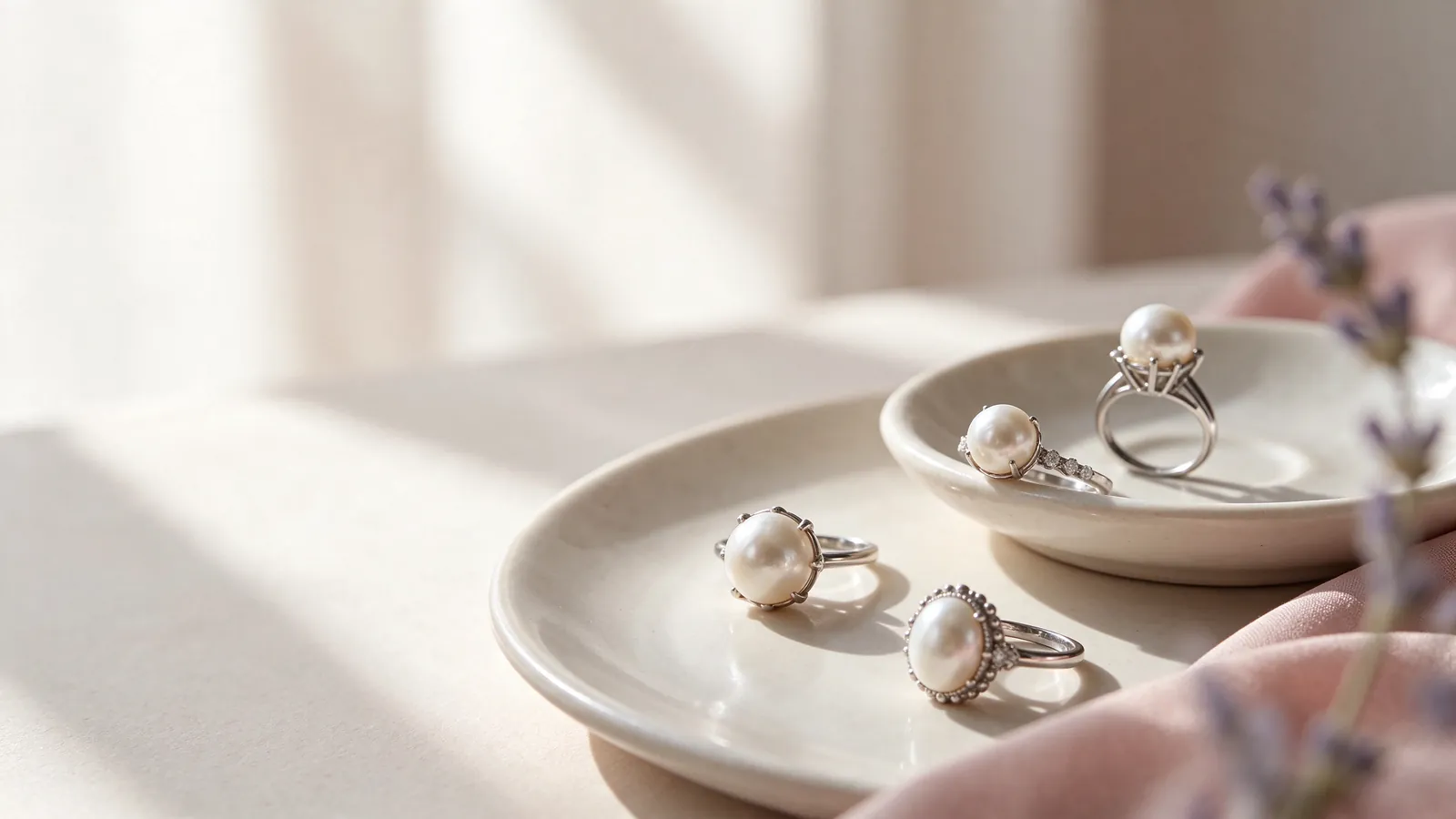
The appeal of a pearl flower ring comes from how its center and outline work together. Look first at the space between the pearl and the outermost petals. An open arrangement gives the flower room to spread, while a tighter frame draws attention toward the center. When reviewing pearl rings, compare images at a similar distance and then look at the outline on your own hand; a tightly cropped picture can exaggerate decorative scale.
In a floral pearl ring, evenly arranged petals create a clear center, but an offset arrangement can also look coherent. Decide whether you prefer an orderly silhouette or a more natural-looking spread. For a flower shaped pearl ring, the useful question is not how many petals it has, but where they end relative to your finger. Consider the visible pearl surface, the gaps in the frame and whether the widest edge crowds the neighboring fingers.
When trying on a pearl flower ring, how should a floral pearl ring or flower shaped pearl ring sit on your finger?
Begin with an unposed, relaxed hand. Bring your fingers together, spread them and gently bend them. Then hold your phone and close your hand lightly. Notice pressure at the finger gaps and any tendency for the flower to rotate. A broad head can still feel suitable, but repeatedly needing to straighten it is a meaningful part of the comparison.
Explore the profile that a front-view photo leaves out
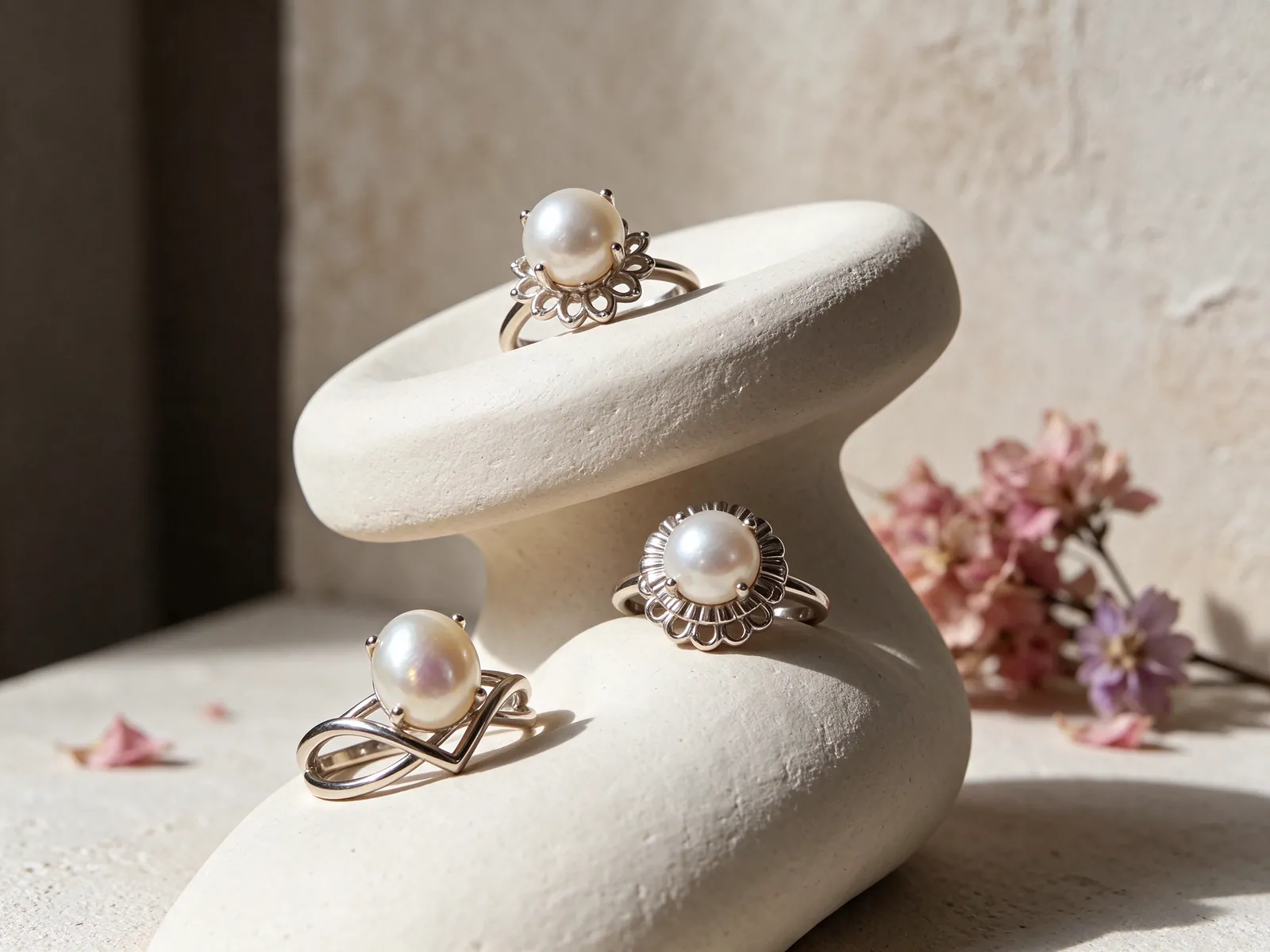
A side view reveals the height of the pearl and the way petals rise from the band. Look for projecting edges and the position of the underside against the finger. These details can affect how a ring meets a cuff, a pocket or a bag opening. Do not assume that a surrounding flower shields every part of the pearl. Its exposed surface may still meet objects, regardless of how enclosed the outline appears from above.
Use a sleeve you actually wear for a gentle movement check, especially if it has lace, knit loops or a narrow opening. Avoid deliberately dragging the fabric over the setting. If you want to compare another spreading motif, a pearl butterfly ring offers a useful visual contrast; a pearl tiara ring can help you think about an outline focused into an arc. Judge their space on the hand rather than assuming one theme is inherently more durable.
Identify the pressure point, not just the overall feeling
Holding a mug, typing and putting on a jacket each move the hand differently. If you feel contact, identify whether it is under the head, along the band or beside a petal. Try another outline with the same movement. Keep the test light: comfort checks do not determine impact resistance or replace an inspection of the jewelry.
Evaluate the pearl without letting the petals do all the work
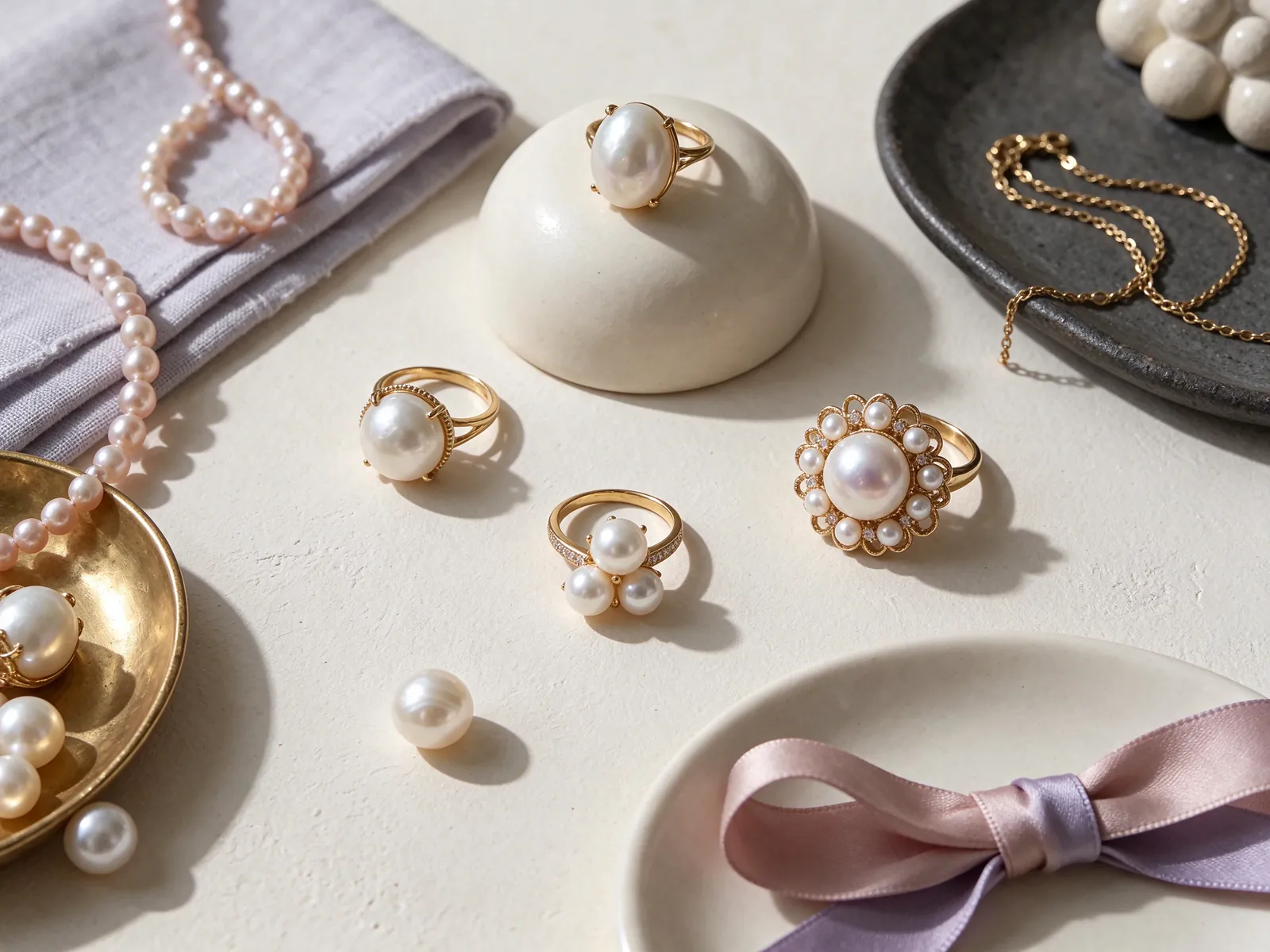
Reflective petals can create lively highlights, so give the pearl its own attention in gentle light. Rotate your hand slowly and consider the sharpness of reflections, visible surface features and color against the frame. GIA identifies seven pearl value factors: size, shape, color, luster, surface quality, nacre quality and, for multi-pearl jewelry, matching. These categories help organize questions about a pearl, but they do not turn a photograph into a reliable quality grade or a laboratory assessment.
Try a neutral background as well as your hand to separate the pearl's appearance from surrounding colors. If you own pearl earrings or a pendant, consider the combined color impression rather than comparing isolated online photos. Neither shape nor color by itself establishes pearl origin or natural-versus-cultured identity. The floral setting does not identify a pearl type either. Review the particular piece's written description and ask directly about the stated pearl identity and treatment information.
Prioritize light that matches the occasion
A ring intended for everyday indoor wear should appeal under ordinary room lighting, not only a display spotlight. Observe whether the center still draws your attention as the metal's bright reflections move. Screen color settings and photographic lighting also influence what you see. Avoid interpreting a difference between images as proof that one pearl is better than another.
Decide how much metal color and texture you want to see
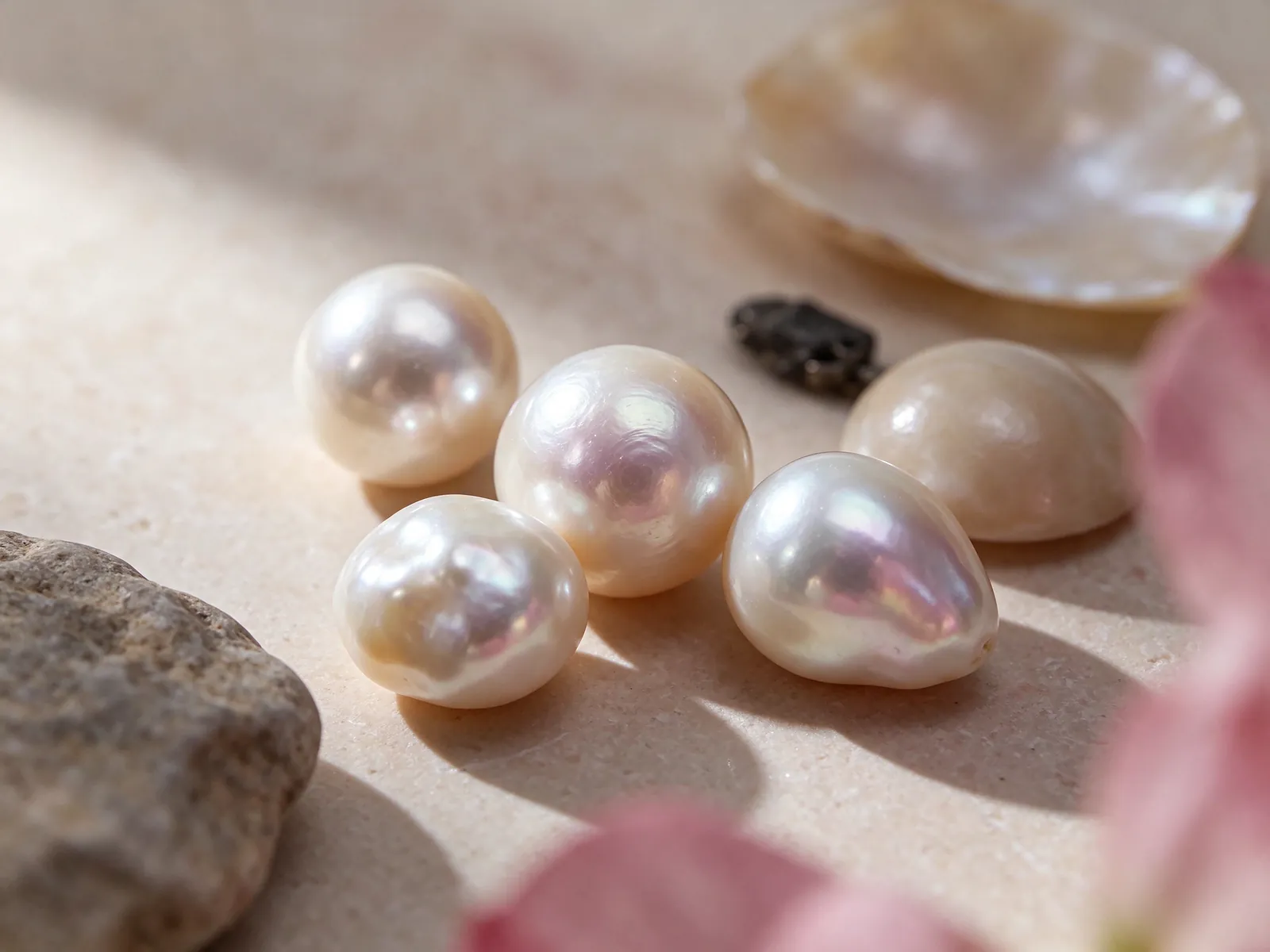
The frame's metal color helps set the mood of a floral ring. White-toned metal can make the outline feel crisp; yellow gold creates a warmer impression, and rose gold may echo warmer clothing colors. This describes visual relationships rather than pearl quality. Compare the flower with a watch, plain ring or earrings you already wear. You may prefer a coordinated color, or find that a restrained contrast makes the flower easier to notice.
Beaded borders, engraving and overlapping petal surfaces reward a closer look. A smoother edge emphasizes the outline instead. Do not read tiny reflections as proof of additional gemstones: a beaded border can be a metal detail. For metal discussions, use the explicit names 18K 750 white gold, 18K 750 yellow gold, 18K 750 rose gold, PT950 platinum and PT900 platinum. Those names alone cannot establish the ring's weight, petal thickness or comfort on your finger.
Let your everyday fabrics guide the amount of detail
A simple shirt can leave space for a finely decorated edge. An embroidered or densely patterned sleeve may benefit from a flower with a more readable silhouette. Ask whether you want the outline noticed from a distance or the texture discovered up close. That distinction gives you a clearer decision than choosing every available kind of ornament at once.
Build an outfit around one floral focal point
Start with the flower alone on one hand, then add accessories gradually. Check the distance between ring heads as you move; a spreading petal can meet a neighboring ring even if both look well spaced in a photograph. A plain blouse and simple earrings can make the flower easy to read during the day. For a dressier outfit, a clean cuff area can draw attention to the hand without requiring matching flowers in every accessory.
If your preference is for a motif that changes with movement, compare the direction of a pearl charm ring. For a more defined block-like outline, consider how a pearl signet ring differs from petals radiating around a center. These are design comparisons, not fixed rules about formality. When clothing already has a busy pattern, remove extra accessories one at a time and check which arrangement gives the flower enough space to remain the intended focal point.
Review the whole outfit before relying on a close-up
A close photograph magnifies petals, while a full-length view shows their actual role in the outfit. Try moving a substantial watch to the other hand if both pieces compete. A pearl cocktail ring guide can offer another perspective on a pronounced focal point, but visual drama should not outweigh a ring's compatibility with your everyday movements.
Connect sizing with the intended finger and the recipient's habits
Choose where you plan to wear the ring before judging fit. Different fingers leave different amounts of space around a flower. Test the band over the knuckle and then check stability with the hand relaxed. A head that rotates or presses into a finger gap can feel unsuitable even when the band goes on easily. Compare on the same finger, noting whether the issue is band tightness, pressure beneath the head or contact along the outer petals.
When buying a gift, the recipient's usual hand, clothing and activities offer more useful guidance than a generic guess about size. A photo can reveal a style preference but cannot reliably measure a finger. A larger band is not automatically a solution, and later resizing should not be assumed. The actual band, floral structure and pearl assembly may affect whether an adjustment is suitable, so discuss sizing for the individual piece rather than relying on a general promise.
Bring specific preferences to a general style conversation
Explain whether you like open or concentrated petals, which metal colors you normally wear and what finger you have in mind. Mention regular sleeve styles and hand-intensive activities. If you have a measurement, identify its hand and finger. This practical description helps communicate fit and style needs without treating a single size number as more important than pressure or rotation.
Clean gently and watch for changes around the floral edges
Check the petal recesses for trapped fibers or dirt after wear. GIA places pearl at 2.5 on the Mohs hardness scale and states that pearls should never be cleaned in ultrasonic or steam cleaners. A very soft, clean cloth is suitable for routine wiping. Avoid probing a tight gap next to the pearl with a hard tool. If debris remains lodged, ask about an appropriate cleaning method instead of scraping or prying at the setting.
Apply cosmetics and fragrance before putting on the ring, and keep acids, hair spray and excessive heat away from the pearl. Remove the piece for household cleaning, heavy lifting or work that could knock your hand. Separate it from hard objects in storage to reduce rubbing against other jewelry. The petals contribute to the appearance of the ring; they do not eliminate the need to protect the pearl from avoidable contact and unsuitable cleaning.
Stop wearing a ring that starts to snag or feel loose
If an edge begins catching fabric or you notice unusual movement or sound near the pearl, pause wear and arrange an inspection. Do not repeatedly shake the ring to confirm the change. Record the location and what you were doing when you noticed it. Attempting to glue a pearl or bend a petal back can make further attention more difficult.
For general style and sizing questions, contact Flint Jewelry on WhatsApp at +85260106207 with your preferred petal outline, metal color and intended finger.
| Checkpoint | Look for | Try gently | Use it to decide |
|---|---|---|---|
| Outer petals | Space between the pearl and the flower edge | Bring fingers together | Whether the spread suits your hand |
| Profile height | Where the pearl and petals project | Put on a familiar sleeve | Whether the profile fits regular clothing |
| Decorative border | A clear silhouette versus close-up texture | Move beside soft fabric | How much detail your wardrobe needs |
| Band and head fit | A centered flower on the intended finger | Hold a phone and lightly bend the hand | Which part causes pressure or rotation |
| Accessory balance | One readable focal point on the hand | Check contact with nearby rings | What to add or remove from the outfit |
Pearl knowledge and authoritative references
GIA gives pearl a Mohs hardness of 2.5. Surrounding petals do not make the pearl suitable for abrasive care, steam cleaning or ultrasonic cleaning.
Read the reference for this factFrequently asked questions
Should short fingers always wear a small floral outline?
There is no reliable rule based only on finger length. Consider the total spread, visible spaces and how the petals meet neighboring fingers. View the entire relaxed hand and test movement instead of choosing solely from a close-up image.
How can I tell whether the flower is too tall for daily wear?
Inspect the side profile and try familiar movements with your usual cuffs. Notice repeated contact when using a pocket, holding a cup or putting on a jacket. There is no single height that suits every routine, and comfort testing should remain gentle.
Does a floral setting identify the kind of pearl?
No. A flower motif does not establish pearl type, origin or natural-versus-cultured identity. Read the individual piece's pearl description and ask specific questions. Appearance alone cannot replace that information.
Is a floral ring suitable for a surprise gift when I do not know the size?
First learn the intended finger and the recipient's normal wearing habits. Photographs can help with style but not reliable sizing. Do not assume a loose fit or future resizing will solve the issue; discuss the actual piece's sizing options.
What should I do if a petal suddenly catches my sleeve?
Stop wearing the ring and have the changed edge inspected. Note where it caught and whether you noticed movement near the pearl. Avoid bending the petal yourself or repeatedly dragging fabric over it to test the problem.
Updated: