
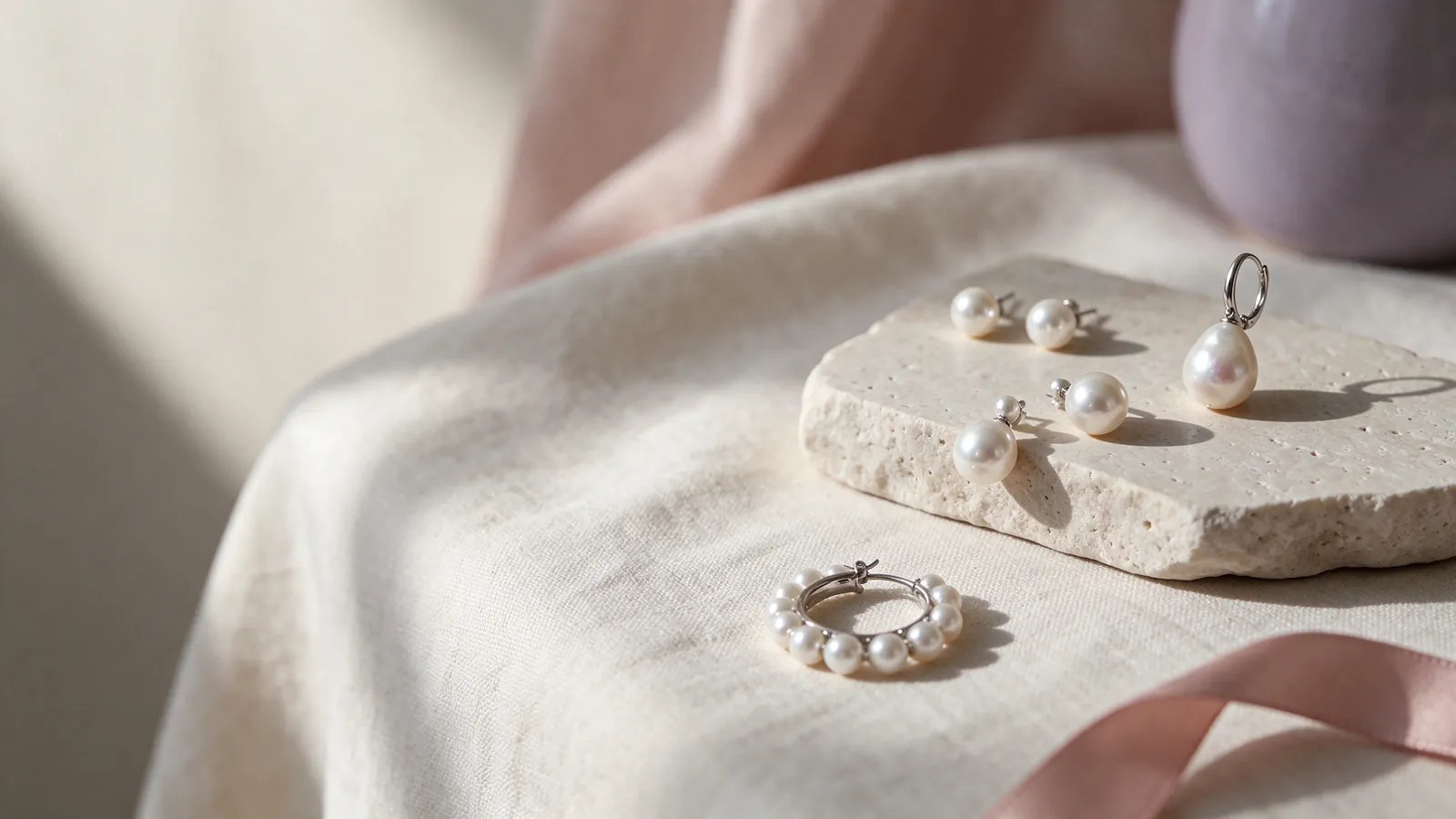
Finding visual balance in diamond halo pearl earrings and pearl halo stud earrings through pearl size and border width
Think of the pearl and halo as two parts of one silhouette. The center supplies a rounded focal point; the border determines how far the design extends beyond it. A fine outline lets the pearl take the lead, while a more visible frame can become an equal part of the composition. When browsing pearl earrings, compare the outer edge of the entire piece instead of relying on the center pearl's diameter to explain its presence. To discuss your preferred pearl-to-frame balance, contact Flint Jewelry on WhatsApp at +85260106207 and share your pearl earring design preferences.
Look next at the spacing. A border tucked close to the pearl can read as a compact unit, while openings between the center and frame can create a lighter-looking arrangement. That is a visual distinction, not a statement about actual weight. Use similarly scaled photographs when comparing designs, and ask which relationship you enjoy: a clearly dominant pearl or a coordinated pattern of pearl, space and outer detail.
How setting height changes the side profile of diamond halo pearl earrings and pearl halo stud earrings
From the side, notice the pearl's rise above the frame, the layers beneath it and the location of the post. Two earrings with similar front outlines can have quite different profiles. Height alone cannot establish comfort or weight. A useful comparison combines the side silhouette with information about the assembled piece and, when possible, your own experience of how the backing supports it on your earlobe.
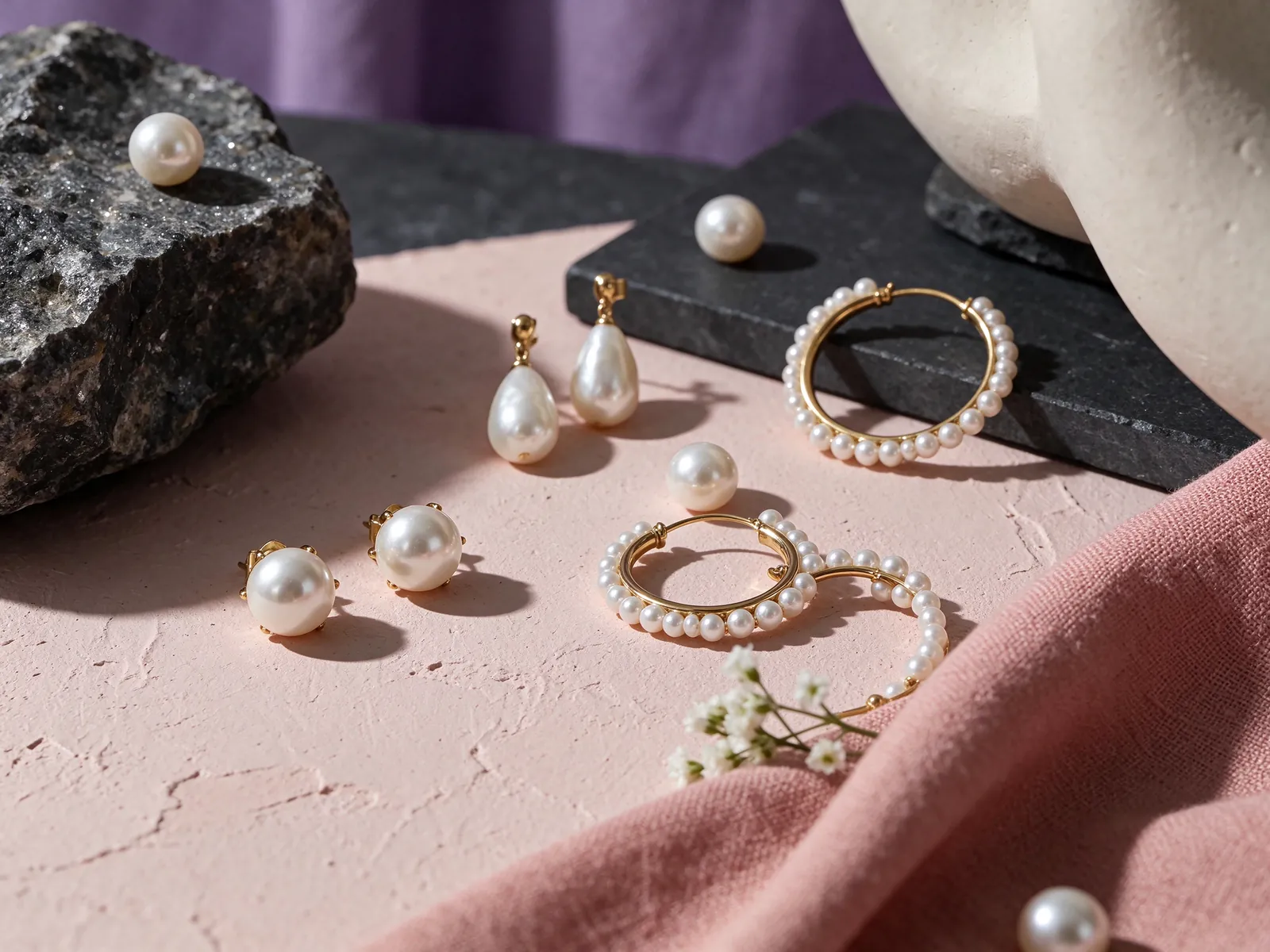
What makes the border a halo?
A halo creates a surrounding frame for the pearl. Isolated diamonds above a stud or along a separate drop do not automatically create that arrangement. The broader term pearl and diamond earrings includes many placements, so examine where the diamonds sit in relation to the center. If enclosure is the feature you want, describe it directly instead of assuming that any diamond-accented pearl earring will deliver the same outline.
A surrounding border may have a textured or segmented edge rather than a perfectly smooth circle. What matters visually is the way those elements frame the center. Keep that judgment separate from identifying materials: a tiny highlight in a photograph could come from polished metal, and its brightness cannot establish that it is a diamond. Written gemstone details and the visible composition answer different questions.
Distinguish a petal accent from an enclosing floral outline
Designs described as floral pearl earrings can use petals that spread outward, cluster on one side or surround the pearl. Compare the gaps and the directions of the petals rather than treating a flower name as proof of a halo. A soft petal outline may appeal to someone who dislikes a strict circular edge, while a clear enclosing border may suit someone seeking a more contained composition. The actual layout is the deciding feature.
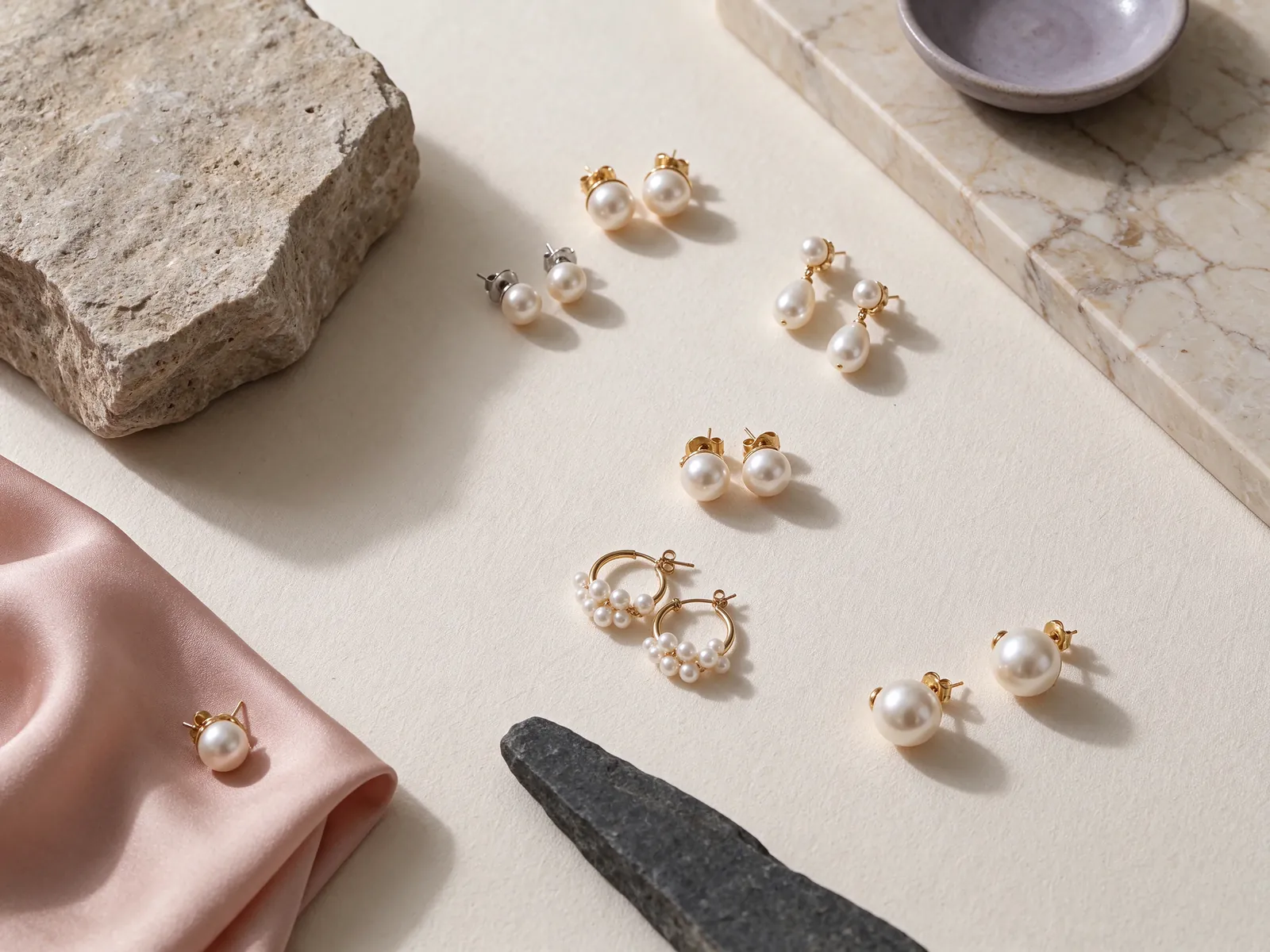
Keep the center pearls in the quality conversation
A bright border can draw the eye first, but the pearls still deserve their own assessment. GIA's seven pearl value factors are size, shape, color, luster, surface quality, nacre quality and matching. With earrings, compare the two centers side by side. Notice whether their shapes, overall color impressions and reflected highlights work together, rather than assuming that identical surrounding frames mean the pearls are equally well matched.
Use soft lighting to look past the setting's sparkle. Observe the sharpness of reflections and where surface features appear in the front view. A feature close to the mounting may have a different visual impact from one in a prominent central position. Avoid inferring species, origin or natural-versus-cultured identity from roundness, color or the halo style. Those identities cannot be established simply by liking the appearance of the finished jewelry.
Notice color components without confusing them with the setting
Bodycolor, overtone and orient are different components of pearl color, and not every pearl has all three. Begin with the basic overall impression and then change the angle slightly. Clothing and surrounding metal can contribute reflected color, so a single colored highlight should not be treated as a complete description of the pearl. For wardrobe choices, compare the overall contrast between pearl and border without using it to guess origin or identity.
Evaluate the entire outline on your own ear
Pearl halo stud earrings occupy more visual space than their center pearls alone. Check where the outer frame falls in relation to your earlobe, especially below the piercing. A straight-on picture shows coverage; a side angle reveals forward tilt and projection. Because piercing position and earlobe shape differ, a photographed model provides styling context rather than a prediction of how the same silhouette will rest on you.
Consider the practical sequence of wearing the earrings: holding the backing, placing the post, moving hair and turning toward a collar. A wide-looking frame is not necessarily heavy, and a small-looking stud is not necessarily comfortable for every person. The post, backing and construction all contribute. If the piece causes discomfort or leans noticeably, tightening the backing indefinitely is not a reliable way to resolve the issue.
Check the side profile with everyday accessories
Glasses can share space with the side of an earring, and loose hair may brush a detailed outer edge. Check those interactions using the accessories and hairstyle you actually use. If you adjust a mask strap, take care not to catch the frame or backing. These checks are about your routine and preferences; they are more useful than expecting a single setting style to be universally suitable.
Choose a focal point for your neckline and hairstyle
For an everyday outfit, try letting the halo be the principal decorative detail near your face. A plain top or clean jacket neckline makes the outline easier to read without requiring every other accessory to match it. Avoid treating apparent size as an occasion rule. A narrow sparkling border can be noticeable, while a broader frame against solid fabric can look orderly rather than overly dressed up.
For an evening outfit, decide whether you want a concentrated shape at the ear or a line that extends and moves. Designs such as pearl fringe earrings create a useful comparison with halo studs because they emphasize downward length rather than enclosure around a center. Consider the space left by the collar and hair. If your clothing already has sequins or detailed embellishment, adding several competing bright pieces may obscure the outline you liked in the first place.
Compare the outfit view with the detail view
A close photograph is helpful for construction and border detail, but a view that includes the shoulders reveals the overall balance. Use both when thinking about styling. Loose hair, a side part and an updo expose different amounts of the earring. Judge the design with your usual choices rather than assuming you will change your entire hairstyle every time you wear it.
Explore alternatives by direction, not only by motif name
The appeal of a halo may be its symmetry and contained shape. If you prefer an outline that reaches to the side or upward, compare butterfly pearl earrings and the direction of their wing-like forms. This makes the choice more precise: you may want a surrounding boundary, a wider horizontal spread or a more animated silhouette. They are different design ideas even when each has a pearl as its focal point.
Designs such as ribbon pearl earrings offer another contrast through loops, curved lines and trailing ends. Enjoying a ribbon motif does not necessarily mean wanting a circular frame, just as enjoying a halo does not require a hanging decoration. Compare similar views and consider how each outline works with prints, collars and hair accessories. The motif can suggest a mood, but its actual structure determines where attention goes.
Turn a general mood into specific design preferences
Describe what you can see: a prominent center, a fine or bold border, a continuous or more open outline, and decoration that stays close or extends outward. Notes such as pearl-focused with a slim enclosing frame are more informative than glamorous by itself. They make a design conversation clearer while leaving room for an individual interpretation rather than requesting an exact copy of someone else's complete piece.
Protect the pearl as well as the surrounding frame
According to GIA, pearls rank 2.5 on the Mohs hardness scale and should never be cleaned in ultrasonic or steam cleaners. The presence of a halo does not change that guidance for a pearl-set earring. Wipe gently after wearing with a very soft, clean cloth. Avoid scraping tight spaces with pointed tools, and remember that a cleaning method suitable for another component may not be suitable for the pearl.
Keep acids, perfume, hair spray and excessive heat away from the earrings. Put them on after spraying products and arranging hair to reduce direct contact. Store them separately from pieces that could scratch the pearl, and avoid rubbing the two outer frames together. A halo is a decorative surround, not a sealed protective case: the pearl and parts of the setting remain exposed during wearing and storage.
Inspect before wearing and avoid improvised adjustments
In good light, look for obvious changes in the outline, make sure the backing engages and notice any area that snags fabric. Remove an earring carefully before dealing with tangled hair rather than pulling against the ear. If a pearl or decorative component moves unexpectedly, stop wearing it and seek a professional jewelry inspection. Household glue or tools can affect neighboring components and are not a substitute for assessing the whole setting. If you would like to talk through the outline, occasion and everyday habits that matter to you, contact Flint Jewelry on WhatsApp at +85260106207 to discuss your pearl earring design preferences.
| Detail | What the front reveals | What another angle reveals | Choice to make | Mistake to avoid |
|---|---|---|---|---|
| Pearl-to-frame balance | How strongly the center stands out | Projection above the border | Center-led or combined visual focus | Equating pearl diameter with total size |
| Halo arrangement | An enclosing border or local accents | Openings and layered construction | A contained or more open outline | Identifying gemstones from reflections |
| On-ear position | Coverage below and around the piercing | Tilt and backing support | Compatibility with your routine | Assuming a model's fit is your fit |
| Pearl matching | Shape, color and highlight balance | Consistency as angles change | Use GIA's seven value factors | Judging only the sparkling frame |
| Pearl-safe care | Snagging points and visible dirt | Exposed surfaces and narrow gaps | Gentle wiping and separate storage | Ignoring hardness 2.5 or using ultrasonic or steam cleaners |
Pearl knowledge and authoritative references
GIA ranks pearl at 2.5 on the Mohs hardness scale and says pearls should never be cleaned in ultrasonic or steam cleaners. A surrounding halo does not make those methods appropriate for a pearl-set earring.
Read the reference for this factFrequently asked questions
Is a pearl halo defined by a particular pearl size?
No. The defining design feature is the surrounding frame, not a specific diameter. Pearl size, border width and spacing together determine the visual proportions, so compare the complete outline.
Why can two similar front views have different profiles?
The pearl's height above the frame, the layers of the base and the post location may differ. A side view helps reveal these features, but it cannot by itself establish actual weight or personal comfort.
Can I identify the pearl type from a white round center?
Shape and color alone do not establish species, geographic origin or natural-versus-cultured identity. Assess the appearance separately from the information needed to establish pearl identity.
How do I choose between a halo stud and a longer style?
A halo keeps the visual focus around the center at the ear, while a fringe-style design emphasizes vertical extension and movement. Compare the space around your neckline and hairstyle, and decide which direction suits the outfit.
Does the surrounding frame protect the pearl from scratches?
It is not complete protection. The pearl remains exposed and can contact other objects. GIA lists pearl hardness at 2.5, so use gentle handling, separate storage and a very soft clean cloth rather than abrasive or strong cleaning methods.
Updated: