
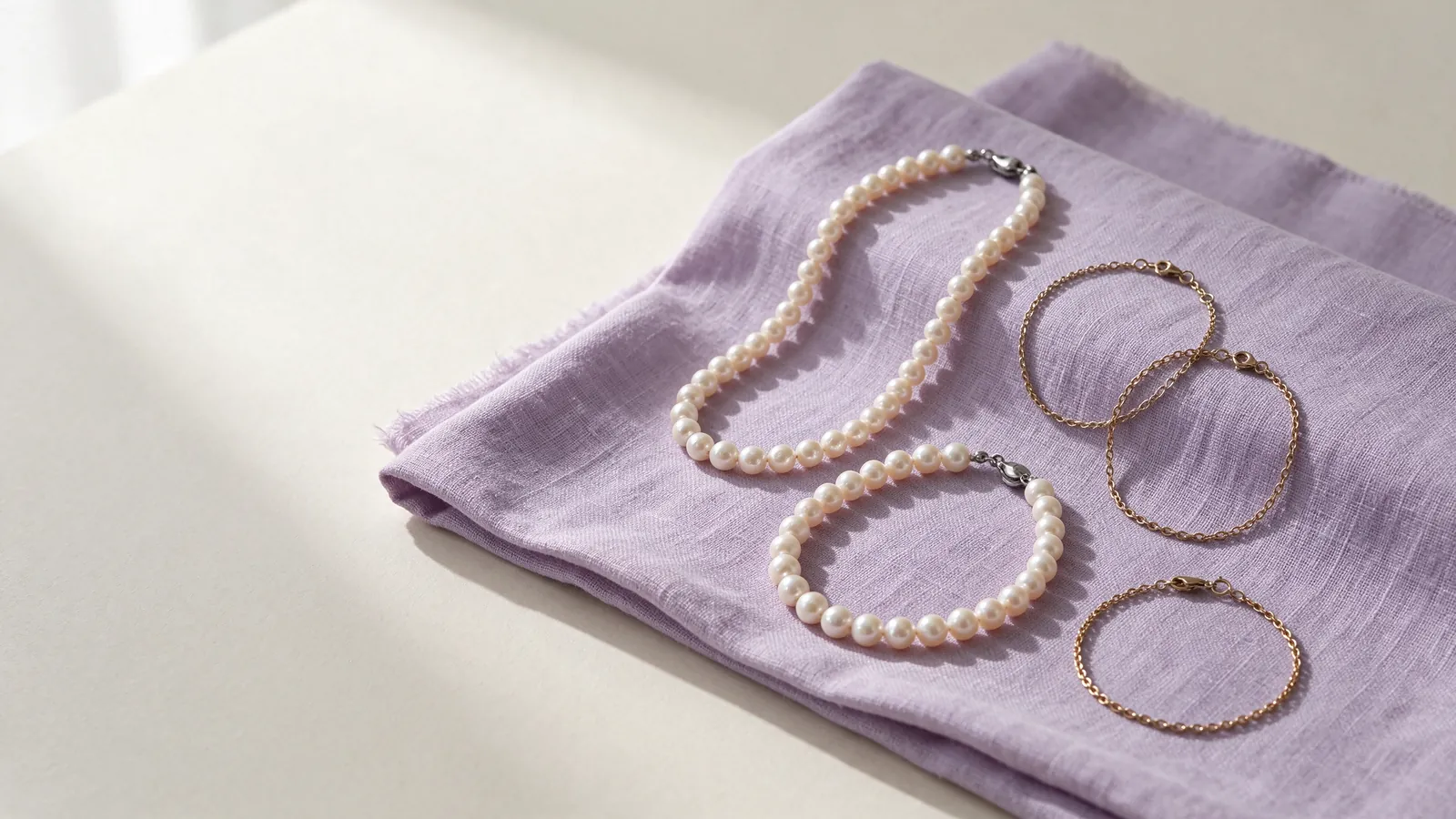
What wrist fit suits a white pearl bracelet, a white pearl chain bracelet or a white cultured pearl bracelet?
Start by choosing where on your wrist you want the bracelet to sit. Place a flexible measuring tape against the skin without squeezing, and note that position along with the measurement. In a pearl bracelet, the curved row, clasp and connections all affect available inside space. The length of another bracelet is therefore a starting reference, not a reliable prediction of identical fit.
Think about the movement you enjoy: a close position near the wrist bone or some room for the row to shift. Test with the arm hanging naturally, the wrist flexed and the hand resting on a work surface. Watch for sliding toward the palm or bunching beneath a cuff. These observations are more useful than applying one fixed length allowance to every construction.
How can you check clasp comfort when trying on a white pearl bracelet, a white pearl chain bracelet or a white cultured pearl bracelet?
Open and close the clasp yourself before judging its appearance. Once fastened, check that it does not twist into the skin, then move it around the wrist while handling a bag strap or pulling on a jacket. If the closure keeps shifting into an unwanted position, consider the row's balance and fit together; simply rotating it back does not explain why it moved.
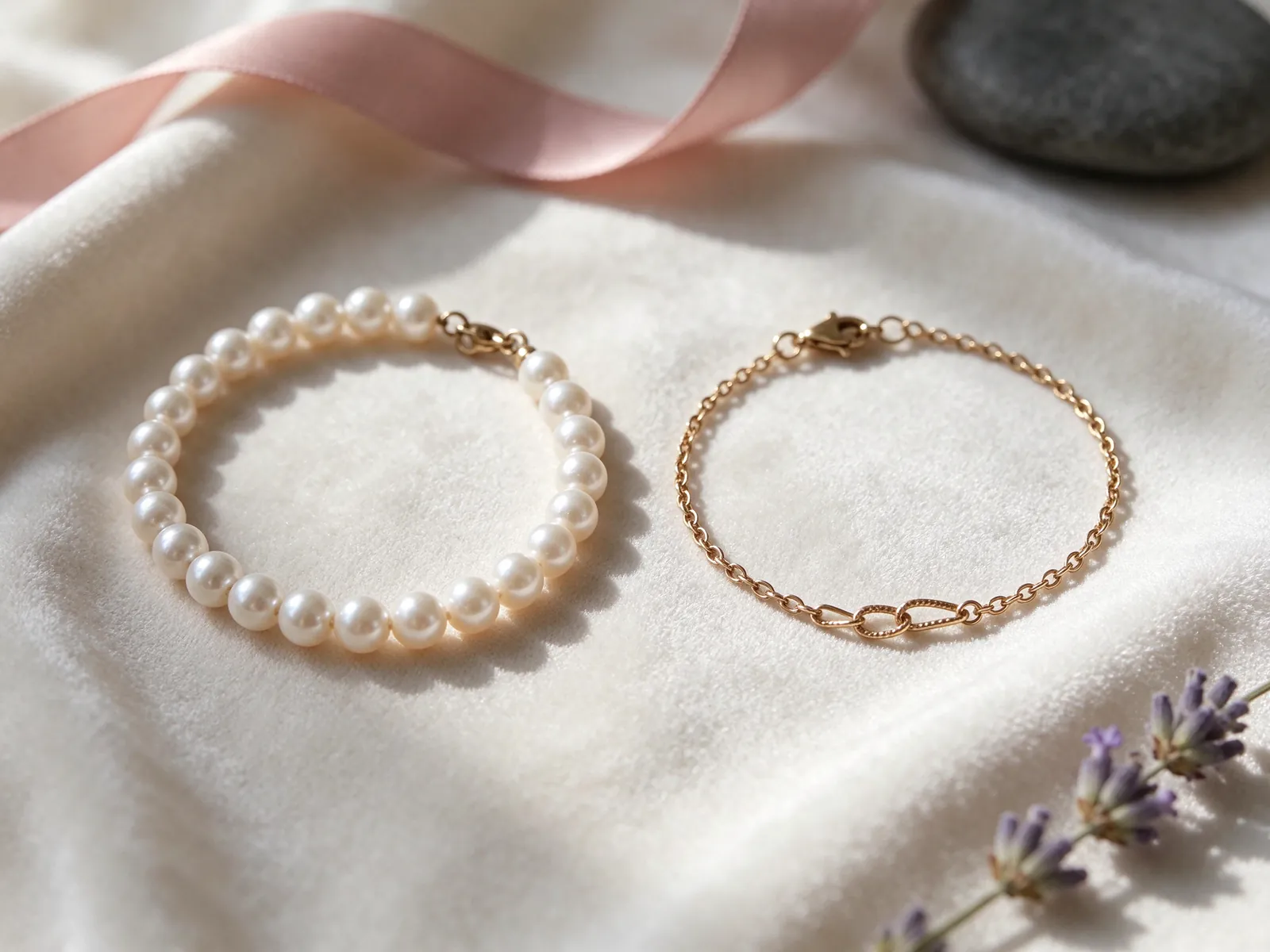
What a white color description tells you, and what it leaves open
A white pearl bracelet name begins with a color description, not proof of a particular pearl type. Origin, treatment and natural-versus-cultured identity are separate questions. White cultured pearl bracelet includes a formation term; white pearl chain bracelet includes a structural term. Reading those elements individually avoids turning an attractive search phrase into an assumed specification for a piece of jewelry.
GIA treats bodycolor, overtone and orient as distinct color components, and not every pearl displays all of them. Under consistent light, look first at the overall base color and then at reflected color effects. When comparing with a pistachio green pearl bracelet, ask which impression works with your wardrobe. Do not use the color names as a ranking of quality or a shortcut to identity.
Why compare the pearls beside your own sleeve?
A white background can hide the question that matters when you wear the bracelet: how clearly the row stands out beside the fabric. Bring a familiar white or ivory sleeve into view and check the result in everyday lighting. Fabric and pearls reflect light differently, so coordination need not mean an exact white match. A soft contrast can be as intentional as a crisp outline.
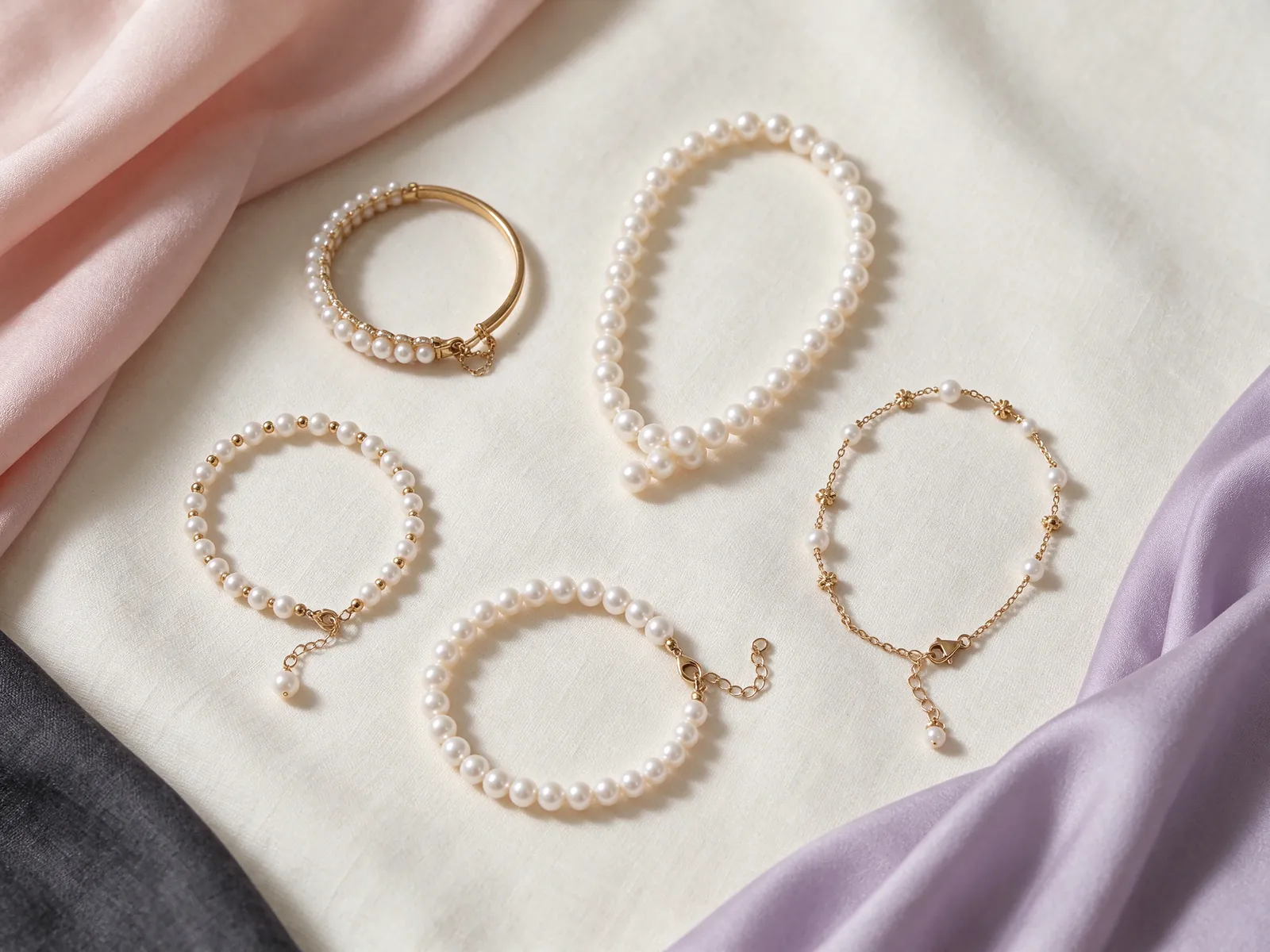
How pearl rows and chain spacing change the overall look
In a continuous pearl row, the eye follows a sequence around the wrist. A chain arrangement can make the metal line and the spaces between pearls part of the design. Compare how much of the wrist each element occupies, including the underside. A front-facing photo cannot show all the places where pearls meet connections or where a row curves into the closure.
If you prefer less visual weight, use a small pearl bracelet as a proportion comparison rather than assuming that any smaller design must feel better. A narrow row may make the clasp stand out more, while spaced pearls can shift toward one side during movement. Judge the relationship among pearls, wrist and sleeve instead of focusing on pearl size in isolation.
Which movements reveal awkward connection positions?
Turn your palm over and let the structure settle without stretching it into a display pose. Slide a sleeve past the wrist and notice whether raised parts catch. Look near the clasp for crowded pearls or a twisted line, and check whether chain sections lie naturally around the curve. These are practical comparison points, not evidence that a particular pearl count guarantees strength.
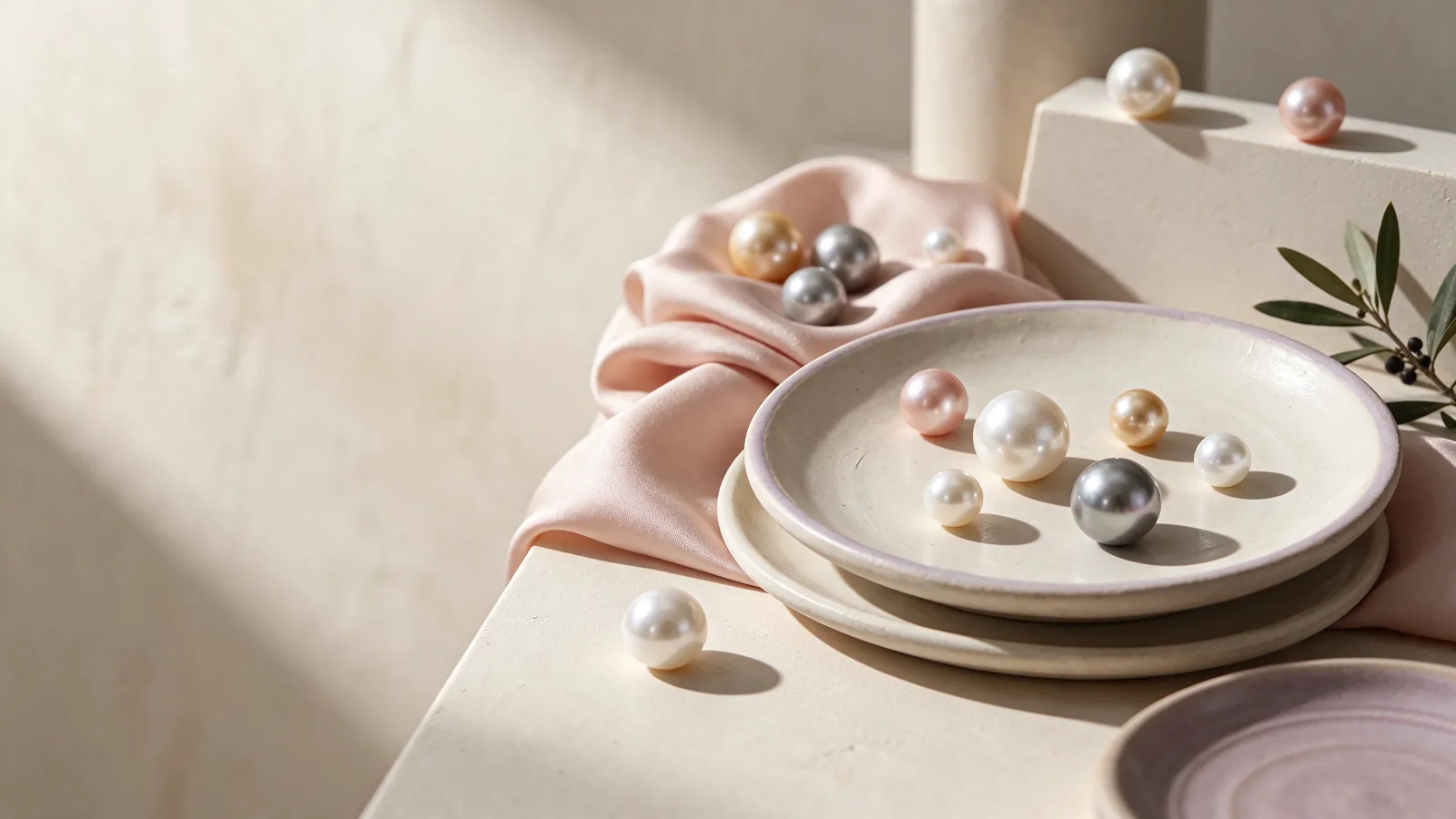
Assessing matching without making roundness the only goal
The seven pearl quality factors described by GIA are size, shape, color, luster, surface quality, nacre quality and matching. They help organize what you see and what you still need to understand. Similar outlines do not ensure similar reflections, and an irregular row can still look coherent. The framework does not let a viewer infer an individual nacre measurement or a certificate from appearance.
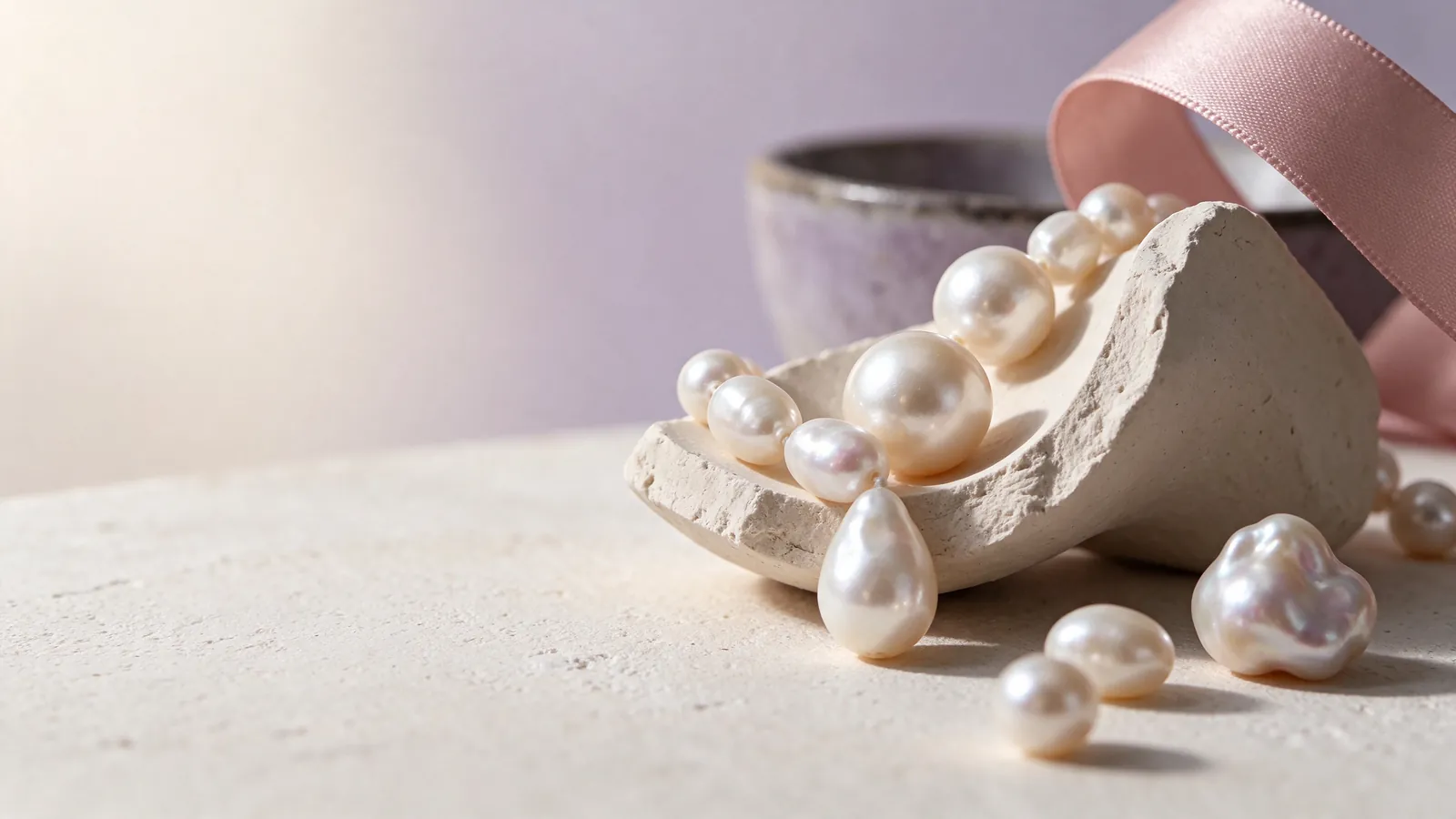
For a more varied silhouette, consider the styling questions explored in a baroque pearl bracelet guide. Observe whether irregular outlines create a rhythm you enjoy beside a cuff or watch, then compare color and luster across the row. Shape alone cannot establish origin or natural-versus-cultured status. Choose a silhouette for its visual relationship with your wardrobe, not an unsupported claim about rarity or investment.
How should you inspect a pearl that looks different from its neighbors?
First rotate the row slowly under the same light to see whether the difference follows the angle. Then view the whole bracelet at an ordinary distance on your wrist. Decide whether you notice a break in the overall effect or only a close-up variation. Include the part underneath the wrist so that a pleasing front arrangement does not become your only basis for comparison.
Separating metal choices from the white pearl description
Metal options for a design discussion can be described as 18K 750 white gold, 18K 750 yellow gold, 18K 750 rose gold, PT950 platinum and PT900 platinum. Compare their role in the overall color balance: should the metal blend into the pearl row or create a contrast? The pearl's white appearance does not identify the metal, and the metal does not establish pearl identity.
A search for sterling silver pearl bracelet raises a different material-comparison question, not another definition of white pearls. Keep the metal name, pearl identity and closure description separate when reading a design description. Once you have decided whether you want a quiet metal line or a noticeable accent, you can discuss construction more clearly instead of asking a color word to cover every detail.
Can the clasp be an intentional accent?
It can be part of the visual composition, but inspect it away from the ideal front position too. A clasp that looks balanced at the top may feel intrusive at the side or underneath. Try the working closure and check its contact during normal hand movement. Choose the visual emphasis only after considering access, a suitable closure and a position that feels comfortable to you.
Building an outfit around sleeves, watches and a clear focal point
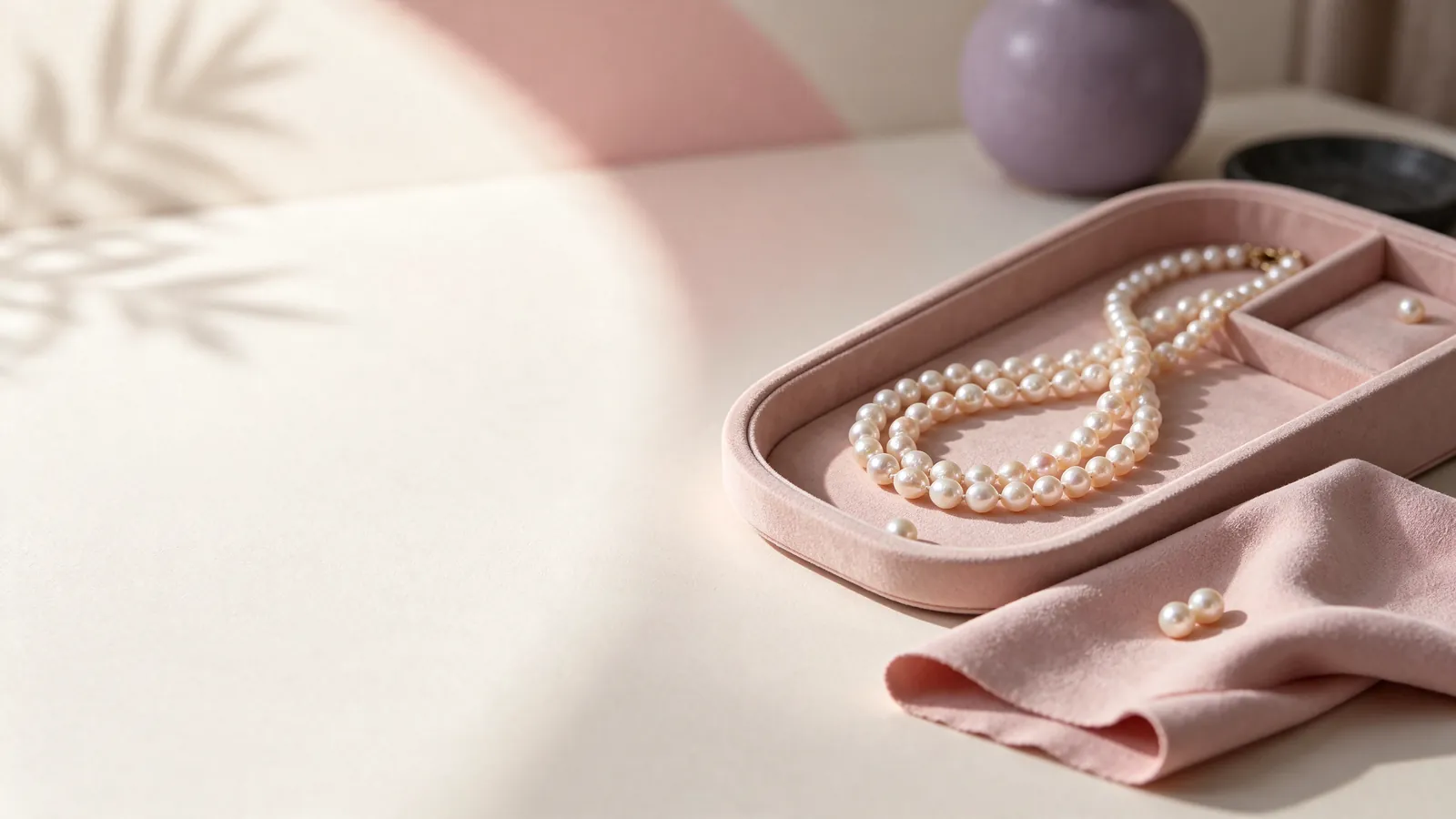
For everyday outfits, watch what the cuff does as you reach forward. A bracelet that looks right with a still arm may move differently when the sleeve pulls across it. For dressier clothing, inspect textured trim, sequins and stiff edges near the wrist. Color coordination is only one part of the decision; contact with the fabric and the row's visual scale also matter.
If you stack a watch and pearl bracelet, decide which should lead visually and test for repeated contact. Place your hand on a desk, turn the wrist gently and notice where the watch case or another hard accessory meets the pearls. Separating the pieces onto different wrists may be a better arrangement than making the bracelet overly tight to stop movement.
How can existing white pearl earrings guide the choice?
Use the earrings as a reference for the overall impression, not a demand for identical dimensions. The bracelet sits beside clothing, while earrings are seen near the face, so their backgrounds and viewing distances differ. Try the combination with an outfit you know well. Compatible color and luster can connect the pieces while different shapes keep each from competing for exactly the same visual role.
After-wear care for white pearls and their bracelet structure
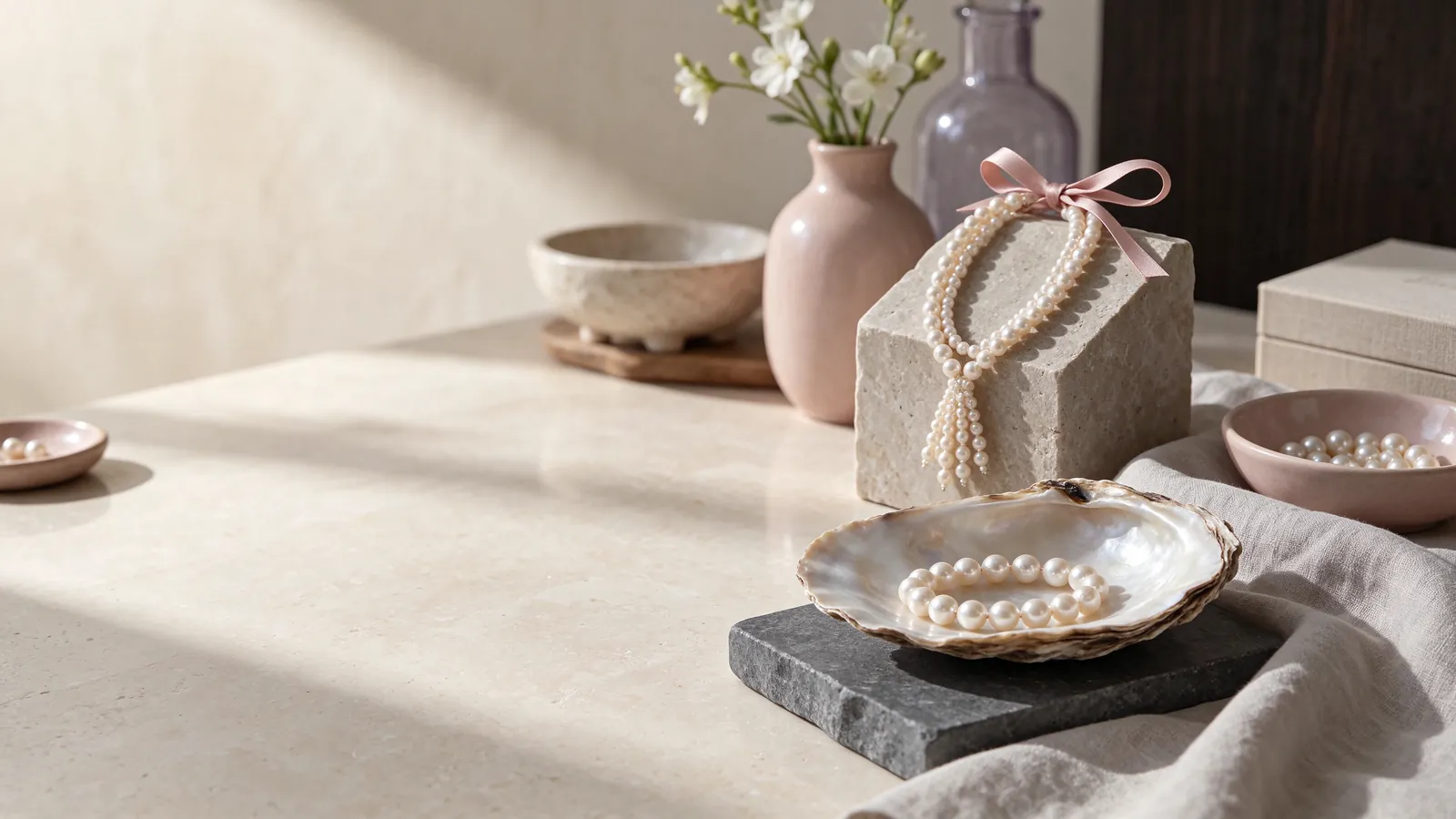
Put the bracelet on after using perfume and hair products, and wipe it with a very soft, clean cloth after wearing. GIA ranks pearl at 2.5 on the Mohs hardness scale, so gentle handling is a meaningful part of care. Store the row separately from hard-edged jewelry and avoid compressing several pieces together where normal handling can make them rub.
GIA advises against ultrasonic and steam cleaning for pearls and recommends avoiding acids, perfume, hair spray and excessive heat. A cleaning method used for other jewelry should not automatically be applied to a pearl bracelet. Think about the connections and any string as well as the visible surface, and avoid tugging the row while trying to reach around the clasp.
What matters before wearing a water-cleaned strung bracelet again?
For strung pearls cleaned with water, GIA says the string must be completely dry before wearing. The surface can look dry while that question remains unresolved, so do not replace the actual condition with a universal number of hours. Also notice fraying, unusual gaps or a closure that no longer moves smoothly. Pause wearing if something is wrong rather than repeatedly pulling the bracelet into position.
Ready to discuss how your preferred white pearl look might fit into everyday wear? Contact Flint Jewelry on WhatsApp or call +85260106207 to talk about wrist measurement, sleeve styling, clasp access and your preferred room for movement.
| Decision | Look for | Outfit consideration | Movement to test | Do not infer |
|---|---|---|---|---|
| Fit | Usable inside space and the row's resting position | Interaction with a familiar cuff | Relax the arm, flex the wrist and rest the hand | Identical stated lengths mean identical fit |
| White color | Base color and reflections in consistent light | Definition beside white or ivory fabric | Compare a common background and then wear it | Color establishes pearl type or treatment |
| Construction | Pearl spacing and the curve of connections | Visual weight around the wrist | Turn the palm and slide a sleeve past | A construction name describes every detail |
| Shape and matching | A coherent color, luster and outline | Regularity or intentionally varied rhythm | Rotate the entire row under one light | Shape proves origin or certification |
| Closure and care | Clasp access, contact and any string condition | Clearance from a watch or textured trim | Fasten independently and mimic ordinary use | Appearance guarantees function or durability |
Pearl knowledge and authoritative references
GIA ranks pearl at 2.5 on the Mohs hardness scale. The number supports gentle care decisions; it is not a promise of durability or a quality grade.
Read the reference for this factFrequently asked questions
Can the word white identify where a pearl came from?
No. White is a color description, not proof of origin, type, treatment or natural-versus-cultured identity. Read those details separately. GIA also distinguishes bodycolor, overtone and orient, so a reflected color in a photo should not be treated as a complete identity statement.
Why can a chain arrangement and a continuous row feel different at the same stated length?
Their shapes, connections and closures can create different usable inside spaces and movement patterns. Measure your wrist at the desired position, then test the construction with the hand relaxed and flexed. Stated length alone cannot predict whether the row will sit near the bone, bunch under a cuff or slide toward the palm.
Are irregular white pearls automatically a poor match?
No. Matching involves the relationship among color, luster and the intended arrangement, not just identical outlines. A varied silhouette can be intentional. Compare the whole row under consistent light and on the wrist before deciding whether the visual rhythm suits you; irregular shape alone does not establish pearl identity or value.
How do I keep a watch from dominating a white pearl bracelet?
First choose a focal point and compare the visual weight of both pieces with your sleeve. Then test where the watch case and pearls meet as the wrist turns or rests on a desk. If they repeatedly collide, consider separate wrists rather than forcing both into a tightly fixed stack.
Does white pearl jewelry need a stronger cleaning method to stay bright?
Do not use stronger cleaning simply because the pearls are white. GIA advises a very soft, clean cloth after wearing and says not to use ultrasonic or steam cleaners. Avoid acids, perfume, hair spray and excessive heat. If strung pearls are cleaned with water, the string must be completely dry before wearing again.
Updated: