
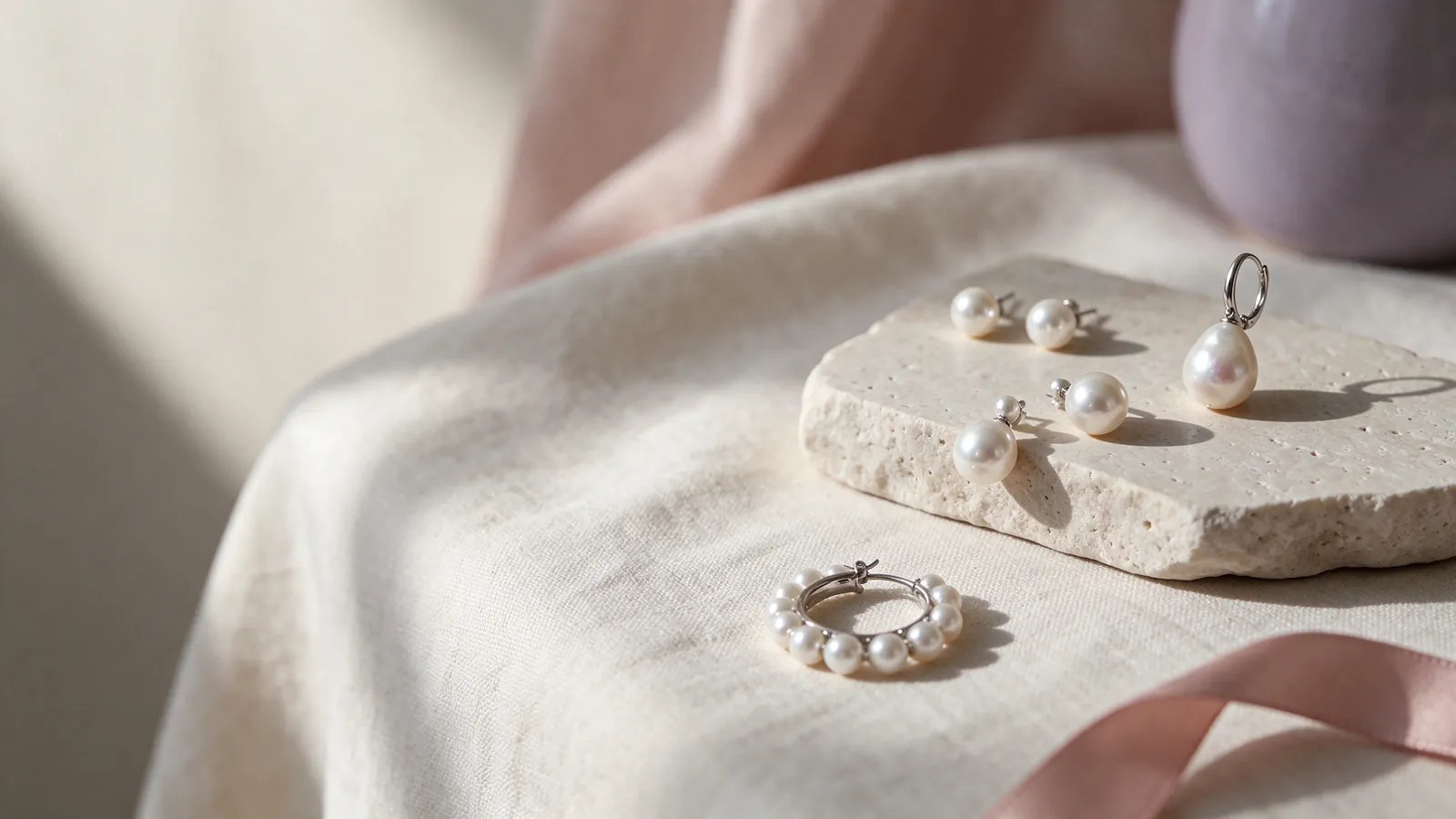
How does post compatibility guide pearl earring catch selection across pearl earring back types when seeking secure backs for pearl earrings?
Treat the post and backing as a matched assembly. First identify whether attachment involves pushing onto a smooth post, rotating onto compatible threads or operating a release feature. The opening's appearance is not enough to judge fit: the post diameter, available fastening length and backing's internal contact structure matter. As you compare pearl earrings, ask to see the back as well as the front. A beautiful face-on view cannot tell you how the small parts engage.
Use a well-lit tabletop and a soft cloth to catch small pieces during inspection. Set the left and right earrings beside their corresponding backs instead of pooling them together. Hold the metal structure when operating the mechanism, rather than pushing against the pearl. If a post is bent or the backing opening looks distorted, a different backing shape alone may not resolve the difficulty.
Before wearing secure backs for pearl earrings, what signs of poor fit matter in pearl earring catch selection across pearl earring back types?
Unexpected sliding, resistance at the opening and a stop halfway through fastening are different observations. Note the exact behavior and remove the earring before investigating. More force is not a useful way to establish compatibility. Avoid bending the post or pinching the backing with tools; altering the parts can create another problem and obscure what originally happened.
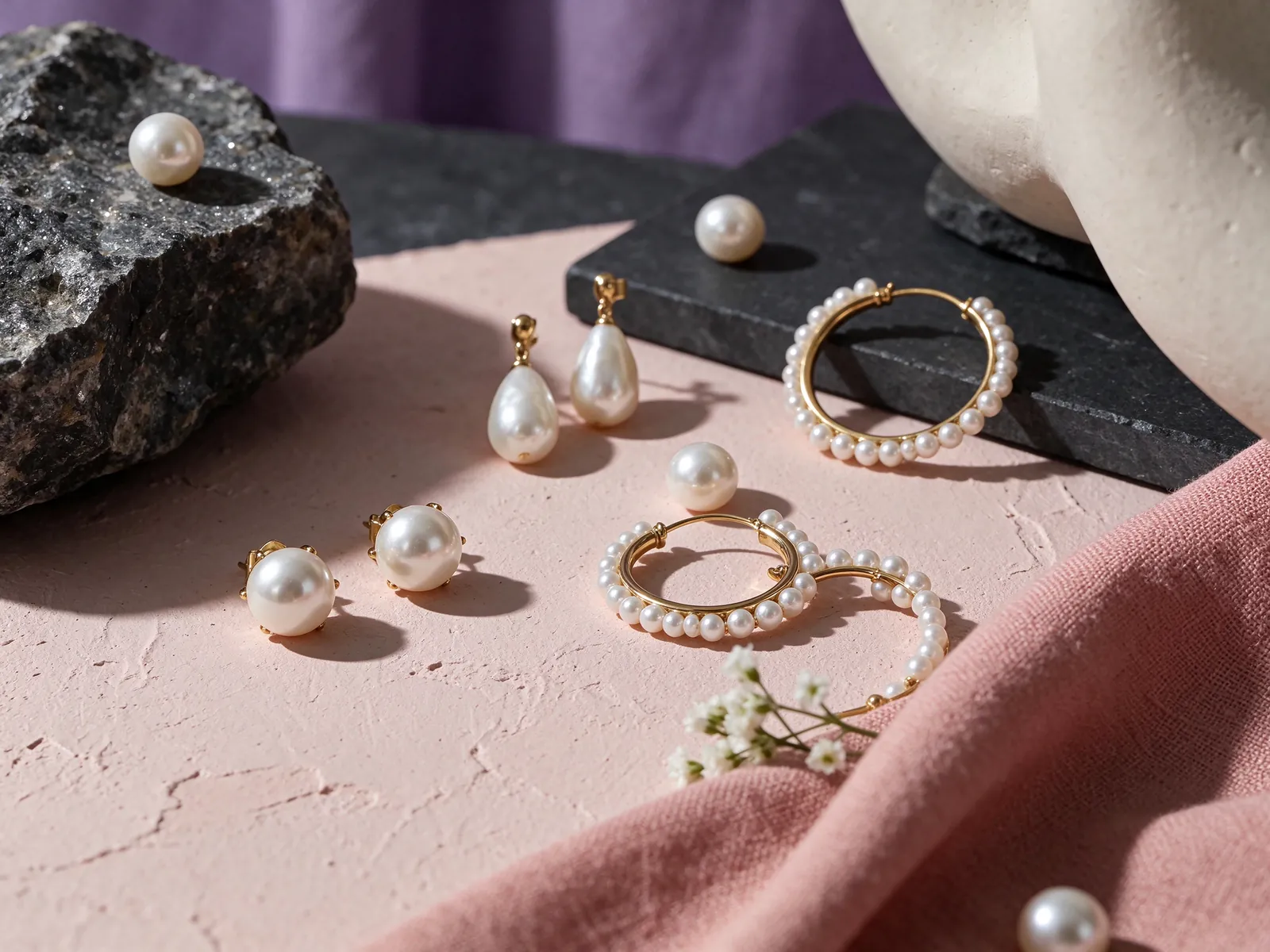
Choose an attachment action you can use comfortably
With a push-back, the backing travels along the post and its internal structure supplies contact. With a screw-back, compatible threads must engage by rotation. Do not press a screw-back straight on as though it were a push-back, and do not assume every threaded component shares the same fit. Trouble starting the rotation, visible tilting or an uneven turning feel calls for examination rather than repeated attempts on the ear.
A silicone-covered backing has an outer surface as well as an underlying structure. Its appearance does not establish whether the cover is providing retention, handling area or another function. For a backing with a release mechanism, have the full attachment and removal sequence demonstrated on the earring. Try it yourself before choosing. The ability to release it normally matters just as much as getting it on.
Use both earrings to explain a replacement need
Bring the complete pair, even when only one back is missing or feels different. Include any remaining loose backs and mention previous mixing with other earrings. One side may have been dropped or compressed while the other was not. That history and the actual components give a better comparison than the outline of a single spare backing.
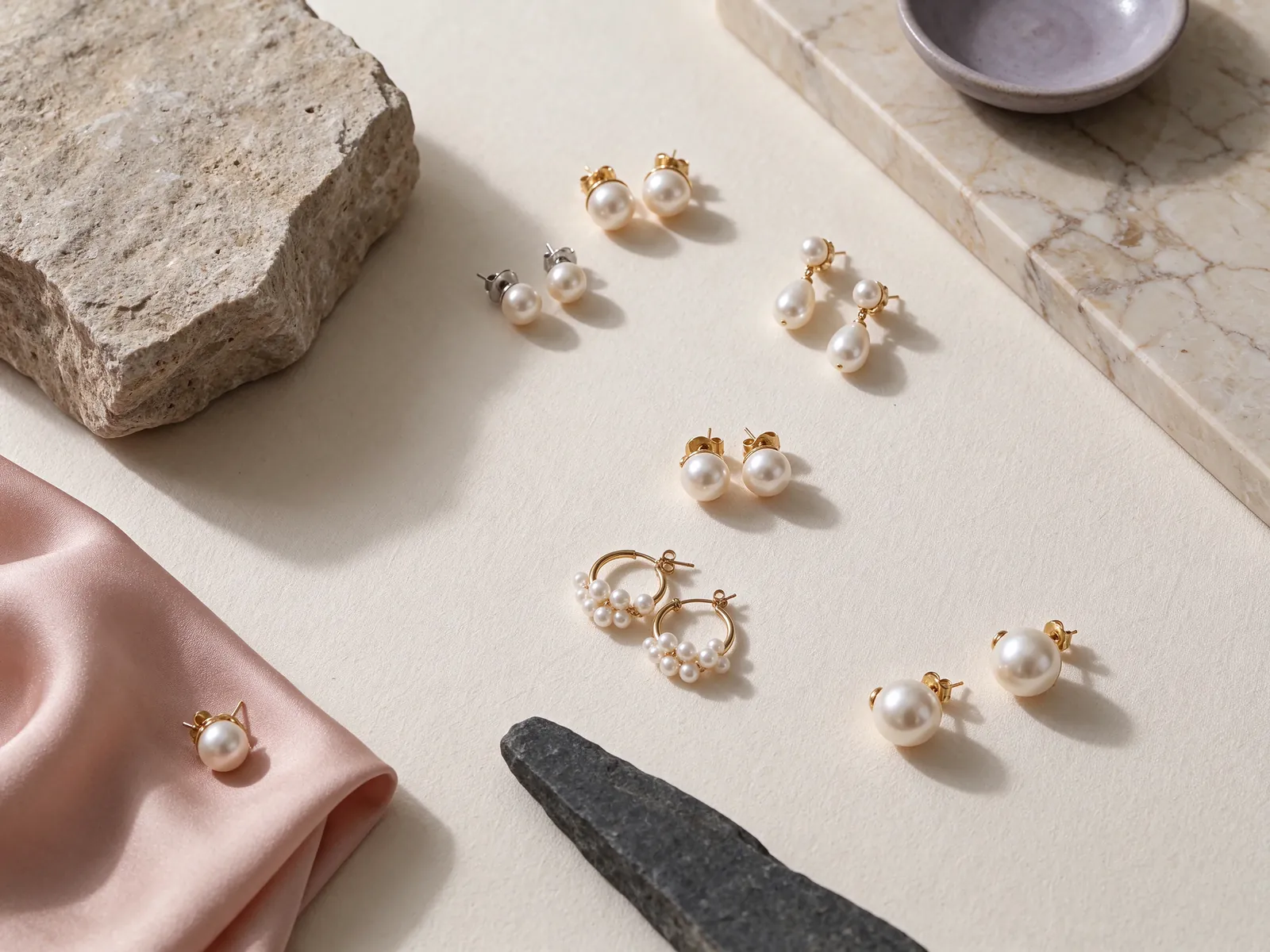
Evaluate forward tilt separately from retention
A backing may hold its post without making the earring face straight ahead. Front projection, the design's balance, piercing location and lobe shape influence the angle. A broader contact surface may help certain arrangements, but can also press into a crease behind the ear. Explore earlobe support backs for pearl earrings if tilting is the issue. Tightening the backing against the lobe is not a substitute for assessing support.
During fitting, sit naturally and look at the front and side, then gently turn your head to notice contact with the jaw or neckline. Use the pearl earring size guide to compare visible proportions without treating pearl diameter as the whole story. If geometric pearl earrings appeal to you, examine the direction and projection of the metal outline too. The support question belongs to the complete design, not only the round front element.
Show the natural wearing angle rather than adjusting your pose
If you send a photo to explain tilt, keep your head upright instead of angling it to make the earring appear straighter. A side view can show the front pointing down or sitting away from the lobe. It cannot establish post diameter or mechanical grip, so photographs supplement rather than replace inspection of the parts.
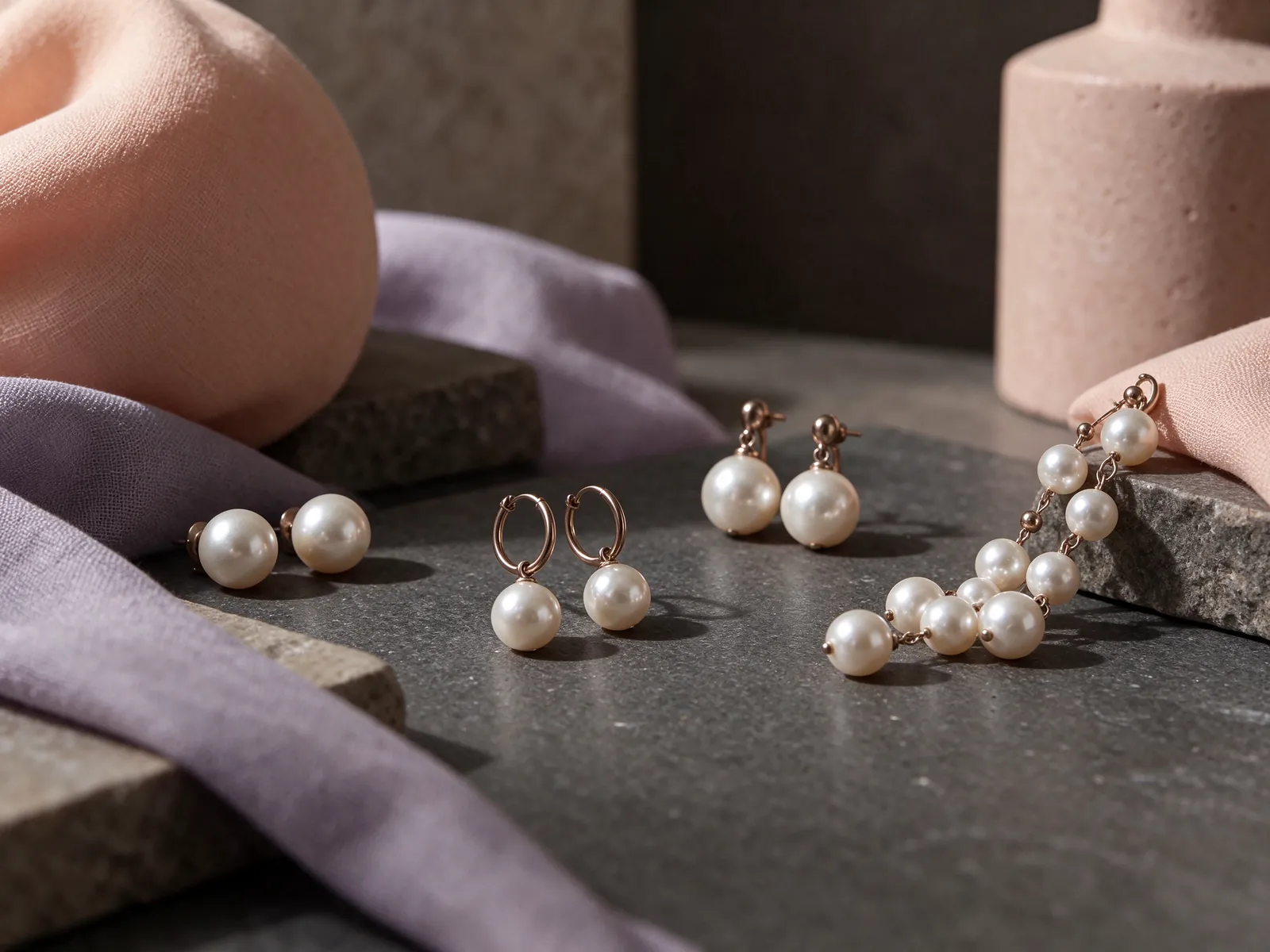
Include clothing and personal accessories in the fitting
Backings occupy the same area as glasses, mask loops, hair and scarf edges. Wear your typical glasses and neckline when trying an earring, and make the gentle movements you normally use to arrange your hair. Do not deliberately pull the back to prove it will hold. Repeated snagging suggests looking at the complete profile and protruding parts, not just choosing greater tightness. Check whether a strap is wrapped around the earring before taking it off.
Your hands are part of the selection process too. Over a table, practice grasping the backing and carrying out normal attachment and removal. This matters if you often change clothes quickly or use headphones. If handling tiny pieces is difficult, a manageable action can be more valuable than a complex mechanism. Looking at small pearl stud earrings may help you compare a less projecting front, but small size does not eliminate the need for matched components.
Set up a simple removal and storage habit
Take earrings off before sleeping, swimming and activities likely to press or pull on them. Remove them before pulling a close-fitting shirt over your head. Keep each earring and its own back together in a separate storage compartment, so that the next wearing does not begin with an accidental swap between pairs.
Ask about every component that contacts the ear
The front's metal description should not be used as a shortcut for the post and backing. Ask about those components individually, especially when comparing pearl earrings for sensitive ears. Personal reactions, contact location and wearing comfort deserve attention alongside the design. A backing that presses too firmly and skin irritation are not automatically the same issue. Stop wearing the earrings if pain or persistent irritation occurs, and get healthcare advice when needed.
For pearl stud earrings with a silicone-covered backing, the cover does not mean every metal surface is isolated from the ear; the post may still contact the piercing. Look for a cover that separates, changes shape or becomes unusually sticky. If the silicone cover comes off, save the detached part and the backing. Do not glue it back or keep wearing the remaining metal simply because it still looks intact. The cover's role depends on the complete mechanism.
Comfort is not a fixed gap measurement
Use the intended fastening position rather than pressing until the lobe cannot move. Check for local pressure and an edge digging into the ear. Lobe thickness, usable post length and backing structure differ, so one prescribed spacing cannot fit every pair. If holding the front upright requires uncomfortable compression, reconsider support or the front profile.
Care for the backing without exposing the pearl to harsh cleaning
When the attachment feel changes, inspect the opening and post contact area for visible residue or damage. Handle the earrings with clean, dry hands. After wear, wipe the pearls gently with a very soft, clean cloth, and apply perfume or hair spray before putting the earrings on. Do not scrape a backing opening with a sharp tool, add lubricant or fill a covered mechanism with cleaning solution.
GIA gives pearl a Mohs hardness of 2.5 and states that ultrasonic and steam cleaners should never be used for pearls. The metal backing may look sturdy, but that does not make machine cleaning appropriate for the attached pearl. If residue is difficult to remove, a cover is damaged or the parts cannot be released normally, seek inspection suited to that mechanism instead of escalating the heat or cleaning strength.
A clean component is not automatically a well-fitting one
Cleaning surface residue and adjusting retention are separate tasks. Persistent looseness after suitable care is not a reason to scrub harder. Separate removable parts only through their normal release action and follow care appropriate to the structure. Avoid prolonged soaking of the pearl and do not return damp components straight to a closed storage box.
Bring a specific question to your fitting conversation
Explain how the back attaches, where sliding or resistance occurs, whether the two sides behave differently and which everyday movement brings on the problem. Distinguish losing position on the post from the front tipping forward. Bring the full earrings, remaining backs and detached covers, and mention any earlier post or backing changes. This makes the conversation about the real assembly rather than a mechanism's reassuring name.
Before choosing a different back, watch normal attachment and release, then perform both actions yourself. Check the side-view angle and comfort behind the ear as separate steps. A front design you love does not have to be forced into place with an ever-tighter backing. When its profile repeatedly conflicts with clothing or handling, reconsidering the whole earring may be a clearer approach than trying unrelated spare backs.
Compare convenience only after resolving compatibility
Once the parts fit and release normally, consider visibility, grasping area and interaction with hair and collars. Remember the demonstrated removal action so you can recognize a later change in feel. If fastening becomes markedly different, return to an assessment of the same parts instead of compensating with extra pushing, twisting or pulling.
For a conversation about the backs on your existing earrings, contact Flint Jewelry on WhatsApp at +85260106207. Explain how they attach and what changes during use, and distinguish retention, support and handling concerns so the discussion starts with your actual needs.
| Backing consideration | Fit question | Everyday check | Stop and examine if |
|---|---|---|---|
| Push-back | Does the internal structure match the post? | Practice normal attachment and release | It slides unexpectedly or needs force |
| Screw-back | Are the threads compatible? | Start straight and rotate without forcing | It tilts, jams or turns unevenly |
| Silicone cover | What is the cover's role and condition? | Distinguish handling surface from mechanism | The cover detaches or changes condition |
| Broad support surface | Where does it contact the lobe? | Observe side angle and accessory contact | Edges dig in or support requires painful pressure |
| Replacement back | Does it fit the actual complete earring? | Compare both sides and try normal removal | Similarity of appearance is the only match |
Pearl knowledge and authoritative references
GIA lists pearl hardness as 2.5 on the Mohs scale and says never to use ultrasonic or steam cleaners for pearls, including when attention is on an attached backing.
Read the reference for this factFrequently asked questions
Can a backing name tell me how secure it will be?
Not by itself. The post, backing structure and your normal handling all matter. Ask how the actual parts engage and release, then compare comfort and fit. No mechanism name establishes that an earring cannot be lost.
Should I push a screw-back on if rotating is difficult?
No. A screw-back depends on compatible threads engaging through rotation. Resistance, misalignment or difficulty starting should be examined with the earring removed. Forcing it straight on is not a substitute for correct thread fit.
Will a larger backing always stop a pearl from tipping?
No. Tipping also involves the front structure, projection, piercing position and lobe shape. A wider contact area may change support but can create pressure behind the ear. Evaluate the complete wearing angle and comfort rather than backing width alone.
Does a silicone-covered back prevent all metal contact?
That cannot be assumed. The post may still contact the piercing, and the cover's role varies with the mechanism. Ask about each ear-contacting component separately and stop wearing the earrings if discomfort develops.
What can I do before a fitting appointment?
Keep the complete pair and all remaining pieces together. Note when the problem occurs, where the backing resists or moves and whether both sides behave alike. A natural side-view photo can illustrate tilt, while the actual components are needed to assess fit.
Updated: