
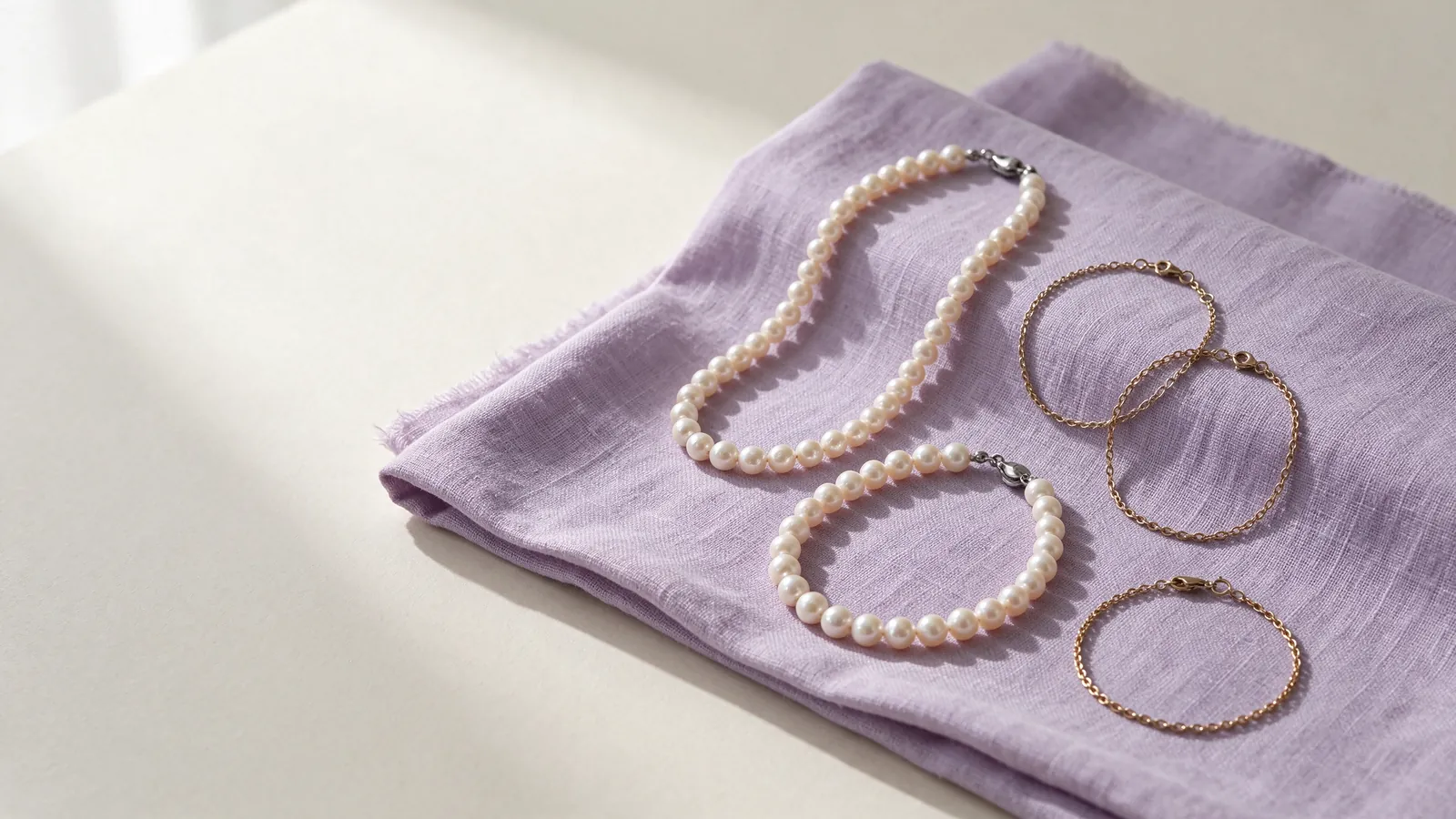
How should a 10k gold pearl bracelet, a K10 pearl bracelet or a 10k yellow gold pearl bracelet suit your wrist and style?
Picture a normal day before narrowing your search: using a keyboard, lifting a tote, fastening a coat or resting your wrist at a table. Those situations reveal what you want a bracelet to do. You might prefer an accent that stays close to the wrist bone, or a little movement toward the hand. Use the pearl bracelet topic to think through construction and wearing preferences before letting the metal term decide the direction.
Take your wrist measurement where you expect to wear the piece. Let a flexible tape sit against the skin without tightening it, and write down both the unit and the location. If you use a non-stretch paper strip, mark the overlap and measure the strip flat. This gives your wrist circumference, not the required overall bracelet length. A clasp, pearl volume and decorative components can change the space inside the bracelet. Avoid applying one fixed allowance to every style.
Why does clasp placement matter for the fit of a 10k gold pearl bracelet, whether labeled K10 pearl bracelet or 10k yellow gold pearl bracelet?
A clasp can influence how a bracelet sits even when it is visually small. With the wrist gently turned and bent, notice whether the fastening reaches the back of the hand, rests on the desk-contact area or sits behind an ornament that makes it harder to access. An unused extension may also meet a cuff. If you are reading a description, ask whether the listed length includes the fastening and how any adjustment is arranged.
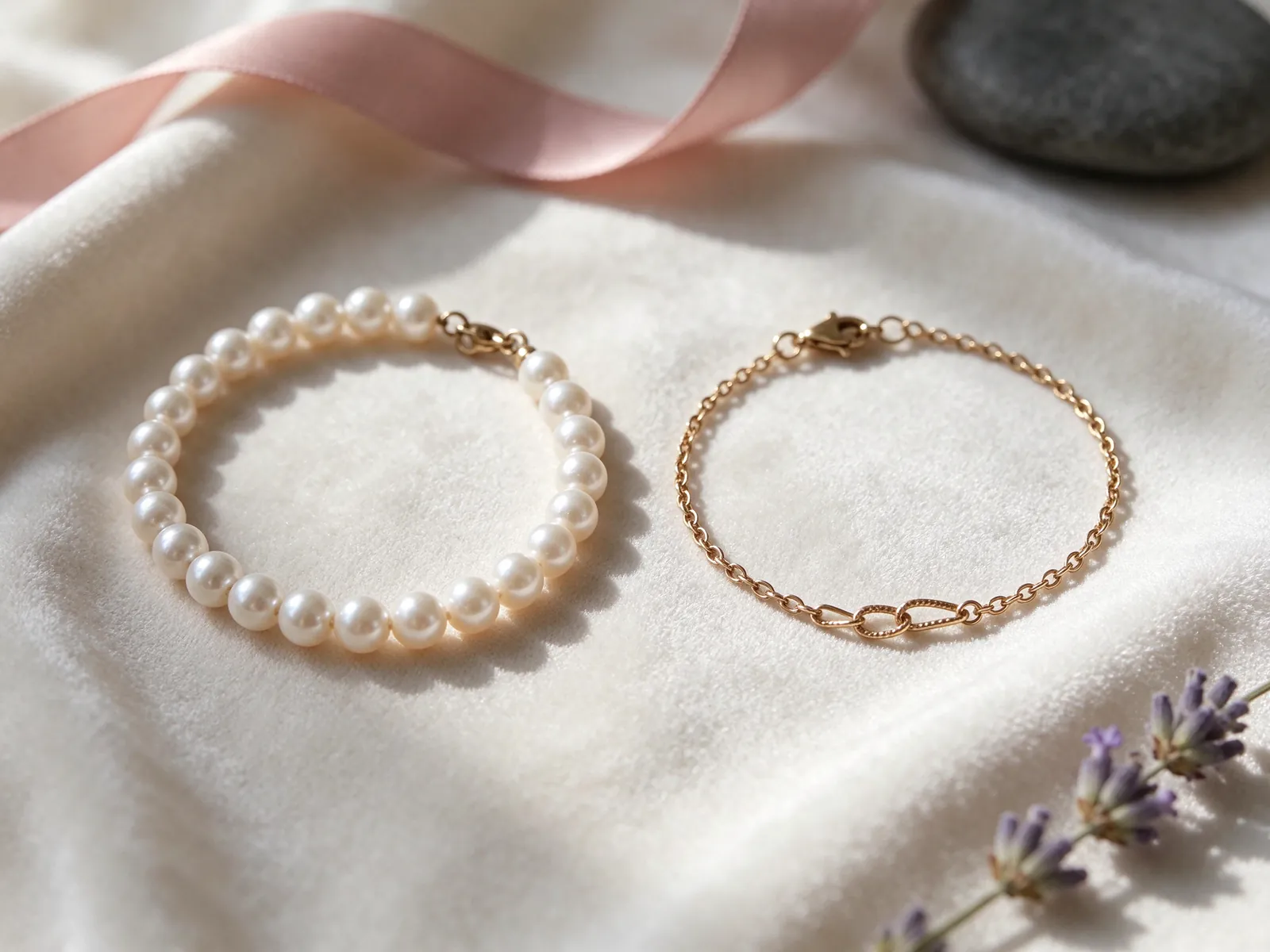
Understand the label without treating the title as a full specification
The K10YG and 10K gold wording in WSP's public bracelet information provides a factual example of market naming. It helps explain why a search may use K10 pearl bracelet or 10k yellow gold pearl bracelet. Letter order is not enough to establish a difference in the design. Read the full material field and component descriptions for the piece being considered, rather than assuming the title contains everything you need.
Keep this naming example separate from Flint Jewelry's offerings. Another company's product title does not transfer its components, series identity or service conditions to Flint. Nor does a gold-related label establish the pearl species, origin, treatment, certification or dimensions. For an incomplete description, focus your questions on what can be stated clearly: which components are described, how the fastening works and where the length is measured.
Give pearl quality its own place in your notes
GIA identifies seven pearl value factors: size, shape, color, luster, surface quality, nacre quality and matching. Matching is particularly useful when looking at the overall rhythm of a bracelet, because adjacent pearls contribute to one composition. A metal abbreviation does not answer those pearl-quality questions. Keeping a separate pearl description prevents a familiar label from being mistaken for evidence about features that have not been stated.
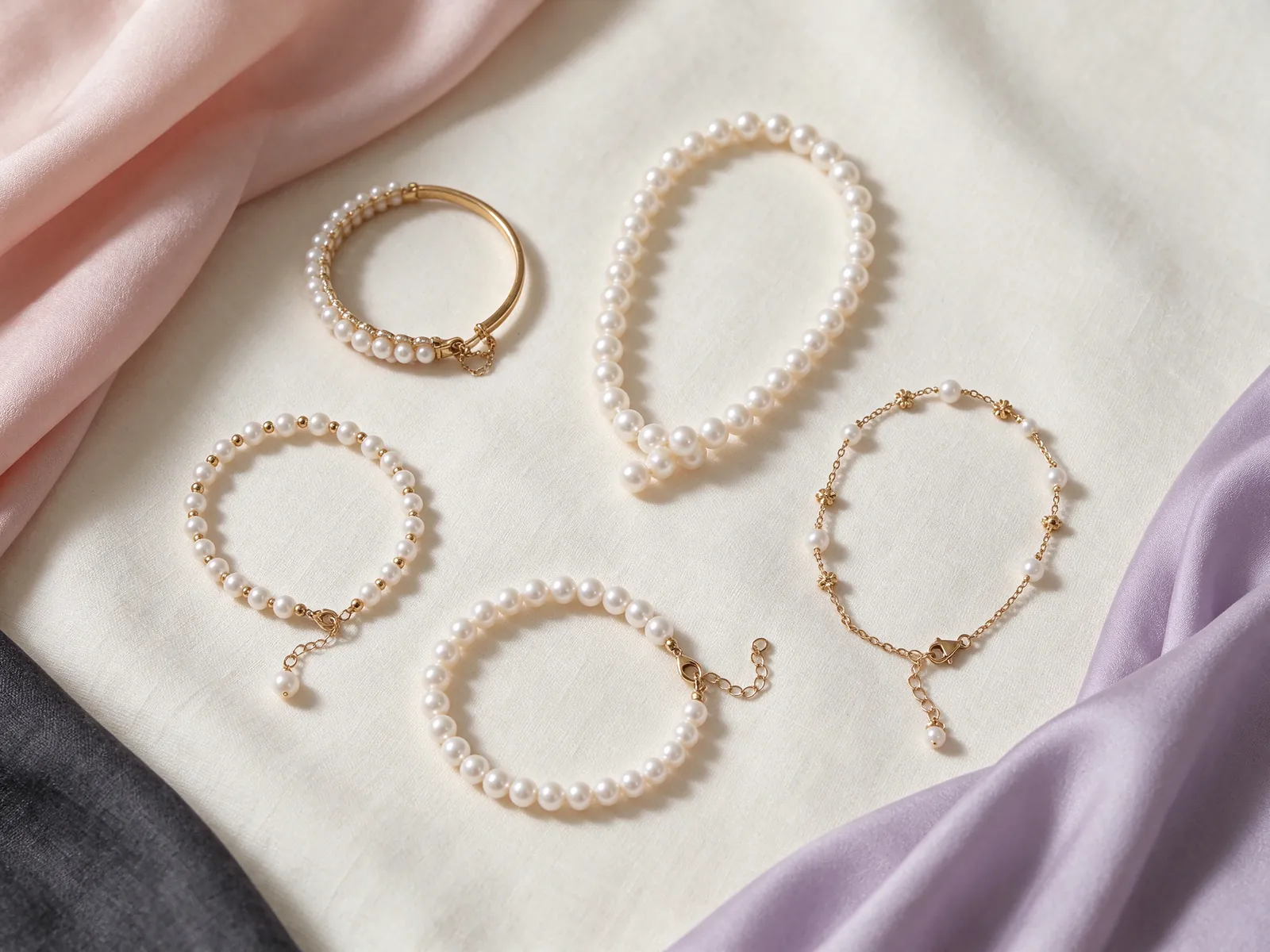
Choose between negative space and a continuous pearl outline
A chain with spaced pearl details creates a different outline from a continuous pearl strand. The first can emphasize intervals of visible skin and metal; the second directs attention to the sequence of pearls around the wrist. Consider the effect next to your usual clothes rather than ranking one structure above the other. A front view may hide where the main ornament sits after the wrist turns, so a side view can be useful when available.
For a pearl strand bracelet, look at the relationship between the pearl sequence, the curve at the wrist and the clasp finish. For an open chain composition, consider whether the decorative elements remain distributed or gather toward one side during movement. These are structural questions, not claims about a particular item. They also explain why equal listed lengths should not be assumed to produce equal internal wearing space.
Let gentle movements reveal the preferred front position
During a try-on, arrange the preferred view on the back of the wrist, then imitate everyday movements such as holding a glass or turning a page. Watch whether the decoration moves underneath the wrist and whether the closed clasp remains easy to identify. Do not pull on the piece to test it. If fabric catches, pause and separate it carefully; the point is to understand placement, not to challenge the connection points.
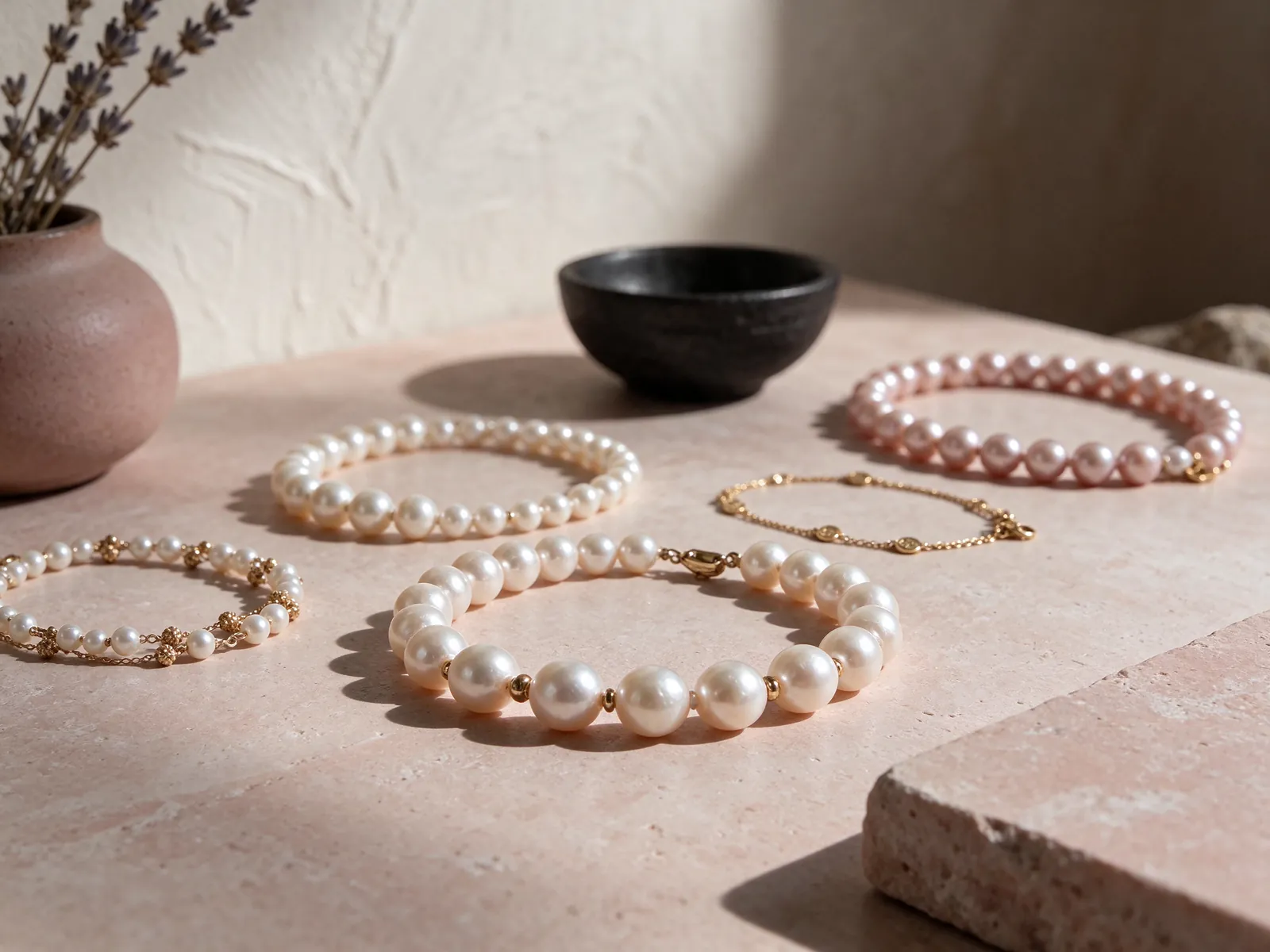
Build a color pairing around the clothes and watch you actually use
A warm gold-colored styling direction is easier to judge against a familiar sleeve. Try plain ivory, beige or a dark solid fabric as a background, then decide whether you want the metal and pearls to blend softly or stand out. Cuffs with textured knitting, lace or decorative buttons may cover a fine chain or meet a fastening. Check the relationship while reaching and bending the wrist, not only while posing with a straight arm.
The white pearl bracelet topic is helpful for exploring brightness and luster, but white appearance does not identify a pearl's species or origin. Look at the visual pairing in reasonably neutral light beside an outfit you often wear. If you also use a watch, consider placing the bracelet on the other wrist so the watch case is not directly beside the pearl surfaces. Color coordination is only one part of a practical combination.
Evaluate contact before deciding to stack accessories
A matching metal color does not prevent a raised link, watch crown or rigid bangle from touching a pearl. Observe where the pieces approach each other as the wrist bends. If the arrangement feels visually crowded or creates repeated contact, a single wrist accent may be a better match for your preferences. You can repeat the color direction with earrings or a necklace without putting more objects beside the bracelet.
Compare market materials without expanding Flint's metal list
Flint Jewelry's metal options are 18K 750 white gold, 18K 750 yellow gold, 18K 750 rose gold, PT950 platinum and PT900 platinum. A 10K option is not part of that list. When reading about an 18k gold pearl bracelet, explain the color relationship, silhouette and wearing habits you want to discuss. Those preferences are useful for a conversation about Flint's actual options; a market label is not a Flint customization specification.
A search for a sterling silver pearl bracelet or a stainless steel pearl bracelet can be approached as a separate material-reading comparison. Read each piece's construction, fastening and care information rather than assuming a comfort or durability ranking from the name. Material wording alone also cannot establish suitability for sensitive skin. When an external photograph interests you, describe the spacing or ornament placement you like without expecting another brand's design to be copied.
Organize a comparison around answerable questions
Write down the exact material wording, stated length, structure, clasp and likely occasion for use. If a field is missing, leave it as a question instead of guessing from the image. This keeps different brands' conditions separate and makes your priorities visible. You may discover that a clear closure or a less intrusive cuff pairing matters more than the abbreviation that brought you to the search.
Choose care methods for the pearls, not just the metal
The metal is only one part of a pearl bracelet. GIA lists pearl at 2.5 on the Mohs hardness scale and advises that pearls should never be cleaned with ultrasonic or steam cleaners. In a wrist accessory, this makes contact with harder objects a relevant consideration. A substantial metal appearance does not mean the whole piece can be cleaned with any method used for other jewelry.
Gently wipe after wearing with a very soft, clean cloth. GIA also advises avoiding acids, perfume, hair spray and excessive heat. Set the piece aside while applying personal-care products, and remove it before changing clothing likely to catch on a fastening. In storage, keep pearl surfaces from rubbing against other jewelry. Do not assume a liquid designed to clean a metal component is suitable for the pearls and every connection in the same piece.
Notice the string and fastening before wearing again
For strung pearls cleaned with water, GIA says the string must be completely dry before wearing. This guidance does not establish that every bracelet can be soaked. As you take a piece from storage, notice whether the clasp closes normally and whether a connection looks visibly different. If something has changed, pause wearing and ask about appropriate handling rather than forcing a clasp or link into place.
Turn a search preference into a clear fit inquiry
A useful inquiry starts with your measured wrist circumference, the measuring position, your usual cuffs and whether a watch shares your routine. Add whether you prefer a continuous pearl outline or open chain spacing, and where you want the decorative focus to rest. This describes your needs without inventing a pearl identity or quality grade. It is more helpful than providing only the phrase 10k gold pearl bracelet and leaving the wearing expectations unstated.
When choosing a gift, distinguish known habits from unknown measurements. You may know the recipient prefers minimal jewelry or wears a watch on a particular wrist, but that does not confirm a bracelet length. A measurement alone also cannot determine how every construction will sit. Use the preferences you can describe accurately, and avoid presenting an estimated size as a confirmed one merely to keep the gift a surprise.
Ask about structure, closure and care in a practical order
Ask how the length is measured, where the clasp is positioned and how to recognize that it is closed. Follow with questions about storage and the relationship between Flint's metal options and your preferred color direction. If you use a styling photograph, identify the visual effect you want rather than requesting another company's series. These questions help support an informed decision without assuming availability or guaranteeing an individual wearing result. Share your wrist measurement and styling preferences with Flint Jewelry using this page's WhatsApp inquiry to discuss metal options and wearing considerations, or call +85260106207.
| Comparison area | Information to read | Useful question | Everyday consideration | Unsupported shortcut |
|---|---|---|---|---|
| Material label | Full material wording and K10/10K terms | Which components are described? | Color alongside familiar jewelry | Treating a market label as a Flint option |
| Wrist and length | Measuring location and overall length | Is the clasp included in the length? | Wrist bending and sleeve movement | Equating body measurement with bracelet length |
| Design structure | Spaced chain details or pearl sequence | Where does the visual focus sit? | Placement after the wrist turns | Reading pearl identity or size from a photo |
| Clasp position | Fastening method and location | How is full closure recognized? | Access and contact with a desk | Assuming every clasp suits every wearer |
| Pearl care | Care directions for the entire piece | Must a cleaned string dry before wear? | GIA lists Mohs hardness 2.5; consider contact | Choosing ultrasonic cleaning from the metal name |
Pearl knowledge and authoritative references
GIA places pearl at 2.5 on the Mohs hardness scale. Contact with other wrist accessories is therefore a relevant care consideration; GIA also states that pearls should never be cleaned with ultrasonic or steam cleaners.
Read the reference for this factFrequently asked questions
Does changing 10K to K10 in the name identify a different bracelet style?
The letter order alone does not identify a different construction. WSP's public bracelet information uses K10YG and 10K gold wording. Read the complete material, length, component and clasp descriptions for the particular piece. These terms are not a Flint 10K offering.
Can I select a length using only my wrist circumference?
A wrist measurement is a useful starting point, but not a complete fit decision. The listed length may include a clasp, and pearl volume and construction affect internal space. Confirm how the bracelet is measured and describe whether you prefer it close to the wrist bone or with some movement.
What should I tell Flint if I like the look of a 10k yellow gold pearl bracelet?
Describe the warm color relationship, the amount of visible chain and the preferred decoration placement. Add your wrist and clothing habits. That allows discussion of Flint's actual metal options without treating 10K as a customization material or requesting a copy of another brand's design.
Is a matching-color watch enough to make a bracelet stack practical?
No. Also observe contact between the pearls and the watch case, crown or links during ordinary wrist movements. Wearing the pieces on separate wrists can reduce direct contact. A coordinated color scheme does not resolve every wearing and care consideration.
What is the important care limitation even when the bracelet has a gold label?
GIA advises against ultrasonic and steam cleaning for pearls. Use a very soft, clean cloth for gentle routine wiping, and avoid perfume, hair spray, acids and excessive heat. If strung pearls are cleaned with water, wait until the string is completely dry before wearing them.
Updated: