
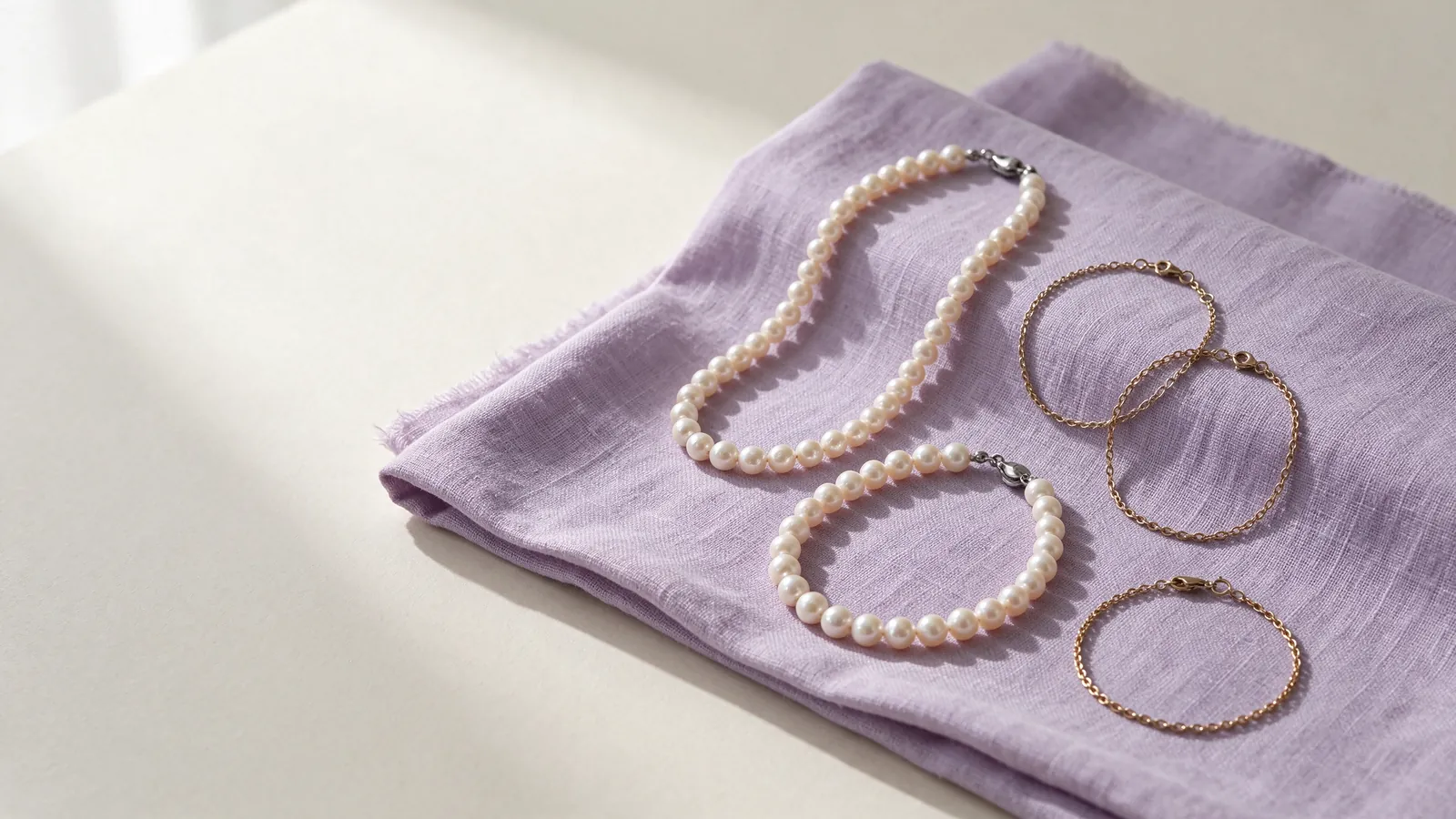
How should a stainless steel pearl bracelet or a SUS316L pearl bracelet fit around your wrist?
Begin with the position where you actually intend to wear the bracelet. Place a flexible tape around that point without pulling it into the skin, and note whether the measurement sits close to the wrist bone or farther up the arm. A wrist measurement is useful context, but it is not automatically the finished bracelet length: the clasp and the arrangement around the wrist also matter. When choosing a pearl bracelet, compare pieces at the same wearing position so that changes in placement do not disguise differences in fit.
Try more than a still pose with your arm hanging down. Open your hand, make a gentle fist, rotate the wrist and rest your forearm on a table. Notice whether the central pearls move underneath the wrist, whether the clasp presses against the wrist bone or whether the chain catches near the cuff. A close outline and a looser drape are different preferences rather than universal standards. An adjustment system offers positions to compare; it does not remove the need to test the particular position you will use.
When comparing a stainless steel pearl bracelet with a SUS316L pearl bracelet, what should you check at the clasp before judging the fit?
Start with the clasp beneath the wrist and see where it settles during normal movement. Check the connecting ring, the clasp's bulk and the direction of any unused adjustment chain. Practise fastening it with your usual hand rather than relying only on somebody else's help. If you work at a keyboard, rest the wrist in your typing position: a clasp that looks discreet may still sit exactly where you make contact with the desk.
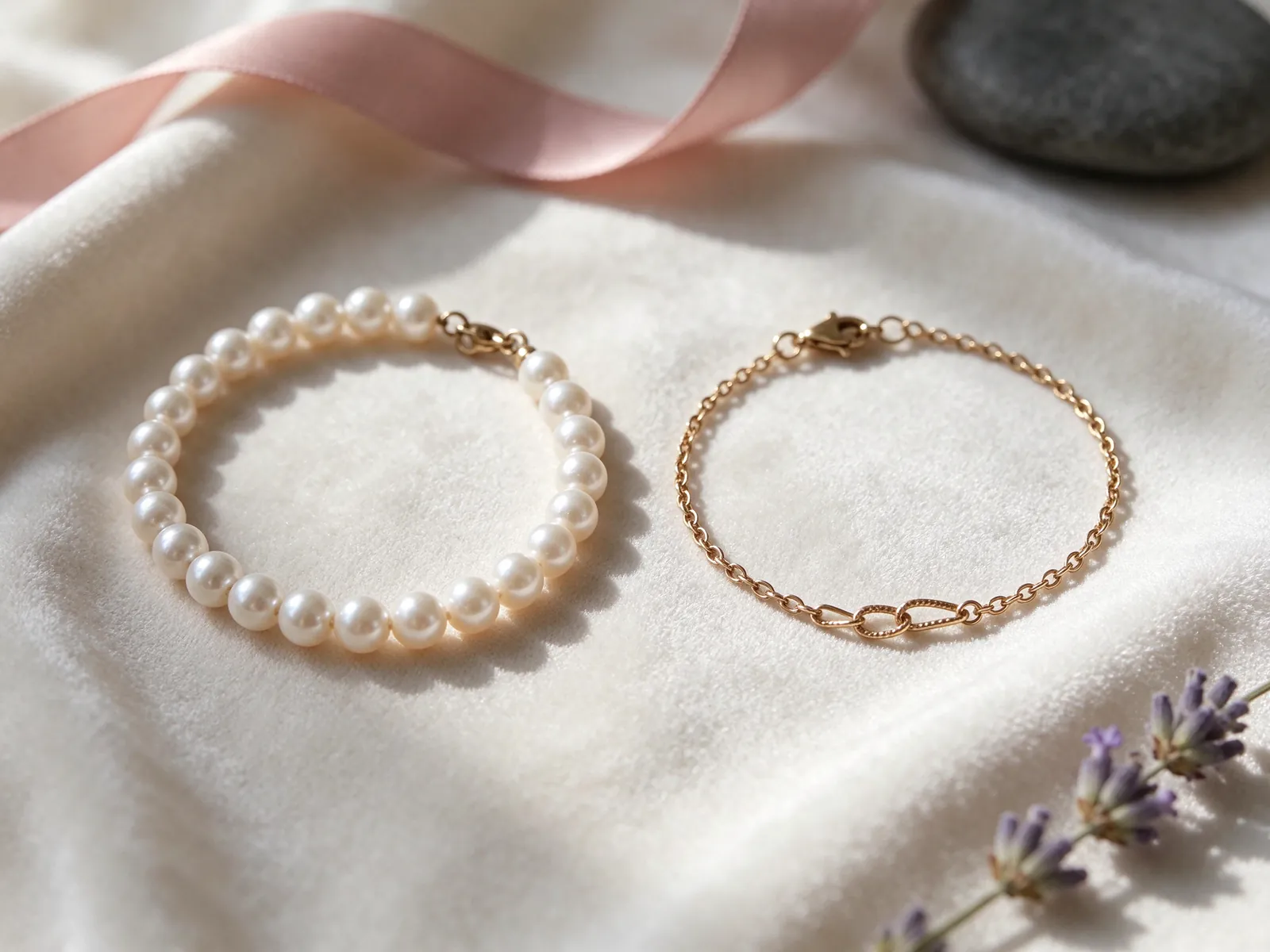
What does the SUS316L label tell you, and what does an adjuster tell you?
When comparing a stainless steel pearl bracelet with a SUS316L pearl bracelet, start by reading what each name actually describes. WSP's bracelet listings use SUS316L and describe an adjustable design in the relevant item name. Read these as separate pieces of information. The material label identifies the wording used in that listing; the adjuster describes a feature of the design. Neither establishes that every stainless steel bracelet uses the same clasp, nor that every adjustable bracelet is made from stainless steel. A search for a steel pearl bracelet should therefore lead to questions about the actual material description, attachment points and adjustment mechanism, not assumptions based on a silver-coloured photograph.
Flint Jewellery's choices are 18K 750 white gold, 18K 750 yellow gold, 18K 750 rose gold, PT950 platinum and PT900 platinum. Keep these choices distinct from WSP's SUS316L label. If your aim is to coordinate with a ring or watch, describe the colour relationship you want and then discuss the metal by name. The 18k gold pearl bracelet guide helps organise these decisions separately from chain proportions, wrist measurements and fastening preferences. Similar colour is a styling observation, not proof that two materials are interchangeable.
Ask which part of the bracelet a description refers to
A chain description may not explain every component. Read how the clasp, connecting parts and pearl attachments are described, and ask the relevant retailer about any part you want to understand. Whether pearls sit at the centre or continue around the wrist affects the viewing angle and contact points. Those are construction questions; a material name alone cannot answer them.
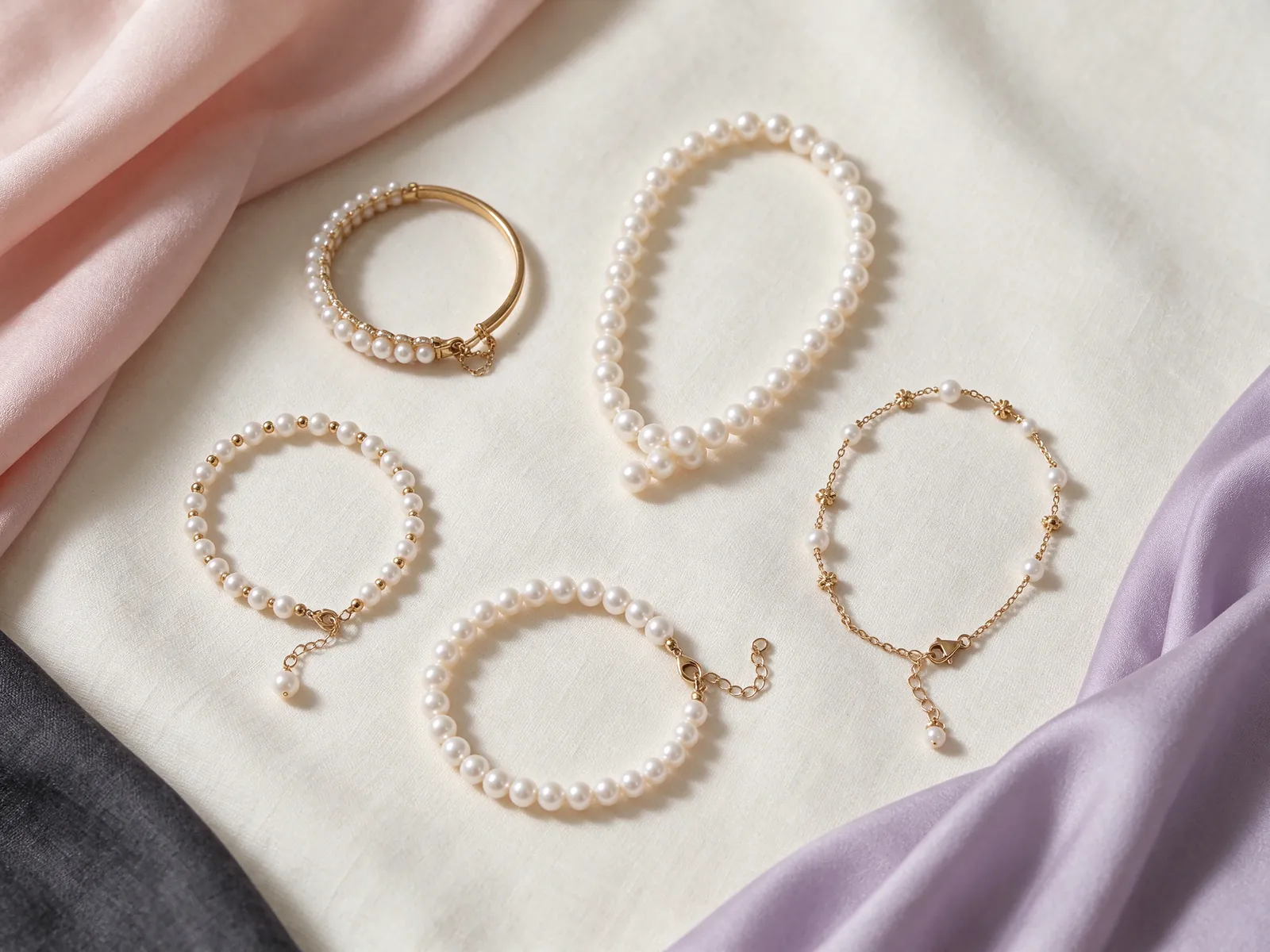
Compare chain space, continuous strands and wider arrangements
A chain with pearls grouped at the centre creates a different rhythm from pearls continuing around the wrist. Decide whether you want an isolated focal point beside a sleeve or a more continuous band of pearl colour. A pearl strand bracelet offers useful context for the latter outline without turning the choice into a ranking of materials. Do not assume that more visible chain means less weight, greater strength or easier wear. The actual clasp, proportions and way the bracelet moves must still be considered together.
A multi strand pearl bracelet creates a broader outline and raises another set of questions: how the rows sit beside each other, what happens when the wrist bends and how much of the bracelet remains visible below a sleeve. If your cuff already has gathers or a strong pattern, try giving it space rather than adding several competing details. With a plain sleeve, a wider arrangement may become the main accent. This is a comparison of silhouettes, not a claim that a multi-row construction belongs to the stainless steel category.
Check the side view, not only the front photograph
Rotate the wrist to see whether the intended focal point remains visible or slips to the underside. Check whether the chain twists as you move. Wear a familiar long-sleeved top during the comparison and look in a mirror at an ordinary distance. The part revealed by your own cuff can be more relevant to daily styling than the enlarged view of a bracelet laid flat.
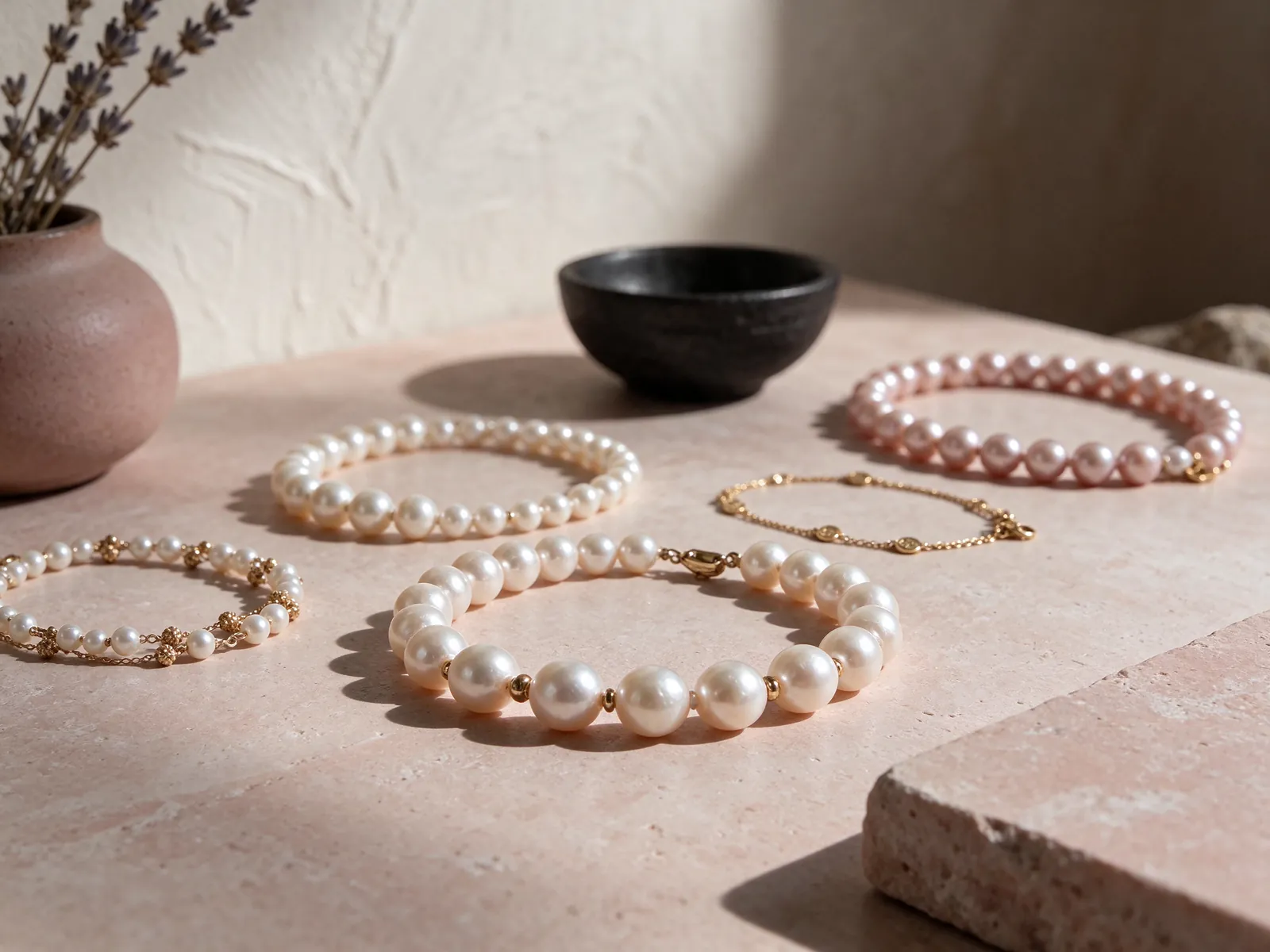
Plan for office sleeves, desk contact and a watch
For an office bracelet, recreate the movements that occupy your day. Typing, using a mouse and turning pages may bring different parts of the piece against the work surface. Identify whether the pearl, clasp or chain makes contact first. A narrow shirt cuff also changes the visible outline: compare the bracelet with the sleeve in its normal position instead of keeping the sleeve rolled up throughout the fitting. A simple-looking design can still have a contact point that does not suit your particular working habits.
If you wear a watch, first try the two pieces on opposite wrists and assess the balance. If you prefer the same wrist, observe whether movement brings the watch case or buckle against the pearls. Choose one main visual element, then reduce other wrist accessories so that the arrangement does not depend on continual repositioning. A cream knit, a dark jacket and a plain cotton shirt give different backgrounds for the pearl outline. Good colour coordination, however, is separate from avoiding repeated contact with hard edges.
For a gift, ask about routines as well as wrist size
Find out whether the recipient wears a watch, prefers a close fit and normally fastens bracelets without assistance. An existing favourite bracelet can help describe position and style, but its flat length should not automatically be transferred to a different construction. Sleeve habits and clasp handling give useful information that a wrist measurement alone cannot provide.
Evaluate the pearls independently of the metal name
GIA describes seven pearl value factors: size, shape, colour, lustre, surface quality, nacre quality and matching. For a bracelet, start by looking at how neighbouring pearls relate in colour, shape and visual proportion. Consider whether reflections appear clear and whether the overall lustre feels consistent with the arrangement. These observations can support useful questions, but a photograph cannot establish a nacre measurement, pearl origin or natural-versus-cultured identity. The metal label should not distract from examining the pearls themselves.
Compare colour under similar lighting and against the same background where possible. A warm lamp and a cooler photograph can make an apparent difference difficult to interpret. If a 10k gold pearl bracelet or a sterling silver pearl bracelet search attracts you through its appearance, separate what you like into metal colour, pearl arrangement and clasp outline. Those comparison terms are not Flint metal options. Roundness or an unusual colour should likewise not be treated as evidence of a particular origin, pearl identity or certificate.
Separate a preferred look from a quality question
A softer colour or an irregular outline can be a deliberate style preference. Lustre, surface condition and matching are separate topics to discuss. Explain the appearance you want before asking what pearl information accompanies a particular piece. GIA's educational factors help clarify vocabulary; they do not confer certification on a Flint design.
Choose care for the pearls as well as the chain
GIA lists pearl at 2.5 on the Mohs hardness scale. That makes care of the pearl surfaces relevant even when the bracelet is described by its chain metal. Wrist jewellery comes close to desks, washbasins and objects inside a bag. Remove the bracelet before activities involving cleaning products or avoidable knocks, and keep it away from hard edges. The hardness figure is not a prediction of service life, a chain performance rating or a way to calculate how many years a finished bracelet will last.
After wearing, use a very soft, clean cloth. Keep perfume, hair spray, acids and excessive heat away from pearls. GIA states that pearls should never be cleaned in ultrasonic or steam cleaners, so do not borrow a cleaning routine simply because the chain resembles another metal accessory. Store the bracelet separately from pieces with hard or pointed edges. For pearls strung on a thread and cleaned with water, allow the string to dry completely before wearing. A different attachment structure needs care appropriate to its own connections.
Look at the attachments before cleaning
Check for a loose pearl, exposed thread or a distorted connecting part before wiping the bracelet. If something has changed, stop wearing it and explain the location and circumstances to the relevant retailer rather than pulling it tight with tools or adding adhesive yourself. Routine cleaning and a structural problem are different matters; a soft cloth cannot address a loose attachment.
Turn the comparison into a clear conversation with Flint
Organise your notes into material, silhouette and daily use. Record the metal you wish to discuss, whether you want a central pearl accent or a continuous arrangement, and where the bracelet should sit. Add practical details about sleeves, a watch and fastening it yourself. If your search began with a PT850 pearl bracelet, keep that comparison label separate from Flint's PT950 and PT900 platinum choices. A shared white-metal appearance is not a reason to substitute one designation for another.
When discussing your needs with Flint Jewellery, describe the measuring position and the movements you want the bracelet to accommodate. Specific requests such as a focal point beside a cuff or an adjustment tail that does not rest beneath the palm are more informative than asking for a steel chain alone. Message Flint Jewellery on WhatsApp at +85260106207 to discuss Flint's metal choices and wrist requirements. Treat a comparison image as a way to explain your preference, not as a Flint product specification or a request to reproduce another brand's identity.
Keep the useful detail and leave the brand label behind
Say which element matters: open space between pearls, a clear central accent, a clasp you can operate or a colour relationship with an existing ring. These details give the conversation a practical direction without transferring another retailer's material description to Flint. The aim is to make your wearing needs understandable rather than let a search phrase decide every part of the design.
| Comparison point | What to read | What to try | Styling consideration | What it does not establish |
|---|---|---|---|---|
| Material label | WSP uses SUS316L; Flint's choices are separate | Discuss the material independently of length | Compare the colour relationship with existing pieces | A silver-coloured photograph is not material proof |
| Adjustment system | Clasp positions and unused adjustment chain | Fasten at the intended position and move your wrist | Check the tail beside a cuff | Adjustment alone does not establish fit |
| Pearl layout | Central accent, continuous strand or several rows | Look at the front and side views | Balance the arrangement with sleeve detail | Layout does not identify origin or pearl type |
| Everyday contact | Where pearls, clasp and chain touch surrounding objects | Recreate typing and wrist rotation | Try a watch on the opposite wrist first | A simple outline does not eliminate friction |
| Care | Consider pearls and attachment points as well as metal | Inspect connections before cleaning | Store away from hard-edged pieces | The chain name is not a whole-piece cleaning instruction |
Pearl knowledge and authoritative references
GIA ranks pearl at 2.5 on the Mohs hardness scale; cleaning and everyday contact should account for the pearls, not only the chain metal.
Read the reference for this factFrequently asked questions
Does SUS316L describe a Flint stainless steel option?
No. SUS316L appears in WSP bracelet listings. Flint Jewellery's choices are 18K 750 white, yellow and rose gold, and PT950 or PT900 platinum. Read the two retailers' material descriptions separately rather than transferring the label between them.
Can I judge an adjustable bracelet without measuring or trying it?
An adjuster describes a feature, not a fit result. Compare the actual fastening position, the unused tail, the pearl layout and how they move around your wrist. Measure at the position where you intend to wear the piece.
What should I check if I want a bracelet beside my office watch?
Observe whether the watch case or buckle contacts the pearls when your wrist moves or rests on a desk. Try opposite wrists first. If you prefer the same wrist, consider both the visual balance and the changing contact points.
Is ultrasonic cleaning appropriate because the chain is steel?
No. GIA says pearls should never be cleaned in ultrasonic or steam cleaners. Choose care that considers the pearl surfaces and attachments, not only the chain, and use a very soft, clean cloth for routine wiping after wear.
How can I discuss a clean chain-style outline with Flint?
Describe the pearl placement, the amount of open chain, the clasp handling and your sleeve or watch habits. Discuss these elements within Flint's metal choices without treating another brand's label, item name or specifications as a Flint offer.
Updated: